
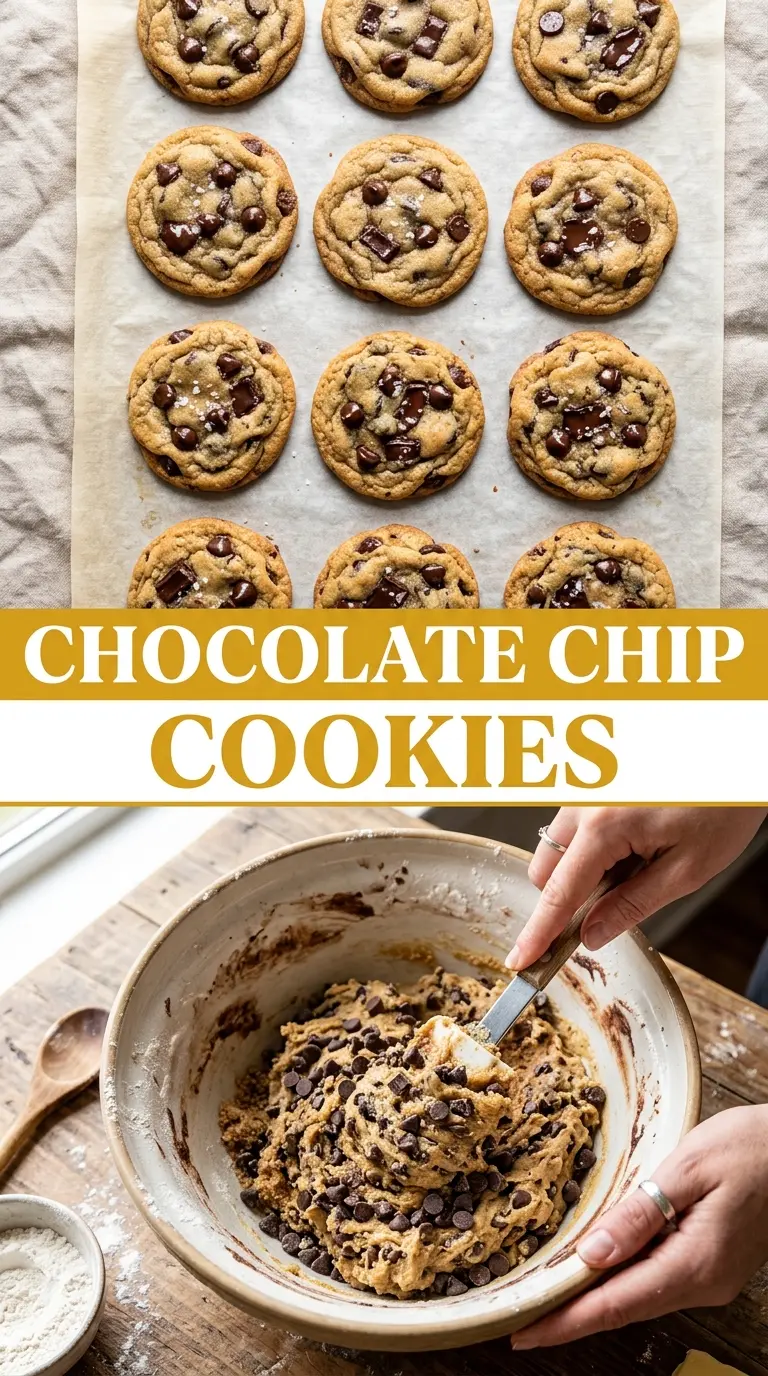
Golden-edged chocolate chip cookies with a soft, chewy center don’t last long on the counter, and the reason this version works is right in the balance. Butter gives them that rich, bakery-style flavor, brown sugar keeps the middle tender, and just enough flour holds everything together without turning the cookies dense. The chocolate stays in thick pockets instead of disappearing into the dough, so every bite gives you melted chocolate, crisp edges, and that warm vanilla-brown sugar finish.
The small details matter here. Creaming the butter and sugars until light gives the cookies lift before they even hit the oven. Chilling the dough isn’t mandatory, but it helps the cookies bake up thicker and chewier instead of spreading into thin, flat rounds. If your cookies usually come out dry or puffy, the fix is usually in the mixing or the bake time, not the ingredients.
Below, I’m walking through the part that changes the texture most, plus the simple swaps and storage notes that keep a batch tasting fresh instead of stale.
I chilled the dough for 30 minutes like you said and the cookies stayed thick with those soft centers instead of spreading flat. The edges were crisp, the middle was chewy, and the chocolate stayed in big melty pockets.
Save these chocolate chip cookies for the batch that delivers crisp edges, chewy centers, and those big melted chocolate pockets every time.
The Dough Mistake That Turns Good Cookies Flat
The fastest way to ruin chocolate chip cookies is to overwork the dough after the flour goes in. Once the flour is added, mix only until the streaks disappear. If you keep beating it, the cookies bake up tough instead of tender, and they lose that soft center everyone wants.
Temperature matters here too. Butter should be softened, not melted, so it can trap air when you cream it with the sugars. Melted butter gives you denser cookies that spread more, and the same thing happens if you bake the dough while it’s still warm from mixing. A short chill fixes that spread and gives the flour time to hydrate.
What Each Ingredient Is Actually Doing in This Dish
- Butter — Use real butter here. It’s the backbone of the flavor and the reason the cookies taste rich instead of just sweet. If you want a deeper, nuttier note, brown it first and let it cool back to room temperature before mixing.
- Brown sugar — This is what keeps the centers chewy. The molasses in it holds moisture, so swapping it for all white sugar makes the cookies crisper and less toffee-like.
- Chocolate chips — Standard semisweet chips work well, but chopped chocolate gives you bigger puddles and a less uniform bite. If you want pools of melted chocolate, use a bar or a mix of chips and chunks.
- Flour — Measure it lightly. Too much flour is the usual reason cookies come out dry and puffy instead of soft and chewy. Spoon and level it, or weigh it if you can.
How to Keep the Centers Soft Without Losing the Edges
Cream the Butter and Sugars Until the Mixture Lightens
Beat the softened butter with both sugars until the mixture looks pale and fluffy, not greasy. That step traps air and gives the cookies some lift. If the butter is too cold, the mixture stays lumpy; if it’s melted, you lose the structure that helps the cookies hold their shape.
Add the Eggs and Vanilla Before the Dry Ingredients
Mix in the eggs one at a time, then add the vanilla. The dough should look smooth and a little glossy. If it looks broken or curdled, keep mixing for a few more seconds — that usually fixes itself once the eggs are fully worked in.
Fold in the Flour Just Until It Disappears
Add the flour, baking soda, and salt, then stop as soon as you no longer see dry streaks. Overmixing here develops too much gluten, which makes cookies chewy in the wrong way: dense, bready, and flat in flavor. Stir in the chocolate chips at the very end so they stay evenly distributed without being crushed.
Bake Until the Edges Set and the Centers Still Look Soft
Drop the dough by rounded tablespoons and bake at 375°F for 9 to 11 minutes. Pull them when the edges are golden and the centers still look slightly underdone; they finish setting on the baking sheet. If you wait until the tops look fully dry in the oven, the cookies usually end up overbaked once they cool.
Brown Butter for a Deeper, Toastier Cookie
Brown the butter in a light-colored pan until the milk solids turn amber and smell nutty, then cool it until it’s soft again before mixing. This gives the cookies a caramel-like depth and a little more chew, but the dough will spread a bit more unless you chill it. It’s worth it when you want a more grown-up, bakery-style cookie.
Gluten-Free Cookies That Still Hold Together
Use a good 1:1 gluten-free flour blend that already includes xanthan gum. The texture will be a touch more delicate, but the cookies should still hold their shape and stay chewy in the middle. Don’t add extra flour trying to “fix” the dough — that’s how gluten-free cookies get dry.
Less Sweet, More Chocolate
Swap half the chips for chopped dark chocolate and use semisweet chips for the rest. The cookies keep their classic structure, but the flavor skews richer and less sugary. This is the version I reach for when I want the chocolate to stand out instead of just adding sweetness.
Storage and Reheating
- Refrigerator: Store baked cookies in an airtight container for up to 5 days. They’ll soften a little as they sit, which is normal.
- Freezer: Freeze baked cookies for up to 3 months, or freeze the scooped dough and bake straight from frozen with 1 to 2 extra minutes in the oven.
- Reheating: Warm a cookie in the microwave for 8 to 10 seconds, just until the chocolate softens. Too much heat dries out the edges and makes the center rubbery.
Answers to the Questions Worth Asking

Chocolate Chip Cookies
Ingredients
Equipment
Method
- Preheat oven to 375°F and line baking sheets with parchment for easy release and cleanup.
- Beat softened butter with granulated sugar and brown sugar until fluffy and lighter in color, then add eggs and vanilla extract and mix until smooth.
- Stir in all-purpose flour, baking soda, and salt until just combined; the dough should look cohesive with no dry streaks.
- Fold in chocolate chips so they are evenly distributed throughout the dough.
- Drop rounded tablespoons of dough onto baking sheets with spacing so the cookies can spread.
- Bake for 9-11 minutes at 375°F until the edges are golden brown and the centers still look slightly soft.
- Cool cookies on a wire rack until set, with a glossy-chewy center and firm edges before serving.