
Juicy chicken breasts split open to hold melted mozzarella, ripe tomato, and fresh basil turn into a dinner that feels special without acting like one. The outside gets a golden sear, the inside turns saucy and fragrant, and every slice shows off that Caprese filling in the best way. The balsamic glaze at the end pulls everything together with just enough tang to keep the cheese from tasting heavy.
What makes this version work is the sequence. The chicken gets stuffed first, then seared in a hot skillet to build color before it goes into the oven to finish gently. That keeps the outside from drying out while the mozzarella melts without leaking everywhere. Using fresh mozzarella matters here because it softens into a creamy pool instead of turning rubbery, and a Roma tomato gives you enough flavor without flooding the pocket.
Below, I’ll walk through the pocket-cutting trick that keeps the filling inside, the part of the sear that matters most, and the small timing details that keep the cheese where it belongs until the first cut.
The mozzarella stayed tucked inside and melted into the tomatoes instead of running all over the pan. I followed the sear-and-bake timing exactly, and the chicken came out juicy with a great crust.
Pin this Caprese Stuffed Chicken for a juicy sear, melty mozzarella center, and a fast dinner that still plates like a restaurant meal.
The Pocket-Cut That Keeps the Filling Inside
Stuffed chicken fails in one of two ways: the pocket gets cut too thin and tears open, or it gets packed so full that everything escapes as soon as the pan heats up. The goal is a deep pocket with enough structure left on three sides to hold the filling while the chicken cooks and tightens in the oven.
Cutting the pocket on the side of each breast gives you more control than slicing straight through the middle. That side opening keeps the tomatoes and mozzarella tucked in place, and the toothpicks only need to hold a small seam closed instead of trying to pin together a whole split breast. If your chicken breasts are very large, pound them gently to even thickness before cutting so the outside cooks at the same pace as the filling inside.
What Each Ingredient Is Actually Doing in This Dish
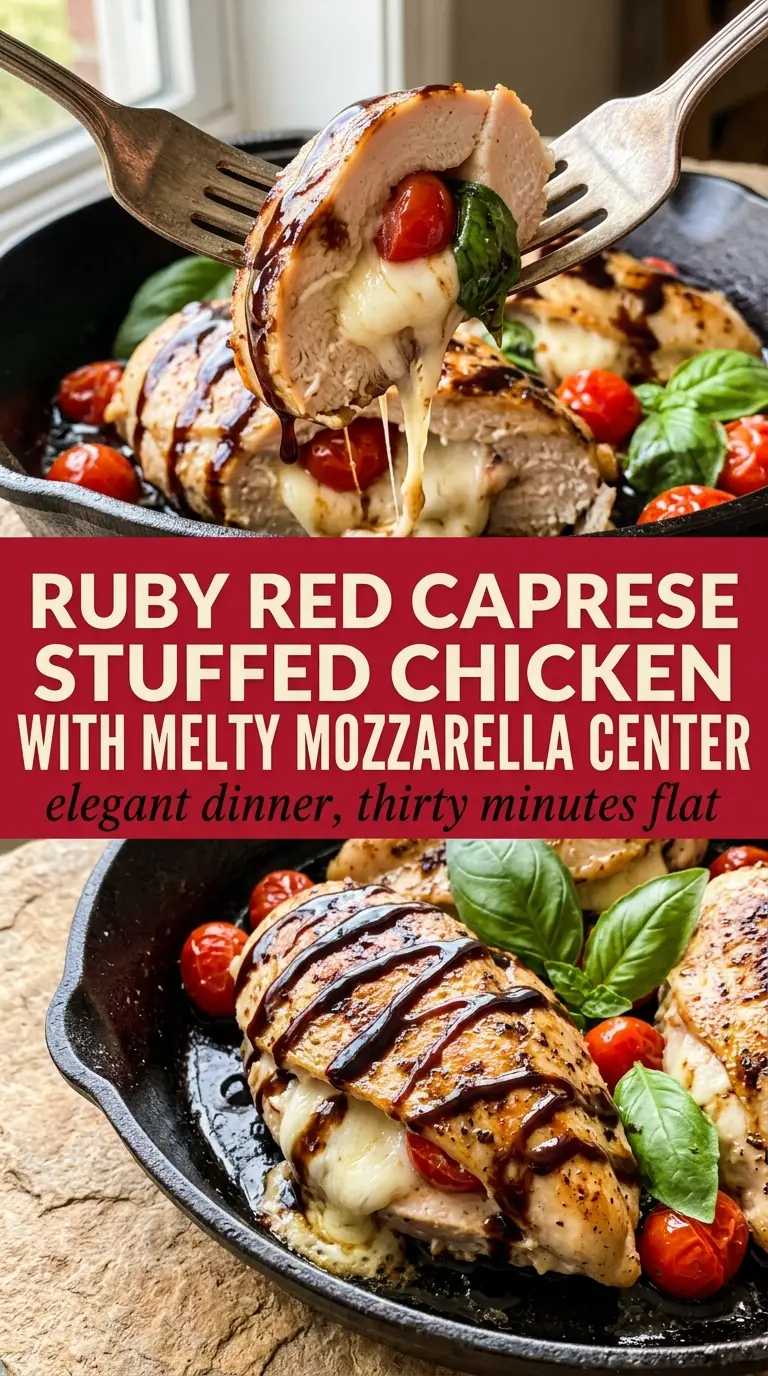
- Chicken breasts — Boneless breasts give you the cleanest pocket and the fastest cook time. Choose ones that are similar in size so they finish together; if one is much thicker, lightly pound it before stuffing.
- Fresh mozzarella — This is the cheese that melts into a creamy center instead of drying out. Pre-sliced works fine, but avoid low-moisture mozzarella here or the filling loses that soft, stretchy pull.
- Roma tomato — Roma tomatoes hold their shape better than juicy slicing tomatoes, which helps keep the pocket from flooding. Slice them thin so they soften in the oven without making the filling watery.
- Fresh basil — Basil goes in at the stuffing stage so it perfumes the cheese as it melts. Dried basil won’t give you the same fresh, peppery lift, so this is one place where the fresh herb matters.
- Balsamic glaze — The glaze adds sweetness and acidity in one swipe. If you only have balsamic vinegar, reduce it separately or drizzle it very lightly at the end; straight vinegar is sharper and can overpower the filling.
- Olive oil — Olive oil helps the chicken brown evenly in the skillet and keeps the exterior from sticking. Use a good everyday oil here; save the fancy finishing oil for the plate.
From Stuffed Breast to Finished Dinner Without Losing the Filling
Building the Pocket
Lay each chicken breast flat and use a sharp knife to cut a deep pocket into the thickest side, stopping before you reach the other edge. You want room for the filling, not a full butterfly. If the opening is too narrow, widen it just enough to slide in the mozzarella, tomato, and basil without forcing the meat apart.
Stuffing and Securing
Layer the mozzarella first, then the tomato, then the basil so the basil sits closest to the heat and perfumes the filling as it melts. Seal the opening with toothpicks placed close together if needed; one toothpick usually isn’t enough for a large breast. Season the outside after stuffing so the salt hits the surface instead of disappearing into the filling.
Getting Color in the Skillet
Heat the oil until it shimmers before the chicken goes in. That hot pan is what gives you the golden crust, and a lukewarm skillet will leave the breast pale and wet. Sear each side just long enough to color it; if the chicken starts to stick hard, it needs another minute before you try to turn it.
Finishing in the Oven
Transfer the skillet straight into the oven and bake until the chicken reaches 165°F in the thickest part. The center should feel firm but still give a little when pressed, and the juices should run clear. Pull it out as soon as it hits temperature, then rest it for a few minutes so the mozzarella settles instead of spilling out immediately when you slice.
Three Ways to Adjust Caprese Stuffed Chicken Without Losing the Point
Dairy-Free Version
Use a dairy-free mozzarella-style slice that melts well, not a hard cheese substitute. The texture will be a little less creamy, but the tomato and basil still carry the Caprese idea cleanly. Choose one that softens instead of browns into a rubbery layer.
Lower-Carb Plate
The chicken already fits a low-carb dinner, so the easiest move is to keep the filling simple and serve it with roasted vegetables or salad. Skip extra glaze if you want to cut the sugar further; the tomatoes and basil still give you enough brightness.
Make It for a Crowd
You can stuff and season the chicken a few hours ahead, then refrigerate it until dinner time. Hold off on the sear until right before baking so the crust stays crisp and the filling doesn’t start leaking in the fridge. That keeps the texture cleaner when you serve it.
Storage and Reheating
- Refrigerator: Store leftovers in an airtight container for up to 3 days. The chicken stays tender, though the basil will darken a bit and the mozzarella will firm up.
- Freezer: It freezes, but the tomato and cheese texture soften after thawing. If you do freeze it, wrap each breast tightly and thaw in the refrigerator before reheating.
- Reheating: Warm covered in a 325°F oven until heated through, or use short bursts in the microwave at medium power. High heat is what turns the chicken dry and pushes the cheese out of the pocket.
Answers to the Questions Worth Asking
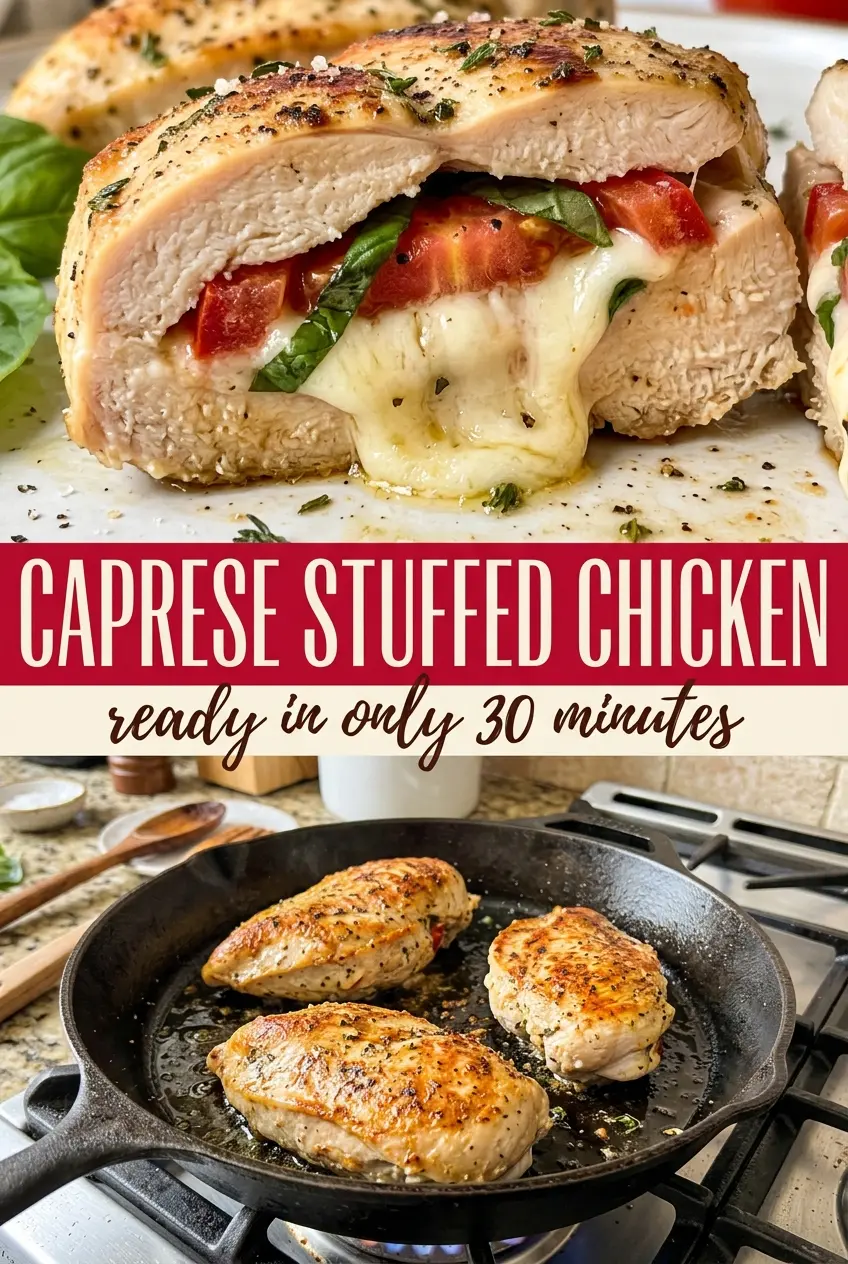
Caprese Stuffed Chicken
Ingredients
Equipment
Method
- Preheat the oven to 375°F.
- Cut a deep pocket into the side of each chicken breast without cutting all the way through.
- Stuff each pocket with mozzarella slices, tomato slices, and basil leaves.
- Secure the opening with toothpicks and season the outside with salt and pepper.
- Heat olive oil in an oven-safe skillet over medium-high heat and sear the chicken for 3-4 minutes per side until golden.
- Transfer the skillet to the oven and bake for 15-18 minutes until the chicken reaches 165°F.
- Remove toothpicks, drizzle with balsamic glaze, and serve.