
Plump cheese tortellini and a velvety butternut squash sauce are a combination that lands somewhere between comforting and a little elegant, which is exactly why this skillet dinner earns a repeat spot. The sauce clings to every fold of pasta instead of puddling at the bottom of the pan, and the crispy sage on top gives each bite a sharp little contrast that keeps the dish from feeling heavy.
The trick is starting with already-roasted squash, whether you roast it yourself ahead of time or use a good-quality puree. That deep, caramelized squash flavor is what makes the sauce taste rounded instead of flat. Frying the sage leaves in the butter first pulls their flavor into the fat, so the whole skillet picks up that earthy, savory note before the cream even goes in.
Below, I’ve laid out the part that matters most: how to keep the sauce smooth, when to add the parmesan so it melts instead of clumping, and a few smart swaps if you need to work with what’s already in your kitchen.
The sauce turned out silky and coated the tortellini perfectly, and the crispy sage on top made it taste like something from a nice restaurant. I used store-bought squash puree and it still came together fast on a Tuesday night.
Save this butternut squash tortellini skillet for a fast creamy dinner with crispy sage and a sauce that actually coats the pasta.
The Fastest Way to Avoid a Thin, Watery Squash Sauce
Butternut squash has a lot of water in it, especially if you use puree straight from a carton or can. That’s fine, but it means the sauce needs a little help from reduction and dairy to turn into something that clings instead of running across the plate. If the pan is crowded or the broth is added too quickly, the sauce can taste diluted and the tortellini ends up floating in it instead of getting coated.
The safest move is to let the squash and broth simmer long enough for the mixture to smooth out before the cream goes in. Once the cream is added, keep the heat low. High heat is where a cream sauce starts to separate or go grainy, especially once parmesan is stirred in. You want a gentle simmer, not a hard boil.
What Each Ingredient Is Actually Doing in This Dish
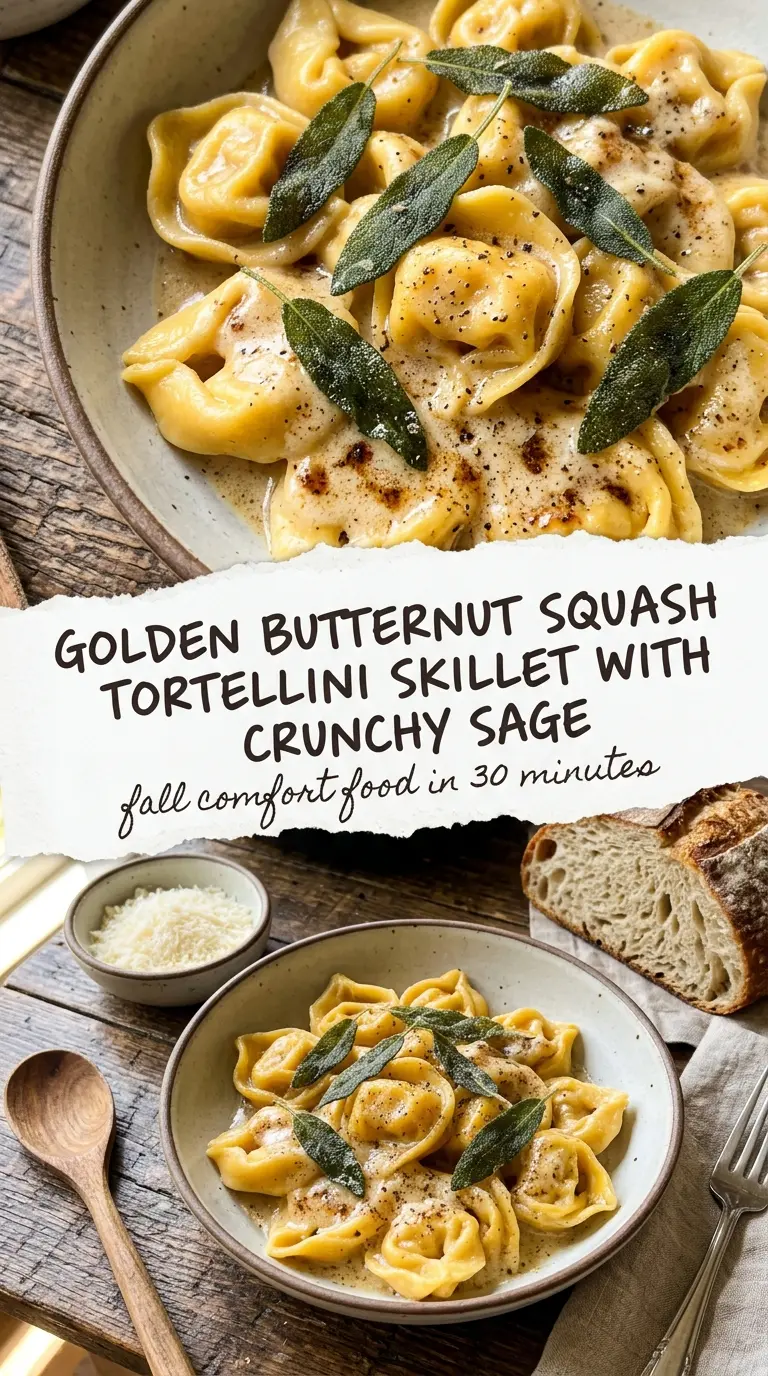
- Roasted butternut squash — This is where the flavor comes from. Roasting gives you sweetness and a little caramelized depth that plain steamed squash just doesn’t have. If you’re short on time, canned puree works, but it should still taste thick and earthy, not watery.
- Fresh sage — Frying the leaves in butter makes them crisp and turns the butter into a built-in seasoning for the whole dish. Dried sage won’t give you that same texture, though it can stand in for the flavor in a pinch.
- Heavy cream — This is what gives the sauce body and that glossy finish. Half-and-half will work if that’s what you have, but the sauce will be a little thinner and you may need to simmer it a minute longer before adding the cheese.
- Parmesan — Use finely grated parmesan so it melts cleanly. Coarse shreds can clump or stay stringy if the sauce is too hot. Pull the pan off the heat for a moment before stirring it in if you want the smoothest result.
Building the Sauce in the Same Pan You Fry the Sage In
Fry the Sage First
Melt the butter in a large skillet over medium heat, then add the sage leaves in a single layer. They should sizzle immediately and turn crisp in about a minute. If the butter starts browning too fast, lower the heat; burnt sage tastes harsh, not savory. Lift the leaves out as soon as they’re crisp and leave the butter behind, because that’s now your flavor base.
Cook the Garlic Just Until It Smells Sweet
Add the minced garlic to the sage butter and stir for about 30 seconds, just until fragrant. If it goes past that point and starts to color, the sauce will pick up a bitter edge. Garlic only needs enough heat to soften its raw bite before the squash goes in.
Turn the Squash Into a Smooth Sauce
Stir in the mashed butternut squash, vegetable broth, and heavy cream, then let the mixture simmer gently until it looks smooth and unified. Use the back of a spoon to press out any lumps if needed. The sauce should thicken enough to coat a spoon, not paste itself to the pan. If it looks loose, keep simmering for another few minutes before moving on.
Finish With Pasta and Cheese
Cook the tortellini according to the package timing, drain it well, and add it straight to the skillet. Stir in the parmesan while the heat is low so it melts into the sauce instead of seizing into little bits. The finished sauce should look glossy and clingy, with the pasta fully coated and the sage ready to crumble over the top.
Three Ways to Make This Tortellini Skillet Work for Your Kitchen
Use frozen tortellini without changing the sauce
Frozen tortellini works well here. Cook it separately until just tender, then add it to the skillet at the end so it doesn’t overcook in the sauce. The filling stays soft and the pasta keeps its shape instead of turning gummy.
Make it dairy-free without losing body
Use a full-fat unsweetened oat cream or coconut cream in place of the heavy cream, and skip the parmesan or use a dairy-free parmesan-style substitute. Oat cream keeps the sauce closer to the original flavor, while coconut cream will make it richer but slightly sweeter. The sauce may need an extra minute of simmering to thicken.
Add greens without watering the sauce down
A handful of baby spinach or chopped kale works well if you want more vegetable content. Stir it in right after the tortellini so the residual heat wilts it without turning the greens mushy. Add too much too early and the skillet will lose the thick, creamy texture that makes it work.
Storage and Reheating
- Refrigerator: Store leftovers in an airtight container for up to 3 days. The sauce will thicken as it chills, and the tortellini will soften a bit more overnight.
- Freezer: It freezes, but the texture of the tortellini and cream sauce changes after thawing. If you want to freeze it, stop before adding the pasta and freeze the sauce on its own.
- Reheating: Rewarm gently on the stove over low heat with a splash of broth or cream. The common mistake is blasting it in the microwave, which makes the sauce separate and the pasta turn chewy.
Questions I Get Asked About This Recipe
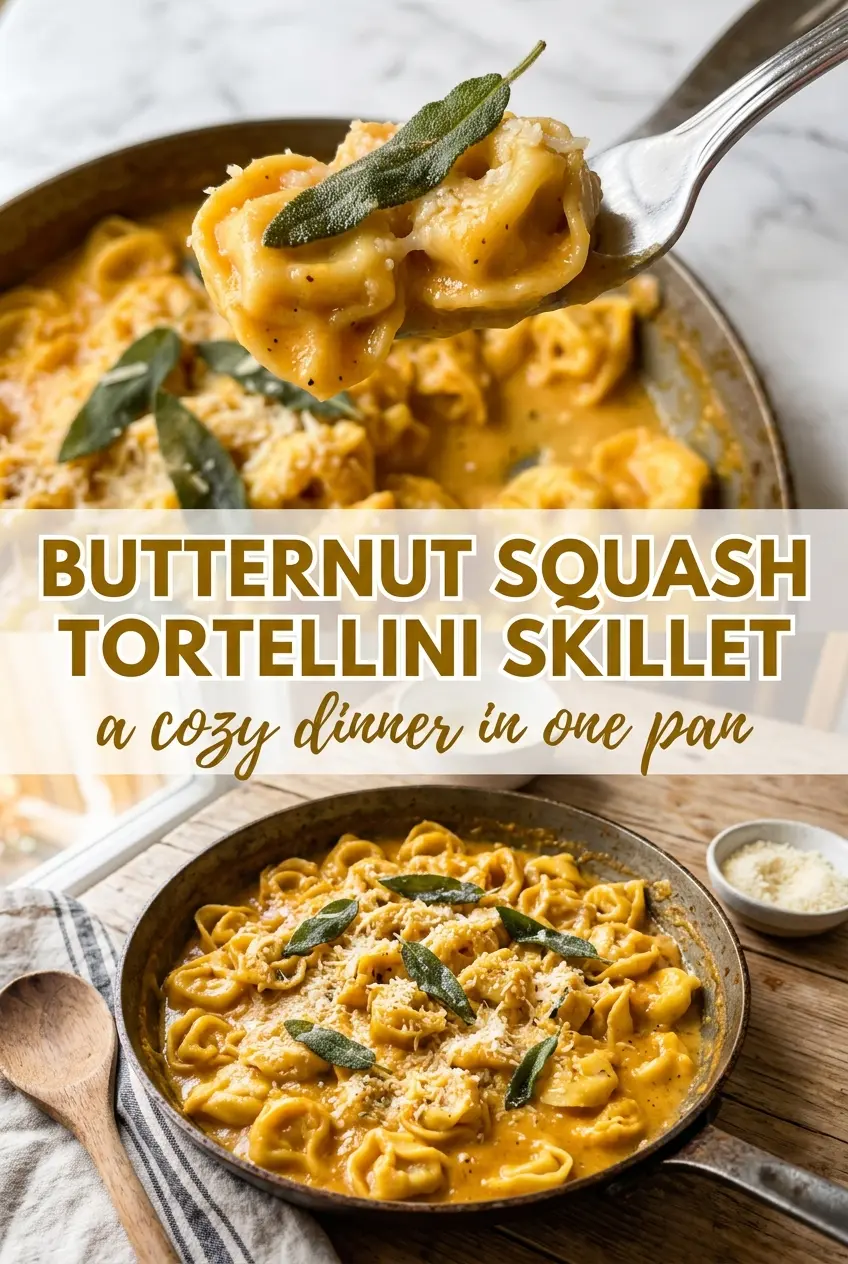
Butternut Squash Tortellini Skillet
Ingredients
Equipment
Method
- Melt butter in a skillet over medium heat and fry sage leaves until crispy, about 1 minute, then remove and set aside for topping.
- Sauté minced garlic in the same skillet for about 30 seconds until fragrant and just beginning to turn golden.
- Stir in mashed butternut squash, vegetable broth, and heavy cream, then simmer on medium-low until smooth, about 5 minutes, stirring as needed so it clings to the spatula.
- Cook the cheese tortellini according to package instructions, then add the cooked tortellini to the skillet and toss to coat.
- Stir in grated parmesan cheese and keep simmering gently until melted and glossy, about 2 minutes.
- Top the skillet with the crispy fried sage right before serving so the leaves stay crunchy.