
Pillowy tortellini and creamy butternut squash sauce are a combination that lands on the table looking like more work than it is. The sauce clings to every fold of pasta, turns a deep amber color, and gets lifted at the end by crisp sage leaves that crackle when you bite into them. It’s the kind of skillet dinner that feels substantial without being heavy, and it comes together fast enough for a weeknight without tasting rushed.
What makes this version work is the balance: roasted squash puree brings sweetness and body, while chicken broth keeps the cream from feeling flat or overly rich. The Parmesan does more than add saltiness; it helps the sauce emulsify so it coats the tortellini instead of pooling at the bottom of the pan. Frying the sage in butter first gives you a second layer of flavor right in the same skillet, and those browned butter bits quietly season everything that follows.
Below, I’ll show you how to keep the sauce smooth, when to loosen it with pasta water, and the small timing detail that keeps the sage crisp instead of bitter. That last step matters more than it sounds.
The sauce thickened up beautifully and coated every piece of tortellini instead of turning watery. I saved a splash of pasta water like you said, and the sage stayed crisp on top even after serving.
Save this butternut squash tortellini skillet for a creamy one-pan dinner with crispy sage and no fussy cleanup.
The Reason This Sauce Stays Velvety Instead of Turning Grainy
Butternut squash sauces can go wrong in two common ways: they turn gluey from too much reduction, or they split when the cheese goes in over heat that’s too high. This skillet avoids both by keeping the simmer gentle and adding the Parmesan after the squash mixture has had time to come together. You want a slow bubble, not a boil. Boiling hard cooks off too much moisture and leaves you with a sauce that tastes thick but feels heavy.
The other detail that matters is the order of the fat. Butter and sage go in first, which gives the sauce a nutty base before the cream and broth hit the pan. Once the Parmesan melts, the sauce should look glossy and smooth, with just enough body to coat a spoon. If it looks too tight, a splash of pasta water loosens it without thinning the flavor.
What Each Ingredient Is Actually Doing in This Skillet
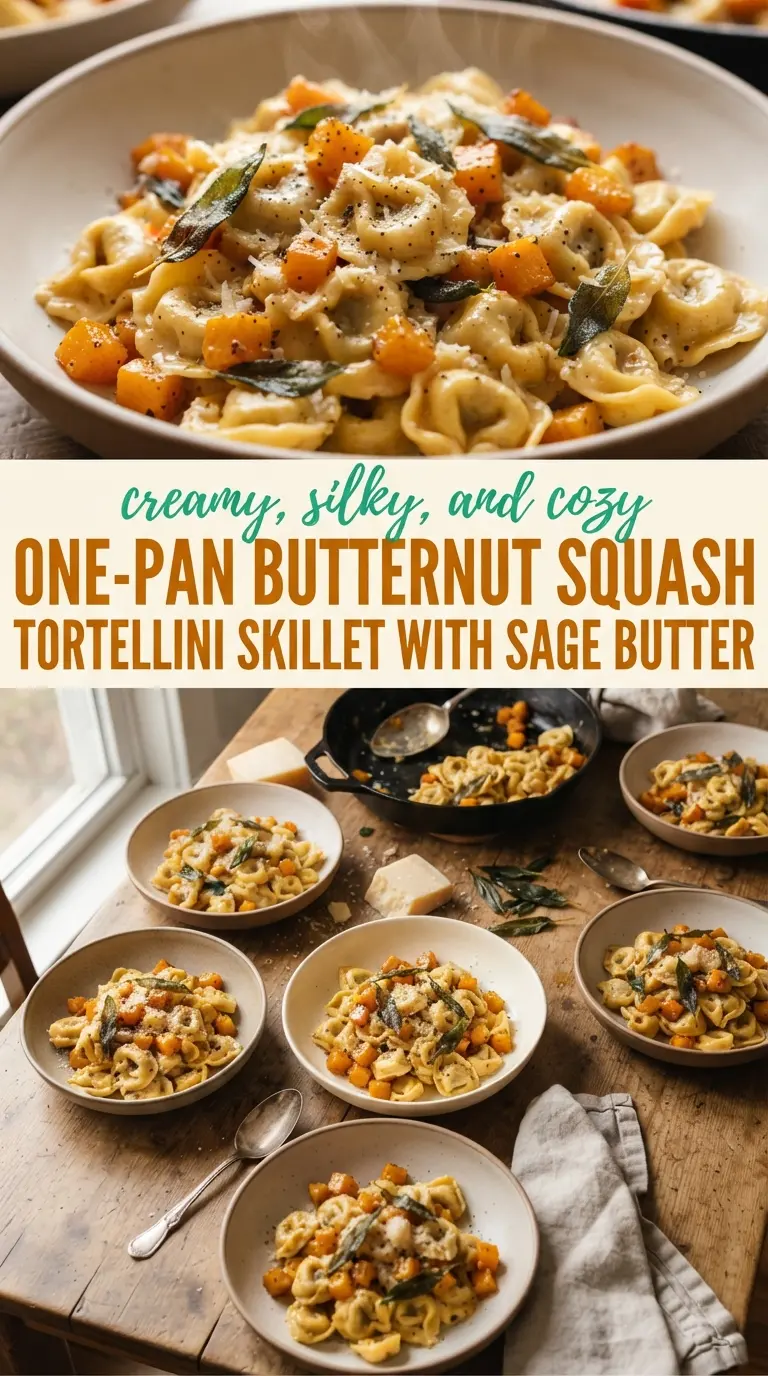
- Cheese tortellini — Fresh or refrigerated tortellini gives you the soft, tender bite this dish needs. Dried tortellini works in a pinch, but it usually needs more simmer time and can feel less plush in the sauce.
- Roasted butternut squash puree — Roasting deepens the squash flavor and keeps the sauce from tasting bland or watery. If you use store-bought puree, choose one with no added sugar or spices so the sage and Parmesan stay in control.
- Heavy cream — This is what makes the sauce silky and gives it the body to cling to the pasta. Half-and-half will work, but the sauce will be looser and a little more fragile.
- Chicken broth — A small amount cuts the richness and helps the puree turn into a real sauce instead of a thick paste. Vegetable broth works too if you want to keep the dish vegetarian.
- Parmesan — Use a finely grated wedge if you can. Pre-grated Parmesan often has anti-caking agents that make melting less smooth, and this sauce depends on that melt for its glossy finish.
- Butter and sage — The butter carries the sage flavor and gives the dish a browned, nutty edge. Sage crisps fast, so pull it as soon as it darkens and curls; if it goes too far, it turns bitter in seconds.
- Nutmeg — Just a little is enough to make the squash taste rounder and warmer without reading as sweet. Freshly grated is nice, but ground nutmeg works fine here because the amount is small.
How to Build the Skillet So the Tortellini Stays Tender
Crisping the Sage First
Melt the butter in a large skillet and drop in the sage leaves before anything else touches the pan. They should sizzle immediately and curl at the edges within about 30 seconds per side. Pull them out as soon as they darken slightly and turn crisp; if the butter smells sharp or the leaves look almost black, the pan was too hot. Set them aside on a plate so they stay crunchy while you finish the sauce.
Letting the Squash and Cream Become One
Stir the squash puree, cream, broth, and nutmeg into the same skillet, using the butter left behind from the sage. Bring it to a gentle simmer and let it bubble for about 5 minutes, stirring often enough that nothing catches on the bottom. The sauce should look a little looser than the finished dish at this stage because the Parmesan will thicken it later. If it starts to spit or boil hard, drop the heat right away.
Melting in the Cheese Without Breaking the Sauce
Turn the heat down before adding the Parmesan. Stir until it melts fully and the sauce turns smooth and glossy, with no gritty spots at the edge of the pan. This is the point where a hard flame can make the cheese seize, so keep the heat low and give it a minute to settle. If the sauce seems too thick to coat the tortellini, loosen it with a splash of reserved pasta water instead of more cream.
Tossing the Tortellini at the End
Add the drained tortellini and fold it through the sauce until every piece is coated. The pasta should finish in the skillet, not sit in the sauce so long that it starts to swell and lose its shape. If the pan looks dry before serving, add a spoonful of pasta water and toss again. Top with the crispy sage leaves right before it hits the table so they stay sharp and fragrant.
Three Ways to Make This Skillet Fit What You Need
Make it vegetarian
Swap the chicken broth for vegetable broth and keep everything else the same. The sauce stays just as creamy, but the savory backbone becomes a little lighter, so the Parmesan matters even more for depth.
Use half-and-half instead of cream
This trims some richness, but it also makes the sauce more likely to thin out. If you use half-and-half, simmer the squash mixture a little longer before adding the cheese, then finish with pasta water only if needed.
Add sausage for a heartier dinner
Brown crumbled Italian sausage before the butter and sage, then build the sauce in the same pan. You’ll get a saltier, more savory skillet with a little extra richness, and the squash will taste less sweet in the best way.
Make it gluten-free
Use a gluten-free tortellini that holds up well to simmering and keep an eye on the package timing, since some versions soften faster than wheat pasta. The sauce itself is already gluten-free as long as your broth and Parmesan are labeled accordingly.
Storage and Reheating
- Refrigerator: Store leftovers in an airtight container for up to 3 days. The sauce will thicken as it chills.
- Freezer: This freezes, but the cream sauce can separate a little when thawed. Freeze only if you’re okay with a slightly less silky texture, and thaw overnight in the fridge.
- Reheating: Warm it slowly on the stove over low heat with a splash of broth or water. The common mistake is blasting it in the microwave, which tightens the tortellini and can make the sauce look broken.
Answers to the Questions Worth Asking

Butternut Squash Tortellini Skillet
Ingredients
Equipment
Method
- Bring a pot of water to a boil and cook the cheese tortellini according to package directions, then drain.
- Melt the butter in a large cast iron skillet over medium heat and fry the fresh sage leaves until crisp, about 30 seconds per side, until the edges look golden.
- Remove the crispy sage leaves from the skillet and set aside for topping.
- In the same skillet, stir in the roasted butternut squash puree, heavy cream, chicken broth, and nutmeg, then simmer for 5 minutes until the sauce looks glossy and slightly thickened.
- Add the grated Parmesan and stir until melted and smooth, keeping the sauce at a gentle simmer.
- Toss the cooked cheese tortellini in the sauce until well coated so each piece is covered with creamy butternut squash.
- Top the skillet with the crispy sage leaves before serving for an earthy crunch.