
Sweet roasted butternut squash and nutty brown butter give this pasta the kind of depth that makes a simple dinner feel finished. The sauce clings to every strand or tube, the sage turns crisp in the butter, and the Parmesan pulls everything into one silky, glossy bowl. It’s the sort of pasta that tastes layered without asking for much more than one pan, one pot, and a little attention at the stove.
The trick is giving each part its own moment. The squash needs high heat so it caramelizes instead of softening into a bland mash. The butter needs to go past melted and into amber-gold territory, where it smells toasty and the milk solids turn the sauce from flat to rich. Once the pasta and squash hit the pan, a splash of starchy water helps everything emulsify instead of sitting greasy at the bottom.
Below, you’ll find the timing that keeps the squash from holding up the rest of the meal, the ingredient swaps that still keep the sauce balanced, and the little cues that tell you the butter is browned at the right moment.
The squash caramelized beautifully and the brown butter with sage made the whole kitchen smell amazing. I added a little pasta water and the sauce turned silky instead of greasy.
Save this Butternut Squash & Sage Pasta for the nights when you want a silky brown butter sauce, sweet roasted squash, and crisp sage in one bowl.
The Reason the Sauce Stays Silky Instead of Turning Heavy
The difference here is that the sauce isn’t built from cream alone. Brown butter gives you flavor, but it still needs the starch from the pasta water and the Parmesan to turn into something that coats instead of puddles. If you skip the reserved water, the butter stays separate and the cheese can clump instead of melting smoothly into the pan.
The other place people lose this dish is with the squash. Roast it hot enough to get color on the edges. Pale squash tastes steamed, and steamed squash disappears once it hits the pasta. You want pieces that are tender all the way through but still holding their shape so they give the finished dish some contrast.
What Each Ingredient Is Actually Doing in This Dish
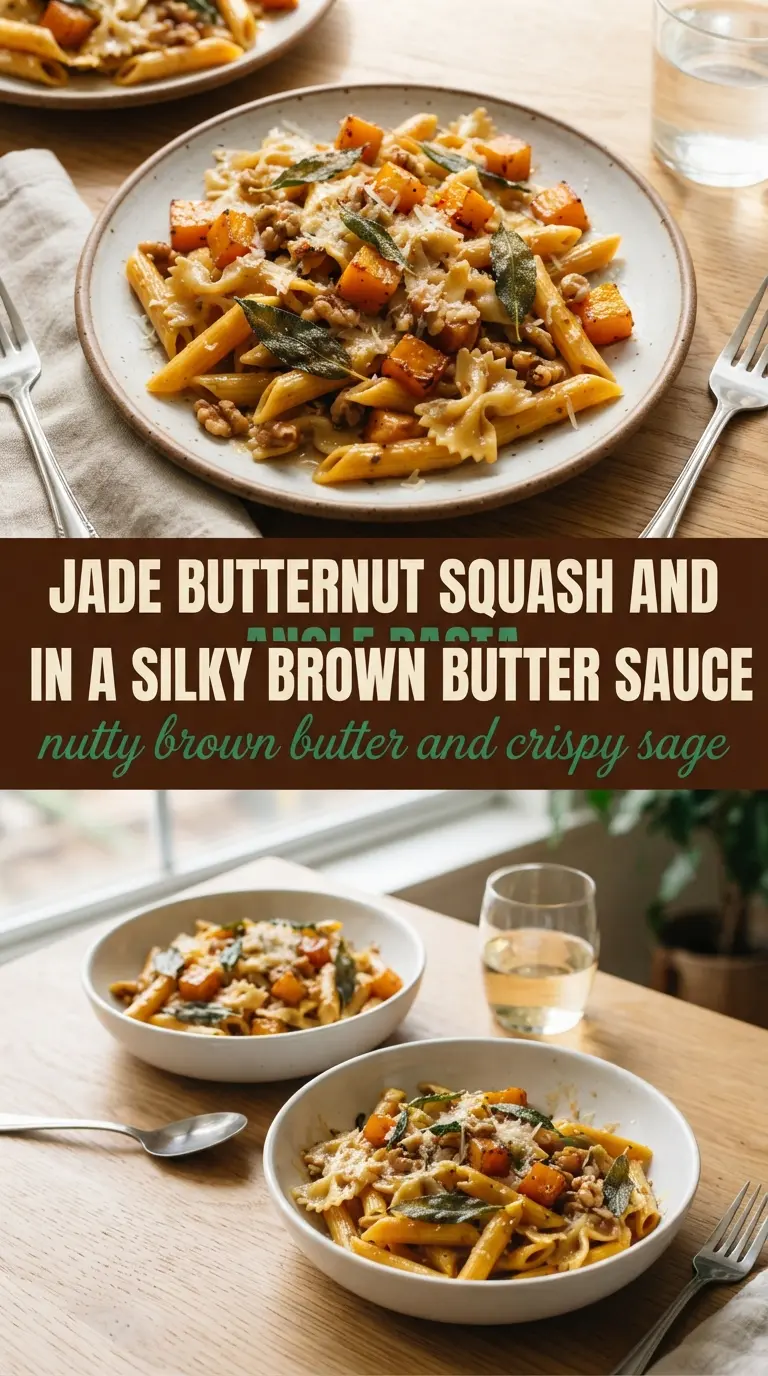
- Butternut squash — This is the sweet, caramelized backbone of the dish. Fresh squash roasts best, but pre-cut cubes save time just fine if they’re cut evenly so they brown at the same pace.
- Brown butter — This is where the nutty, toasted flavor comes from. Don’t rush it over high heat; let the foam subside and watch for the milk solids to turn amber and smell like hazelnuts.
- Fresh sage — Sage crisps in the butter and gives you little bursts of herbal flavor in the finished pasta. Dried sage won’t give the same texture, so this is one place where fresh matters.
- Parmesan — It helps emulsify the sauce and adds saltiness and depth. Use finely grated Parmesan so it melts in cleanly; coarse shreds can stay stringy.
- Reserved pasta water — This is the glue that pulls everything together. Its starch helps the butter and cheese turn glossy instead of oily, so don’t drain the pasta dry.
The 20 Minutes That Actually Matter
Roasting the Squash Until It Browns
Toss the squash with olive oil, salt, and pepper, then spread it out on a hot sheet pan in a single layer. If the pieces are crowded, they steam and go soft before they color. You’re looking for browned edges and tender centers, not collapse. A fork should slide in with just a little resistance, and the cut sides should show deep gold patches.
Cooking the Pasta for the Finish
Boil the pasta in well-salted water and pull it when it’s just shy of done, because it will finish in the skillet. Reserve at least a cup of the cooking water before draining. If the pasta sits too long after draining, it clumps, which makes the final toss harder and the sauce less even.
Turning Butter into Brown Butter
Melt the butter over medium heat and keep watching after the foam forms. It will go from pale yellow to foamy, then the solids at the bottom will turn golden and smell nutty. The second it smells toasted, add the sage so it crisps without burning. If the butter goes too far, it tastes bitter, and there’s no fixing that.
Bringing Everything Together
Add the garlic for just 30 seconds, then the pasta, squash, Parmesan, and a splash of pasta water. Toss constantly so the cheese melts into the butter instead of sticking in clumps on the bottom of the pan. Add more pasta water a little at a time until the sauce looks glossy and lightly clings to the pasta. The dish is ready when the sauce coats the noodles and there’s no puddle left in the pan.
How to Adapt This for a Different Pantry or a Different Table
Make It Gluten-Free
Use a sturdy gluten-free pasta that holds up well to tossing, then undercook it by a minute so it doesn’t break apart in the skillet. Keep the pasta water if possible, since the starch helps the sauce come together even more with gluten-free noodles, which can sometimes need extra help staying cohesive.
Make It Dairy-Free
Swap the butter for a good olive oil or a plant-based butter that browns well, then finish with a dairy-free Parmesan-style substitute. The sauce won’t have the same nutty depth as brown butter, but you’ll still get a rich, glossy pasta if you lean on the roasted squash and use enough pasta water to emulsify.
Use Delicata or Acorn Squash Instead
Both work well if that’s what you have. Delicata cooks faster and has a softer skin, while acorn squash gives a slightly earthier flavor. Cut the pieces to a similar size and watch the roasting time closely, because smaller, sweeter squash can overbrown before the centers are tender.
Storage and Reheating
- Refrigerator: Store in an airtight container for up to 3 days. The pasta will soak up some of the sauce, so it won’t stay as glossy as it is right after tossing.
- Freezer: It freezes, but the sauce texture softens and the squash can turn watery after thawing. If you freeze it, expect a looser, less polished finish.
- Reheating: Warm it gently in a skillet over low heat with a splash of water or broth. The common mistake is blasting it in the microwave until the cheese tightens and the butter separates.
Answers to the Questions Worth Asking
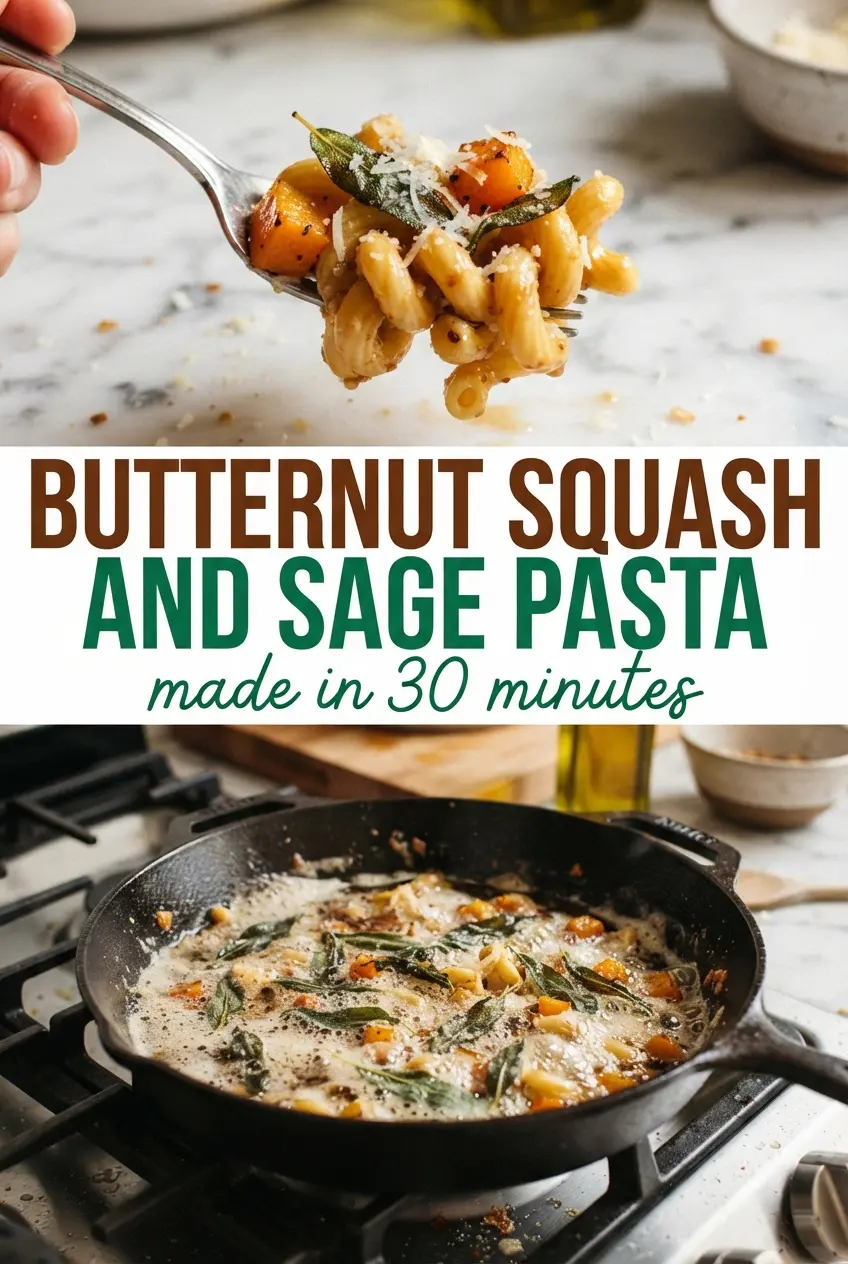
Butternut Squash & Sage Pasta
Ingredients
Equipment
Method
- Preheat the oven to 425°F. Toss the cubed butternut squash with olive oil, salt, and pepper and spread it on a sheet pan.
- Roast for 20 minutes at 425°F, stirring once if needed, until caramelized and tender. Pull the sheet pan when you see browned edges and softened squash.
- Cook the pasta according to package directions, then reserve 1 cup of pasta water. Keep the reserved pasta water nearby so you can loosen the sauce.
- Melt the unsalted butter in a skillet over medium heat until golden and nutty. Watch for foaming and a toasted aroma, then reduce heat slightly if it darkens too fast.
- Add the fresh sage leaves to the skillet and cook until crisp. The butter will foam around the leaves as they turn darker and crisp at the edges.
- Stir in the minced garlic for 30 seconds. Stop as soon as the garlic smells fragrant to prevent browning.
- Toss the cooked pasta, roasted squash, and brown butter with grated Parmesan. Add reserved pasta water a splash at a time until the sauce looks silky and lightly coats the noodles.