
Roasted acorn squash gives you the best kind of contrast: tender, caramelized edges on the outside and a soft, almost buttery center that holds up to a rich savory filling. When it’s stuffed with browned sausage, sweet-tart apple, and a handful of cheddar, every bite lands somewhere between cozy and balanced, with enough texture to keep it interesting. The squash itself turns into part of the meal instead of just a serving bowl.
What makes this version work is the way the filling is cooked before it goes into the squash. The sausage needs to be fully browned so the flavor deepens, and the onion and apple need a few minutes in the pan so they soften and pick up the drippings without turning mushy. Breadcrumbs soak up the juices and keep the filling from sliding around, while the cheese on top adds a crisp, salty finish once it hits the oven again.
Below, I’ve included the one roasting cue that keeps the squash from turning watery, plus a few swaps that actually hold up if you need to change the sausage or make the dish fit what’s already in your kitchen.
The squash came out tender without getting watery, and the apple with the sausage was such a good combo. I followed the roasting time exactly and the cheese browned on top just enough.
Save this Apple Sausage Stuffed Acorn Squash for the nights when you want a cozy roasted dinner with sweet apple, savory sausage, and crisp cheddar on top.
The Reason the Squash Stays Tender Instead of Watery
The biggest mistake with stuffed squash is rushing the roast. If the halves go into the oven cut-side up too soon, they steam in their own moisture and end up bland and soft without any roasted flavor. Starting them cut-side down lets the cut surface make direct contact with the hot pan, which drives off moisture and gives you that slightly caramelized edge that makes the whole dish taste deeper.
Flipping the squash only after the first roast matters for another reason: it creates a stable cavity that holds the filling without collapsing. You want the flesh tender enough to scoop with a fork, but not so soft that the walls slump when you add the sausage mixture. If a knife slides in cleanly but the squash still holds its shape, you’re in the right place.
What the Sausage, Apple, and Breadcrumbs Are Each Doing
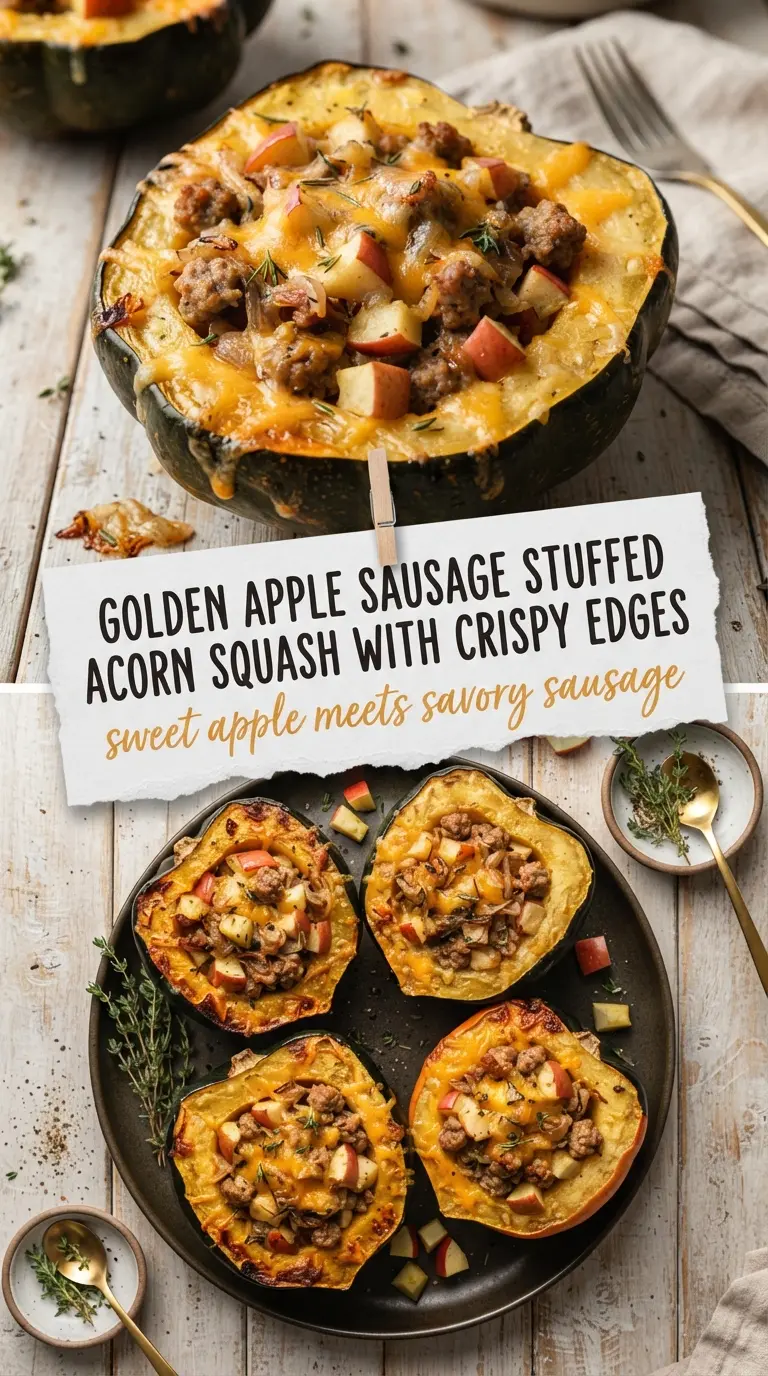
The sausage carries the bulk of the seasoning and fat, so I like a bulk breakfast sausage with enough salt and spice to stand up to the squash. If yours is very lean, the filling can taste flat; if it’s very greasy, drain off a little of the fat after browning so the breadcrumbs don’t turn oily.
The apple should be firm and crisp, not mealy. A tart apple gives the filling brightness and keeps it from leaning too heavy, while the onion softens into the background and rounds everything out. Breadcrumbs are there for structure, not bulk — they catch the sausage juices and help the filling mound neatly instead of spreading into the pan.
- Acorn squash — Halves that are similar in size cook more evenly. If one squash is much smaller, pull it from the oven a few minutes early rather than waiting for the larger one to catch up.
- Breakfast sausage — This gives you the built-in seasoning that makes the dish taste complete. You can use hot or mild sausage depending on how much heat you want.
- Apple — Use a crisp variety like Honeycrisp or Granny Smith for the best texture. Soft apples will break down and disappear into the filling.
- Sharp cheddar — The sharper the cheese, the better it stands up to the sweet squash and apple. Pre-shredded works, but freshly grated melts more cleanly.
Building the Filling So It Holds Its Shape
Roasting the Squash First
Brush the cut sides with olive oil, season them well, and roast cut-side down on a sheet pan until the flesh is just tender. You’re looking for a squash that gives easily when pressed, but still has enough structure to support the filling. If it goes too far, the halves will collapse when you flip them.
Cooking the Sausage and Vegetables Together
Brown the sausage first, breaking it into small pieces so it cooks through evenly. Add the onion and apple and let them cook in the rendered fat until the onion turns translucent and the apple starts to soften at the edges. If the pan looks dry before the vegetables are done, add a small splash of oil rather than letting them scorch.
Finishing With Sage, Thyme, and Breadcrumbs
Stir in the garlic, sage, thyme, and breadcrumbs at the end so the garlic doesn’t burn and the herbs stay fragrant. The breadcrumbs should absorb the pan juices and look lightly coated, not pasty. Once that happens, the filling is ready to mound into the squash and hold together in the oven.
Melting the Cheese on Top
Spoon the filling into the squash halves, then scatter the cheddar over the top so it melts into the ridges and gets a little browned at the edges. Bake long enough for the cheese to go fully melted and the top to turn golden. If you pull it too early, the cheese will look greasy instead of crisp.
How to Adapt This for Different Diets and What to Do With Leftovers
Make it gluten-free without losing the texture
Swap the breadcrumbs for gluten-free breadcrumbs or crushed gluten-free crackers. You still get the binding effect that keeps the filling cohesive, and the final texture stays close to the original.
Use chicken or turkey sausage for a lighter filling
Chicken or turkey sausage works well here, but it has less fat and can taste drier. Add a touch more olive oil when browning and keep an eye on the seasoning, since lean sausage usually needs a little extra salt to match the flavor of pork.
Turn it into a vegetarian main
Replace the sausage with a mix of sautéed mushrooms and chopped walnuts, then season a little more aggressively with salt, sage, and thyme. You’ll lose the rich fattiness of the sausage, but you gain a deeper earthy flavor and a filling that still has good bite.
Storage and Reheating
- Refrigerator: Store leftovers in an airtight container for up to 4 days. The squash softens a bit, but the flavor holds up well.
- Freezer: It freezes, though the squash texture turns softer after thawing. Wrap individual halves tightly and freeze for up to 2 months for the best result.
- Reheating: Reheat in a 350°F oven until hot in the center and the cheese starts to bubble again. The microwave works in a pinch, but it can make the squash watery and the top soft instead of crisp.
Answers to the Questions Worth Asking

Apple Sausage Stuffed Acorn Squash
Ingredients
Equipment
Method
- Preheat the oven to 400°F. Brush the squash with olive oil, season with salt and pepper, and roast cut-side down for 30 minutes.
- Flip the squash so the cut side faces up, then keep it ready for filling.
- Brown the bulk breakfast sausage in a skillet, breaking it up, then add the diced yellow onion and diced red apple and cook for 6 minutes.
- Stir in the minced garlic, dried sage, dried thyme, and breadcrumbs until evenly combined.
- Fill each squash half with the sausage-apple mixture, mounding slightly.
- Top with shredded sharp cheddar, then bake for 15 minutes at 400°F until crisp and golden.