
Tomato bruschetta gets its charm from contrast: hot, crisp bread, juicy tomatoes, sharp garlic, and a little olive oil to tie everything together. A good board of bruschetta appetizers should feel lively, not soggy or overworked, and this version keeps that balance by treating the toast and topping as separate jobs until the last minute. The strawberry-ricotta variation brings a second kind of contrast, with sweet fruit, pepper, basil, and balsamic landing on cool ricotta so each bite stays bright instead of cloying.
The bread matters here more than people think. A baguette sliced on the bias gives you a wider surface for toppings and enough structure to hold up under juicy tomatoes or strawberries. Toasting it until the edges are deeply golden gives you a real barrier against moisture, and rubbing the hot bread with garlic while it’s still warm adds flavor without leaving raw garlic bite in every corner. The tomato topping needs that short rest so the salt can pull out a little juice and turn the mixture glossy instead of watery. The strawberry version works for the opposite reason: the honey and balsamic glaze cling to the fruit and make it feel finished, while the ricotta keeps the whole thing grounded.
Below, I’ve broken down the parts that matter most, along with the one variation I reach for when I want a board that gets people talking before the main course even lands.
The tomatoes stayed juicy but not watery, and the strawberry ricotta version was the first thing gone. Toasting the baguette until it was really crisp kept everything from sliding off, which I never get with bruschetta boards.
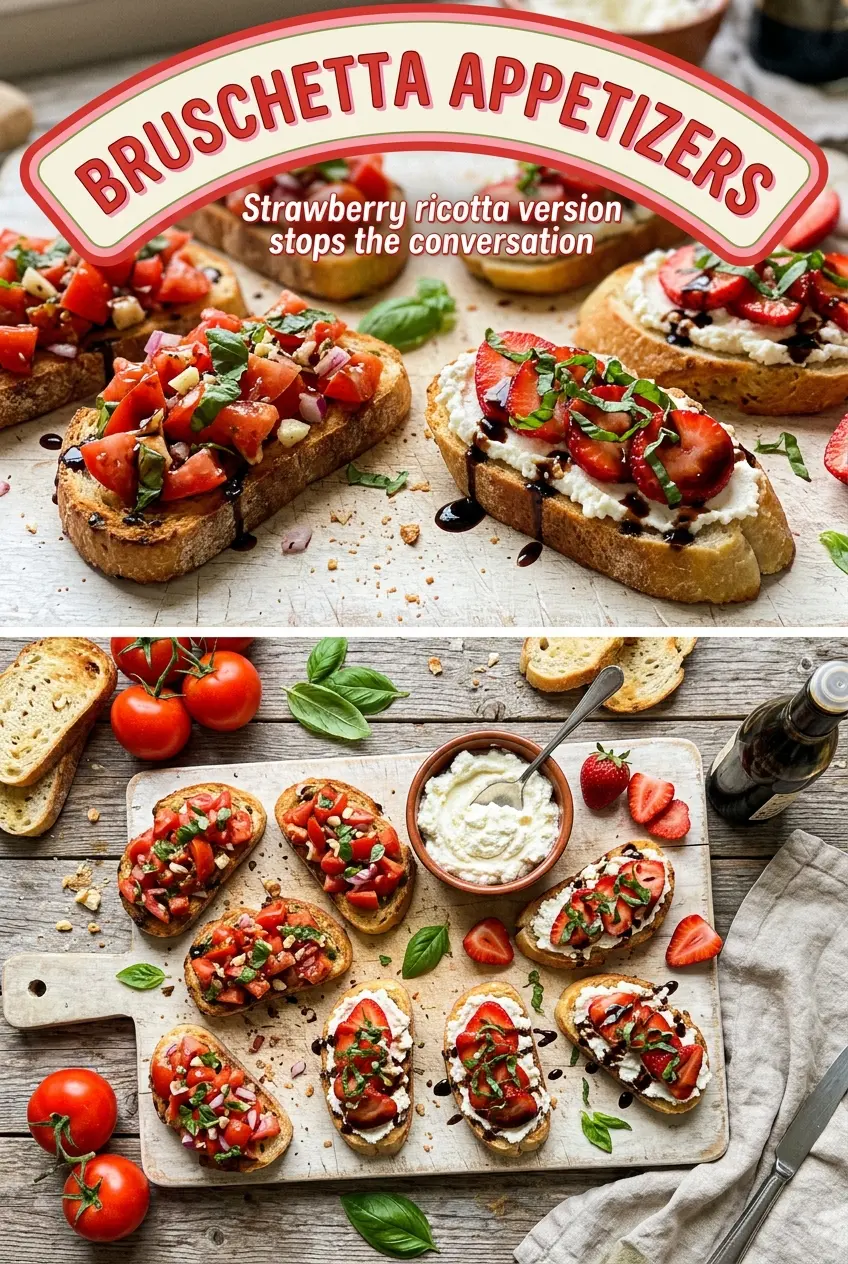
Two kinds of bruschetta on one board means crisp tomato toast and strawberry ricotta bites in the same spread.
The Toast Is What Saves Bruschetta From Going Soggy
Most bruschetta goes wrong because the bread isn’t sturdy enough for the topping. If the slices are pale or soft, the first spoonful of tomato juice or strawberry syrup soaks straight through and you lose the crunch before the tray even hits the table. You want bread that is dry at the center and deeply golden at the edges, with enough structure to stay crisp under a generous topping.
The other place people lose this dish is rushing the tomato mixture. Salt draws moisture out fast, and that’s a good thing here, but only if you give it those 15 minutes to settle. Spoon the topping on too soon and the liquid runs off the bread instead of coating the tomatoes. For the strawberry version, the same idea applies in reverse: keep the ricotta and fruit separate until serving so the berries stay glossy and the toast stays clean.
What Each Ingredient Is Actually Doing in This Board
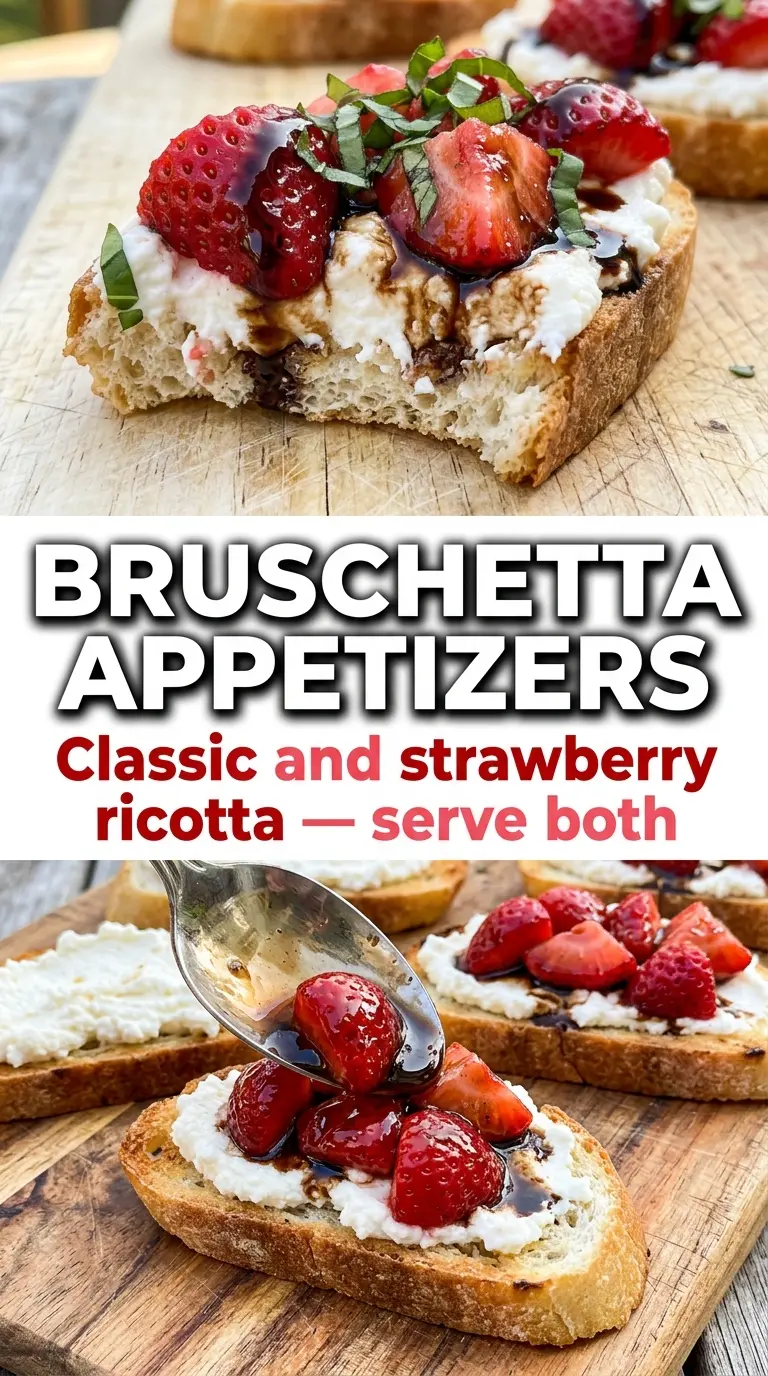
- Baguette — A baguette gives you a narrow, sturdy slice that browns fast and holds toppings without collapsing. Sourdough works if that’s what you have, but it will read a little tangier and chewier.
- Olive oil — This does more than add flavor; it helps the bread toast evenly and gives the surface enough richness to taste finished before the toppings go on. Use a decent everyday olive oil here, not your most expensive bottle.
- Tomatoes — For the classic version, ripe tomatoes are worth buying for flavor and texture. If they’re mealy, the bruschetta will taste flat no matter how much salt you add. Dice them small so they sit neatly on the toast instead of rolling off.
- Ricotta — The ricotta in the strawberry version acts like a creamy landing pad and keeps the fruit from feeling like dessert. If you want a sharper, more whipped texture, blend it briefly with a fork or spoon before spreading.
- Strawberries — Strawberries need to be ripe but not mushy. They should hold their shape after tossing with honey and balsamic glaze, which gives you a glossy topping instead of a syrupy mess.
- Basil and garlic — Basil gives both versions their fresh lift, while garlic rubbed onto the hot toast gives a mellow edge without raw harshness. That garlic step matters more than adding extra minced garlic to the topping.
Building the Two Toppings So They Stay Distinct
Toast the Bread Until It Sounds Dry
Brush the baguette slices with olive oil and toast them until both sides are golden and the surface feels firm when you tap it. The bread should not bend easily in the center. If it’s still soft, it will absorb moisture from the toppings and lose that clean crack when you bite into it.
Rub the Garlic While the Bread Is Hot
As soon as the toast comes out of the oven, rub it with a cut garlic clove. The heat softens the garlic just enough to perfume the bread without leaving raw, bitter pieces behind. If you wait until the bread cools, the garlic won’t grab the surface the same way.
Let the Tomatoes Sit, Then Spoon Carefully
Mix the diced tomatoes with minced garlic, basil, olive oil, and salt, then let the bowl sit for 15 minutes. That rest creates a juicy, seasoned mixture that tastes integrated instead of scattered. Use a slotted spoon when you pile it onto the bread so the excess liquid stays in the bowl.
Dress the Strawberries at the Last Minute
Toss the strawberries with honey, basil, black pepper, and balsamic glaze right before serving. The berries should look lacquered, not crushed. Spread the ricotta first, then top with the strawberries so the toast doesn’t get wet before it reaches the plate.
How to Change This Board Without Losing What Makes It Work
Make It Dairy-Free
Skip the ricotta and use a thick dairy-free spread, like almond-based cream cheese or a whipped cashew cheese. You’ll lose a little of the gentle milky sweetness ricotta brings, but the texture still gives the strawberries a base and keeps the board from feeling overly sweet.
Make It Gluten-Free
Use a sturdy gluten-free baguette or sliced gluten-free artisan bread and toast it a little longer than you think you need. Gluten-free bread can go from pale to dry quickly, so the goal is crisp edges with enough center structure to hold the toppings.
Turn It Into a Bigger Party Board
Double both toppings and keep the bread slices a little smaller so guests can try each version without committing to a full piece. This works best when you arrange the classic tomato side and strawberry side separately, because the colors and textures stay clear and people can spot the difference at a glance.
Storage and Reheating
- Refrigerator: Store the tomato mixture and strawberry mixture separately for up to 1 day. The bread will soften fast, so keep it unassembled if you want any crunch left.
- Freezer: The assembled bruschetta doesn’t freeze well. You can freeze the plain toasted bread, then crisp it again in the oven before topping.
- Reheating: Rewarm the toast in a 350°F oven for a few minutes until it feels dry and crisp again. Don’t microwave it; that turns the bread leathery and destroys the texture that makes bruschetta worth serving.
Answers to the Questions Worth Asking
Bruschetta Appetizers
Ingredients
Method
- Brush the baguette slices with olive oil and toast until golden, about 3-4 minutes per side, flipping once for even browning. While hot, rub the toast with minced garlic so the aroma clings to the crust.
- Combine diced tomatoes with minced garlic, basil, olive oil, and salt in a bowl and stir until glossy. Rest the mixture for 15 minutes so the tomatoes release juices.
- Spoon the tomato mixture onto the toasted baguette slices right before serving for best texture.
- Toss diced strawberries with honey, chiffonade basil, black pepper, and balsamic glaze until coated. Let the mixture sit just briefly to marry flavors while you prepare the ricotta.
- Spread ricotta on the toasted baguette slices, then top with the strawberry mixture so it sits on the creamy base.
- Arrange both classic and strawberry versions on a board in separate sections for easy grabbing. Serve immediately so the toast stays crisp.