
Sticky, spicy Korean chili cauliflower with a crisp-edged bite and a glossy glaze is the kind of dinner that disappears fast. The cauliflower stays light instead of soggy, the coating sets up in the air fryer without a deep fry mess, and the gochujang sauce clings to every ridge instead of sliding off the bowl.
The trick is in the batter and the timing. A mix of flour and cornstarch gives the cauliflower a shell that turns shattery at the edges, while cold sparkling water keeps it airy instead of heavy. The glaze is cooked just long enough to thicken, then the hot cauliflower goes straight into the pan so it grabs that sweet-salty heat before the coating can soften.
Below, you’ll find the reason the batter works, the ingredient swaps that still give you a proper bowl, and the small finishing move that makes the cucumber ribbons worth adding. That cool crunch against the sticky cauliflower is what turns this from a snacky appetizer into a full dinner.
The batter came out light and crisp even after tossing it in the sauce, and the glaze thickened up in just a few minutes. I served it over rice with the cucumber ribbons and my husband asked if we could have it again the next night.
Love the sticky gochujang glaze and crisp air-fried cauliflower? Save this vegan bowl for the nights when you want big flavor without deep frying.
The Reason the Cauliflower Stays Crisp Instead of Going Soft
Most cauliflower bowls fail in the same place: the coating turns wet before the glaze even hits it. Cauliflower gives off moisture as it cooks, and if the batter is too thick or the florets are crowded, you end up with a heavy shell that steams instead of crisping. This version avoids that by keeping the batter light, the florets evenly coated, and the air fryer hot enough to set the crust before the centers overcook.
Another problem is glaze timing. If you toss the cauliflower in sauce too early, the coating starts to relax right away. The sweet spot is a thickened glaze that still moves easily in the pan, then an immediate toss with the cauliflower while everything is hot. That gives you shine and cling without making the crust collapse.
- Cold sparkling water — The bubbles lighten the batter, and the cold temperature helps the coating stay airy. Flat water works in a pinch, but the texture won’t be quite as crisp.
- Cornstarch — This is what gives the crust that fragile, crisp edge. Don’t swap it out entirely unless you’re fine with a softer bite.
- Gochujang — This brings heat, salt, and fermented depth in one spoonful. There isn’t a perfect substitute, but a mix of chili paste and a little miso gets you closer than hot sauce alone.
- Rice vinegar — Just a little acid keeps the glaze from tasting flat or sticky-sweet. Lemon juice can work, but it shifts the flavor away from the classic Korean-style balance.
What Each Ingredient Is Actually Doing in This Bowl
The cauliflower needs to be cut into medium florets, not tiny ones. Small pieces dry out before they get that browned edge, while oversized florets can stay pale in the middle. A large head gives you enough surface area for the glaze to catch without turning the bowl into mush.
Flour gives the batter body, but cornstarch is the part that makes it shatter a little when you bite in. Garlic powder seasons the coating from the inside, which matters because the glaze alone won’t season every crevice evenly. The sparkling water is there for texture, not flavor, so keep it cold until the last second.
For the glaze, gochujang is the anchor. Soy sauce adds salt and depth, maple syrup rounds out the heat, sesame oil gives the finish a nutty smell, and ginger and garlic keep it from tasting one-note. If you use honey instead of maple syrup, the glaze will be a touch deeper and slightly less smooth, but it still works.
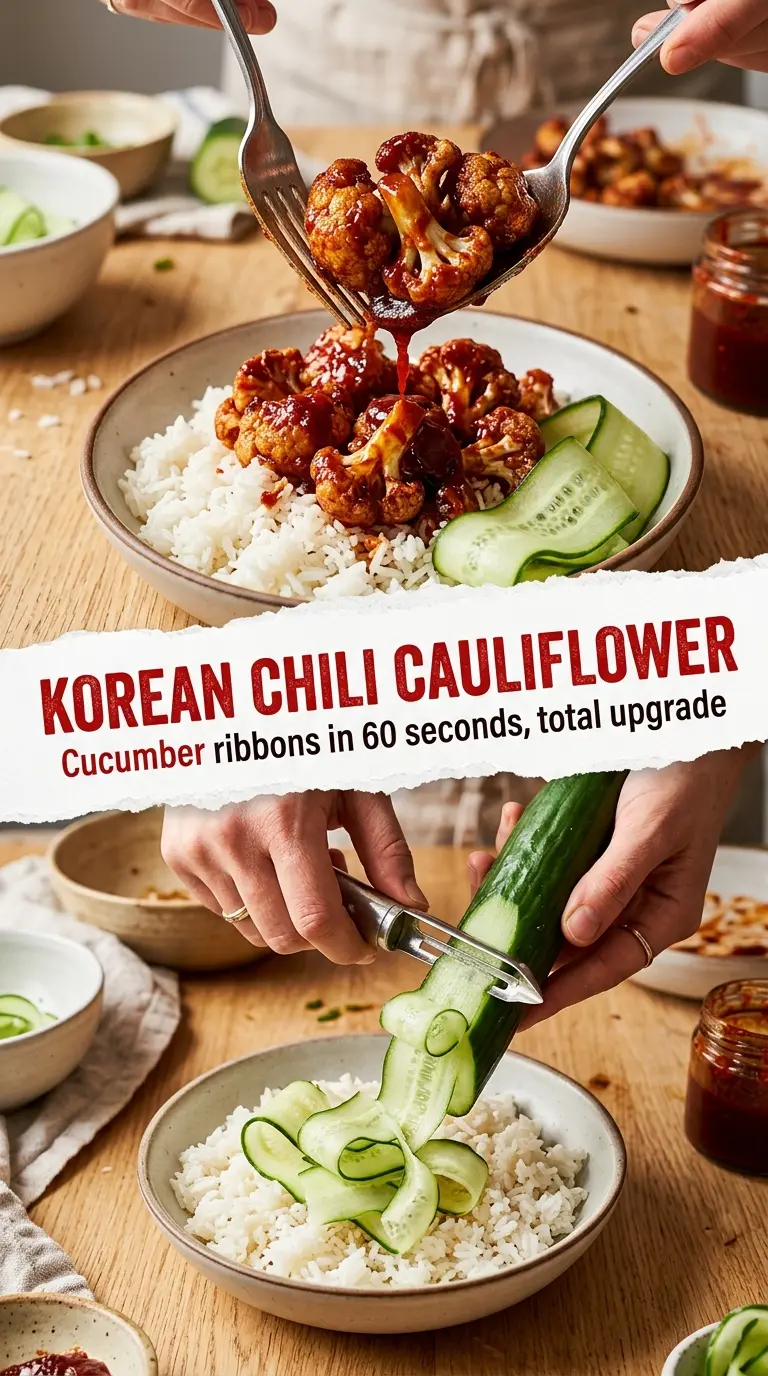
The cucumber ribbons are more than garnish. They cool each bite and keep the bowl from feeling heavy. Use a vegetable peeler and cut them lengthwise so you get thin, bendy ribbons instead of watery chunks.
How to Build the Bowl So the Coating Stays Crisp
Mix the Batter Without Beating Out the Air
Whisk the flour, cornstarch, garlic powder, salt, and pepper together first so the dry ingredients are evenly distributed. Add the sparkling water and stop as soon as the batter looks smooth enough to coat a spoon; a few small lumps are fine. If you whisk it until perfectly glossy, you usually end up with a thicker batter that clings too heavily and bakes up dense.
Air-Fry in a Single Layer
Dip each floret fully, let the excess drip off, and set it in the air fryer basket with space around it. Crowding is the fastest way to lose crispness because the cauliflower releases steam and softens its own coating. Flip halfway through so both sides get that deep golden edge and the florets don’t dry out on one side while staying pale on the other.
Cook the Glaze Until It Nappes the Spoon
Combine the gochujang, soy sauce, maple syrup, sesame oil, garlic, ginger, and rice vinegar in a small pan and simmer until it thickens enough to coat the back of a spoon. You want a glossy sauce that moves slowly, not a hard candy texture. If it reduces too far, stir in a teaspoon of water at a time until it loosens again.
Toss Fast and Serve Right Away
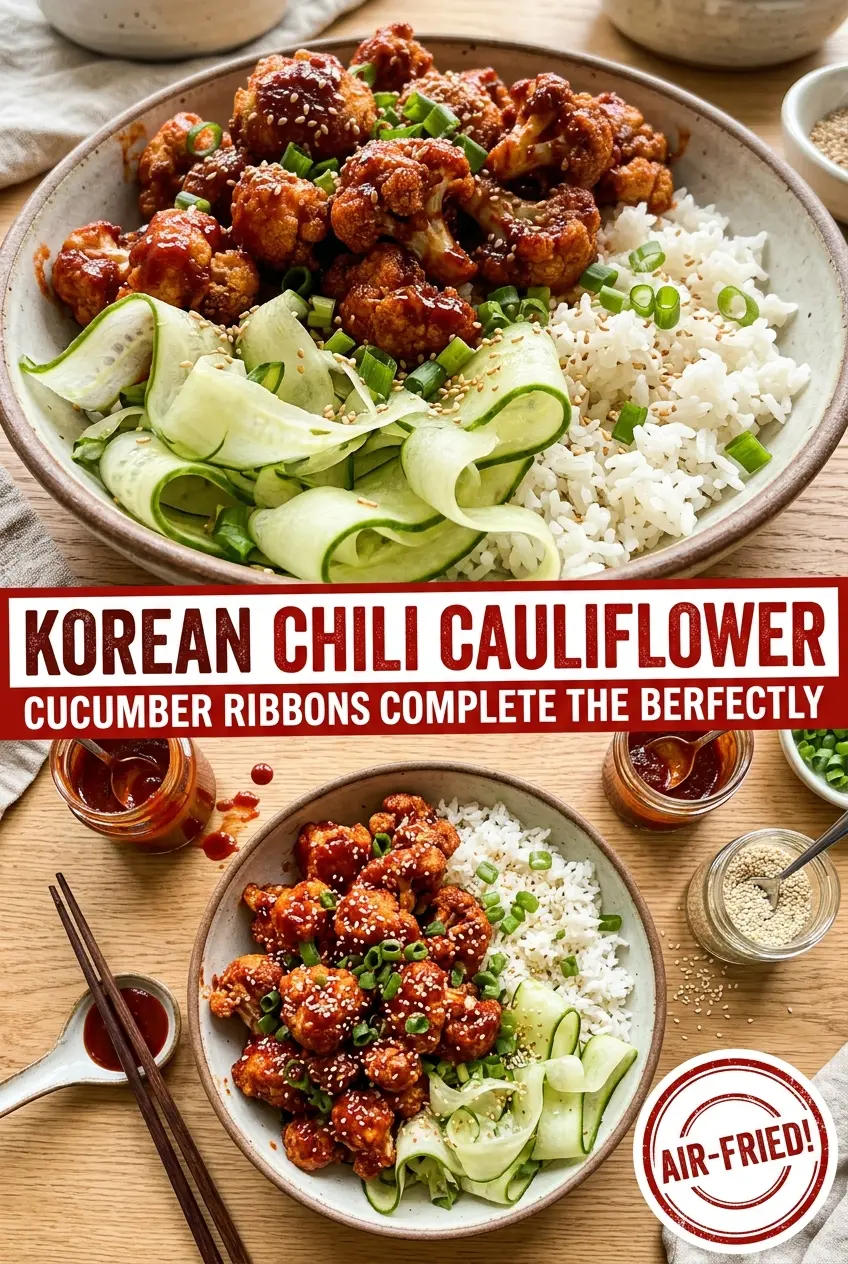
Move the hot cauliflower into the pan or a mixing bowl and toss immediately so every piece gets lacquered while the coating is still receptive. Wait too long and the crust cools, which means the sauce sits on top instead of clinging. Spoon it over steamed jasmine rice, add the cucumber ribbons, then finish with sesame seeds and green onion for crunch and freshness.
What to Change When You Want a Different Kind of Bowl
Gluten-Free Version
Use a gluten-free all-purpose flour blend and tamari instead of soy sauce. The crust still comes out crisp because the cornstarch is doing most of the work, but the batter may need an extra spoonful of sparkling water to stay light and pourable.
Lower-Heat Version
Cut the gochujang back by a tablespoon and replace the lost volume with a little extra maple syrup and vinegar. You’ll still get that glossy Korean-style glaze, but the heat lands softer and the sauce tastes more sweet-salty than fiery.
No Rice, More Veggies
Skip the jasmine rice and serve the cauliflower over shredded cabbage, rice noodles, or steamed broccoli. The bowl gets lighter and crunchier, but you lose the soft base that catches the extra glaze, so keep the cucumber ribbons in play.
Storage and Reheating
- Refrigerator: Store leftovers for up to 3 days. The cauliflower softens as it sits, but the flavor holds up well.
- Freezer: It doesn’t freeze well once glazed. The sauce turns tacky and the coating loses its crisp texture after thawing.
- Reheating: Reheat in the air fryer at 375°F until the edges perk back up, about 5 to 7 minutes. The common mistake is microwaving it, which makes the coating limp and the glaze sticky in the wrong way.
Answers to the Questions Worth Asking
Air-Fried Korean Chili Cauliflower (Vegan)
Ingredients
Equipment
Method
- In a bowl, whisk flour, cornstarch, garlic powder, salt, and pepper together until evenly combined.
- Whisk in the cold sparkling water until you have a light batter that coats cauliflower.
- Add the cauliflower florets to the batter and toss until fully coated.
- Transfer to a sheet pan and air fry at 400°F for 18-20 min, flipping halfway for even crisping.
- In a small saucepan, simmer gochujang, soy sauce, maple syrup, sesame oil, minced garlic, grated ginger, and rice vinegar for 3 min until thick.
- Toss the hot cauliflower immediately in the thick glaze until every piece is coated.
- Serve the glazed cauliflower over steamed jasmine rice with cucumber ribbons.
- Garnish with sesame seeds and green onion.