
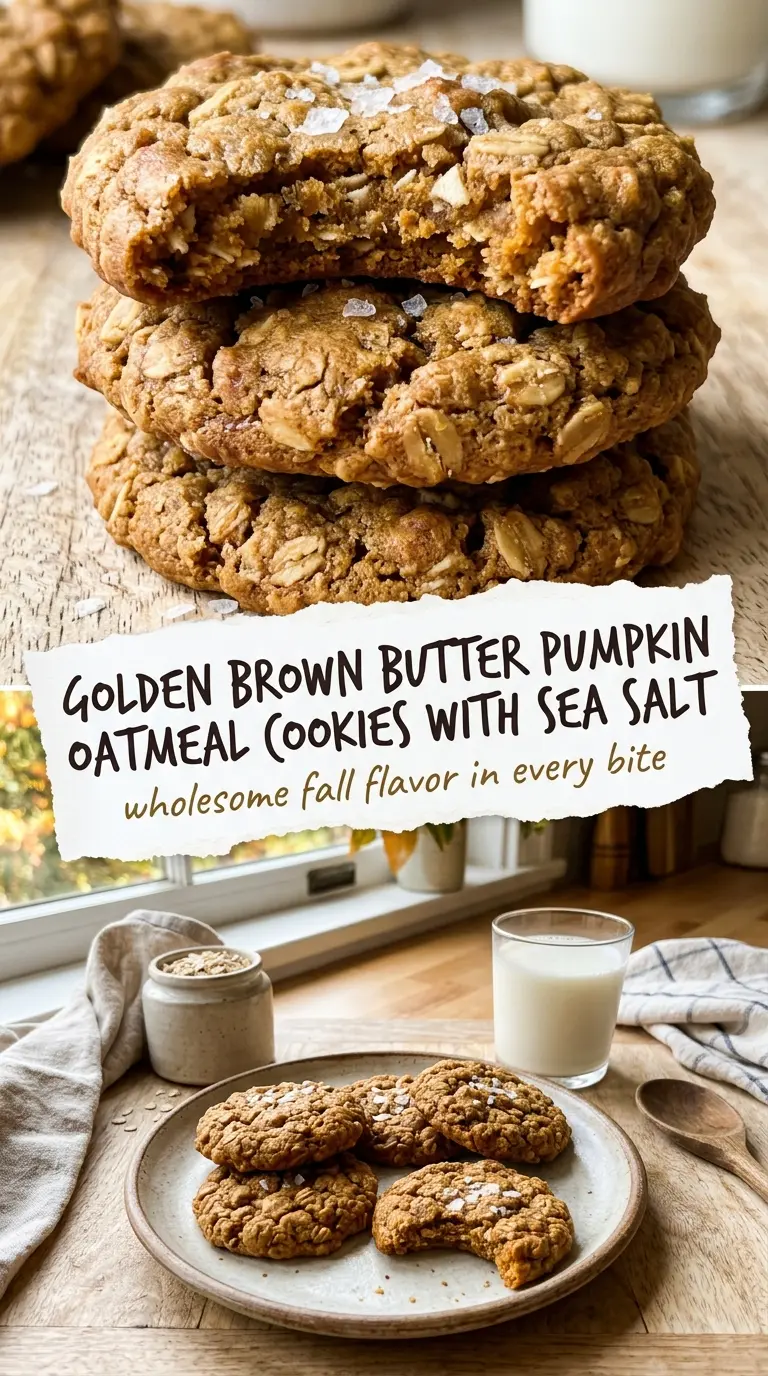
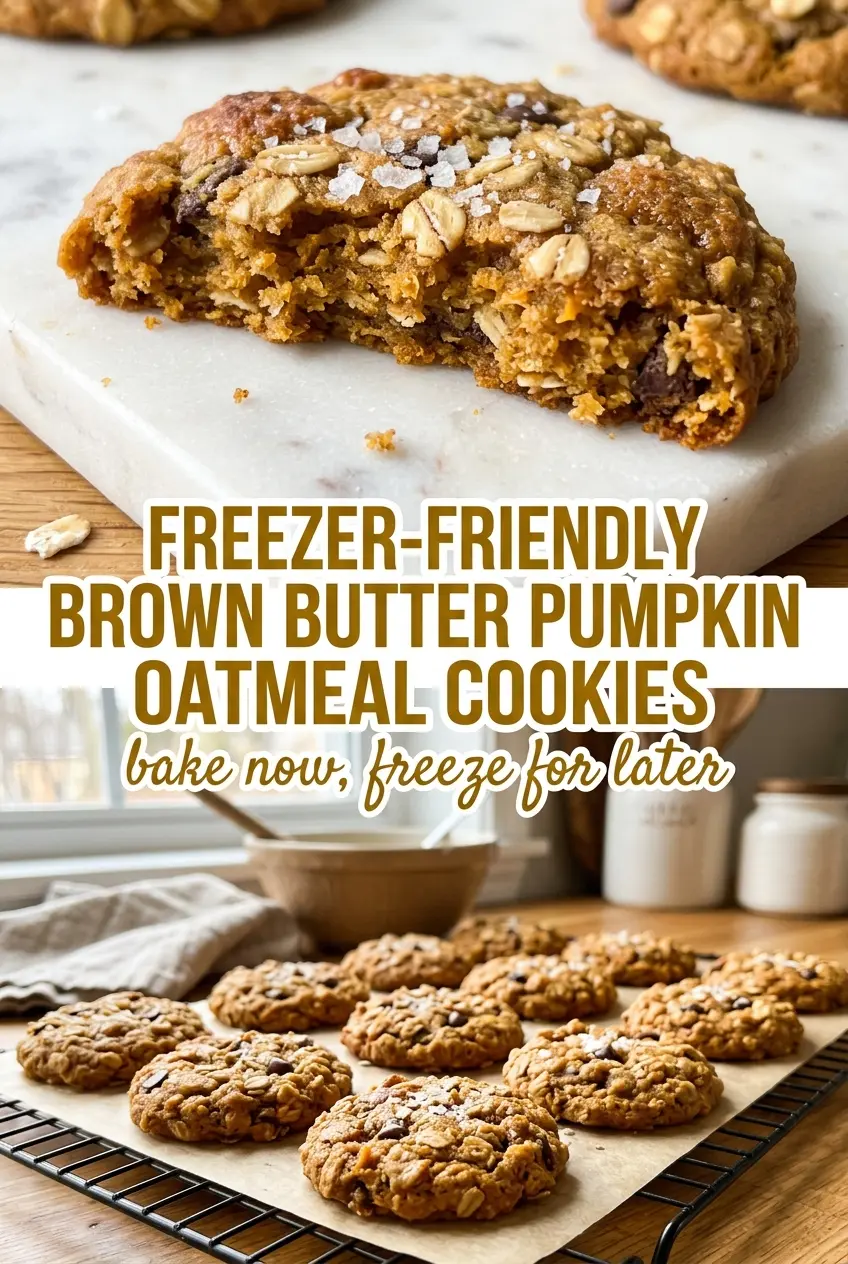
Brown butter pumpkin oatmeal cookies bake up with crisp edges, a chewy center, and those little toasted bits of oat that give each bite some real texture. The pumpkin brings moisture and warmth without making the cookies cakey, while the browned butter adds a deep nutty note that plain melted butter just can’t touch. A pinch of flaky salt on top pulls everything into focus.
The trick here is balance. Brown butter gives you flavor, but pumpkin puree adds a lot of water, so the dough needs enough flour and oats to stay thick and scoopable. Old-fashioned oats matter because they hold their shape and give the cookies that hearty chew; quick oats turn the texture softer and more uniform. Cooling the butter before mixing it with the sugar keeps the dough from going greasy and helps the cookies spread in a controlled way.
Below, I’ve added the one step that keeps these from baking up flat, plus the best way to freeze the dough so you can bake a few warm cookies whenever the mood hits.
The browned butter made these taste rich without being heavy, and the oats stayed chewy after baking. I also loved that the pumpkin didn’t make them cakey at all.
Brown butter pumpkin oatmeal cookies with chewy oats, nutty flavor, and flaky sea salt belong on your Pinterest board for the days you want a freezer-friendly cookie that still tastes homemade.
The Reason These Cookies Stay Chewy Instead of Turning Cake-Like
Pumpkin cookies go wrong fast when the dough gets too wet. Pumpkin puree adds moisture, and if the recipe leans on too much flour to compensate, the cookies can turn dry and dense. If it leans the other way, they puff up like little muffins and lose that chewy cookie texture.
This version stays in the cookie lane because the browned butter brings flavor without extra water, and the oats help absorb just enough moisture to keep the dough sturdy. The other detail that matters is the bake time. Pull them when the edges are set and golden but the centers still look a little soft; they finish on the sheet pan and stay tender instead of hard.
What Each Ingredient Is Actually Doing in This Dough
- Browned butter — This is the flavor engine. Browning it cooks off water and leaves behind toasted milk solids, which gives the cookies a nutty, almost caramel-like depth. Let it cool before mixing or it can melt the sugar too fast and make the dough loose.
- Pumpkin puree — Use plain pumpkin puree, not pumpkin pie filling. The puree adds moisture and that soft orange crumb, but it also thins the dough a bit, which is why the oats and flour matter. Blotting it is not necessary here; the recipe is built to handle the moisture.
- Old-fashioned oats — These give the cookies their chew and a hearty bite. Quick oats can work in a pinch, but they break down more and make the texture softer and less distinct. If you want the look and texture in the description, stick with the old-fashioned kind.
- Brown sugar — It holds onto moisture and keeps the cookies bendy instead of crisp all the way through. Light brown sugar works fine, though dark brown sugar will push the flavor deeper and a little more molasses-heavy.
- Flaky sea salt — Don’t skip it. The salt on top sharpens the butter flavor and keeps the cookies from reading flat or one-note. Add it right after baking so it sticks.
The Mixing Order That Keeps the Dough Scoopable
Brown the butter first, then cool it
Set the butter in a light-colored pan so you can watch the color change. It’s ready when the milk solids turn deep golden and smell nutty, not when the butter just melts. If you keep cooking after that point, the butter goes from toasted to bitter in a matter of seconds. Pour it into a bowl and let it cool until it feels warm, not hot.
Build the dry base before the wet ingredients join in
Whisk the flour, baking soda, cinnamon, and oats together before you touch the wet ingredients. That keeps the leavening and spice evenly distributed, and it helps prevent pockets of soda in the finished cookies. If the dry mix looks uneven, the cookies can bake with weird bitter spots or patchy texture.
Mix just until the dough comes together
Beat the cooled brown butter with the brown sugar first, then mix in the pumpkin puree and egg. Once the dry ingredients go in, fold until you no longer see loose flour. Stop there. Overmixing after the flour is added can make the cookies tighter and tougher, especially with oats already in the dough.
Bake until the edges set and the centers still look soft
Portion the dough onto a lined sheet pan with space between each scoop. Bake at 350°F until the edges are golden and the tops look just barely set in the center. If you wait for the middle to look fully done in the oven, the cookies will be overbaked by the time they cool. Finish with flaky salt the second they come out.
How to Adapt These Cookies for the Freezer, a Different Flour, or a Dairy-Free Kitchen
Freeze the dough for fresh cookies on demand
Scoop the dough onto a tray, freeze until solid, then move the balls to a bag or container. Bake straight from frozen and add a minute or two to the time. This keeps the cookies thick and prevents the dough from spreading too quickly before the edges set.
Make them dairy-free
Use a plant-based butter that browns well, or use a vegan butter with a richer flavor if browning isn’t important to you. The texture will still be chewy, but you’ll lose some of the toasted milk-solid flavor that makes brown butter special. Add a tiny pinch more salt if the dairy-free butter tastes flatter than regular butter.
Swap in whole wheat pastry flour for part of the flour
Replacing up to half of the all-purpose flour with whole wheat pastry flour gives the cookies a nuttier, slightly heartier finish without turning them heavy. Regular whole wheat flour can work too, but it makes the crumb drier and more assertive. If you use it, keep the dough from sitting too long before baking so it doesn’t tighten up.
Storage and Reheating
- Refrigerator: Store baked cookies in an airtight container for up to 4 days. They stay chewy, though the oats soften a little by day two.
- Freezer: Baked cookies freeze well for up to 2 months. Layer them with parchment so they don’t stick together, or freeze the dough as noted above for the best texture.
- Reheating: Warm a cookie in the microwave for 8 to 10 seconds or in a 300°F oven for a few minutes. Long reheating dries them out, so stop as soon as the center feels soft again.
Questions I Get Asked About This Recipe
Brown Butter Pumpkin Oatmeal Cookies
Ingredients
Equipment
Method
- Melt unsalted butter, browned and cooled in a light-colored pan over medium heat until golden brown and nutty smelling, then cool completely.
- Whisk all-purpose flour, baking soda, cinnamon, and old-fashioned oats together in a mixing bowl until evenly combined.
- Beat unsalted butter, browned and cooled with brown sugar until smooth, then mix in pumpkin puree and large egg until combined.
- Fold the dry ingredients into the wet ingredients until a soft dough forms with no dry streaks.
- Scoop the dough onto a sheet pan and bake at 350°F for 12-14 minutes until edges are golden.
- Sprinkle flaky sea salt, for topping immediately after baking so it sticks while the cookies are hot.