
The beef gives off a deep, savory smell as it browns, and the vegetables soften in the same pot while picking up those browned bits. I used to expect a soup like this to be a quick simmer, but chuck needs more time than that to turn fork-tender. This beef and noodle soup takes a little patience up front, then the pot does most of the work.
Brown the beef in batches, then let it simmer gently with the broth, water, and vegetables before the noodles go in. That order keeps the beef tender and the egg noodles from spending the whole cooking time in the pot. When they’re ready, the broth is savory and the noodles are soft without losing their shape.
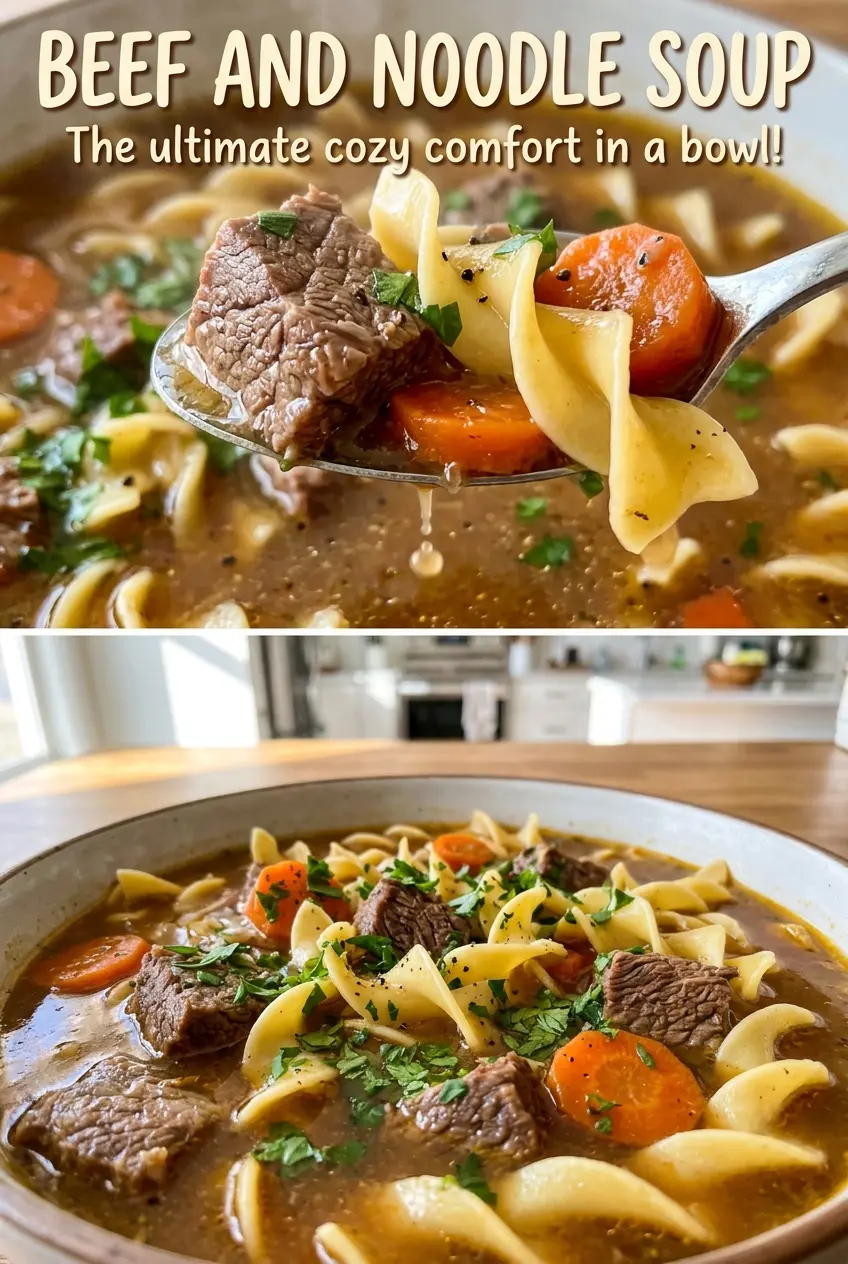
Kitchen Note
Pat the beef dry before seasoning it; moisture on the surface slows browning. I brown it in batches so the cubes get browned sides instead of steaming against one another.
Save this beef and noodle soup for a cozy dinner with tender chuck, soft egg noodles, and a deeply savory broth.
Why Chuck Needs a Gentle Simmer Before the Noodles Go In
Chuck is a hardworking cut with connective tissue that needs time in moist heat to soften. A quick boil won’t speed that process in a helpful way: the outside can tighten while the middle stays chewy. A low, gentle simmer gives the beef time to become tender while the vegetables and broth build a fuller base around it.
The soup uses both beef broth and water, so the finished pot tastes beefy without relying on broth alone. Keep the lid on during the long simmer, and let the beef—not the clock by itself—tell you when it’s ready. A fork should slide into a cube easily, and the meat should yield without needing to be cut.
The noodles have a much shorter cooking time than the beef. Adding them once the beef is tender lets them cook in the seasoned broth without turning soft and swollen during the long simmer. That difference in timing is what gives you tender beef and noodles with some structure in the same bowl.
What the Chuck, Broth, and Egg Noodles Bring to the Pot
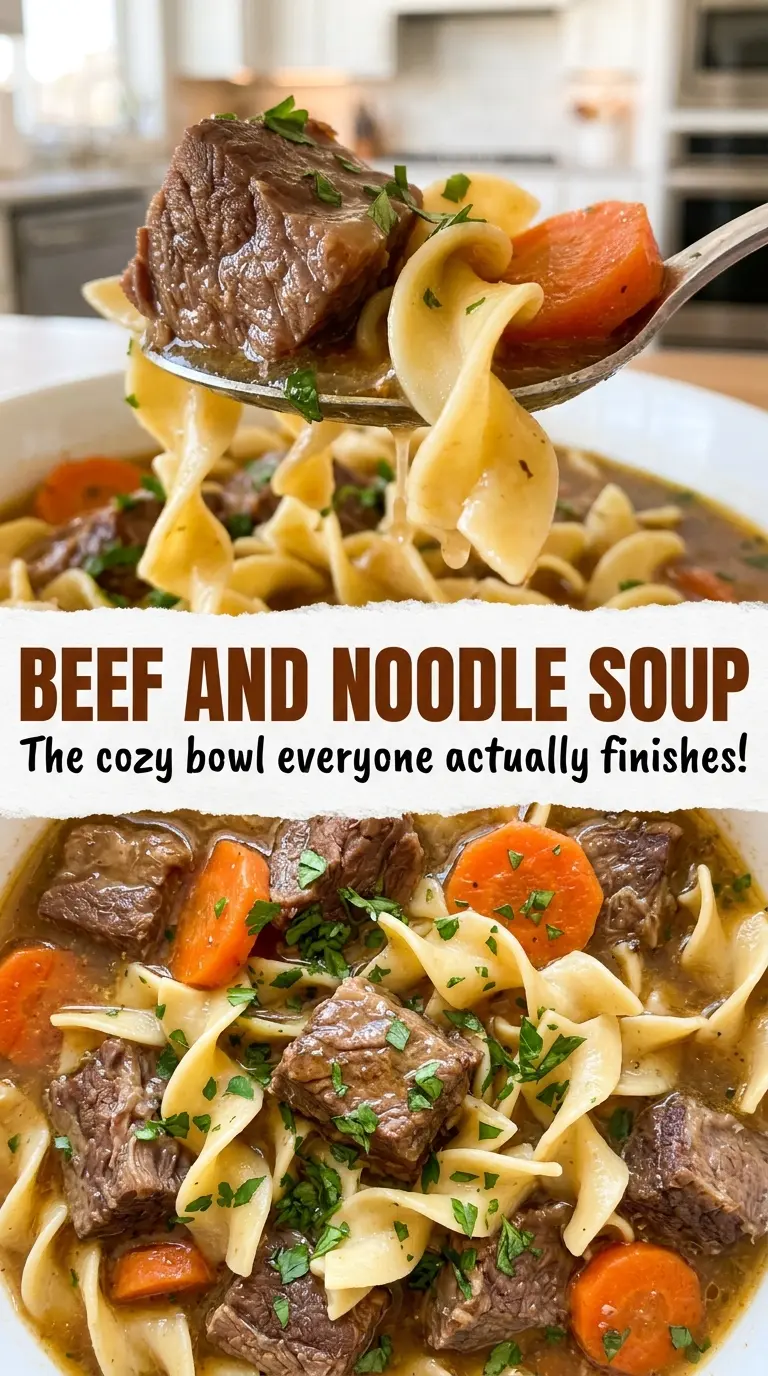
- Beef chuck — Its connective tissue and marbling give the soup its tender chunks and satisfying body after a long simmer. Choose chuck cut into even pieces, or cut a larger piece into 1-inch cubes yourself so the pieces cook at a similar pace. Beef stew meat is a practical substitute, though the pieces in a package can vary in size.
- Beef broth — This is the backbone of the soup, so use a broth whose flavor you like on its own. A reduced-sodium broth is useful if you want more control over saltiness; taste the finished soup before adding anything beyond the listed seasoning.
- Wide egg noodles — Egg noodles bring a tender, slightly springy bite that holds up well in broth. Medium egg noodles work too, though their smaller shape may become tender sooner, so watch them as they simmer.
- Onion, carrots, celery, and garlic — These everyday vegetables create a rounded savory base without needing a separate sauce or seasoning blend. Fresh garlic gives the clearest flavor, but there’s no need to seek out unusually sweet or specialty vegetables for this soup.
- Vegetable oil — Its neutral taste lets the beef and vegetables lead. Canola oil works in its place, and the important prep detail is to have the pot hot before the beef goes in.
- Dried thyme and bay leaves — They gently season the broth as it simmers. The bay leaves need to come out before serving; dried thyme is convenient here and doesn’t need to be fresh to flavor the pot.
Building the Soup in the Right Order
Brown the Beef in Batches
Season the dried beef with kosher salt and black pepper, then heat vegetable oil in a 6-quart Dutch oven over medium-high heat. Brown the cubes in batches for 6 to 8 minutes total, turning them so more than one side develops a rich brown color. Move each batch to a plate as it browns. If the beef looks pale, give the pot a little more time to heat before continuing.
Soften the Vegetables in the Same Pot
Add the chopped onion, sliced carrots, and sliced celery to the pot, then cook over medium heat for 5 minutes, stirring occasionally. The onion should begin to soften, and the vegetables will pick up some of the browned flavor left behind by the beef. Stir in the minced garlic for 30 seconds, just until fragrant. Garlic can scorch quickly, so keep it moving and don’t leave it cooking on its own.
Simmer Until the Beef Gives Easily
Return the beef and any juices from the plate to the Dutch oven. Add the beef broth, water, bay leaves, and dried thyme, then bring the pot to a boil before covering it and lowering the heat. Simmer gently for 1 1/2 to 2 hours, checking that the liquid is barely bubbling rather than rolling hard. The beef is ready when it’s fork-tender, not merely when the first hour and a half has passed.
Cook the Noodles at the Finish
Take out and discard the bay leaves before stirring in the wide egg noodles. Simmer uncovered for 6 to 8 minutes, checking for tender noodles near the end of that window. They should be soft enough to bite comfortably but not falling apart. Serve once the noodles are tender, since they continue to absorb broth as they sit.
Simple Ways to Change the Noodles or the Format
Make It Gluten-Free with Wide Rice Noodles
Replace the egg noodles with wide rice noodles and cook them separately according to their package directions, then add them to individual bowls before ladling in the soup. Rice noodles can turn overly soft if simmered in the pot, so keeping them separate gives you better control of their texture. The beef and broth remain the same; the noodles have a lighter, less springy bite.
Serve It as a Noodle-Free Beef Soup
Leave out the egg noodles and serve the tender beef and vegetables in their broth for a simpler, broth-forward bowl. Without noodles, the soup feels lighter and keeps more of its liquid as it sits. This is an easy format change when you’d rather have the beef and vegetables take center stage.
Storage and Reheating
- Refrigerator: Refrigerate leftovers within 2 hours and keep them for 3 to 4 days. The noodles will absorb broth and soften as the soup sits.
- Freezer: Freeze the beef-and-broth portion without noodles for up to 3 months for the best quality. Cook fresh noodles when you’re ready to serve; noodles frozen in the soup tend to turn soft.
- Reheating: Warm the soup gently on the stovetop, adding a little broth if the noodles have thickened it. Reheat leftovers to 165°F, and avoid a hard boil, which can make the noodles mushy.
Questions That Come Up While Making Beef and Noodle Soup
Beef and Noodle Soup
Ingredients
Equipment
Method
- Pat the beef dry and season it with the salt and pepper.
- Heat the oil in a 6-quart Dutch oven over medium-high heat.
- Brown the beef in batches for 6 to 8 minutes total, turning to brown the sides, then transfer it to a plate.
- Add the onion, carrots, and celery to the pot and cook over medium heat for 5 minutes, stirring occasionally.
- Stir in the garlic for 30 seconds.
- Return the beef and any accumulated juices to the pot; add the broth, water, bay leaves, and thyme.
- Bring to a boil, then cover and simmer gently over low heat for 1 1/2 to 2 hours, until the beef is fork-tender.
- Remove and discard the bay leaves, then stir in the egg noodles.
- Simmer uncovered for 6 to 8 minutes, until the noodles are tender.