
Roasted acorn squash turns silky and sweet in the oven, and the wild rice filling gives each bite a chewy, nutty contrast that keeps the whole dish from feeling soft all the way through. The cranberries bring little bursts of tartness, the pecans toast up with a clean crunch, and the maple-sage seasoning ties everything together without making the filling taste sugary.
What makes this version work is the layering. The squash roasts cut-side down first so it steams a little and becomes tender without drying out, then it finishes filled so the flavors meld and the top gets hot all the way through. Cooking the onion and garlic before they go into the rice keeps the filling savory instead of flat, and a small amount of maple syrup is enough to round out the sage without turning the dish into dessert.
If you’ve ever had stuffed squash that felt mushy, bland, or awkwardly underseasoned, the notes below will help. The rice texture matters here, and the timing of the roast-and-fill method is what gives you a squash half that holds together when you serve it.
The squash came out tender but still held its shape, and the rice filling had the best mix of chewy cranberries and crunchy pecans. I made it ahead and baked it right before dinner, and it sliced cleanly without falling apart.
Save this wild rice stuffed acorn squash for a make-ahead vegetarian main with maple, sage, cranberries, and pecans.
The Trick to Keeping Acorn Squash Tender Instead of Watery
Acorn squash can go wrong in two directions: it can stay firm in the center, or it can turn soft and a little soggy before you ever fill it. Roasting it cut-side down first solves both problems. The cut surface traps steam against the squash, which helps the flesh turn tender, while the hot pan works on the exposed edges so they start to caramelize instead of just drying out.
The other place this recipe succeeds is the filling. Wild rice blend has more chew than plain white rice, and that matters because it gives the squash something structured to sit against. If you use only very soft rice, the filling can slump and disappear into the squash. The pecans add another layer of texture, and the cranberries keep the sweetness from getting heavy.
What Each Ingredient Is Doing in This Dish
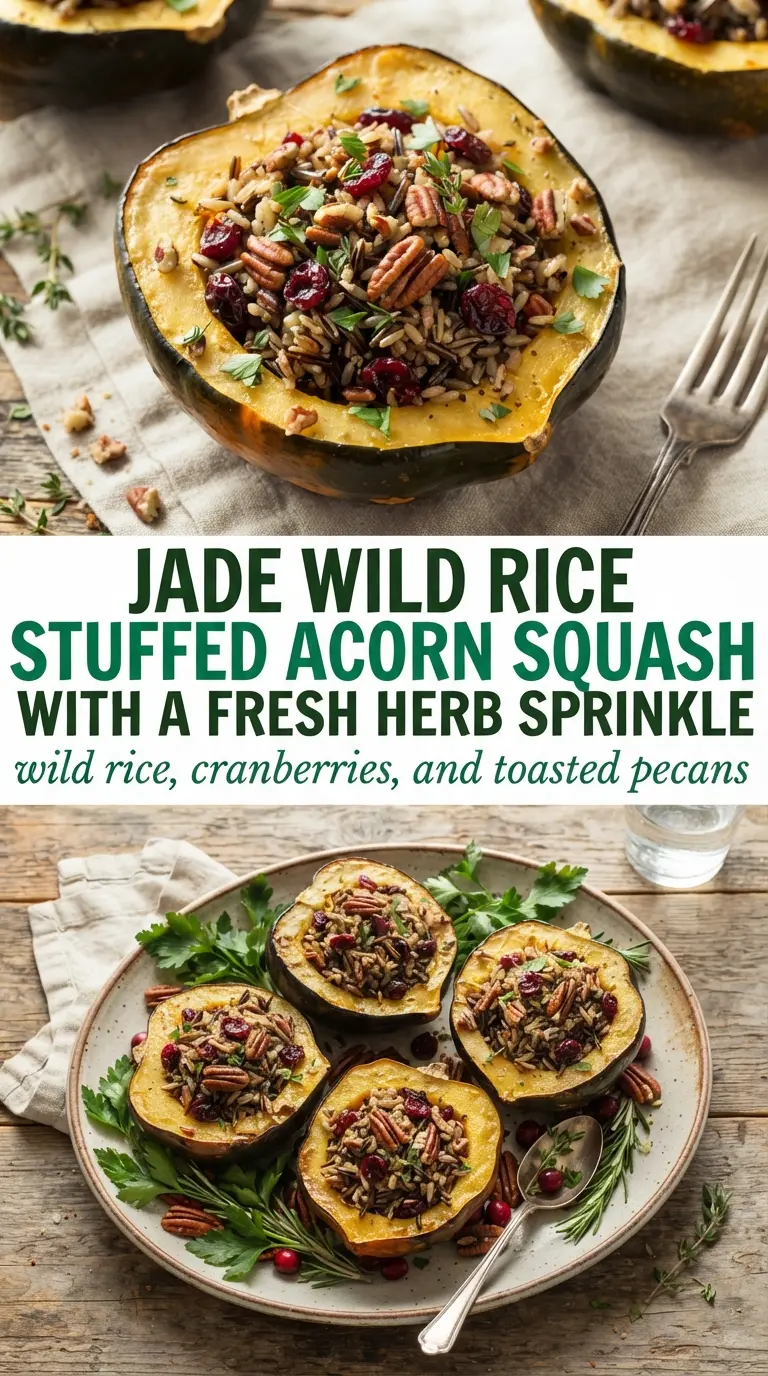
- Acorn squash — This is the base and the serving vessel. Look for squash that feel heavy for their size and have flat, stable bottoms so they sit nicely on the pan. If the halves wobble, trim a very thin slice from the rounded side before roasting.
- Wild rice blend — This gives the filling its nutty chew. A blend works better than plain white rice because it stays distinct after baking. Cook it until tender but still springy; overcooked rice turns the whole filling soft.
- Onion and garlic — They build the savory backbone. The onion needs to cook until translucent and sweet before the garlic goes in, or the filling can taste sharp. That short sauté is what keeps the dish from reading as just sweet squash plus fruit.
- Dried sage — Sage is the seasoning that makes the whole pan taste like fall in the best way. Dried sage works fine here because it blooms in the butter and onion mixture. If you use fresh sage, chop it finely and use about three times as much.
- Dried cranberries — These bring brightness and a little chew. They soften slightly in the oven but still pop against the rice. If yours are very dry, let them sit in warm water for 5 minutes and drain well before using.
- Pecans — They add crunch and a toasty, buttery note. Raw pecans are fine because they toast as the filling bakes, but stale pecans will taste flat, so use fresh ones if you can.
- Maple syrup — Just a little goes a long way. It rounds out the sage and cranberries without making the filling cloying. Honey can work in a pinch, but maple fits the squash more naturally.
- Parsley — This is the finishing touch that wakes everything up. Stir it in right at the end or sprinkle it over the top just before serving so it stays bright.
Building the Filling and Roasting the Squash in the Right Order
Roasting the Squash First
Start with the squash cut-side down on an oiled baking sheet. That position lets the flesh steam gently while the outer edges dry enough to concentrate their flavor. After about 30 minutes at 400°F, the flesh should be easily pierced with a fork but still hold its shape. If the knife slides through with no resistance, it’s overdone and can collapse when you fill it.
Cooking the Rice and Aromatics
Cook the rice first so it’s ready when the squash comes out. While it sits, soften the onion in butter until it looks glossy and pale gold, then stir in the garlic and sage just long enough for the kitchen to smell fragrant. Garlic burns fast, so once it goes in, you only need about 30 seconds before adding the rice and the rest of the filling. The goal is a savory base, not browned bits.
Filling and Finishing
Flip the squash cut-side up and pile the filling generously into each cavity. Don’t pack it down hard; a loose fill heats more evenly and keeps the texture light. Bake again until the squash is hot all the way through and the top of the filling looks glossy and steamy. Finish with parsley after it comes out of the oven so the herb stays fresh and green.
Three Ways to Adjust This Without Losing the Point
Make It Dairy-Free
Swap the butter for olive oil or a plant-based butter. Olive oil gives the filling a cleaner, less rich finish, while plant butter keeps the same round flavor. Either way, the onions still need that little bit of fat so they soften instead of sticking and scorching.
Make It Nut-Free
Leave out the pecans and add roasted pumpkin seeds for crunch. The texture changes a bit, but you still get a good contrast against the soft squash and chewy rice. If you skip the nuts entirely, add a little extra rice or cranberries so the filling doesn’t feel sparse.
Use a Different Grain
Farro or barley can stand in for the wild rice blend if that’s what you have. Both bring chew, but farro tastes a little more wheaty and barley gets softer as it sits. White rice works in a pinch, though the filling will be less sturdy and a little less interesting.
Storage and Reheating
- Refrigerator: Store leftovers in an airtight container for up to 4 days. The squash softens a bit more after chilling, but the flavor holds well.
- Freezer: It freezes, but the squash texture gets softer after thawing. For best results, freeze the filling separately and roast fresh squash when you’re ready to serve.
- Reheating: Warm in a 350°F oven, covered loosely with foil, until heated through. Microwaving works for a quick lunch, but it softens the squash faster and can make the filling unevenly hot.
Answers to the Questions Worth Asking

Wild Rice Stuffed Acorn Squash
Ingredients
Equipment
Method
- Cook the wild rice according to package directions and set aside so it stays chewy for stuffing.
- Preheat the oven to 400°F. Brush the squash with olive oil, season with salt and pepper, and roast cut-side down for 30 minutes until the flesh starts to turn tender.
- In a skillet, cook the onion in butter for 5 minutes until softened.
- Stir in the garlic and dried sage and cook for 30 seconds to 1 minute until fragrant.
- Stir in the cooked wild rice, dried cranberries, chopped pecans, and maple syrup until evenly mixed and glossy.
- Flip the squash so cut sides face up, then fill each half generously with the wild rice mixture.
- Bake for 15 minutes at 400°F until the filling is hot and the squash is fully tender, then top with chopped fresh parsley before serving.