
Roasted acorn squash turns soft and sweet in the oven, then gets loaded with a filling that has a little chew, a little crunch, and just enough brightness to keep every bite interesting. The squash itself does half the work here. Once the cut sides get brushed with olive oil and roasted until the flesh is tender, you get those caramelized edges that taste deeper and richer than plain steamed squash ever could.
The filling is built for contrast. Wild rice brings a nutty bite that holds up under the fruit and nuts, dried cranberries add tartness, and toasted pecans keep the texture from going soft. A small spoonful of maple syrup ties everything together without turning the dish sweet, and the feta on top gives the whole thing a salty finish that keeps the squash from tasting one-note.
Below, I’ve added the little details that matter most here: how to roast the squash so it browns instead of drying out, how to keep the filling balanced, and the swaps I’d use when I want a creamier finish or need to work around what’s already in the pantry.
The squash came out tender and caramelized, and the wild rice filling stayed fluffy instead of getting mushy. I loved the cranberry and pecan combo with the feta on top — it tasted balanced, not too sweet, and the halves held together beautifully on the plate.
Save this wild rice stuffed acorn squash for a cozy side with caramelized squash, chewy grains, and a feta finish.
The Reason the Squash Should Roast Before the Filling Goes In
The biggest mistake with stuffed squash is treating the filling and the squash like they need the same amount of time. They don’t. The squash needs a head start because the oven is doing two jobs at once: softening the flesh and concentrating the flavor. If you add the filling too early, the nuts can scorch, the cranberries can harden, and the squash never gets that deep, spoon-tender texture.
Roasting cut-side down first matters for another reason. The direct contact with the pan helps the flesh caramelize instead of just steaming. When you flip it over, the squash should be tender enough that a fork slides in easily, but it shouldn’t collapse. That structure is what lets the halves hold the filling without turning limp on the plate.
- Cut-side down gives you the best browning.
- The first roast is about texture, not color alone.
- Wait to add the filling until the squash is nearly done so the toppings stay distinct.
What Each Ingredient Is Actually Doing in This Dish
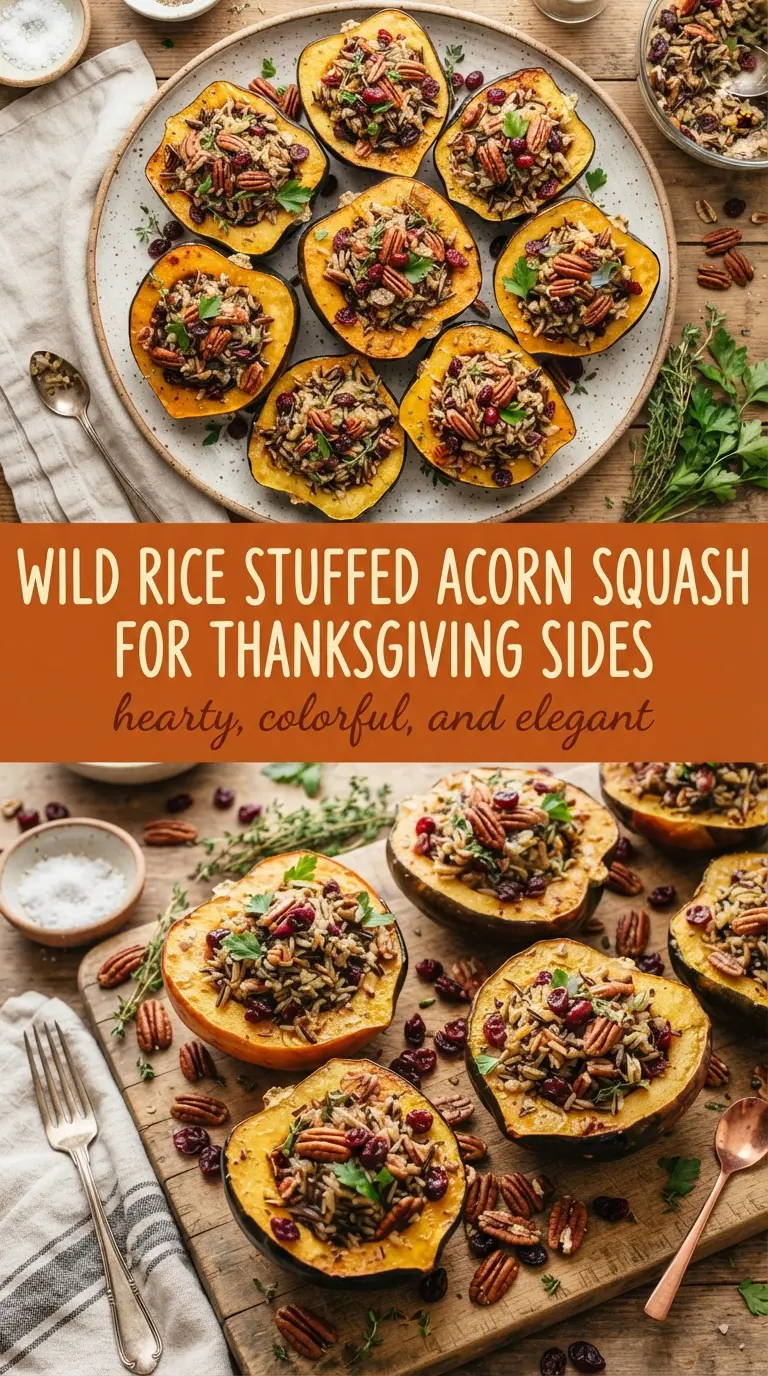
- Acorn squash — This is the edible bowl and the sweet backbone of the dish. Choose squash that feel heavy for their size and have firm, matte skin. If you swap in delicata, you’ll get smaller portions with a slightly sweeter, more tender result, but you lose the dramatic stuffed-half presentation.
- Wild rice — Wild rice gives the filling its chew and keeps it from collapsing into a soft mash. Use fully cooked rice that’s cooled a bit so it doesn’t smear with the maple syrup. A wild rice blend works in a pinch, but the texture will be a little softer and less earthy.
- Dried cranberries — These bring tart, chewy contrast against the sweet squash and maple. If yours are very dry, soak them in warm water for a few minutes and pat them dry before mixing. That keeps them plump and prevents them from tasting leathery after baking.
- Pecans — Toasted pecans add the crunch that makes each bite feel finished. Don’t skip the toasting; raw pecans taste flat beside the roasted squash. Walnuts work too, but they read a little more bitter and less buttery.
- Maple syrup — Just enough to bind the filling and echo the sweetness of the squash. You want restraint here. Too much turns the filling glossy and sticky instead of balanced.
- Feta — The salty, crumbly finish keeps the dish from leaning too sweet. If you want a creamier top, goat cheese is the best swap and melts into the warm rice a little more softly than feta.
Roasting the Squash, Building the Filling, Finishing With the Right Contrast
Getting the Squash Tender First
Brush the cut sides of the squash with olive oil, season with salt and pepper, and roast them cut-side down on a baking sheet at 400°F. You’re looking for flesh that gives easily when pierced and edges that have started to deepen in color. If the squash still feels firm, give it another five minutes; undercooked squash won’t hold the filling well and will taste bland beside the rice mixture.
Mixing a Filling That Still Has Texture
Stir the cooked wild rice with the cranberries, toasted pecans, and maple syrup while the squash roasts. The filling should look loose and separate, not wet or sticky. If it feels heavy, you’ve gone too far with the syrup. The goal is a mixture that can mound in the squash and still keep its individual pieces intact after the final bake.
Stuffing and Warming Through
Flip the squash halves cut-side up, then fill them generously. Top with feta and return them to the oven just long enough to warm the filling and soften the cheese slightly. Don’t leave them in long enough for the rice to dry out. At this stage, you’re finishing the dish, not cooking it from scratch.
Three Ways to Make This Recipe Work for Your Table
Dairy-Free Finish
Skip the feta and finish with a drizzle of olive oil plus a pinch of flaky salt, or add a spoonful of tahini for extra richness. You’ll lose the tangy pop from the cheese, but the dish will still feel complete and balanced.
Make It a Main Dish
Stir in cooked lentils or white beans with the rice for extra protein, then top with the feta as written. That turns the squash from a side into a full vegetarian lunch or light dinner without changing the texture of the filling.
Swap the Cheese
Use goat cheese if you want something creamier and softer, or a little grated Parmesan if you want a saltier, more savory finish. Goat cheese melts into the filling a bit more; feta stays distinct and gives sharper contrast.
Storage and Reheating
- Refrigerator: Store leftovers in an airtight container for up to 4 days. The squash softens a little more in the fridge, but the flavors stay good.
- Freezer: Freeze the filling separately if you want the best texture; roasted squash halves can be frozen, but they’ll be softer after thawing. For a make-ahead option, assemble and freeze before the final bake, then thaw overnight.
- Reheating: Warm in a 350°F oven until hot, about 15 to 20 minutes. The microwave works for a quick lunch, but it softens the pecans and makes the squash wetter, so the oven gives you a cleaner result.
Answers to the Questions Worth Asking
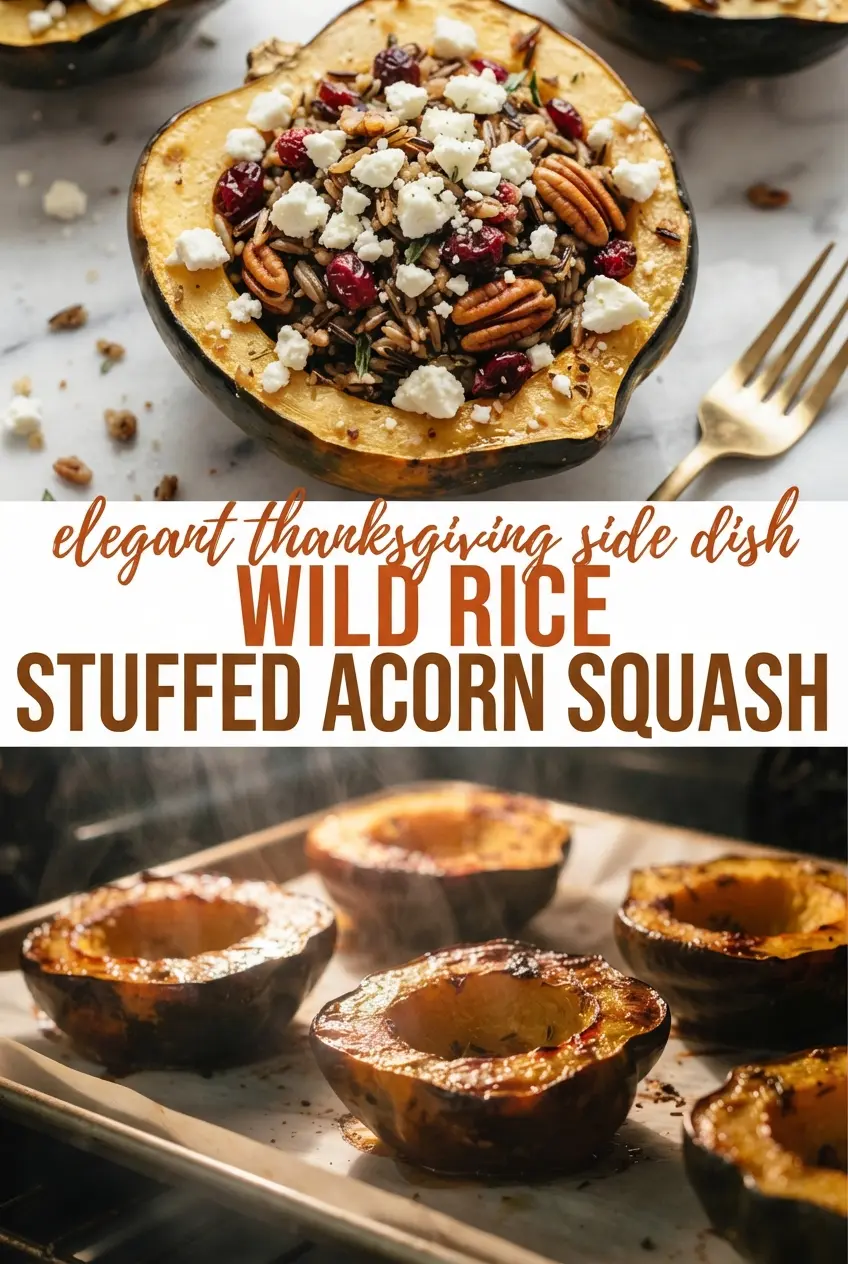
Wild Rice Stuffed Acorn Squash
Ingredients
Equipment
Method
- Preheat the oven to 400°F. Brush the cut sides of the squash with olive oil and season with salt and pepper, so the flesh browns evenly.
- Place the squash on a sheet pan cut-side down and roast for 30-35 minutes, until tender and browned at the edges; use a visual check for caramelized color.
- In a bowl, mix the cooked wild rice with dried cranberries, toasted pecans, and maple syrup until evenly combined and glossy.
- Flip the roasted squash halves cut-side up and fill generously with the wild rice mixture, packing it slightly so it holds the shape.
- Top with crumbled feta and return to the oven for 5-10 minutes at 400°F until warmed through and the squash is hot throughout.