
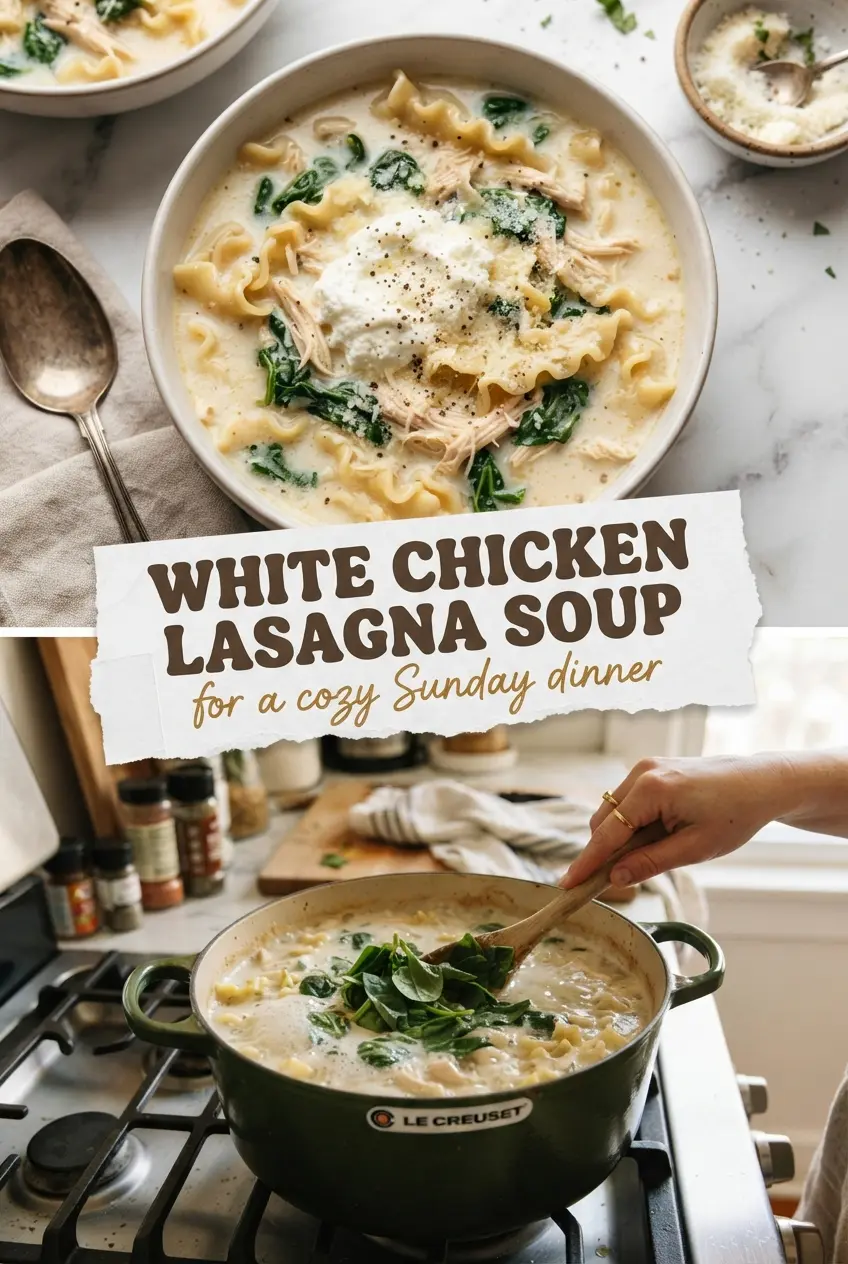
Creamy white chicken lasagna soup lands in the bowl with tender chicken, wavy noodles, and a broth that tastes like the best part of a white lasagna, just loosened enough to eat with a spoon. The ricotta and mozzarella topping melts into the hot soup and gives each bowl that stretchy, cheesy finish that makes you go back for another bite before you’ve even set the spoon down.
What keeps this version on the right side of rich is the balance: a quick flour base for body, chicken broth to keep the flavor clean, and heavy cream added after the onion and garlic have softened so the soup stays silky instead of heavy. The noodles cook right in the broth, which lets them release starch and help thicken the pot naturally. If you’ve ever had white soup that tasted flat, this one fixes that with Parmesan, Italian seasoning, and a final spoonful of ricotta on top.
Below, I’ll walk through the little decisions that matter most here — when to add the flour, how to keep the cream from turning muddy, and what to do if your noodles keep drinking up the broth before dinner hits the table.
The broth turned out silky and the noodles stayed tender without falling apart. I loved how the ricotta melted into the top of each bowl and made it taste like lasagna without all the layering.
Save this white chicken lasagna soup for the nights when you want creamy comfort, wavy noodles, and a cheesy ricotta topping in one pot.
The Part Most Soups Get Wrong: Adding the Cream Too Early
This soup needs structure before it needs richness. The flour cooked with the onion and garlic gives the broth enough body to carry the cream, and that quick minute on the heat takes away the raw flour taste without letting it brown. If you dump the liquid in before the flour has a chance to coat the aromatics, the soup can turn thin and a little dusty instead of smooth.
The other place people get tripped up is the chicken. Browning it first builds flavor in the pot, and those browned bits on the bottom are part of the broth’s depth. Once the broth goes in, scrape them up right away so they dissolve into the soup instead of sticking and scorching.
- Browned chicken — Cubing the chicken before cooking gives you more surface area, which means more flavor in less time. Breast meat stays tender here because it only finishes in the simmering soup instead of cooking from start to finish in liquid.
- Flour — This is the thickener. All-purpose flour works well because it cooks quickly and gives the broth a soft, creamy body. If you skip it, the soup will taste thinner and the ricotta topping won’t have the same contrast.
- Heavy cream — Use real cream here if you want that silky, white lasagna feel. Half-and-half will work in a pinch, but the broth will be lighter and a little less luxurious.
- Mafalda or broken lasagna noodles — The curly edges catch the broth and the cheese. Any wide pasta will work, but long, flat pieces need to be broken so they fit a spoon and cook evenly in the pot.
The 20 Minutes That Actually Matter in the Pot
Getting the Chicken Browned
Heat the oil until it shimmers, then add the seasoned chicken in a single layer so it sears instead of steaming. You want light browning on the outside, not deep crust, because the chicken will finish in the soup later. If the pan looks crowded, the meat will give off water and turn gray; cook in two batches if needed.
Building the Onion and Garlic Base
Cook the onion until it turns soft and a little translucent at the edges, then stir in the garlic and flour together. The flour should disappear into the onion mixture and smell slightly nutty after a minute. If it clumps, the heat was too high or the pan was too dry, and a splash of broth will loosen it fast.
Bringing the Broth Together
Whisk in the broth slowly, then add the cream and Italian seasoning once the flour mixture is fully dissolved. Bring the pot to a gentle simmer, not a hard boil, so the cream stays smooth and the broth thickens evenly. A boil can make the dairy look grainy, especially if the heat stays high for too long.
Cooking the Noodles and Finishing the Soup
Add the noodles and let them cook until they’re just tender with a little bite left in the center. Stir in the chicken, spinach, and Parmesan at the end so the chicken stays juicy and the spinach wilts without turning dull. If the soup gets too thick, add a splash of broth before serving; pasta keeps absorbing liquid as it sits.
Three Ways to Make This Soup Fit the Night You’re Having
Dairy-Free Version
Swap the heavy cream for canned full-fat coconut milk and leave out the ricotta and mozzarella topping. The soup will still be creamy, but it will lean slightly sweet and less like classic white lasagna, so add a little extra Parmesan-style seasoning or more salt to keep the flavor grounded.
Gluten-Free Option
Use a good gluten-free lasagna noodle and swap the flour for a gluten-free all-purpose blend or a cornstarch slurry at the end. Gluten-free pasta tends to soften faster, so start checking it a few minutes early and keep a little extra broth nearby in case the soup tightens up.
Make It Heartier
Add sliced mushrooms with the onion or stir in chopped zucchini with the spinach. Both options stretch the pot without changing the creamy base, and mushrooms bring extra savory depth that fits the white lasagna idea especially well.
Storage and Reheating
- Refrigerator: Store for up to 4 days. The noodles will keep absorbing broth, so expect a thicker soup the next day.
- Freezer: It freezes, but the cream and noodles soften after thawing. For best texture, freeze the soup before adding the pasta, then cook fresh noodles when you reheat.
- Reheating: Warm it gently on the stove over low heat and add a splash of broth or water if needed. High heat can make the dairy split and overcook the noodles before the center is hot.
Answers to the Questions Worth Asking
White Chicken Lasagna Soup
Ingredients
Equipment
Method
- Heat the olive oil in a Dutch oven over medium-high heat, then add the cubed chicken and season with salt and pepper. Cook until browned on the outside, then set the chicken aside.
- In the same Dutch oven, cook the diced onion over medium heat for 5 minutes until softened. Add the minced garlic and all-purpose flour, then stir for 1 minute.
- Whisk in the chicken broth, heavy cream, and Italian seasoning, scraping up any browned bits. Bring the mixture to a simmer over medium heat.
- Add the mafalda or broken lasagna noodles and cook for 10 minutes, stirring occasionally so they don’t stick. When the noodles are tender, stir in the chicken, baby spinach, and grated Parmesan until the spinach is wilted and the soup turns silky.
- Ladle the soup into bowls and top each bowl with ricotta cheese and shredded mozzarella. Let the heat melt the cheese, creating a creamy, cheesy finish.