
Juicy fresh peaches can go from ripe to wasted fast, and the best way to keep that sweet, fragrant fruit from slipping past its prime is to put it straight to work. A good peach roundup gives you more than one path: something quick for breakfast, something cold for snacking, something warm and baked when you want dessert, and a savory option for the nights when peaches need a little salt and heat to shine.
The trick is choosing recipes that handle peaches at different stages of ripeness. Firm peaches hold up on the grill and in salsa. Soft, dripping-ripe peaches collapse into cobbler, crisp, or jammy compote with almost no effort. Once you know which texture belongs where, a peach haul stops feeling like a race and starts looking like a plan.
Below you’ll find seven ways to use fresh peaches before they fade, plus the small details that keep them tasting bright instead of mushy. There’s also a simple guide for what to do when your peaches are a little too hard, a little too soft, or somewhere in between.
I made the peach cobbler from this roundup with fruit that was almost too soft, and it baked up with a thick syrup underneath and a biscuit top that stayed crisp on the edges. The grilled peaches were a surprise too — just a couple minutes on the pan and they got caramelized without falling apart.
Save this fresh peach roundup for grilled peaches, cobbler, and salsa when your peach basket needs a plan.
The Peach Problem: Firm Fruit, Soft Fruit, and Everything in Between
Peaches punish sloppy timing. Firm fruit gives you clean slices and better structure, which matters for grilled peaches, salsa, and anything you want to spoon over yogurt or ice cream without it turning to puree. Soft fruit, on the other hand, is a gift for baking because it melts into its own syrup and carries a stronger peach aroma once heat hits it.
The mistake most people make is treating every peach the same. A peach that still feels a little firm on the counter can finish ripening in a paper bag, but once it’s fragrant and gives slightly at the stem, it’s on borrowed time. Use those peaches fast in desserts or compotes, and save the firmer ones for recipes where shape matters.
- Firm-ripe peaches — Best for grilling, slicing into salads, or making salsa. They hold their shape and give you a cleaner bite.
- Very ripe peaches — Best for cobblers, crisps, and jammy toppings. The fruit softens quickly and the juices turn syrupy.
- Peeling — If a recipe needs peeled peaches, blanch them for 30 seconds and shock them in ice water. The skins slip off without wasting half the flesh.
- Can’t use them today? — Slice and freeze peaches on a tray first, then bag them. They won’t be perfect for fresh snacking later, but they’re excellent for smoothies, sauces, and baking.
What Each Peach Recipe Is Actually Doing With the Fruit
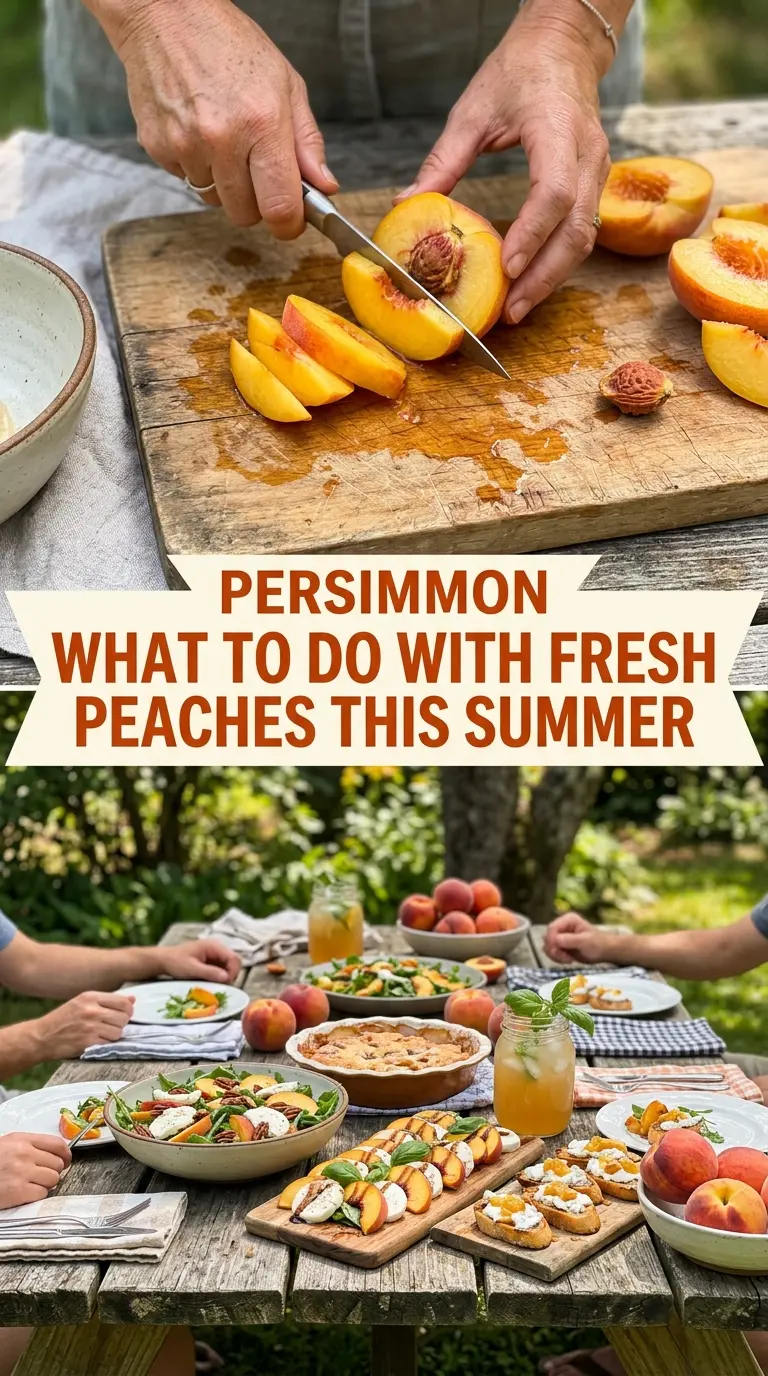
Each recipe in this roundup asks peaches to do a different job, and that’s what keeps the list useful. Grilled peaches use direct heat to concentrate sweetness and add caramelized edges. Peach salsa relies on firm dice so the fruit stays bright and doesn’t disappear into the tomatoes, herbs, and onion. Cobbler and crisp lean on soft peaches because the fruit releases juices that become the sauce under the topping.
When peaches are borderline overripe, don’t force them into a fresh salad or anything that depends on neat slices. Put them in a baked dish, a sauce, or a spoonable topping where texture can soften without becoming a problem. If your peaches are a little bland, a pinch of salt, a squeeze of lemon, or a short stint in the oven brings the flavor back into focus.
- Brown sugar — This matters in baked peach desserts because it deepens the syrup and helps the fruit taste less one-note. White sugar works in a pinch, but the result is flatter.
- Lemon juice — A small amount keeps peaches from tasting heavy. It also slows browning in fresh recipes and sharpens the fruit in salsa and toppings.
- Cornstarch — Useful in cobbler, crisp, or any baked peach filling that needs a little body. Too much makes the juices gummy, so keep it light.
- Fresh herbs — Basil, mint, and thyme work well with peaches because they echo the fruit’s perfume without burying it. Dried herbs won’t give the same clean finish.
The 20 Minutes That Matter Most When You Cook with Peaches
Getting the Fruit Ready
Wash peaches just before using them, not hours ahead, so the skin stays dry and the fruit stays firm. If you’re peeling, score a small X on the bottom and blanch them briefly until the skins release. For grilled or fresh recipes, cut the peaches evenly so the pieces finish at the same pace; uneven chunks turn half the bowl mushy while the rest stays too firm.
Choosing the Right Heat
High heat is your friend for grilled peaches and quick stovetop compotes, but baked peach desserts need enough time for the fruit to soften without scorching the topping. If the fruit starts leaking fast in the pan, the heat is too high and the sugars are tightening before the flesh can relax. Pull it back and let the peaches cook until they smell deeper and the juices look glossy instead of watery.
Building a Dessert That Doesn’t Collapse
For cobbler and crisp, spread the fruit in a single layer if you can. A packed dish traps steam, which turns peaches soft in the wrong way and makes the topping soggy. The edges should bubble and the filling should look thick, not soupy, before you call it done.
Three Ways to Make This Peach Roundup Work for Your Kitchen
Dairy-Free Peach Desserts
Use coconut oil or a plant-based butter in crisps and cobblers. You’ll lose a little of the rich dairy note, but the peaches still bake into a syrupy base and the topping stays crisp if you don’t overmix it.
Gluten-Free Crisp and Cobbler Options
Swap in a good 1:1 gluten-free flour blend for the topping. The fruit layer behaves the same, but the topping may need an extra spoonful of butter or oil to get the same sandy texture before baking.
Turn the Haul Into a Savory Peach Side
For salsa or a quick peach salad, add more acid and salt than you would in dessert. That contrast keeps the peaches bright and turns the whole dish into something that works with grilled chicken, pork, or fish.
Storage and Reheating
- Refrigerator: Fresh-cut peaches keep 2 to 3 days in an airtight container, though they soften and release more juice as they sit. Baked peach desserts keep 3 to 4 days.
- Freezer: Sliced peaches freeze well for baking and smoothies. Freeze them in a single layer first so they don’t clump, then transfer to a bag for up to 6 months.
- Reheating: Warm cobbler and crisp in a 300°F oven until the filling is bubbling again. The common mistake is microwaving until the topping turns limp before the center is hot.
Questions I Get Asked About This Recipe

What to Do with Fresh Peaches Roundup
Ingredients
Equipment
Method
- Wash the fresh peaches and pat them dry, then cut them into wedges or cubes so you can use them across the roundup ideas in batches.
- Heat a cast iron skillet over medium-high heat and add the peaches for quick grilled-style serving; cook for 2-4 minutes, stirring once, until lightly browned at the edges (visual cue: glossy juice and caramelized spots).
- Spread peach pieces on a sheet pan and roast at 425°F for 15-20 minutes, flipping once halfway, until the fruit is tender and bubbling (visual cue: softened skins and syrupy juices).
- For cobbler-style fruit, transfer the roasted peaches to a Dutch oven and simmer at 200-210°F for 10-15 minutes, stirring occasionally, until thickened slightly (visual cue: juices cling to the spoon).
- Taste and decide your serving style: spoon warm peaches over yogurt or ice cream, or chill for a fruit topping; use within the same day for best texture (no resting step needed).