
Creamy butter beans, garlicky olive oil, and tangy sun-dried tomatoes turn into a skillet dinner that eats like comfort food but still feels light enough for a weeknight. The beans hold their shape, the spinach melts into the sauce, and the parmesan pulls everything together without making the pan heavy or gluey. What you get is a spoonable, savory dish with enough brightness from the tomatoes to keep each bite interesting.
The trick here is building the flavor in layers instead of dumping everything in at once. Garlic goes into the oil first so it perfumes the pan, then the sun-dried tomatoes soften and release some of their concentrated flavor before the beans and broth go in. The cream and parmesan finish the sauce, but they need low heat and a little patience; rush that part and the sauce can turn grainy instead of silky.
Below, I’ve included the one detail that keeps the beans tender, the ingredient swap that adds extra depth, and a few ways to adapt this if you need it dairy-free or want a little more heat.
The sauce thickened up beautifully and the butter beans stayed intact instead of turning mushy. I used the oil from the sun-dried tomato jar like suggested, and it gave the whole pan a deeper, richer taste.
Save these creamy Tuscan butter beans for a fast skillet dinner with spinach, parmesan, and sun-dried tomatoes.
The Reason the Beans Stay Creamy Instead of Falling Apart
Butter beans are sturdy, but they still need gentle handling once they’re in the skillet. If you boil them hard after the cream goes in, the outer layer starts to break down and the sauce turns starchy in a way that tastes heavy instead of lush. A low simmer is enough to heat them through and help them absorb the broth and garlic without losing their shape.
The other thing that matters is the order. Sun-dried tomatoes go in before the beans so the pan gets a little of their concentrated flavor in the oil, and the broth goes in before the cream so the beans have a chance to warm and soften slightly first. That keeps the final sauce from tasting flat or separate.
What Each Ingredient Is Actually Doing in This Dish
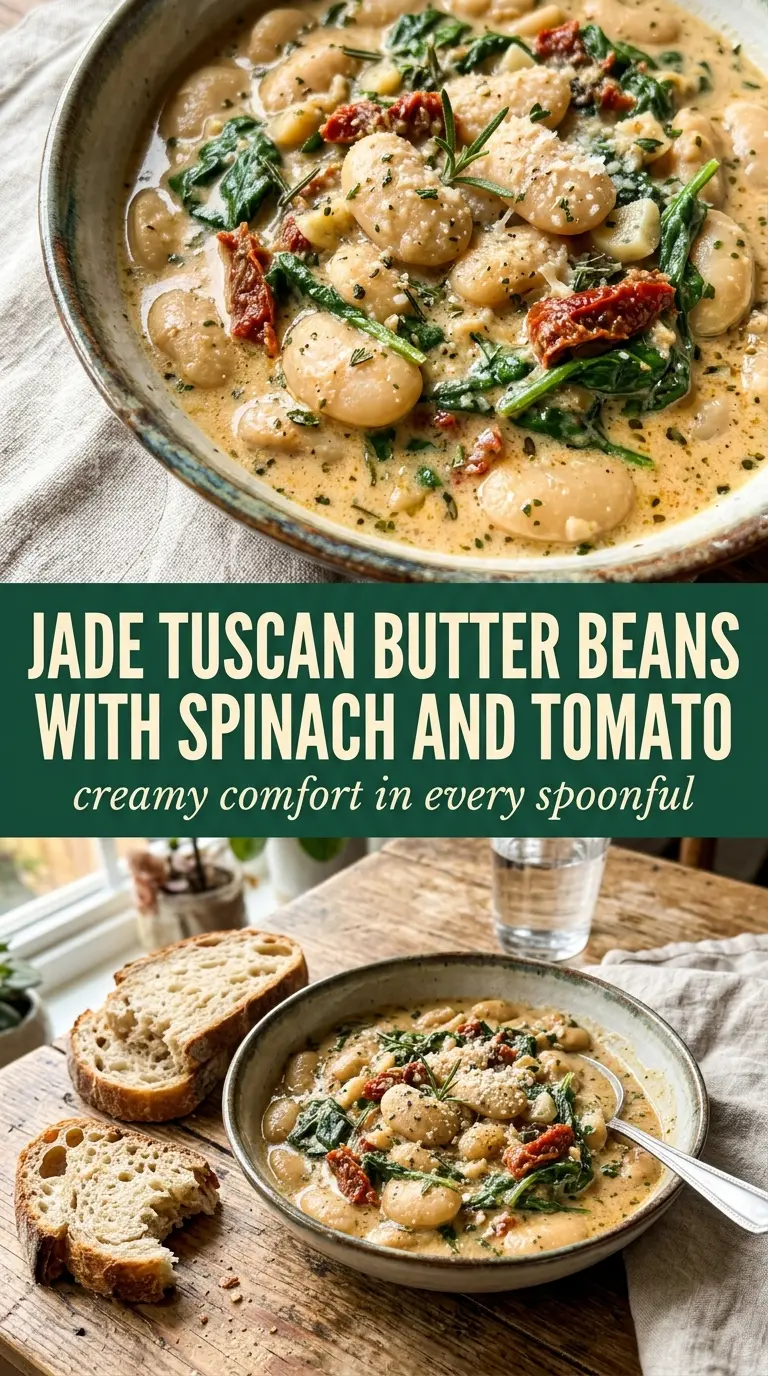
- Butter beans — These are the backbone of the dish. Their creamy centers and sturdy skins let them sit in sauce without turning to paste, which is why cannellini beans work in a pinch but don’t give quite the same plush texture.
- Sun-dried tomatoes — Chopped tomatoes bring concentrated sweetness and a little chew. If you have the kind packed in oil, the oil itself is worth using because it carries tomato flavor straight into the pan.
- Vegetable broth — This loosens the sauce and gives the beans something savory to absorb. Homemade or boxed both work; just use one that tastes clean and not overly salty, since parmesan adds salt later.
- Heavy cream — This gives the sauce its silky body. Half-and-half can work, but the sauce will be thinner and a little less stable when it simmers, so keep the heat low if you swap it in.
- Parmesan cheese — Parmesan thickens and seasons the sauce at the same time. Grate it finely so it melts smoothly; pre-shredded cheese can leave the sauce a little grainy because of the anti-caking agents.
- Spinach — Fresh spinach folds in at the end and turns tender in seconds. Baby spinach is easiest because it wilts evenly; mature spinach should be chopped first so you don’t end up with long, stringy pieces.
- Reserved sun-dried tomato oil — If you use it in place of some or all of the olive oil, the whole dish tastes deeper from the start. That little swap matters more here than in most quick skillet recipes.
Building the Sauce Without Breaking the Cream
Waking Up the Garlic
Start with warm oil in a large skillet and add the garlic just until it smells fragrant, about 30 seconds. You want it softened, not browned; once garlic goes dark, it turns bitter and the bitterness carries through the whole sauce. Keep the heat at medium and watch for the edges to look glossy and lightly sizzling, not crisp.
Letting the Tomatoes Season the Pan
Add the chopped sun-dried tomatoes and cook them for a couple of minutes so they loosen and perfume the oil. This step builds the base flavor, and it’s worth the pause because tomatoes straight from the jar can taste sharp if they go in cold. If the pan starts to look dry, add a splash of the broth early so nothing sticks.
Simmering the Beans Gently
Stir in the butter beans and broth, then let everything simmer for about five minutes. You’re looking for a small, steady bubble around the edges, not a hard boil. If the beans bash around too much, they’ll split and cloud the sauce before the cream even hits the pan.
Finishing With Cream and Parmesan
Lower the heat before the cream and parmesan go in. Stir slowly until the sauce turns glossy and slightly thickened, and pull the pan off the burner if the cheese seems to clump. That usually means the heat was too high; the fix is simple, and it works because parmesan melts best when the pan is hot, not scorching.
Folding in the Spinach at the End
Add the spinach last and stir just until the leaves collapse. It should go from bulky and bright green to tender and silky in under a minute. If you cook it too long, the color dulls and the leaves disappear into the sauce instead of giving the dish that fresh, green contrast.
Three Ways to Adjust the Skillet Without Losing the Point
Dairy-Free But Still Creamy
Swap the heavy cream for full-fat coconut milk and leave out the parmesan, then add a little extra salt and a squeeze of lemon at the end. The sauce won’t taste exactly the same, but it still turns rich and spoonable, with a softer finish and a faint sweetness that plays well with the tomatoes.
Make It Fully Vegetarian or Vegan
This recipe is already vegetarian, and for a vegan version you only need to replace the parmesan with a nut-based or dairy-free parmesan-style topping. The beans still carry the dish, so you won’t lose substance, but you should expect the sauce to be a little less savory unless you season it more assertively at the end.
Add Heat Without Overpowering the Cream
Keep the red pepper flakes, but add them with the garlic so they bloom in the oil instead of just floating on top. That gives the heat a rounded, even quality rather than a sharp burn, and it spreads through the sauce instead of landing in one hot bite.
What to Do If You Want a Thicker Sauce
Simmer the broth a minute or two longer before adding the cream, or mash a small spoonful of beans against the side of the pan. That gives the sauce body without adding flour, and it keeps the finished dish naturally gluten-free.
Storage and Reheating
- Refrigerator: Store leftovers in an airtight container for up to 4 days. The sauce thickens as it chills, so it may look tighter the next day.
- Freezer: It freezes, but the cream can separate a little on thawing. If you plan to freeze it, stop before adding the spinach and stir that in fresh when you reheat.
- Reheating: Warm it slowly in a skillet over low heat with a splash of broth or water. High heat can split the cream and make the beans tougher on the outside before the center is hot.
Answers to the Questions Worth Asking

Tuscan Butter Beans With Spinach And Sun-Dried Tomato
Ingredients
Equipment
Method
- Heat the olive oil in a large skillet over medium heat, then sauté the garlic until fragrant, about 30 seconds. Keep it moving so the garlic turns aromatic but doesn’t brown.
- Add the chopped sun-dried tomatoes and cook for 2 minutes. The mixture should look slightly glossy and smell pleasantly tangy.
- Stir in the drained and rinsed butter beans and the vegetable broth, then simmer for 5 minutes. Cook until the liquid reduces slightly and the beans are hot throughout.
- Pour in the heavy cream and add the parmesan, then stir until the sauce thickens slightly, 2-3 minutes. The surface should look creamy and cling lightly to the beans.
- Fold in the fresh spinach and cook just until wilted, about 1 minute. Use gentle stirring so the spinach stays bright green with tender leaves.
- Season with the red pepper flakes and serve warm. Taste and adjust heat if you prefer it milder or spicier.