
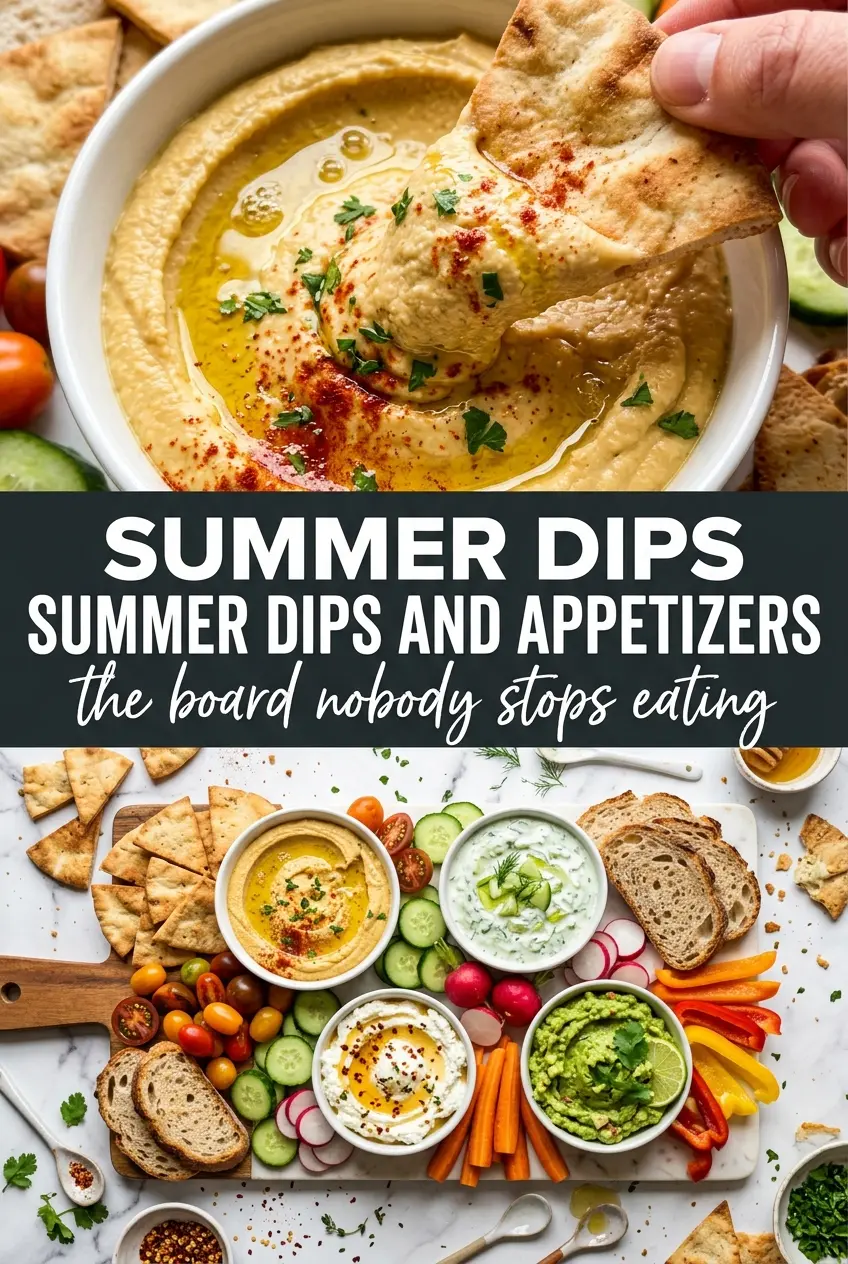
The best dip boards disappear fast because every bowl brings a different kind of comfort: silky hummus with garlic and lemon, whipped feta that goes tangy and creamy, guacamole with enough lime to stay bright, and tzatziki that cools everything down between bites. Spread them out with a mix of crisp vegetables, pita chips, and warm bread, and you’ve got the kind of appetizer people hover around without meaning to. It’s colorful, generous, and a lot more satisfying than a single dip on the table.
What makes this board work is contrast. The hummus gets its body from tahini and chickpeas, the whipped feta turns smooth because the yogurt loosens the cheese just enough, and the tzatziki needs that grated cucumber squeezed almost dry so it doesn’t water down the bowl. The guacamole stays lively when you season it at the end and taste for salt after the lime goes in. Each dip can be made on its own, but they’re better together because each one covers what the others don’t.
Below, you’ll find the small details that keep each bowl tasting fresh and balanced, plus the smartest way to prep the board ahead so you’re not scrambling right before people arrive.
The hummus turned out so smooth and the whipped feta with honey was the first bowl gone. I made the tzatziki 30 minutes ahead like you said and it tasted much cleaner after the cucumber drained properly.
Save this summer dip board for the next party night — the mix of silky hummus, whipped feta, fresh guacamole, and tzatziki is built for grazing.
The Trick to Keeping Four Dips Fresh on One Board
The biggest mistake with a dip board is treating every bowl like it behaves the same. Hummus and whipped feta hold for hours, but guacamole wants a tight seal and the shortest possible wait time before serving. Tzatziki sits somewhere in the middle: it needs time for the garlic and dill to bloom, but it also benefits from being stirred again right before it hits the table because the yogurt can loosen as it chills.
Another thing people miss is texture balance. If every dip is smooth, the board feels flat. If every dip has chunks, it can eat like a mixed salad instead of a spread. That’s why the creamy dips here need crisp dippers and fresh vegetables, while the guacamole and tzatziki bring the looser, fresher edges that keep each bite interesting.
What Each Dip Is Doing on the Board

- Chickpeas — These give the hummus its body and earthy flavor. Canned chickpeas work fine here, but if you have time to simmer them with a pinch of baking soda until they’re very soft, the hummus turns noticeably smoother.
- Tahini — Good tahini adds the nutty depth that keeps hummus from tasting one-note. If your tahini is bitter, whisk it with the lemon juice first; it should lighten and loosen before the chickpeas go in.
- Feta and Greek yogurt — This combination is what makes the whipped feta creamy instead of crumbly. Full-fat yogurt gives the best texture, and if your feta is very salty, hold back a little until you’ve tasted the finished bowl.
- Avocados — For guacamole, ripeness matters more than brand or origin. They should yield gently to pressure but not feel mushy; underripe avocados stay chalky, and overripe ones can taste flat.
- Cucumber and dill — These are the reason the tzatziki tastes clean and cool. Grate the cucumber, then squeeze it hard in a towel or your hands, because extra water turns the yogurt loose and weakens the garlic.
- Pita chips, sourdough, and crudités — Use a mix of sturdy and delicate dippers. The creamy bowls need something crisp and sturdy, while sliced vegetables keep the board from feeling too heavy.
Building Each Bowl So It Tastes Right on the First Spoonful
Whipping the Hummus Until It Smears
Blend the chickpeas, tahini, lemon, garlic, cumin, and olive oil until the mixture looks pale and fluffy, not grainy. If the food processor starts to struggle, stop and scrape the bowl instead of dumping in more liquid all at once, because too much water makes the hummus loose rather than smooth. A long blend time matters here; the chickpeas need a chance to break down enough that the texture turns creamy instead of pasty.
Making the Feta Silky, Not Salty
Process the feta with Greek yogurt until it looks glossy and spreadable. If the mixture feels stiff, add a spoonful more yogurt, not more lemon, since acid sharpens the flavor but won’t fix the texture. The topping of honey and red pepper flakes goes on at the end so the sweetness stays distinct from the salty base instead of getting blended away.
Keeping the Guacamole Bright
Mash the avocados first, then add the lime, jalapeño, cilantro, red onion, and tomato. Taste after everything is in the bowl, because the tomatoes and onion both change how salty the guacamole seems. If it tastes dull, it usually needs salt more than more lime.
Letting the Tzatziki Drain and Chill
After grating the cucumber, squeeze out as much liquid as you can. This step decides whether the tzatziki stays thick or turns watery in the bowl. Stir in the yogurt, garlic, dill, and lemon, then chill for at least 30 minutes so the garlic softens and the dip tastes integrated instead of sharp.
Building the Board Last
Spoon each dip into its own bowl and place them on the board before adding the dippers. Fill the gaps with things that can handle scooping and stacking, like pita chips and bread slices, then tuck the lighter vegetables around the edges for color. If you build the board too early, the chips soften and the cucumbers start to weep, so the last few minutes before serving matter more than people think.
How to Adapt This Board for Different Diets and Different Crowds
Make it Vegetarian-Friendly Without Changing a Thing
This board already lands naturally in vegetarian territory, which is part of why it works so well for gatherings. The trick is to keep the dippers interesting enough that the dips don’t feel repetitive, so use a mix of crunch, chew, and freshness instead of leaning on only crackers.
Dairy-Free Changes That Still Feel Complete
Swap the whipped feta for a dairy-free white bean dip or an extra batch of hummus, and use a plain unsweetened plant-based yogurt for the tzatziki if you want a cooling dip in the lineup. The board will lose some richness, so lean harder on olive oil, lemon zest, herbs, and good salt to keep the flavors layered.
Make It Ahead for a Crowd
You can make the hummus, feta, and tzatziki up to a day ahead, then prepare the guacamole shortly before serving so it stays green and lively. Set out the board with the bowls first, cover the dips separately, and add the dippers at the last minute so nothing goes limp while people are still arriving.
Storage and Reheating
- Refrigerator: Store each dip separately in airtight containers for up to 3 days. The guacamole may darken on top, but a quick stir usually brings it back.
- Freezer: Hummus freezes best of the four; the texture may loosen slightly after thawing, but a stir with a little olive oil helps. Whipped feta and tzatziki don’t freeze well, and guacamole turns watery.
- Reheating: These dips are meant to be served cold or at cool room temperature, not heated. If the hummus thickens in the fridge, let it sit out for 20 to 30 minutes and stir in a little olive oil before serving.
Answers to the Questions Worth Asking
Summer Dips and Appetizers
Ingredients
Method
- Blend chickpeas, tahini, lemon, garlic, and cumin until smooth, stopping to scrape the sides as needed. Swirl olive oil on top for a glossy finish.
- Blend feta and Greek yogurt until silky and spreadable. Top with honey and red pepper flakes.
- Mash avocados, then add lime, jalapeño, cilantro, red onion, and tomato. Season and taste, adjusting lime for brightness if needed.
- Grate cucumber and squeeze it dry to remove excess water. Mix with Greek yogurt, garlic, dill, and lemon, then chill for 30 min to thicken.
- Arrange all dips in bowls on a large board, then fill gaps with colorful dippers. Add pita chips, crudités, sourdough slices, crackers, and tortilla chips so guests can mix and layer textures together.