
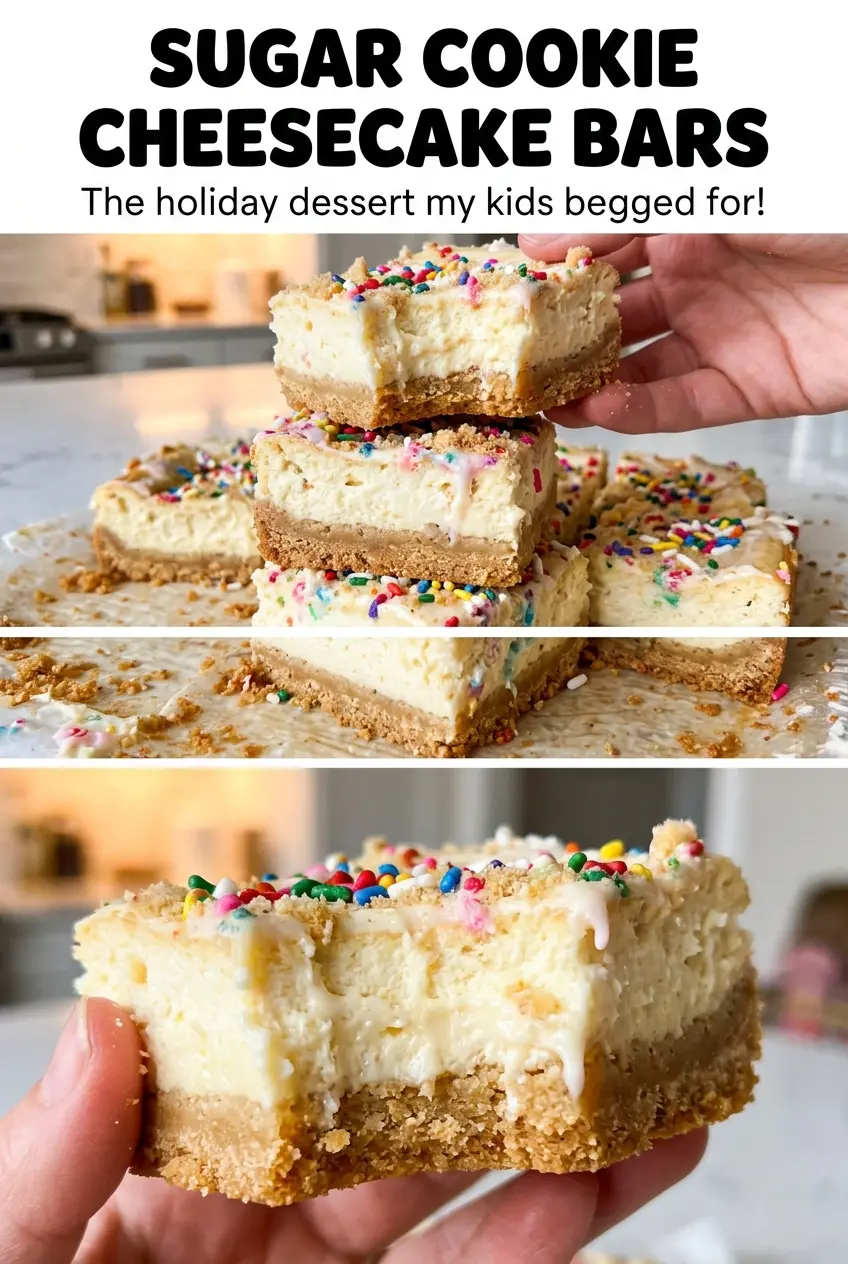
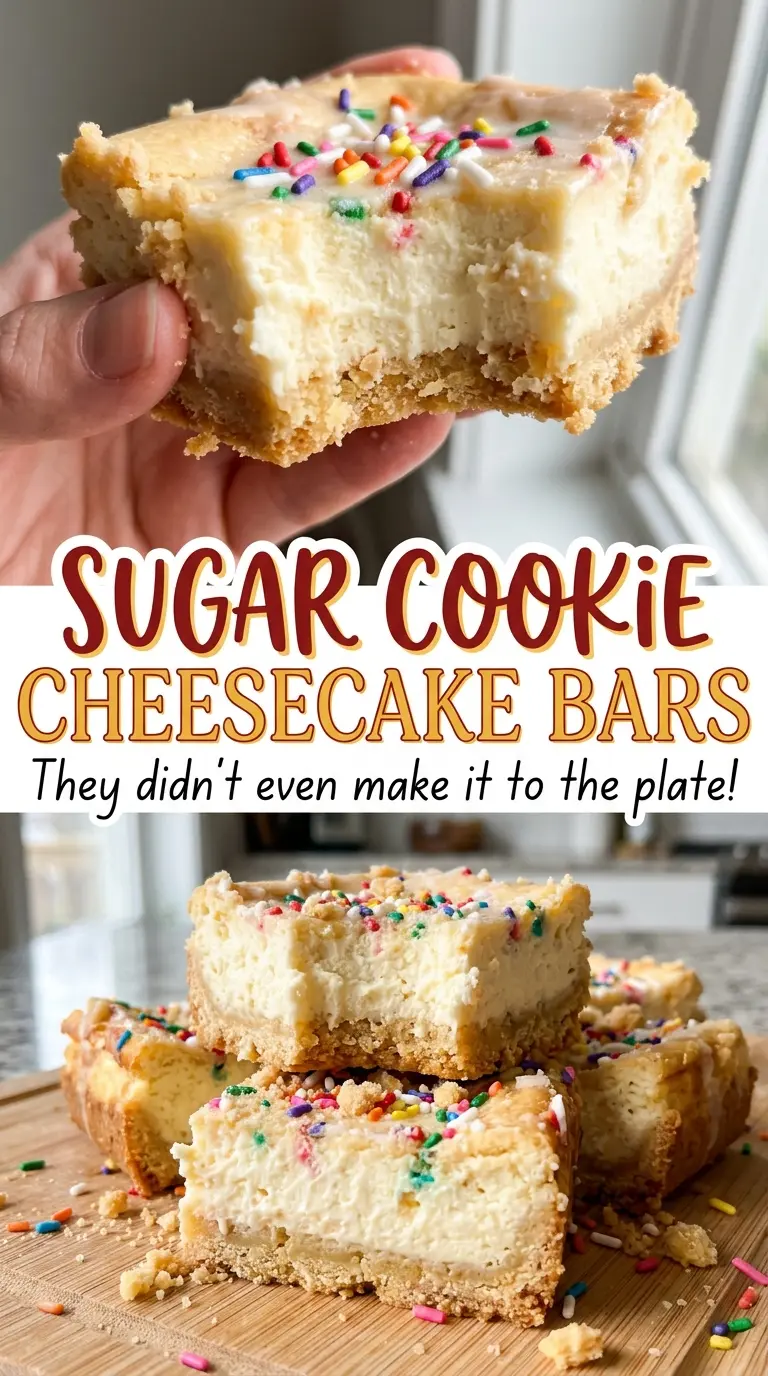
When the crust comes out of the oven, the edges are just starting to turn golden while the center looks dry—not browned all over. That’s the point where I pull it out and let it cool before adding the cheesecake layer. These sugar cookie cheesecake bars bring a soft, buttery cookie base together with a smooth, lightly tangy filling, and the two layers bake at different temperatures.
Sour cream gives the cream cheese filling a little lift in flavor, so each bite tastes creamy without feeling too heavy. I keep the mixing gentle once the eggs go in; the filling only needs to become smooth, not fluffy. After a long chill, the bars slice neatly into 24 squares, with a tender cookie crust under every piece.
Kitchen Note
Give the bars the full four hours in the refrigerator before cutting. The filling firms as it chills, so the cookie base stays attached instead of crumbling under the knife.
Save these sugar cookie cheesecake bars for a bake-ahead dessert with a buttery cookie base and a cool, creamy center.
Why the Oven Drops 25 Degrees Before the Cheesecake Goes In
The cookie dough and cheesecake filling need different kinds of heat. The crust starts at 350°F, where it can bake through and develop lightly golden edges before anything covers it. Once the crust comes out, the oven temperature drops to 325°F for the filling’s longer bake.
That lower temperature gives the cream cheese mixture a gentler bake, which helps it set without rushing the edges while the center is still loose. Keep the crust’s doneness cue separate from the cheesecake’s: the crust is ready when its center looks dry, while the filling is ready when its center is set and reaches 160°F. A thermometer takes the guesswork out of that second check. Don’t try to judge both layers by color alone; the filling should stay pale, and the cookie layer is partly hidden once the filling goes on.
The brief cooling pause between bakes also matters. Letting the crust rest for 10 minutes gives it a chance to settle before you spread the filling, and it gives you time to lower the oven temperature. That transition is what makes the two-layer bake manageable in one pan.
What Makes a Sugar Cookie Crust Work Under Cheesecake
- All-purpose flour — It gives the cookie layer enough structure to support the filling while keeping the crust tender. A standard all-purpose flour works well; for a gluten-free version, use a cup-for-cup flour blend made for baking.
- Softened butter and granulated sugar — Beating these together until light and fluffy builds the cookie base’s texture. The butter should yield when pressed but shouldn’t be melted; melted butter won’t cream with the sugar in the same way.
- Eggs — The egg in the crust helps bind the dough, while the eggs in the filling help it set. Room-temperature eggs blend more smoothly into the other ingredients than cold ones straight from the refrigerator.
- Cream cheese — Use block-style cream cheese and let it soften before mixing. Its dense, rich texture is what gives these bars their cheesecake layer; whipped cream cheese is aerated and won’t give the same result.
- Sour cream — It loosens the filling slightly and brings a gentle tang. Plain, full-fat Greek yogurt is the most useful substitute; swap it measure-for-measure, knowing the filling will taste a little tangier.
- Vanilla extract — Vanilla ties the cookie and cheesecake layers together. A good-quality extract is worth using here, but there’s no need for an expensive bottle; vanilla bean paste can replace it in the same measure if you want visible vanilla flecks.
- Baking powder — A small amount gives the cookie crust a softer, less dense bite. Check that yours is fresh if it has been open for a long time; old baking powder may not lift the dough as well.
How to Bake the Cookie Base and Cheesecake Without Overdoing Either Layer
Mix and Press the Cookie Dough
Heat the oven to 350°F, prepare the 9×13-inch pan with cooking spray and parchment overhang, and whisk the flour, baking powder, and salt together. Beat the softened butter with the crust sugar for 2 to 3 minutes, until light and fluffy, then mix in the crust egg and vanilla. Add the dry ingredients on low and stop as soon as they’re combined; a few seconds too long can make the dough tougher. Press it into an even layer so the corners aren’t thinner than the center.
Bake the Crust Until Its Center Looks Dry
Bake the crust for 15 to 18 minutes, watching for lightly golden edges and a dry-looking center. It doesn’t need to be deeply browned; baking it too long now can leave the base overdone after the second trip through the oven. Take the pan out and let the crust cool for 10 minutes. Lower the oven to 325°F during that pause.
Mix the Filling Gently
Beat the softened cream cheese with the remaining sugar on medium-low until smooth, scraping the bowl if you see unmixed patches. Add the remaining eggs one at a time on low speed, mixing only until each one disappears into the filling. Finish with the sour cream and vanilla, stopping once the mixture looks smooth. If you beat in lots of air at this stage, the cheesecake can puff as it bakes and settle unevenly as it cools.
Bake, Cool, and Chill Before Cutting
Spread the filling evenly over the crust, taking it all the way to the edges. Bake at 325°F for 30 to 40 minutes, until the center is set and an instant-read thermometer reads 160°F. Cool the pan on a wire rack for 1 hour, then refrigerate the bars for at least 4 hours until thoroughly chilled. Use the parchment overhang to lift the slab from the pan, then cut it into 24 bars.
Three Useful Swaps for Sugar Cookie Cheesecake Bars
Make the Cookie Crust Gluten-Free
Replace the all-purpose flour with the same volume of a cup-for-cup gluten-free flour blend formulated for baking. The crust may have a slightly different texture, but the cheesecake filling stays the same; follow the same visual cues for baking the base.
Use Greek Yogurt for a Tangier Filling
Replace the sour cream with plain, full-fat Greek yogurt in the same measure. The filling will keep its creamy character, with a slightly sharper tang and a touch more body.
Use Vanilla Bean Paste Instead
Swap vanilla bean paste for the vanilla extract using the same measure in both layers. The flavor stays familiar, but you’ll see tiny vanilla flecks through the pale filling.
Storage and Reheating
- Refrigerator: Keep the bars covered in the refrigerator for 3 to 4 days. The crust softens a little as it sits beneath the filling.
- Freezer: Freeze individual bars until firm, then wrap them well and store in an airtight container for up to 2 months. Thaw in the refrigerator before serving.
- Reheating: These bars are best served chilled, so they don’t need reheating. Let them thaw in the refrigerator rather than warming them, which can soften the cheesecake filling.
Questions That Come Up While Making Sugar Cookie Cheesecake Bars
Sugar Cookie Cheesecake Bars
Ingredients
Equipment
Method
- Heat the oven to 350°F.
- Lightly coat a 9x13-inch baking pan with the cooking spray.
- Line the pan with parchment paper, leaving overhang on two sides.
- Whisk the flour, baking powder, and salt together in a medium bowl.
- Beat the butter and 1 cup of the sugar in a large bowl with an electric mixer on medium speed until light and fluffy, 2 to 3 minutes.
- Beat in 1 egg and 1 teaspoon of the vanilla.
- Add the flour mixture and mix on low just until combined.
- Press the dough evenly into the prepared pan.
- Bake until the edges are lightly golden and the center looks dry, 15 to 18 minutes.
- Remove the crust from the oven and cool it for 10 minutes.
- Reduce the oven temperature to 325°F while the crust cools.
- Beat the cream cheese and remaining 3/4 cup sugar in a large bowl on medium-low speed until smooth.
- Beat in the remaining 3 eggs one at a time on low speed, mixing just until each is incorporated.
- Mix in the sour cream and remaining 2 teaspoons vanilla just until smooth.
- Spread the filling evenly over the crust.
- Bake at 325°F until the center is set and an instant-read thermometer inserted in the center reads 160°F, 30 to 40 minutes.
- Cool in the pan on a wire rack for 1 hour.
- Refrigerate for at least 4 hours until thoroughly chilled.
- Lift the bars from the pan using the parchment overhang.
- Cut into 24 bars.