
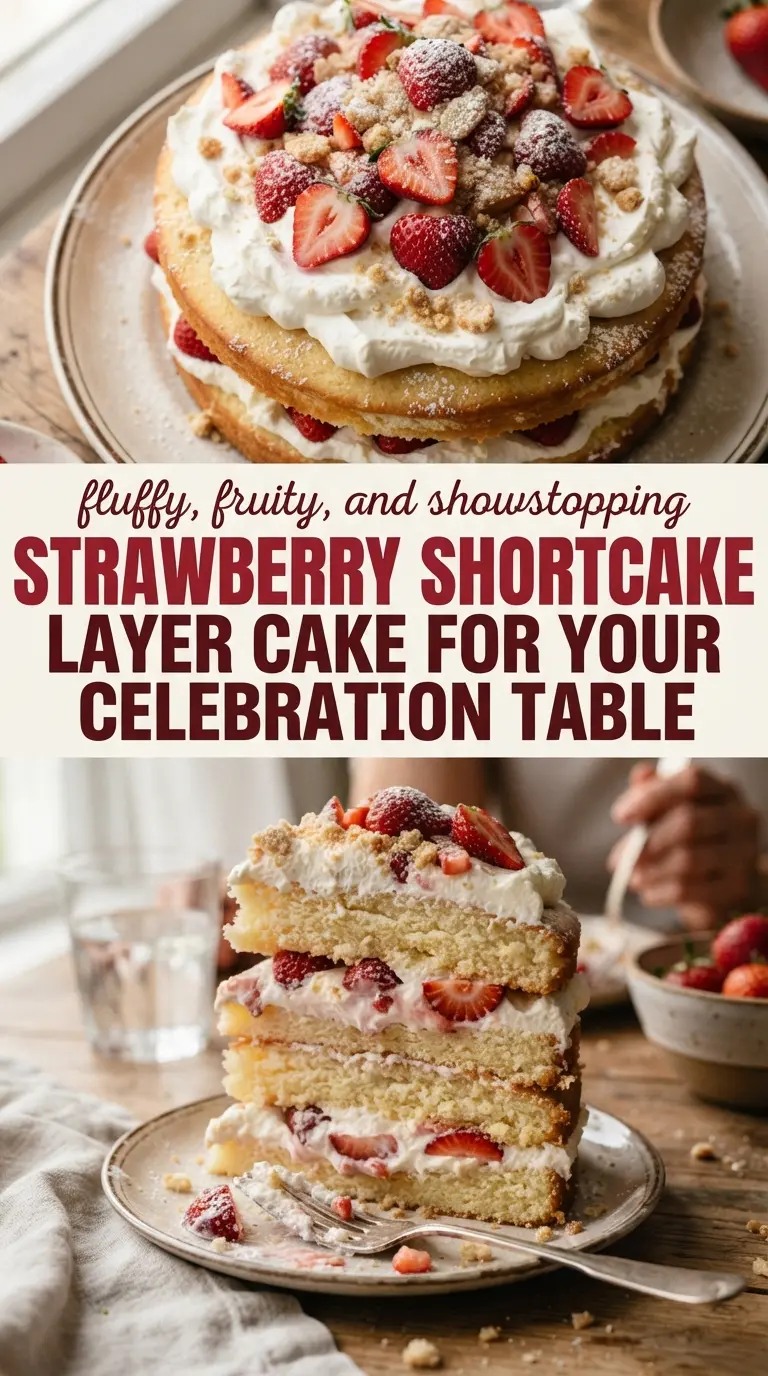
Fluffy vanilla cake, billowy whipped cream, and juicy strawberries make this layer cake worth every bowl and every minute at the mixer. The crumb stays soft enough to cut cleanly, but it still has enough structure to hold tall layers without collapsing under the fruit and cream. Each slice gives you that classic strawberry shortcake feeling in a form that looks as special as it tastes.
What makes this version work is balance. The cake leans on butter and eggs for richness, but the batter stays tender because the dry ingredients and milk are added in turns and mixed only until combined. That keeps the crumb light instead of tight. The whipped cream is kept simple on purpose, so the strawberries stay the star and the whole cake tastes fresh rather than heavy.
There’s one detail below that matters more than people expect: the cakes need to be completely cool, and they slice even better after a short chill. That little bit of patience makes the layers stack neatly and keeps the filling from sliding out when you cut into it.
The cake layers came out so soft and even, and the whipped cream held its shape long enough for me to assemble it a few hours ahead. The strawberries made every slice taste fresh, not heavy, and the naked sides looked beautiful on the table.
Save this strawberry shortcake layer cake for the next celebration when you want tall vanilla layers, fresh berries, and whipped cream that slices cleanly.
The Shortcut That Keeps Strawberry Shortcake Layers Tall Instead of Slumping
The biggest mistake with a strawberry shortcake layer cake is treating it like a regular frosted cake. The filling here is soft, wet, and heavy with fruit juices, so the structure has to come from the cake itself. That means you want a tender crumb, not a fragile one, and you want the layers fully cool before a single berry goes on them.
Another thing that trips people up is overmixing after the flour goes in. Once the batter turns smooth, stop. Extra mixing develops too much gluten, which gives you a tighter cake that feels sturdy at first and then turns dense after it sits under whipped cream. The other quiet win is chilling the layers before assembly; cold cake handles better, and the whole stack stays cleaner when you spread the cream.
What Each Ingredient Is Actually Doing in This Cake
- All-purpose flour — This gives the cake enough structure to hold layers without becoming dry. Cake flour would make it softer, but here a little more body helps the cake stand up to the filling.
- Baking powder — This is what gives the cake its lift, especially since the batter starts with butter and sugar. Old baking powder is one of the fastest ways to end up with a flat cake, so check the date if yours has been sitting around a while.
- Butter — Use real butter here, not a spread. It traps air when creamed with sugar, which creates a lighter crumb and adds the flavor that makes the vanilla cake taste like dessert, not just sweetness.
- Eggs — These give the cake richness and help it set properly. Add them one at a time so the batter stays smooth; if the mixture looks a little curdled after an egg, it usually comes back together once the flour goes in.
- Whole milk — Milk keeps the cake tender and gives the batter a pourable texture without thinning it out too much. Lower-fat milk works in a pinch, but the finished crumb won’t taste as plush.
- Vanilla extract — This is the background flavor that makes the strawberries taste brighter. Use the good stuff if you have it, because the cake itself is otherwise fairly simple.
- Fresh strawberries — Fresh fruit matters here. Frozen strawberries release too much liquid and turn the filling soupy, which is the one thing that will send the layers sliding.
- Heavy cream — This needs the fat content to whip into stable peaks. Anything lighter won’t hold the cake together as well, especially if you’re assembling ahead of time.
Building the Cake So the Layers Stay Clean
Mixing the Batter Without Toughening It
Start by creaming the butter and sugar until the mixture looks pale and fluffy, not just blended. That step builds air into the batter and gives the cake a lighter crumb. When the eggs go in, beat each one in fully before adding the next so the batter doesn’t separate. Once the flour and milk are added, switch to a gentler hand and stop mixing as soon as the streaks disappear.
Baking for Even Layers
Divide the batter evenly among the pans so the cakes finish at the same time and stack neatly. Bake until the tops spring back when touched and a toothpick comes out clean or with a few moist crumbs, not wet batter. If the centers still wobble, give them a few more minutes; pulling them too early is how you end up with layers that sink in the middle once they cool.
Whipping the Cream to the Right Point
Whip the cream with the sugar until stiff peaks hold their shape when you lift the whisk. Soft peaks will spread too quickly between the layers and won’t support the strawberries as well. Stop as soon as it reaches that point, because overwhipped cream starts to look grainy and can turn buttery fast. If that happens, it’s usually been pushed too far, not whipped too long by a small amount.
Assembling Without a Leaning Tower
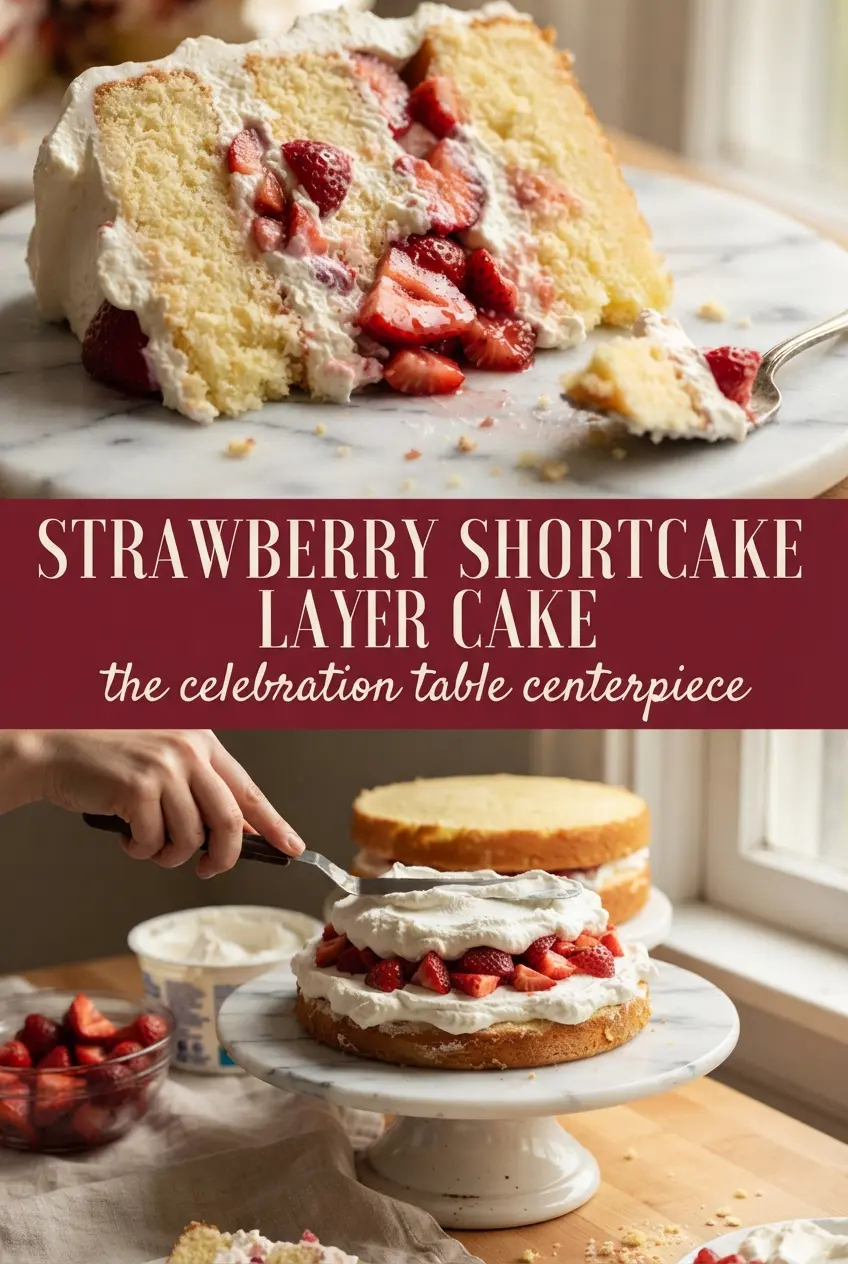
Level the cake layers only if they’ve domed a lot, then chill them briefly so they’re easier to handle. Spread a generous layer of whipped cream over the first cake, add sliced strawberries, then repeat with the next layer. Keep the fruit away from the very edge so the filling doesn’t squeeze out when the top layer goes on. Finish with cream and a few berries on top, then chill the assembled cake before slicing so the layers settle together.
How to Adapt This Cake Without Losing What Makes It Work
Make it ahead for a party
Bake the cake layers a day ahead, wrap them well, and chill them before assembling. The texture actually improves after resting, and the cold layers are easier to stack without tearing the whipped cream.
Dairy-free version
Use a plant-based butter that behaves like baking margarine and swap in an unsweetened non-dairy whipping cream that holds peaks. The cake will still stack, but the flavor will be a little less rich and the cream may soften faster, so assemble closer to serving time.
Gluten-free adaptation
Use a 1:1 gluten-free baking flour that includes xanthan gum. The cake will be a little more delicate, so line the pans well and let the layers cool completely before moving them.
Stabilize the cream if the cake needs to sit out
If you need the cake to hold up for longer, add a little powdered sugar or use a stabilized whipped cream method. That gives the filling more staying power, which helps if the cake will be on a buffet or in a warm room.
Storage and Reheating
- Refrigerator: Store covered for up to 2 days. The strawberries will soften and release more juice as it sits, but the cake still tastes great.
- Freezer: Freeze the unfrosted cake layers only. Wrap them tightly and freeze for up to 2 months, then thaw in the refrigerator before assembling. I don’t recommend freezing the finished cake because the whipped cream changes texture.
- Reheating: This cake isn’t meant to be reheated. Serve it cold or at cool room temperature, and don’t microwave slices or the cream will melt into the berries.
Answers to the Questions Worth Asking
Strawberry Shortcake Layer Cake
Ingredients
Equipment
Method
- Preheat the oven to 350°F and grease three 8-inch cake pans for easy release.
- Whisk together the all-purpose flour and baking powder until evenly distributed.
- Cream the butter and sugar until light and fluffy, then beat in the eggs one at a time.
- Alternate adding the dry ingredients and milk, mixing until just combined, then stir in the vanilla extract.
- Divide the batter among the pans and bake for 22-25 minutes until a toothpick comes out clean.
- Whip the heavy cream with sugar to stiff peaks for stable filling.
- Layer the cooled cakes with whipped cream and sliced fresh strawberries between each layer, finishing with cream and berries on top.