
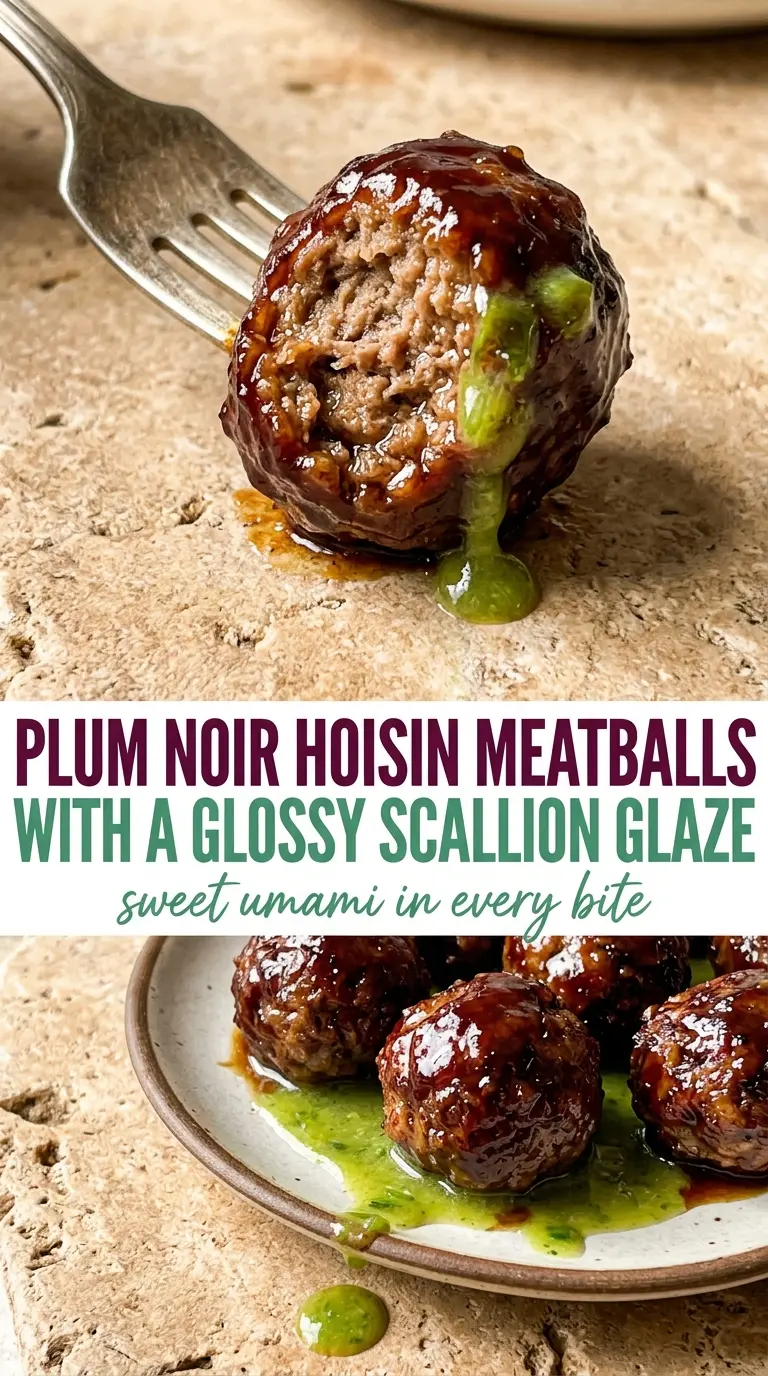
Tender meatballs with a glossy hoisin glaze and a sharp scallion finish are the kind of thing people hover over. The beef stays juicy, the outside picks up just enough color in the oven, and the sauce clings in a sticky, lacquered coat instead of sliding off the pan. The scallion oil on top keeps the whole dish from leaning too sweet, so every bite lands with richness, salt, and a fresh bite of allium.
The trick here is baking the meatballs first and glazing them after. That keeps them intact and gives you a better texture than trying to simmer raw meatballs in sauce from the start. Breadcrumbs and egg do the quiet work of holding everything together, while garlic and ginger give the beef enough backbone to stand up to the hoisin.
Below, you’ll find the small timing details that keep the glaze glossy, plus the easiest way to double the scallion sauce when you want extra brightness for serving.
The glaze got shiny and thick without turning sticky-sweet, and the scallion oil on top made them taste restaurant-worthy. I baked them right on a sheet pan and they held together perfectly.
Sticky hoisin meatballs with scallion sauce are the kind of appetizer that disappears fast, so pin this for the next time you need a glossy, crowd-pleasing party dish.
The Key to Meatballs That Stay Tender Before the Glaze Goes On
The biggest mistake with sauced meatballs is rushing the sauce too early. Raw meatballs tossed straight into hoisin glaze can shed fat, soften before they set, and end up more fragile than you want. Baking them first gives the outside enough structure to hold onto the glaze, and it also keeps the finished sauce concentrated instead of watered down by drippings.
That second part matters more than people think. Hoisin already brings sweetness and body, so if the meatballs release too much moisture, the glaze turns loose and muddy instead of sticky. A hot oven sets the crust quickly, while the short finish in sauce coats the meatballs without soaking them.
What Each Ingredient Is Actually Doing in This Dish
- Ground beef — An 80/20 blend gives you the best balance of flavor and moisture. Leaner beef works, but the meatballs won’t taste as rich and can dry out a little faster in the oven.
- Breadcrumbs — These hold onto the meat juices and keep the texture soft. Panko works fine, though standard breadcrumbs give a slightly tighter, more classic meatball.
- Egg — This is the binder that keeps the meatballs from crumbling before they hit the glaze. One egg is enough for a pound of beef; adding more makes the texture bouncy instead of tender.
- Garlic and ginger — Fresh is worth using here because the glaze is sweet and savory, and the meat needs something sharp underneath it. Ground ginger can stand in, but use less or it will read dusty.
- Hoisin sauce — This is the backbone of the glaze, so use one you actually like the taste of on its own. If yours is very thick, loosen it with a tablespoon of water while simmering so it coats evenly.
- Scallions — These are not garnish in this recipe. Mixed with sesame oil, they become the bright finishing sauce that keeps the dish from tasting heavy.
Building the Sticky Finish Without Breaking the Sauce
Mixing the Meatball Base
Combine the beef, breadcrumbs, egg, garlic, and ginger just until everything looks evenly distributed. If you overwork the mixture, the meatballs tighten up and turn dense instead of tender. The mixture should hold its shape when rolled, but it should still feel soft and a little tacky in your hands.
Baking Until the Edges Set
Roll the meatballs into even portions so they cook at the same pace, then bake at 400°F until browned and cooked through. You want the outsides to look set and lightly caramelized, not pale and damp. If they are packed too tightly on the pan, they steam instead of browning, so leave a little room between each one.
Glazing to a Glossy Coat
Warm the hoisin, soy sauce, and rice vinegar together until the sauce looks smooth and slightly thickened. The vinegar keeps the glaze from tasting flat, and the simmer helps everything turn shiny. If the heat is too high, the sugars in the hoisin can catch on the pan and turn the glaze sticky in the wrong way, so keep it at a gentle simmer.
Finishing With the Scallion Sauce
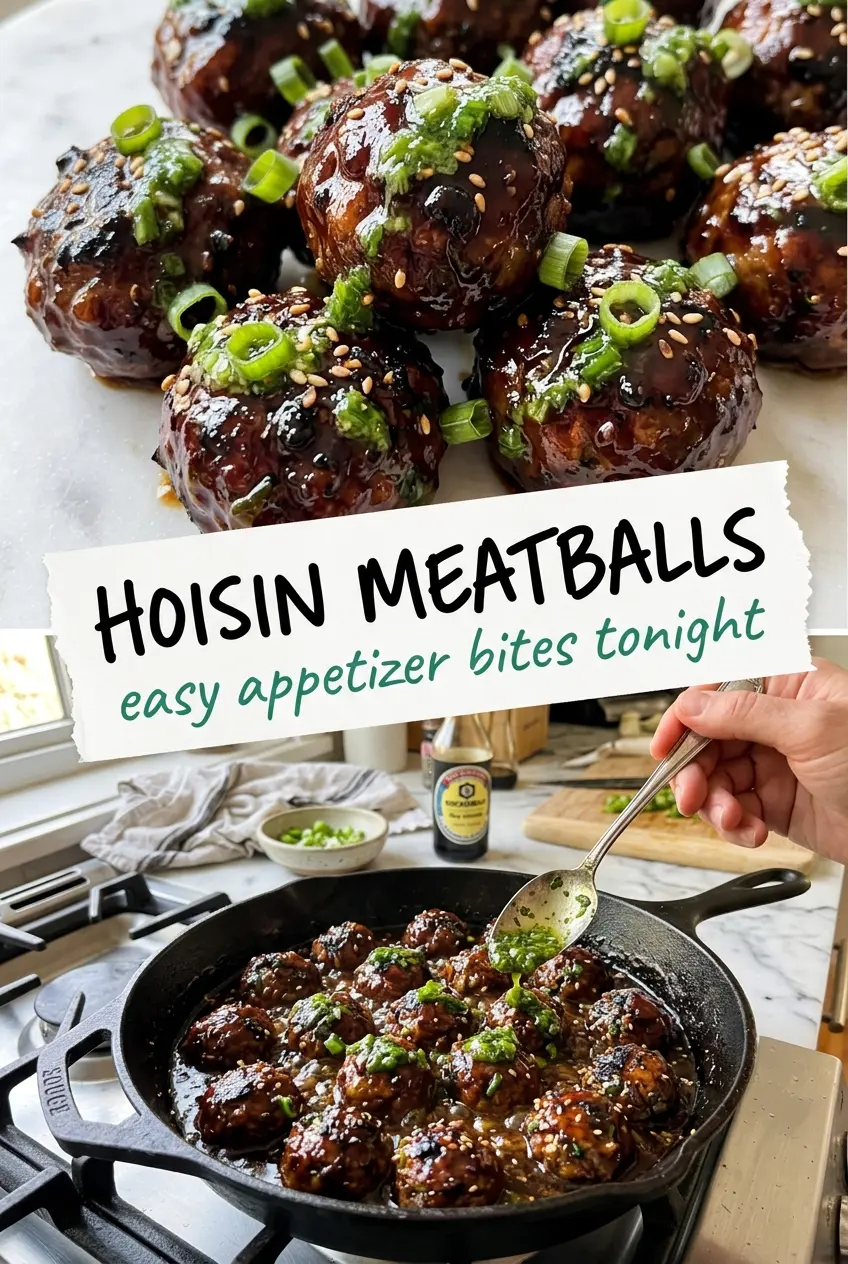
Toss the baked meatballs in the glaze while they’re still hot so the sauce clings right away. Then mix the scallions with sesame oil and drizzle that over the top just before serving. That last step matters because the fresh scallion flavor fades if it sits too long in the oil.
Three Ways to Make These Meatballs Work for Different Nights
Make Them Gluten-Free
Use certified gluten-free breadcrumbs and check that your hoisin sauce is gluten-free, because some brands sneak wheat into the formula. The texture stays almost the same, though the meatballs may brown a touch less deeply depending on the breadcrumb brand.
Swap in Ground Turkey or Chicken
This works well if you want something lighter, but the leaner meat needs a gentler hand. Add a tablespoon of oil to the mixture or brush the meatballs lightly before baking so they don’t dry out, and pull them from the oven as soon as they reach temperature.
Turn It Into a Main Dish
Serve the meatballs over steamed rice, rice noodles, or crisp greens with the extra scallion sauce spooned over everything. The glaze gives you enough bold flavor for a full bowl, and the bright scallions keep it from feeling heavy.
Storage and Reheating
- Refrigerator: Store the meatballs and sauce in an airtight container for up to 4 days. The glaze thickens a bit as it chills, but the flavor holds well.
- Freezer: The baked meatballs freeze well, but freeze them before adding the scallion sauce. Rewarm the meatballs and glaze separately if possible, then add fresh scallions after reheating.
- Reheating: Warm gently in a covered skillet over low heat with a splash of water to loosen the glaze. High heat can make the sauce seize and can dry out the beef, so keep the reheating slow.
Answers to the Questions Worth Asking
Sticky Hoisin Meatballs With Scallion Sauce
Ingredients
Equipment
Method
- Preheat the oven to 400°F. Mix ground beef, breadcrumbs, egg, garlic, and ginger, then roll into meatballs.
- Bake the meatballs on a sheet pan for 15–18 minutes until browned and cooked through.
- In a saucepan, whisk hoisin sauce, soy sauce, and rice vinegar. Simmer until glossy, stirring occasionally.
- Toss the baked meatballs in the hoisin glaze until evenly coated.
- Mix scallions with sesame oil for the scallion sauce. Stir until the scallions look glossy and well coated.
- Drizzle scallion sauce over the glazed meatballs before serving. Finish with extra drizzle only if the sauce pools nicely on top.