
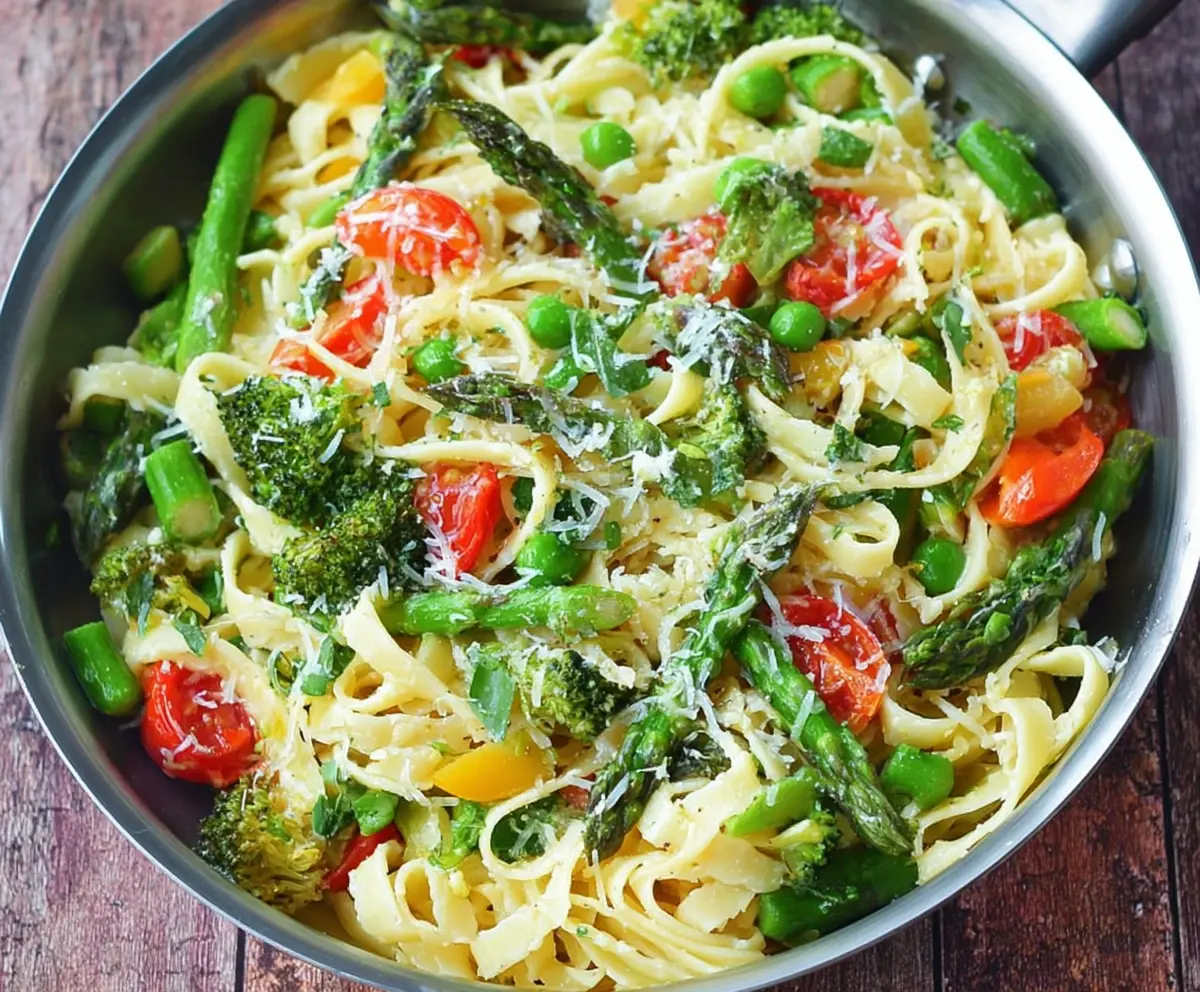
Spring Vegetable Pasta Primavera is a fresh and colorful dish that celebrates the best of spring’s bounty. It’s packed with crisp asparagus, sweet peas, tender zucchini, and juicy cherry tomatoes, all tossed together with pasta in a light garlic and olive oil sauce. The vegetables keep their bright colors and crunchy textures, making every bite feel lively and refreshing.
I love making this pasta when I want something that feels light but still satisfying. The way the veggies and pasta come together so easily makes it a perfect meal for busy weeknights. I usually add a generous sprinkle of parmesan cheese and a squeeze of lemon to brighten it up even more. It’s also a great way to get more veggies into your meal without any fuss.
Whenever I serve Spring Vegetable Pasta Primavera, it reminds me of sunshiny days and casual dinners with friends. I often like to pair it with a simple green salad and some crusty bread to soak up all the tasty juices. It’s the kind of dish that feels like a little celebration of the season, and I find myself coming back to it again and again when I want something fresh and cheerful on the table.
Key Ingredients & Substitutions
Farfalle and Penne Pasta: Using two pasta shapes adds an interesting twist to the dish. If you prefer, use just farfalle or penne. Gluten-free pasta works well too if you need a gluten-free option.
Asparagus and Broccolini: These spring veggies bring a fresh crunch. Broccoli can replace broccolini, or use green beans for a similar texture. Trim the tough ends before cooking.
Green Peas and Carrots: Peas add sweetness, great fresh or frozen. Carrots give color and softness. If carrots aren’t handy, bell peppers or zucchini are nice substitutes.
Olive Oil and Garlic: Olive oil keeps the dish light and flavorful. Garlic should be fresh and minced finely. If you want a milder taste, reduce garlic or use garlic-infused oil.
Parmesan Cheese: This adds a nutty, salty finish. Use pecorino or any hard cheese as a substitute. For a dairy-free option, try nutritional yeast for a cheesy hint.
How Can I Keep Vegetables Tender but Crisp in Pasta Primavera?
Cooking the vegetables just right is key! Follow these simple steps to avoid mushy or undercooked veggies:
- Start by sautéing the hardest vegetables first (like carrots), since they take longer to soften.
- Add medium-firm veggies like asparagus and broccolini next, cooking them until they’re tender but still have a slight snap.
- Finish with quick-cooking veggies like peas and tomatoes—just warm them through to keep their shape and freshness.
- Use medium heat to cook evenly without burning or overcooking.
- If the pan looks dry while cooking the vegetables, add a small splash of water or reserved pasta water to help steam them gently.
This method helps preserve color, texture, and flavor, making your Primavera bright and lively every time.
Equipment You’ll Need
- Large pot – I love it because it boils pasta quickly and with plenty of space, making draining easier.
- Large skillet or sauté pan – perfect for cooking the vegetables evenly without overcrowding.
- Colander – makes draining the pasta simple and mess-free.
- Wooden spoon or tongs – helps toss everything together gently without breaking the pasta.
- Measuring cups and spoons – to accurately measure ingredients like olive oil and cheese.
Flavor Variations & Add-Ins
- Swap cherry tomatoes for roasted sun-dried tomatoes for a deeper, tangy flavor.
- Add cooked chicken, shrimp, or tofu for extra protein and a heartier meal.
- Use fresh herbs like basil, parsley, or thyme for a burst of fresh flavor.
- Sprinkle red pepper flakes for a little heat or lemon zest for extra brightness.
Spring Vegetable Pasta Primavera
Ingredients You’ll Need:
Pasta:
- 8 oz (225g) farfalle (bow-tie) pasta
- 1 cup penne pasta
Vegetables:
- 1 cup asparagus spears, trimmed and cut into 2-inch pieces
- 1 cup broccolini or tender broccoli florets
- 1/2 cup green peas (fresh or frozen)
- 1/2 cup carrots, diced small
- 1 cup cherry tomatoes, halved
- 2 cloves garlic, minced
Other Ingredients:
- 3 tbsp olive oil
- Salt and pepper to taste
- 1/4 cup grated Parmesan cheese, plus extra for serving
- Optional: fresh basil or parsley for garnish
- Optional: lemon zest (for brightness)
How Much Time Will You Need?
This delicious pasta primavera takes about 20-25 minutes to prepare and cook. Most of the time involves boiling the pasta and sautéing the fresh vegetables, so it’s a quick and healthy meal for any busy day.
Step-by-Step Instructions:
1. Cook the Pasta:
Fill a large pot with salted water and bring it to a boil. Add the farfalle and penne pasta and cook according to the package instructions until just tender but still firm (al dente). Before draining, save about 1/2 cup of the pasta water – this will help keep your dish moist. Drain the pasta and set it aside.
2. Sauté Vegetables and Garlic:
While the pasta cooks, heat 2 tablespoons of olive oil in a large skillet or sauté pan over medium heat. Add the minced garlic and cook for about 30 seconds until it smells amazing. Then add the diced carrots, cooking for 2-3 minutes since they take longer to soften.
3. Add Tender Veggies:
Stir in the asparagus and broccolini pieces. Sauté for another 3-4 minutes until they’re tender but still have a nice crunch. Next, add the green peas and cherry tomatoes. Cook for 2 minutes, just enough to warm them and soften the tomatoes slightly.
4. Combine Pasta and Vegetables:
Add the drained pasta directly into the skillet with the vegetables. Drizzle the remaining 1 tablespoon of olive oil over everything, then toss gently to mix. If things seem a little dry, add some reserved pasta water a little at a time until it looks just right.
5. Season and Finish:
Season the entire dish with salt and pepper to your liking. Sprinkle the grated Parmesan cheese over the pasta and stir softly to combine all the flavors. Remove from heat, and if you like, add fresh basil or parsley and a little lemon zest for a fresh, bright finish.
6. Serve Warm:
Plate the pasta primavera warm and offer extra Parmesan cheese on the side for anyone who wants a little more cheesy goodness. Enjoy your colorful, fresh, and delicious meal!
Can I Use Frozen Vegetables for This Recipe?
Yes! Frozen peas and broccoli or broccolini work well—just thaw them slightly before cooking. Add them a bit earlier in the sauté process if needed, so they heat through without getting mushy.
How Can I Make This Dish Vegan?
To make it vegan, skip the Parmesan cheese or substitute it with a plant-based cheese or nutritional yeast for a cheesy flavor. Also, ensure the pasta you use is egg-free, which most dry pastas are.
Can I Prepare This Pasta Primavera Ahead of Time?
Absolutely! Cook the pasta and veggies separately, then toss together with olive oil just before serving. Store components in the fridge for up to 2 days and reheat gently to keep veggies crisp.
What Should I Do If I Don’t Have Farfalle or Penne Pasta?
Any pasta shape will do! Fusilli, rotini, or even spaghetti can be great substitutes. Just adjust cooking times according to the pasta you choose.