
Creamy deviled eggs get a playful Halloween makeover here, and the best part is that the spooky look doesn’t ask you to sacrifice the classic flavor people actually want to eat. The filling stays smooth and tangy, the whites stay neat and tender, and the olive “legs” give each one just enough drama to stand out on a party platter without turning the whole recipe into a craft project.
What makes these work is keeping the yolk filling balanced and pipeable. Too much mayo and the filling goes loose; too little and it turns dry and heavy. The tiny splash of vinegar sharpens the yolks so the eggs taste bright instead of flat, and a little Dijon gives the filling backbone. The olive strips are simple, but they look best when you cut them evenly and place them while the filling is still soft enough to anchor them.
Below you’ll find the little details that keep the eggs tidy, how to get the spider legs to look clean instead of clunky, and a few smart variations if you want to adjust the filling or make the recipe ahead for a crowd.
The yolk filling stayed silky and piped cleanly, and the olive legs held their shape on the platter. I made them the night before and they were still perfect the next day.
Save these Spider Deviled Eggs for a Halloween platter that looks polished, tastes classic, and comes together with just a few smart touches.
The Secret to Spider Deviled Eggs That Don’t Look Messy
The filling needs to be smooth enough to pipe, but not so loose that the spider legs slide around. That’s the balance that separates a neat platter from eggs that look like they were assembled in a hurry. A slightly thicker filling holds the olive strips in place, especially once the paprika goes on and gives the tops a dry finish.
The other place people run into trouble is cutting the olives too chunky. Thick strips don’t read as legs; they just look heavy. Thin, even slices lay flatter and fan out better from the center. If the eggs are slipping on the tray, a tiny smear of filling under the olive pieces helps anchor them without changing the look.
What the Yolks, Mustard, and Olives Are Doing Here
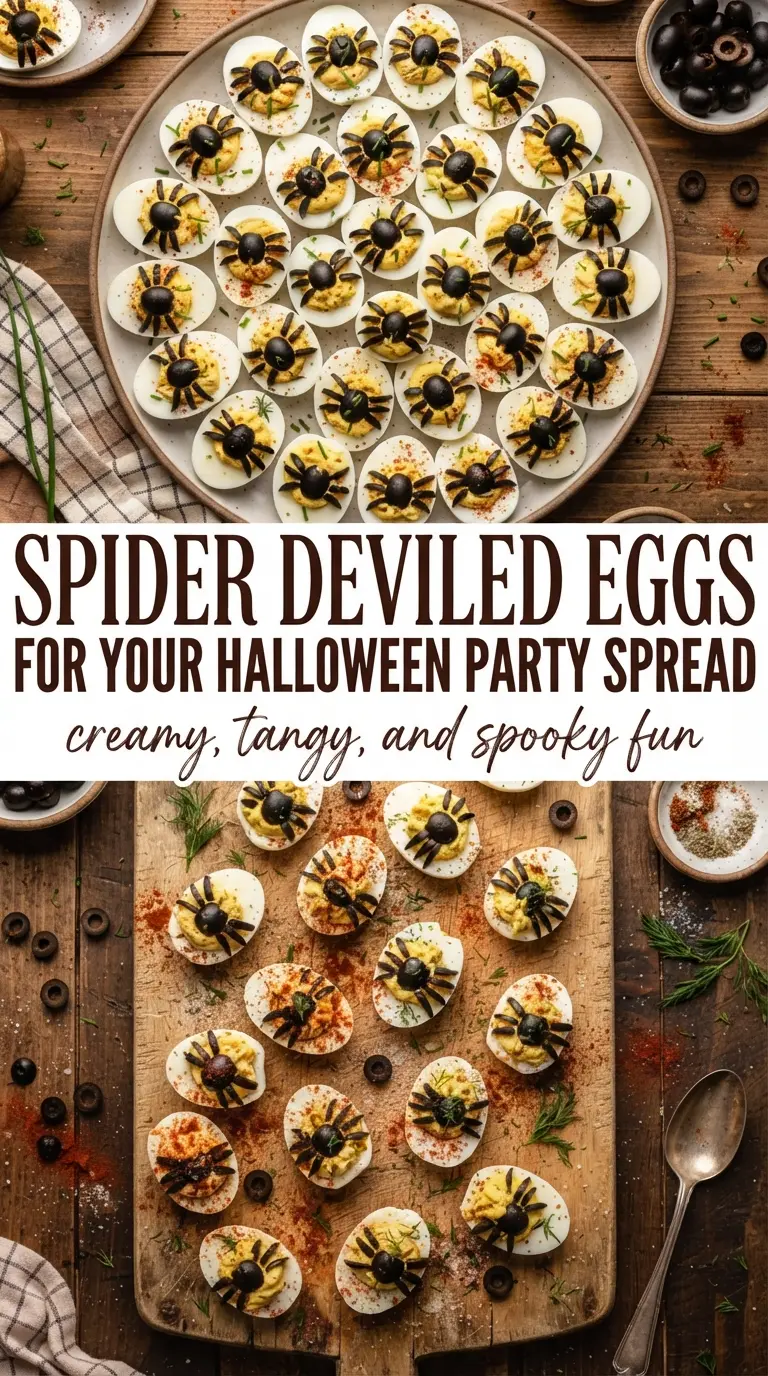
The eggs themselves matter most here. Start with eggs that are cooked through but not overcooked, because rubbery whites make the whole appetizer feel tired before you even add the filling. If the yolks have that gray ring from boiling too hard or too long, the flavor is still fine, but the presentation takes a hit.
- Mayonnaise — This gives the filling its creamy body. Use a mayo you like eating on its own, because its flavor comes through. If you want a slightly lighter filling, replace a spoonful with plain Greek yogurt, but don’t swap in too much or the mixture turns sharp and loose.
- Dijon mustard — Dijon adds depth and keeps the yolks from tasting one-note. Yellow mustard works in a pinch, but it tastes brighter and a little flatter. Dijon gives the filling a more rounded bite without making it taste mustardy.
- White vinegar — That small splash wakes up the yolks and cuts the richness. Lemon juice can work if that’s what you have, though it brings a softer, fruitier acidity. Use just enough to sharpen the filling; too much and the eggs start tasting harsh.
- Black olives — These do the visual heavy lifting. Thin strips are easier to arrange and look more like spider legs than thick half-moons. Pat them dry after slicing so they don’t slide on the filling.
Building the Filling, Shaping the Legs, and Getting the Platter Ready
Mashing the Yolk Base Until It Turns Smooth
Scoop the yolks into a bowl and break them up first before adding the mayo, mustard, vinegar, salt, and pepper. The fewer lumps you leave at the start, the easier the filling will pipe later. Press and stir until the mixture looks creamy and holds soft peaks on a spoon. If it seems grainy, keep mashing; it usually just needs a few more turns with a fork.
Piping the Centers Without Smearing the Whites
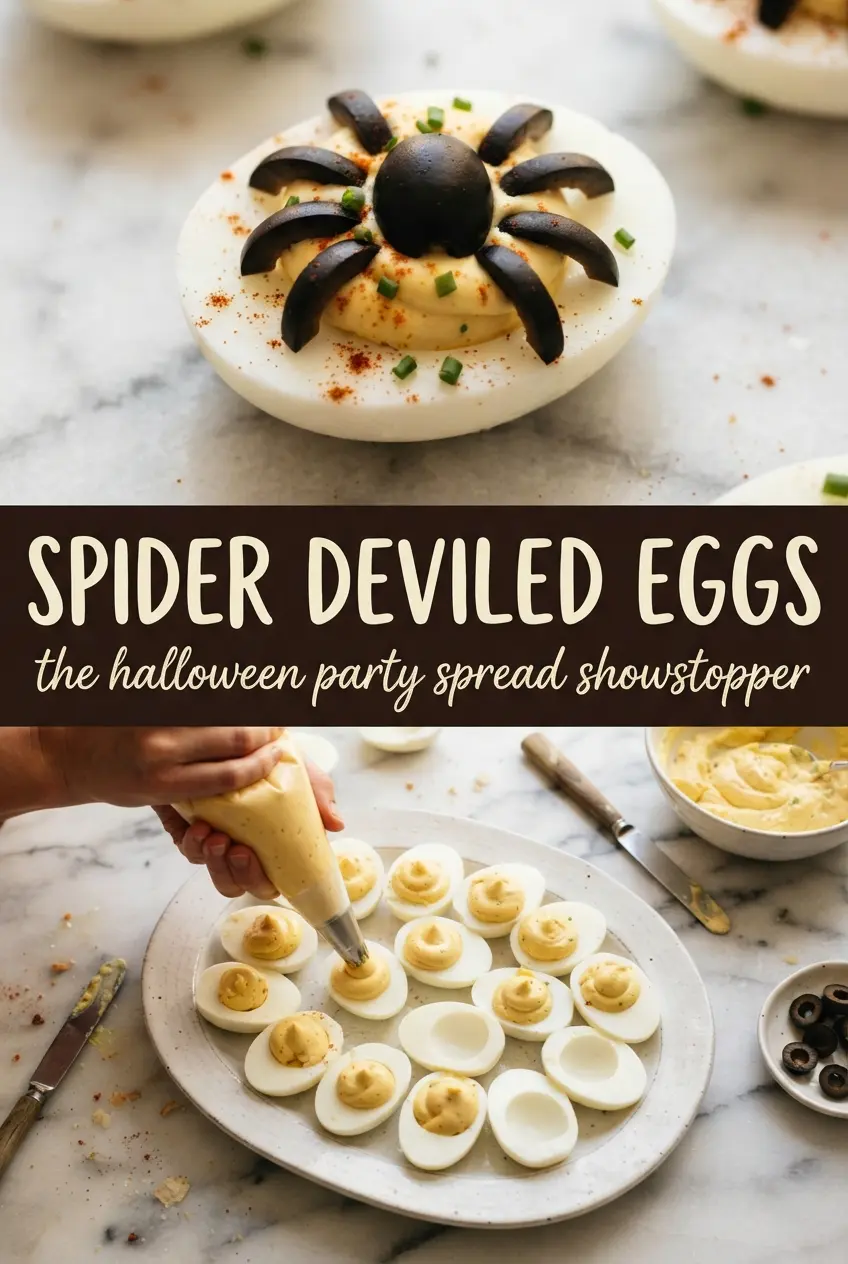
Use a piping bag if you want the cleanest look, but a spoon works as long as you keep the filling centered. Fill each egg half just above the edge so the top has a rounded finish rather than a flat, packed-in look. If you overfill, the olive strips won’t sit cleanly, and the eggs will start to look crowded. A quick pass with the back of a small spoon smooths any ridges before you add the spiders.
Arranging the Olive Legs So They Read as Spider Legs
Cut the olives into thin, even strips, then place them around the yolk filling like spokes on a wheel. Four strips on each side is enough for the spider look without cluttering the egg. Press them down gently so they catch on the filling, and don’t move them around once they’re placed or the design starts to blur. A light dusting of paprika at the end adds color and keeps the tops from looking too stark.
Three Ways to Make These Spider Deviled Eggs Work for Your Crowd
Dairy-Free Deviled Eggs
These are already close to dairy-free, so the main thing is choosing a mayo you know works for your diet. The texture stays the same, since mayo is what carries the filling here. Just don’t add extra vinegar trying to replace missing richness; that makes the filling sharp instead of creamy.
A Tangier, Brighter Filling
Add a little more Dijon or a few extra drops of vinegar if you like a sharper bite. This works best when you’re serving the eggs alongside salty snacks or richer party foods, because the extra tang keeps them from disappearing on the table. Add gradually; once the filling turns too loose, it won’t pipe cleanly.
No Piping Bag, No Problem
A small spoon gives you a rustic look that still works well for this recipe. The key is to pack the filling into the center in one motion instead of dragging it across the egg white. If the top looks uneven, tap the tray lightly on the counter to settle the filling before adding the olive strips.
Storage and Reheating
- Refrigerator: Store covered for up to 2 days. The whites stay best within the first day, though the flavor holds well.
- Freezer: Don’t freeze deviled eggs. The whites turn watery and spongy once thawed, and the filling breaks down.
- Reheating: These are meant to be served cold. Pull them from the fridge 10 to 15 minutes before serving so the filling isn’t icy, but don’t warm them or the texture gets soft and awkward.
Answers to the Questions Worth Asking
Spider Deviled Eggs
Ingredients
Method
- Scoop the yolks from the halved eggs into a bowl, keeping the whites intact. Stop as soon as the yolk is removed so the egg whites hold their shape.
- Mash the yolks with mayonnaise, Dijon mustard, vinegar, salt, and pepper until smooth. Mix until no lumps remain and the filling looks creamy.
- Pipe or spoon the yolk mixture back into the egg white halves. Fill each half to the top for a centered “spider” look.
- Arrange thin olive strips radiating outward from the center of each filled egg to resemble spider legs. Place the strips close together so the legs fan out clearly.
- Sprinkle lightly with paprika before serving. Use a light dusting so the paprika reads as garnish without turning the filling orange.