
Soft, moist banana bread with a tender crumb and a gentle tang disappears fast once it comes out of the oven. The sour cream keeps the loaf rich without making it heavy, and the banana flavor stays front and center instead of getting buried under too much sugar or spice. Sliced warm, it has that perfect balance of plush interior and lightly browned edges that makes a plain loaf feel worth baking again.
The trick here is using full-fat sour cream, not a lighter version. That extra fat keeps the crumb velvety and helps the bread stay soft for days. Mixing the bananas with melted butter first gives you a smooth base, and folding the dry ingredients in at the end keeps the loaf from turning dense or rubbery.
Below, I’ve added the one texture cue that matters most at the end of baking, plus a few ways to adapt the loaf if you need a different pan size or want to make it a little more your own.
The loaf came out so tender and stayed moist for days. I used full-fat sour cream like you said, and the crumb was soft without being gummy, even on the second day.
Love the moist crumb and tangy flavor of this sour cream banana bread? Save it to Pinterest for the days when you’ve got ripe bananas and want a loaf that stays tender all week.
The Reason This Loaf Stays Tender Instead of Drying Out
Most banana bread gets dry because the batter is overmixed or the loaf bakes a little too long. Sour cream changes the texture from the start. It brings fat and moisture into the batter, which gives you a softer crumb that holds up well after cooling. The loaf also has a small amount of baking soda, which reacts with the sour cream and bananas to lift the bread without making it taste flat.
The other detail that matters is restraint. This batter should look thick and slightly lumpy after the flour goes in. If you beat it smooth, the gluten tightens and the loaf turns heavy. Stop mixing as soon as you no longer see dry flour.
What Each Ingredient Is Doing in This Banana Bread
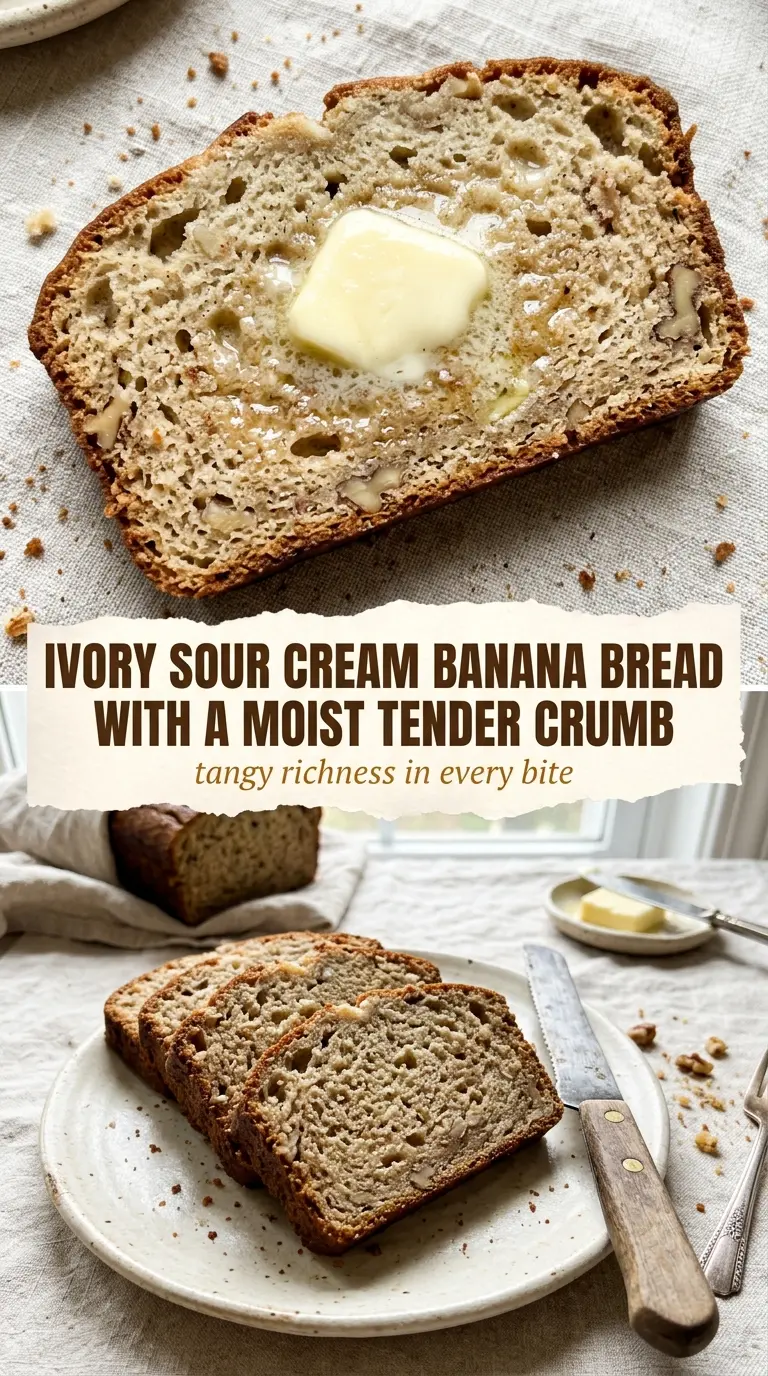
- Ripe bananas — The darker and spottier the bananas, the better the flavor. They should mash easily and smell sweet. Under-ripe bananas won’t give you the same moisture or depth, and you’ll taste that in the finished loaf.
- Melted butter — This brings richness and a softer, more even crumb than oil would. You can use unsalted butter here and keep the salt as written. Let it cool slightly before mixing it with the bananas so you don’t accidentally cook the egg.
- Sour cream — This is the ingredient that makes the loaf stay plush for days. Use full-fat sour cream for the best texture. Low-fat versions can work in a pinch, but the crumb won’t be as tender or moist.
- All-purpose flour — Regular all-purpose flour gives this loaf the right structure without making it bready. If you swap in a heavier flour, the loaf gets denser. For the most reliable result, measure the flour lightly rather than packing it into the cup.
- Baking soda — This is the leavener that helps the loaf rise and also balances the tang of the sour cream. It needs the acidity from the bananas and sour cream to do its job well, so don’t substitute baking powder here.
Building the Batter Without Toughening the Crumb
Mashing and Mixing the Wet Ingredients
Start by mashing the bananas until mostly smooth, then stir in the melted butter, sugar, egg, and sour cream. The mixture should look thick, glossy, and a little loose from the banana. If the butter is too hot, it can scramble the egg or create greasy streaks, so let it cool for a minute or two first. You’re aiming for a batter that smells sweet and banana-forward before the flour ever goes in.
Bringing in the Dry Ingredients
Whisk the flour, baking soda, and salt together in a separate bowl, then fold them into the wet mixture just until the flour disappears. Don’t chase every small lump. Those usually melt out during baking, and overmixing is what makes the loaf chewy instead of tender. The batter should look thick and scoopable, not pourable like cake batter.
Baking to the Right Center
Scrape the batter into a greased loaf pan and bake at 350°F until the top is deeply golden and a toothpick comes out clean from the center. The top usually cracks a bit down the middle, which is a good sign. If the outside is browning too quickly before the middle is done, tent the loaf loosely with foil for the last 10 to 15 minutes. Letting it cool in the pan for 10 minutes helps it set before you move it to a rack.
How to Adapt This Loaf When You Need a Different Version
Dairy-Free Version
Swap the butter for melted coconut oil or a neutral oil and use a thick dairy-free yogurt in place of the sour cream. The loaf will still be moist, but the flavor becomes a little less rich and a little more neutral. Choose an unsweetened yogurt so the bread doesn’t turn cloying.
Add-Ins That Won’t Weigh It Down
A handful of chopped walnuts, pecans, or chocolate chips works well here. Keep the total add-ins modest so the loaf doesn’t lose its tender crumb. Toss them with a spoonful of flour before folding them in if you want them to stay suspended through the batter instead of sinking.
Gluten-Free Swap
A 1:1 gluten-free baking flour blend can work, but the loaf will usually need the full bake time and may slice a little more delicately. Let it cool completely before cutting so it has time to set. If your blend already includes xanthan gum, you’re covered; if not, choose one that does for the best structure.
Storage and Reheating
- Refrigerator: Store tightly wrapped for up to 5 days. The crumb stays moist, though the texture firms up a bit when cold.
- Freezer: Freezes well for up to 3 months. Wrap the whole loaf or individual slices in plastic, then foil, and thaw at room temperature.
- Reheating: Warm slices in the microwave for 10 to 15 seconds or in a low oven until just heated through. Don’t blast it on high heat, or the edges dry out before the center softens.
Questions I Get Asked About This Banana Bread
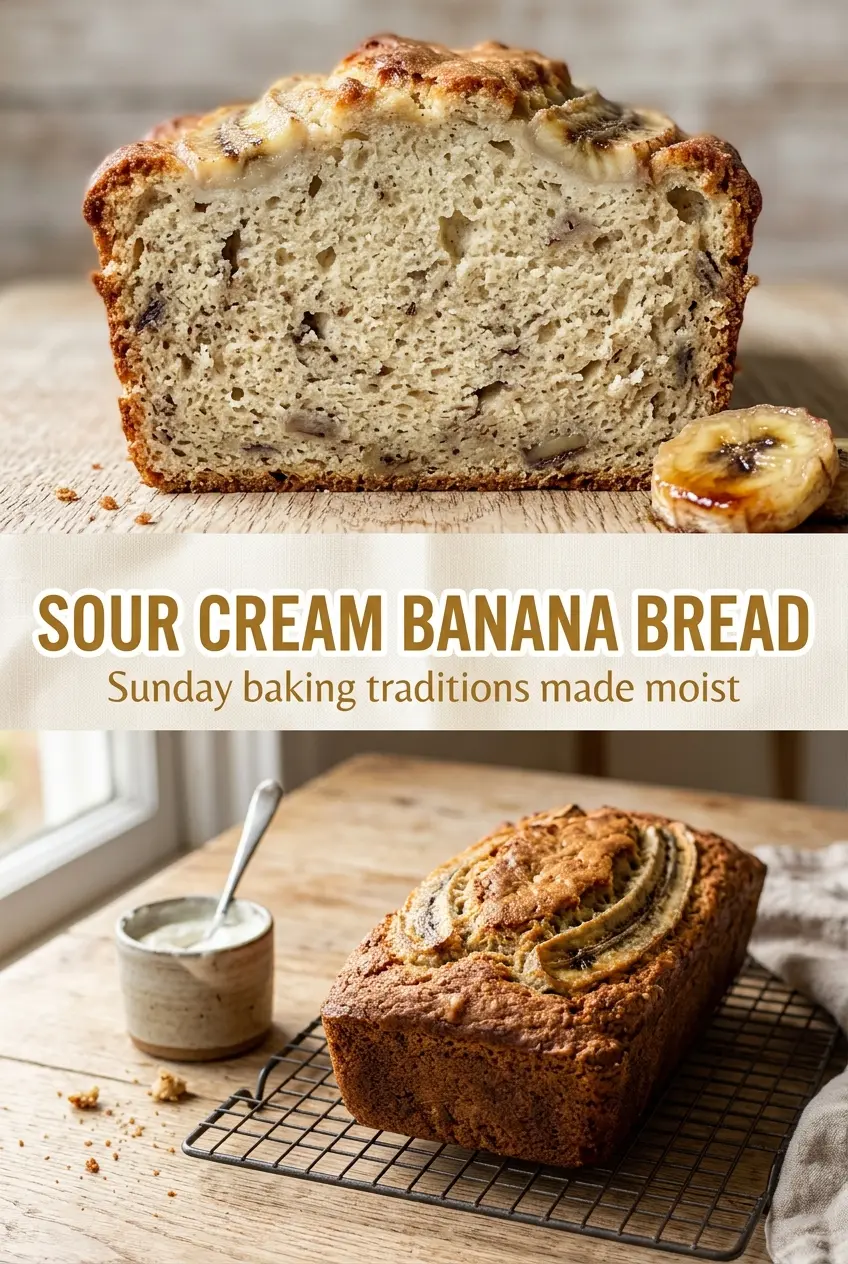
Sour Cream Banana Bread
Ingredients
Equipment
Method
- Preheat the oven to 350°F and grease a loaf pan for easy release and clean slicing.
- Mix the melted butter into the mashed bananas, then stir in the sugar, egg, and sour cream until smooth and glossy.
- Whisk the flour, baking soda, and salt together, then fold into the wet mixture just until no dry streaks remain.
- Pour the batter into the loaf pan and level the top so it bakes evenly with a uniform rise.
- Bake for 55 to 65 minutes at 350°F, until a toothpick inserted in the center comes out clean with no wet crumbs.
- Let the loaf cool in the pan for 10 minutes, then transfer to a wire rack to set the crumb before slicing.