
Fork-tender slow cooker pot roast with carrots, potatoes, and onion lands on the plate with the kind of gravy that makes people hover around the table waiting for seconds. The beef turns plush instead of stringy, the vegetables soak up the broth, and the whole thing tastes like it had more work behind it than it did. That’s what makes this version worth keeping around: it gives you a proper Sunday-style roast without standing over the stove all afternoon.
The key is using chuck roast, which has enough marbling to stay juicy through a long cook. Onion soup mix does more than add salt; it seasons the broth with onion, herbs, and a little savory backbone that plain broth doesn’t bring on its own. Cutting the vegetables into larger chunks keeps them from collapsing into the gravy before the beef is done.
Below, I’ve included the one step that deepens the flavor if you have an extra pan and the small timing detail that keeps the gravy smooth instead of gluey. If you’ve had pot roast turn out bland or dry before, this method fixes both.
The gravy thickened up perfectly and the roast was fall-apart tender without getting mushy. I used the leftovers for sandwiches the next day and my husband said it was even better.
Save this slow cooker pot roast for the night you want fork-tender beef, gravy, and vegetables with almost no hands-on work.
The Part Most Pot Roasts Get Wrong: Making the Beef Tender Without Turning the Vegetables to Mush
Pot roast gives people trouble when everything goes in and stays in the same way for the entire cook. Beef chuck wants time. Potatoes and carrots want structure. If you chop the vegetables too small, they surrender long before the roast is ready and you end up with a muddy pot instead of a proper dinner.
The other common mistake is lifting the lid too often. Every peek drops heat and slows the tenderizing process. Slow cookers work best when they stay steady, and that steady heat is what turns chuck roast from tough to spoon-soft. If you want cleaner slices, choose the lower end of the cook time and check for fork tenderness at the thickest part before you call it done.
What Each Ingredient Is Doing in This Slow Cooker Pot Roast
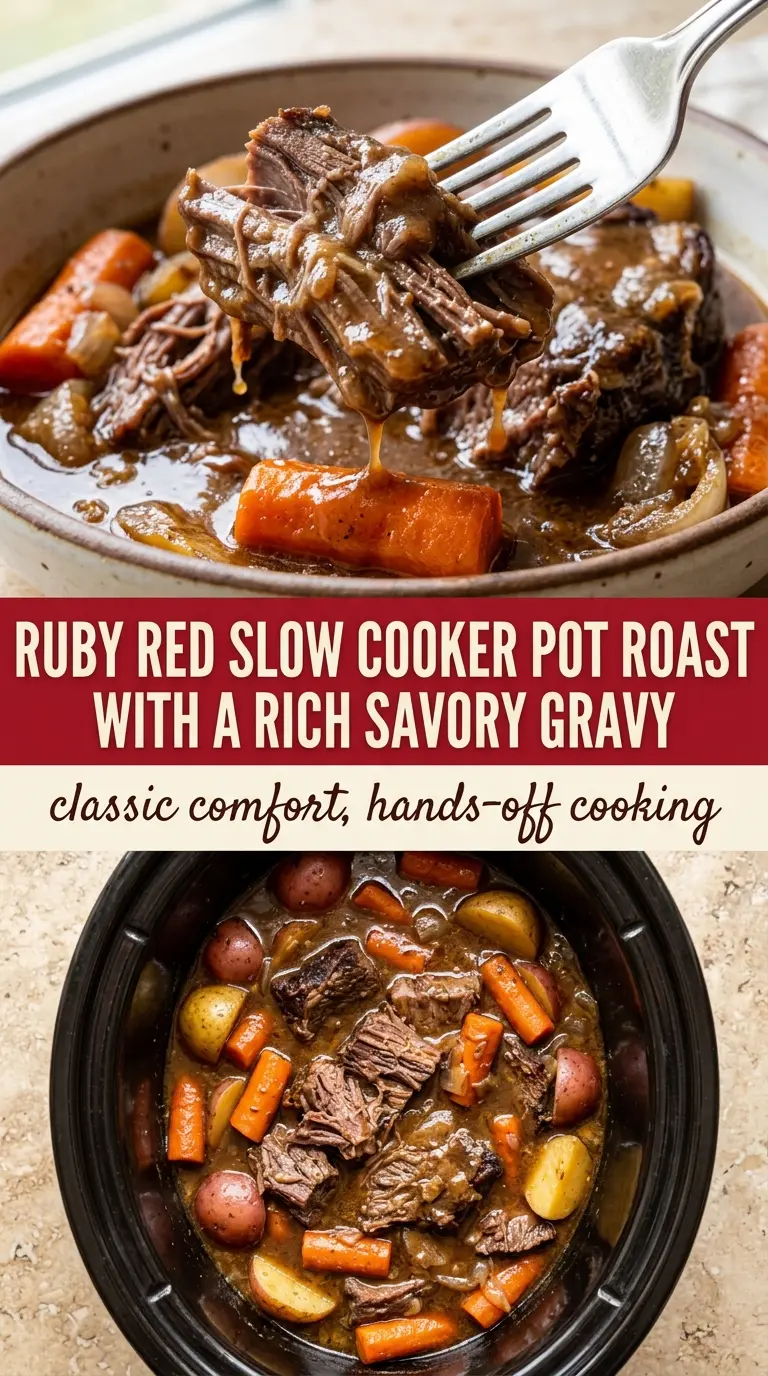
- Beef chuck roast — This is the cut that makes the recipe work. Chuck has enough connective tissue and marbling to become tender in long, moist heat, while leaner roasts tend to dry out before they soften. If you need a substitute, bottom round can work, but it won’t shred as luxuriously and needs extra care not to overcook.
- Carrots, potatoes, and onion — These aren’t garnish; they build the meal and flavor the cooking liquid. Cut them into large, even pieces so they hold their shape through hours of heat. Small pieces disappear and make the gravy cloudy.
- Beef broth — Use a broth you’d actually drink from a spoon. Since the liquid becomes gravy, better broth gives you a deeper finish. If you only have stock, that works too; just watch the salt because the onion soup mix adds plenty on its own.
- Onion soup mix — This is the shortcut that gives the pot roast that familiar savory backbone. It seasons the broth, adds onion depth, and helps the finished gravy taste like it simmered longer than it did. If you don’t use it, you’ll need to replace that layer with extra onion powder, garlic powder, and herbs.
- Cornstarch and water — This slurry turns the thin cooking liquid into a smooth gravy without floury lumps. Whisk the cornstarch with cold water first so it disperses evenly, then add it to simmering liquid. If the liquid isn’t hot enough, the gravy stays thin.
How to Build the Gravy and Finish the Roast Without Breaking It
Loading the Slow Cooker in the Right Order
Season the roast first, then set it into the slow cooker with the vegetables tucked around it. Pour the broth over the top so it settles into the pot instead of washing the seasoning off the meat. If you pile the vegetables on the bottom in a thick layer, the roast can sit too high and cook unevenly.
Cooking Until the Beef Actually Yields
Cover and cook on low for about 8 hours, or high for 5 to 6 hours if you’re short on time. The roast is ready when a fork twists through it with almost no resistance and the meat pulls apart in thick strands. If it still feels tight in the center, it needs more time, not more heat.
Turning the Drippings Into Gravy
Lift out the beef and vegetables, then strain the cooking liquid into a saucepan for a smoother gravy. Bring it to a simmer before whisking in the cornstarch slurry. If you add the slurry to liquid that isn’t hot, it won’t thicken properly; if you boil it hard after the slurry goes in, the gravy can turn pasty. Simmer just until it coats a spoon, then stop.
Resting Before Slicing or Shredding
Let the beef sit for a few minutes after it comes out of the cooker. That pause gives the juices a chance to settle back into the meat instead of running all over the cutting board. Slice it for neat portions or shred it with a fork if you want the most tender, pulled-apart texture.
How to Adapt This Pot Roast for Different Kitchens and Leftovers
Dairy-Free and Naturally Gluten-Free
This recipe already fits a dairy-free table as written. For gluten-free cooking, check that your onion soup mix and broth are certified gluten-free, since those are the two places gluten usually sneaks in. The texture stays the same; you’re just protecting the seasoning base.
If You Want More Depth of Flavor
Sear the roast in a hot skillet before it goes into the slow cooker. That browned crust adds a richer, meatier edge to the gravy that you can’t get from broth alone. It’s an extra pan, not an extra complication, and it pays off if you want a roast that tastes like it cooked all day in the best possible way.
How to Make It Stretch Further
Add extra potatoes or serve the roast over mashed potatoes, buttered noodles, or rice. The gravy is the glue here, so anything starchy underneath it turns the meal into a bigger spread without changing the recipe. Leftover beef also makes excellent sandwiches once it’s sliced thin and warmed in a little gravy.
Storage and Reheating
- Refrigerator: Store the beef, vegetables, and gravy in an airtight container for up to 4 days. The gravy thickens as it chills, and the potatoes soften a bit more overnight.
- Freezer: The beef and gravy freeze well for up to 3 months, but the potatoes can turn grainy after thawing. If you know you want freezer-friendly leftovers, freeze the meat and gravy separately from the vegetables.
- Reheating: Warm gently on the stove over low heat or in the microwave in short bursts, adding a splash of broth if the gravy has tightened up. High heat can make the beef dry and the gravy break, so slow warming gives you a better texture.
Answers to the Questions Worth Asking
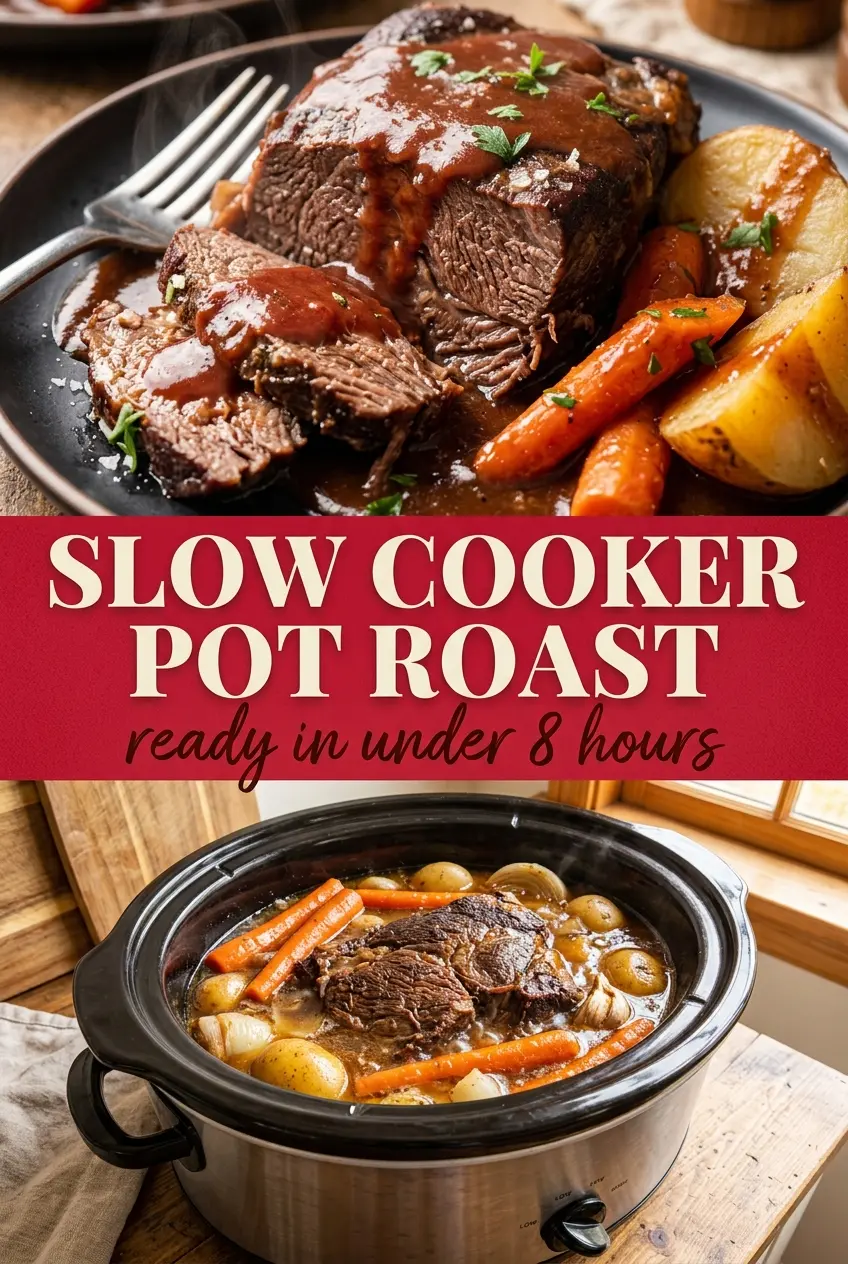
Slow Cooker Pot Roast
Ingredients
Equipment
Method
- Season the chuck roast with salt and pepper, then place it in the slow cooker. Make sure the surface is evenly coated for balanced flavor.
- Arrange the carrots, potatoes, and onion around the roast. Keep the chunks large so they hold their shape during the long cook.
- Pour the beef broth over everything and sprinkle the onion soup mix on top. Spread the mix as evenly as possible across the roast and vegetables.
- Cover and cook on low for 8 hours (or high for 5–6 hours) until the beef is fork-tender. The roast should easily pull apart when tested with a fork.
- Remove the beef and vegetables, then strain the cooking liquid into a saucepan. Discard solids and aim for a smooth, gravy-ready base.
- Whisk the cornstarch and water together, then whisk it into the simmering liquid until thickened into a gravy. Keep whisking to prevent lumps and cook just until glossy and thick.
- Slice or shred the beef and serve with the vegetables, topped with gravy. Let the beef rest for a few minutes before slicing for juiciest texture.