
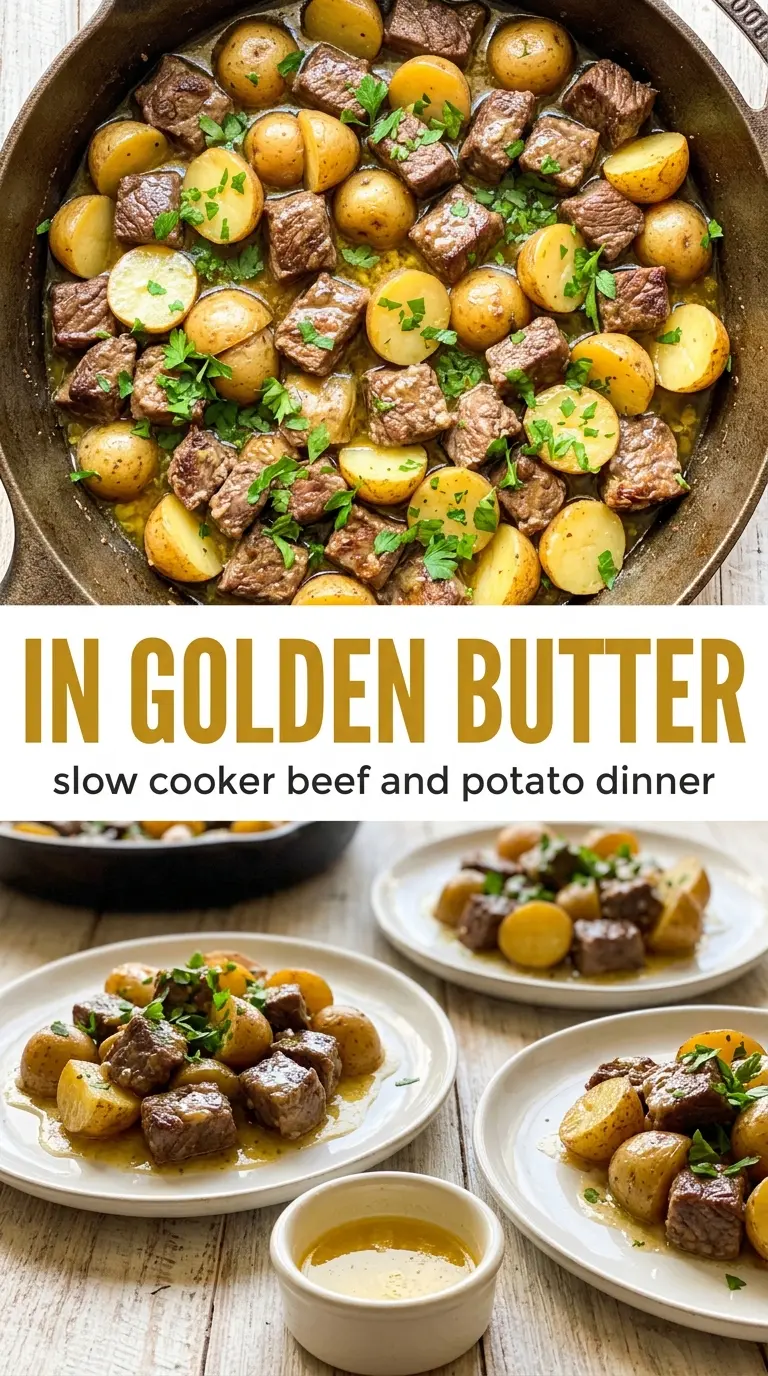
Slow cooker garlic butter beef bites with potatoes turn into the kind of dinner that gets scraped clean because every piece is coated in a glossy, savory sauce and the potatoes soak up all of it from the bottom of the pot. The beef comes out fork-tender instead of stringy, the baby Yukon golds stay intact without turning floury, and the garlic butter finishes everything with a rich, pan-worthy sheen even though you barely lifted a finger.
What makes this version work is the way the seasoning gets layered instead of dumped in all at once. The beef and potatoes are held in separate halves of the slow cooker at first, which helps the potatoes keep their shape and keeps the meat from turning the whole pot muddy. The butter goes in at the end as pats, not melted ahead of time, so it melts slowly and coats the food instead of disappearing into the liquid.
Below, I’ve included the detail that matters most for this dish: how to keep the potatoes from overcooking while the beef finishes, plus a few easy swaps if you need to adjust what’s in the kitchen.
The potatoes held their shape and the beef was tender enough to pull apart with a spoon. I loved that the garlic butter stayed glossy instead of turning greasy, and the leftovers tasted even better the next day.
Slow Cooker Garlic Butter Beef Bites with Potatoes are the kind of dinner that gives you tender beef, buttery potatoes, and almost no cleanup.
The Reason the Potatoes Stay Intact While the Beef Goes Tender
The trap with slow cooker beef and potatoes is timing, not seasoning. If everything goes in the same way, the potatoes often turn soft before the beef has fully relaxed, or the beef gives off enough liquid that the whole dish tastes boiled instead of rich. Keeping the beef and potatoes visually separated at the start helps them cook at their own pace, and it gives the potatoes a little less direct contact with the hottest pocket of liquid at the bottom.
Baby Yukon gold potatoes are the right call here because they hold together better than russets and have enough natural creaminess to soak up the garlic butter without falling apart. Stew meat works because the long cook breaks down the connective tissue, but only if the heat stays low and steady. High heat can tighten the beef before it has time to turn tender, which is how you end up with dry chunks floating in a soft potato mess.
- Beef stew meat — This cut needs time, not precision. Chuck-based stew meat turns tender and beefy in the slow cooker; leaner cubes dry out faster and won’t give you the same soft bite.
- Baby Yukon gold potatoes — Their waxy, creamy texture holds up better than starchy potatoes. If you swap in red potatoes, keep the pieces similar in size so they finish evenly.
- Butter — The butter is the finish, not the cooking fat. Patting it over the top lets it melt slowly and coat the beef and potatoes instead of disappearing into the liquid.
- Worcestershire sauce — This adds the savory edge that keeps the dish from tasting one-note. There isn’t a clean one-to-one substitute, but soy sauce plus a tiny splash of vinegar gets you close in a pinch.
Building the Garlic Butter Without Turning It Flat
The garlic and smoked paprika do more here than add flavor; they keep the butter sauce from tasting heavy. Garlic powder seasons the meat deeply, while fresh minced garlic perfumes the top of the dish as it cooks. If you only use fresh garlic, it can lose some edge in the slow cooker. If you only use powder, the finished dish tastes flatter and less alive.
Smoked paprika brings a little background warmth without making the dish taste smoky enough to compete with the butter. Thyme gives it an earthy note that fits the beef. Use real butter, not margarine, because margarine can separate and leave you with a waxy coating instead of a glossy sauce.
- Garlic powder and fresh garlic — The powder seasons the meat from the inside; the fresh garlic gives the final sauce its aroma. That combination matters more than using a large amount of either one alone.
- Smoked paprika — A small amount adds color and warmth. Too much and it takes over the whole pot, so keep it measured.
- Dried thyme — Dried thyme stands up better to the long cook than fresh, which can fade. Crush it lightly between your fingers before adding it to wake it up.
- Seasoned salt — This does the broad seasoning work early in the cook. If you use plain salt instead, you’ll need to lean harder on the garlic and paprika for depth.
The 6 Hours That Matter Most in the Slow Cooker
Setting Up the Pot
Place the beef on one side of the slow cooker and the potatoes on the other, then season both parts before anything starts releasing liquid. That separation isn’t cosmetic. It helps the potatoes keep a little structure while the beef begins to soften. If you pile everything together from the start, the potatoes sit in the fattier beef juices the entire time and can go soft before dinner even gets close.
Seasoning and Topping
Toss the beef gently so the seasoning clings to the outside without compacting the pieces. Then scatter the garlic, paprika, and thyme across the top before adding the Worcestershire sauce and butter. The butter pats should sit in visible pieces on top, not disappear into the bottom, because they melt down gradually and coat the food as the slow cooker heat works through the pot.
Cooking Until the Beef Gives Up
Cook on low for 6 to 8 hours if you want the most tender result. The beef is done when it yields easily to a fork and the potatoes are pierced through with no resistance at the center. If you’re in a rush, high heat will cook it faster, but it also gives you less room for error. Pulling it too soon leaves the beef chewy; leaving it too long on high can turn the potatoes mealy.
Knowing When to Stop
Don’t wait for the beef to look shredded on its own. Look for pieces that break apart when pressed and potatoes that are tender all the way through but still hold their shape. The finished dish should have a little buttery liquid pooled at the bottom, not a lot of thin broth. That’s the point where the sauce clings instead of washing the seasoning away.
Make It Dairy-Free Without Losing the Savory Finish
Swap the butter for a plant-based butter that behaves well under heat, not a soft tub spread. You’ll lose a little of the round, rich taste that real butter gives, but the garlic, Worcestershire, and paprika still build a satisfying sauce.
How to Make It Gluten-Free
Use a gluten-free Worcestershire sauce, since some standard brands contain malt vinegar or other gluten sources. The rest of the recipe is naturally gluten-free, so the flavor stays the same as long as that bottle checks out.
How to Stretch It for a Bigger Crowd
Add more potatoes before you add more beef. Extra potatoes absorb the butter sauce and make the dish feel abundant without forcing the beef into a crowded pot, which can slow the cook and soften the texture too much.
Using Different Potatoes
Red potatoes work well if that’s what you have, but they stay a bit firmer and less buttery than Yukon golds. Russets cook softer and can fall apart, which thickens the sauce but changes the texture of the dish.
Storage and Reheating
- Refrigerator: Store in an airtight container for up to 4 days. The potatoes soften a little more as they sit, but the flavor deepens.
- Freezer: It freezes fairly well for up to 2 months, though the potatoes will be a bit softer after thawing. Cool it fully first, then freeze in portions with some of the sauce.
- Reheating: Warm it covered in a skillet over low heat or in the microwave at medium power so the butter doesn’t separate. High heat is the fastest way to dry out the beef and break the sauce.
Questions I Get Asked About This Recipe

Slow Cooker Garlic Butter Beef Bites with Potatoes
Ingredients
Equipment
Method
- Place the beef stew meat in one half of the slow cooker and the potatoes in the other half, so they cook separately at first. Visual cue: the meat and potatoes should not be mixed together yet.
- Season both sides evenly with onion powder, garlic powder, and seasoned salt. Visual cue: the beef and potatoes should look evenly dusted, not spotty.
- Toss the beef gently to coat, keeping it separate from the potatoes. Visual cue: the beef takes on a light, seasoned coating while the potatoes stay undisturbed.
- Sprinkle the minced garlic, smoked paprika, and thyme over the top, then drizzle with Worcestershire sauce. Visual cue: you should see garlic and dried herbs scattered across the surface.
- Dot the butter pats evenly over the beef and potatoes. Visual cue: small butter mounds are visible before they melt.
- Cover and cook on low for 6 to 8 hours, or until the beef is tender and the potatoes are cooked through. Visual cue: the beef should pull apart easily with a fork and the potatoes should be soft.