
Slow cooker creamy tomato basil chicken comes out with tender chicken and a sauce that lands somewhere between a simmered marinara and a silky cream dinner sauce. The tomato stays bright, the basil keeps it from tasting flat, and the Parmesan gives it enough body to cling to pasta, rice, or mashed potatoes instead of sliding right off the spoon.
The trick is treating the cream like a finish, not an ingredient to cook hard for hours. Tomatoes and dairy can split if they’re heated too aggressively together, so the sauce stays smoother when the cream goes in at the end, after the chicken is already cooked through. That last stir with Parmesan is what turns the juices in the pot into something that tastes complete instead of thin and one-note.
Below, I’ll show you the small details that keep the sauce velvety and the chicken tender, plus a few smart swaps if you want to make it lighter, gluten-free, or stretch it into another meal.
The sauce turned out smooth and creamy instead of grainy, and the chicken shredded right in the slow cooker after 6 hours on low. I served it over pasta and my husband went back for seconds before I even sat down.
Save this slow cooker creamy tomato basil chicken for a hands-off dinner with a silky tomato-Parmesan sauce that clings to every bite.
The Reason the Cream Goes In at the End, Not the Beginning
The biggest mistake with slow cooker cream sauces is letting dairy cook for hours with acidic tomatoes. The heat is gentle, but the time is long enough to make the sauce look broken or slightly curdled by the end. Adding the cream after the chicken is cooked keeps the texture smooth and lets the tomato base stay bright instead of dull and heavy.
There’s also a practical reason to shred or slice the chicken before the final stir. Once the meat has finished cooking, it can soak up the sauce instead of sitting under it. That last toss coats every piece and gives you the kind of dinner that tastes like it came together with more effort than it did.
What Each Ingredient Is Actually Doing in This Dish
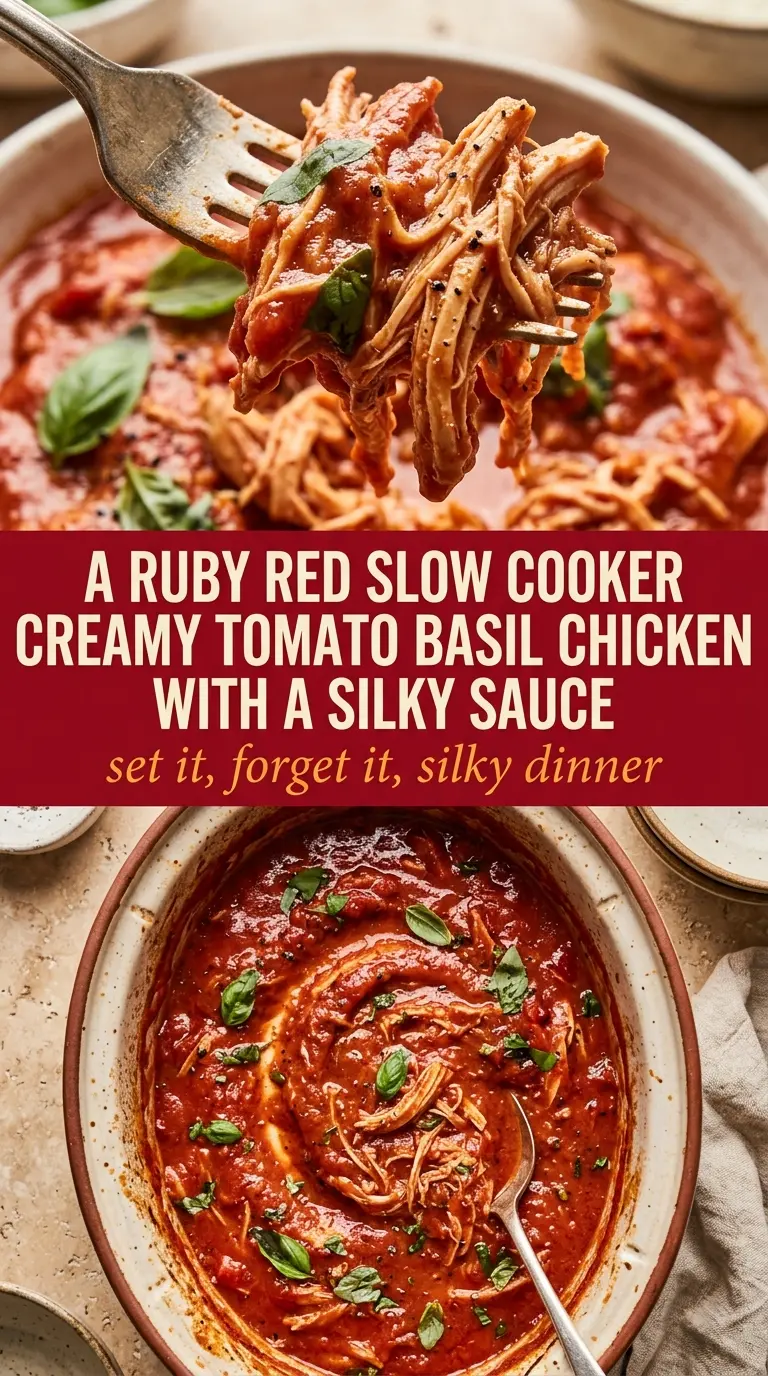
- Chicken breasts — Boneless breasts hold up well in the slow cooker and shred cleanly once they’re tender. If yours are very thick, they need the full low-and-slow time so the center finishes before the edges dry out. You can use boneless thighs instead for a richer, more forgiving result.
- Crushed tomatoes — This is the base of the sauce, so use a brand you like the taste of on its own. Crushed tomatoes give you body without needing to cook them down first, which is why they work better here than diced tomatoes. If all you have is tomato sauce, the sauce will be smoother and a little less textured, but it still works.
- Heavy cream — This is what turns the tomato mixture into a true creamy sauce at the end. Half-and-half can work in a pinch, but it’s more likely to stay thinner and won’t give the same luxurious finish. Stir it in off the heat or on the very lowest setting so it blends instead of separating.
- Parmesan cheese — Parmesan adds salt, body, and a little nutty depth. Freshly grated cheese melts more smoothly than the shelf-stable powdery kind, which can leave the sauce grainy. If you use pre-grated Parmesan, add it gradually and stir well so it has time to soften into the sauce.
- Fresh basil — The dried basil cooks into the sauce, but fresh basil at the end is what makes the dish taste lively. Add it right before serving so it keeps its color and doesn’t turn muddy. If you only have dried basil, use a little less than you think; it concentrates as it sits.
How to Keep the Chicken Tender and the Sauce Smooth
Starting With the Chicken and Tomatoes
Lay the chicken in the bottom of the slow cooker and cover it with the crushed tomatoes, garlic, dried basil, and Italian seasoning. The chicken should sit mostly submerged so it cooks evenly and stays juicy. If the breasts are stacked too tightly, the ones on top can dry out before the center of the pot is done.
Cooking Until the Chicken Shreds Easily
Cook on low for about 6 hours or high for 3 to 4 hours, depending on your slow cooker. The chicken is ready when it pulls apart with almost no resistance and the thickest piece reaches 165°F. If it still feels tight or rubbery, it needs more time; pulling it early is how you end up with dry chicken even in a sauce.
Finishing the Sauce Without Breaking It
Take the chicken out, shred or slice it, then stir the cream and Parmesan into the hot tomato base. The sauce should look glossy and slightly thickened, not separated or curdled. If the slow cooker is running hot, turn it off for a few minutes before adding the dairy so the temperature drops just enough to protect the texture.
Bringing It All Back Together
Return the chicken to the sauce and stir until every piece is coated. The fresh basil goes in at the very end so it keeps its clean herbal flavor. Serve it right away over pasta, rice, or something that can catch the extra sauce in the bowl.
Three Useful Ways to Change the Dish Without Losing What Makes It Work
Dairy-Free Version
Swap the heavy cream for canned full-fat coconut milk and skip the Parmesan or use a dairy-free Parmesan-style alternative. The sauce will still be creamy, but it will have a faint coconut note and a softer, less savory finish. This version works best if you keep the basil and garlic strong so the flavor stays balanced.
Thighs Instead of Breasts
Use boneless, skinless chicken thighs if you want a richer texture and a little more forgiveness on the cooking time. Thighs hold up better if the slow cooker runs hot, and they shred into a softer, juicier texture. The sauce will taste a touch richer because dark meat brings more fat into the pot.
Gluten-Free Serving Ideas
The chicken and sauce are naturally gluten-free as written, so the real job is choosing a safe base to serve it over. Rice, mashed potatoes, polenta, or gluten-free pasta all work well because they catch the sauce instead of competing with it. Check the Parmesan and seasoning blend if you’re cooking for someone highly sensitive, since packaged blends can vary.
Storage and Reheating
- Refrigerator: Store leftovers in an airtight container for up to 4 days. The sauce thickens as it chills, so expect it to look a little tighter the next day.
- Freezer: It freezes well for up to 2 months, though the cream sauce may separate slightly when thawed. For the best texture, freeze the chicken and sauce in a shallow container and thaw in the refrigerator overnight before reheating.
- Reheating: Warm it gently on the stove over low heat or in the microwave at reduced power, stirring halfway through. High heat is the fastest way to split the sauce, especially after it has been chilled. Add a splash of cream, broth, or water if it seems too thick.
The Things That Trip People Up With This Dish
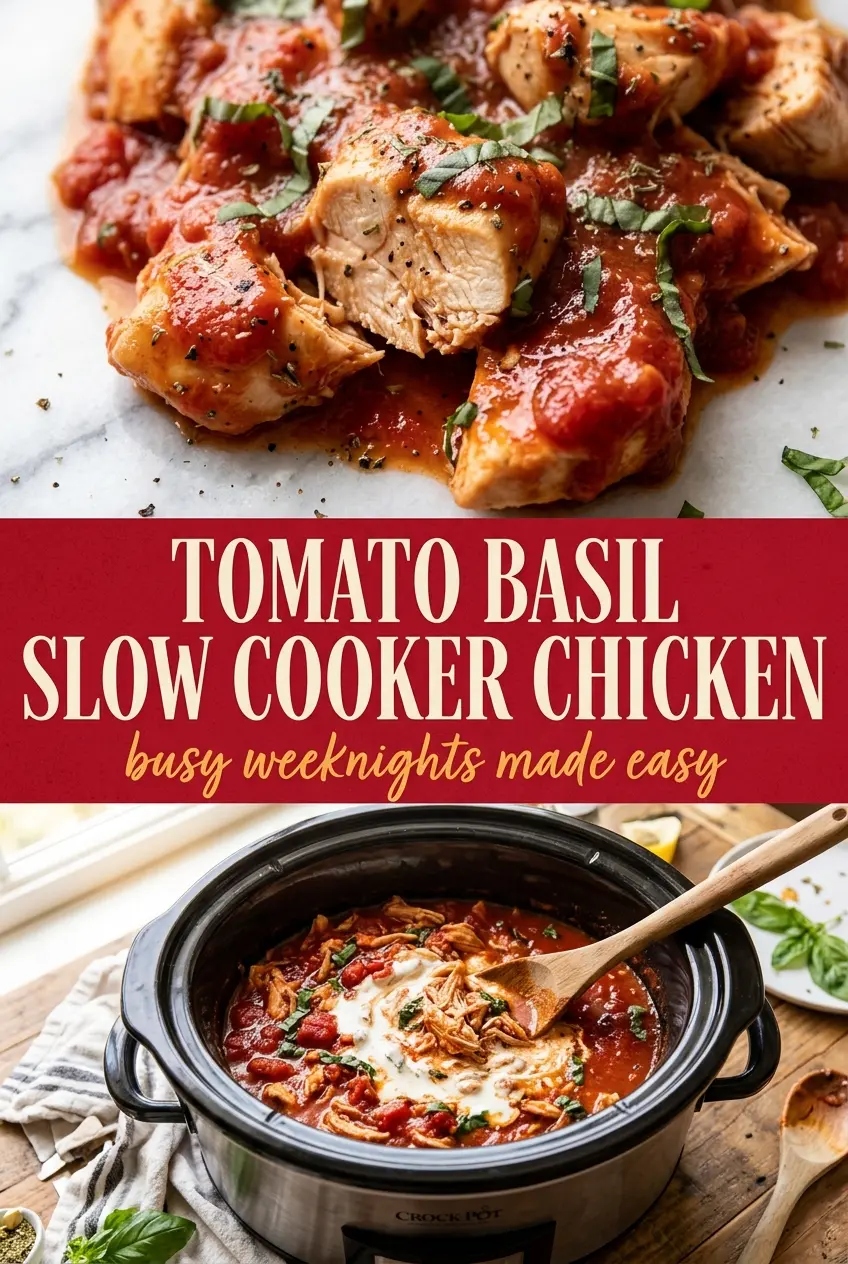
Slow Cooker Creamy Tomato Basil Chicken
Ingredients
Equipment
Method
- Place the chicken breasts in the bottom of a slow cooker.
- Pour the crushed tomatoes over the chicken and add the minced garlic, dried basil, and Italian seasoning.
- Cover and cook on low for 6 hours or high for 3-4 hours until the chicken is tender and fully cooked.
- Remove the chicken and shred or slice, then set aside.
- Stir the heavy cream and Parmesan cheese into the sauce in the slow cooker until smooth.
- Return the chicken to the sauce and stir to coat.
- Sprinkle with fresh chopped basil before serving.