
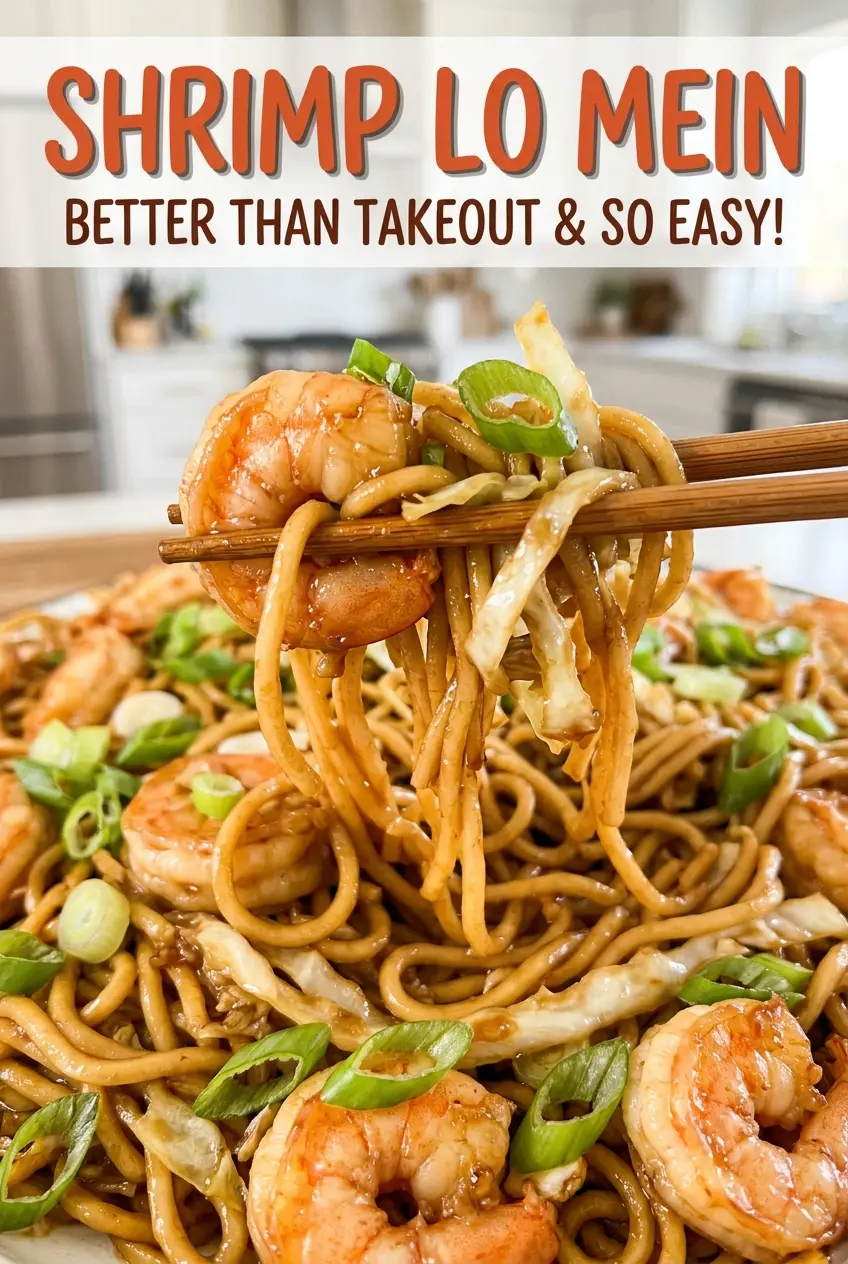
The first thing I notice when the noodles hit the wok is how quickly they drink in the sauce. A good lo mein shouldn’t sit in a puddle; the strands should look glossy, with the shrimp and vegetables tucked through every forkful. This Shrimp Lo Mein gets that finish by bringing the cooked noodles, sauce, shrimp, and scallion greens together only at the end.
I cook the shrimp separately, then give the vegetables their own brief turn in the hot wok. That keeps the shrimp from sitting over the heat while the carrot and pepper soften, and it gives the cabbage and garlic just enough time to become fragrant without losing all their bite. The sauce is whisked before the cooking starts, so the final toss moves quickly. You’ll have tender noodles coated in savory sauce, with bright scallions and sweet, crisp-tender vegetables.
Kitchen Note
Whisk the sauce until the sugar and cornstarch have dissolved, not just until they’re mixed in. Cornstarch settles while you prep, so give the bowl one more quick whisk right before it goes into the wok.
Save this Shrimp Lo Mein for a quick, savory noodle dinner with tender shrimp and vegetables in every bite.
Why the Shrimp Should Leave the Wok Before the Vegetables
It’s easy to think everything should go into the wok at once, but shrimp and vegetables don’t need the same amount of time. The shrimp cook quickly; the carrot and bell pepper need a little longer, while napa cabbage, scallion whites, and garlic need only a short finish. Cooking in stages lets each ingredient get the heat it needs instead of asking one ingredient to wait for another.
There’s a practical payoff, too: once the shrimp are cooked, you can set them aside while the vegetables stir-fry. They go back in with the noodles and sauce for the final toss, just long enough to warm through. That short return to the wok helps keep the shrimp tender. The order also makes the cooking easier to manage: the vegetables soften while the shrimp rest, and the noodles join only when everything else is ready for the sauce.
What Gives These Lo Mein Noodles Their Savory, Glossy Finish
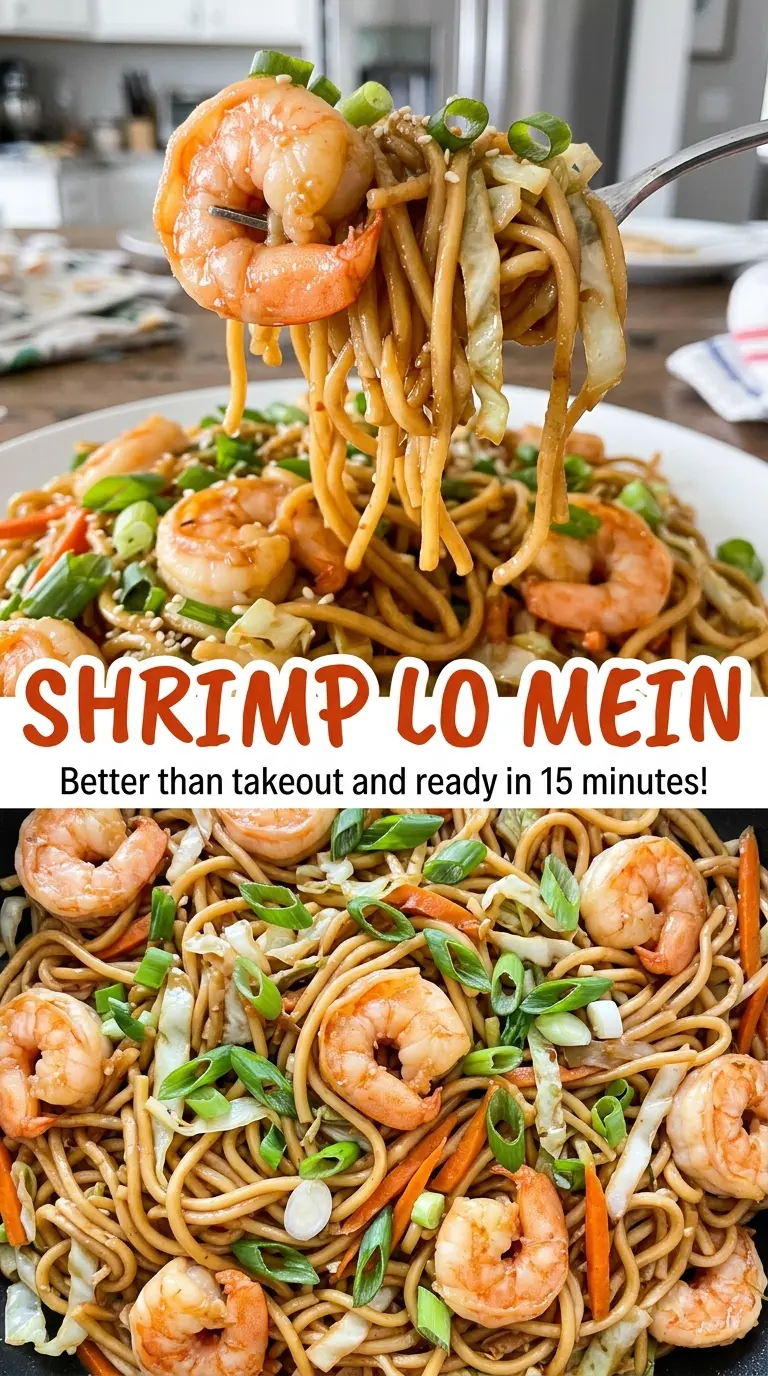
- Lo mein noodles — Dried lo mein noodles give the dish its familiar springy, substantial bite. Cook them just until tender; softer noodles are more likely to break when tossed with the vegetables and shrimp. If you need a gluten-free version, use the rice noodles described below and follow their package directions.
- Shrimp — Large raw shrimp are substantial enough to stay distinct among the noodles, and peeling and deveining them means they’re ready to cook. Freshness matters more than size variations here; choose shrimp that smell clean and mild. Thaw frozen shrimp completely before cooking so they brown and cook evenly rather than releasing excess water into the wok.
- Soy sauce and oyster sauce — Low-sodium soy sauce brings the salty, fermented base, while oyster sauce adds a deeper savory note and a little body. Oyster sauce is not interchangeable with a sweeter, thinner sauce without changing the result. A good everyday bottle works well; there’s no need for a specialty brand.
- Toasted sesame oil and cornstarch — Toasted sesame oil contributes its distinctive nutty aroma, so it’s worth using the toasted kind rather than plain sesame oil. Cornstarch helps the sauce cling to the noodles instead of sliding to the bottom of the wok. Keep both in the sauce mixture; the sesame oil is there for flavor, not as the main cooking oil.
- The vegetables and scallions — Thin matchsticks of carrot and thinly sliced pepper cook quickly while keeping some bite. Napa cabbage softens faster and brings a mild sweetness, and separating scallion whites from greens gives the whites time to cook while the greens stay fresh and bright at the finish. Slice everything before you turn on the stove, since the stir-fry moves fast.
The Wok Timing That Keeps the Noodles Coated, Not Soggy
Whisk the Sauce Before the Wok Gets Hot
Whisk the soy sauce, oyster sauce, water, toasted sesame oil, sugar, and cornstarch in a small bowl until smooth. Set it beside the stove, along with the prepared shrimp and vegetables, so nothing needs chopping once the wok is hot. The finished sauce should look evenly blended, without visible starch clumps. Keep it close for the final toss.
Cook the Noodles Just to Tender
Bring a 6-quart pot of water to a boil and cook the dried lo mein noodles according to the package directions until just tender, then drain. Check a strand near the end of the package’s time rather than letting the noodles go soft. They’ll spend another minute or two moving through the hot wok with the sauce. Drain them well so excess cooking water doesn’t thin the sauce.
Sear the Shrimp, Then Clear the Wok
Heat 1 tablespoon of canola oil in a 14-inch wok over medium-high heat. Add the shrimp in a single layer and cook for 1 to 2 minutes per side, until opaque throughout and 145°F, then transfer them to a plate. If the shrimp overlap, they won’t cook as evenly, so work in a single layer. Don’t leave them in the wok while the vegetables cook.
Stir-Fry the Vegetables and Toss Everything Together
Add the remaining 1 tablespoon of oil to the wok and stir-fry the carrot and bell pepper for 2 minutes. Add the napa cabbage, scallion whites, and garlic; cook for 1 minute, stirring so the garlic doesn’t sit in one spot. Add the noodles, sauce, shrimp, and scallion greens, then toss for 1 to 2 minutes until the noodles are hot and coated. The finished noodles should look glossy, with no loose pool of sauce at the bottom.
Two Practical Ways to Adapt This Shrimp Lo Mein
Make It Gluten-Free With Rice Noodles
Use 8 ounces of gluten-free rice noodles in place of the dried lo mein noodles, and choose gluten-free tamari in place of the low-sodium soy sauce plus gluten-free oyster sauce in place of the regular oyster sauce. Keep the sauce quantities the same. Rice noodles can be more delicate than lo mein noodles, so cook them just until tender and toss gently at the end.
Scale It Down for Two
Halve every ingredient for a smaller meal, including the sauce, vegetables, noodles, and shrimp. Keep the same cooking order, and use the visual cues rather than assuming every stage will take exactly half as long. The shrimp still need to be opaque throughout and reach 145°F.
Storage and Reheating
- Refrigerator: Store leftovers in an airtight container for 3 to 4 days. The noodles soften as they sit, but the savory flavor holds up well.
- Freezer: Freeze in a sealed container for up to 2 months for the best texture. Thaw overnight in the refrigerator; the noodles may be softer after freezing.
- Reheating: Warm leftovers in a skillet over medium heat, stirring until steaming hot throughout, or microwave in a covered dish, stirring partway through. Don’t reheat them for a long stretch over high heat, which can make the shrimp tough and the noodles stick.
Questions That Come Up When Making Shrimp Lo Mein
Shrimp Lo Mein
Ingredients
Equipment
Method
- Whisk the soy sauce, oyster sauce, water, sesame oil, sugar, and cornstarch in a small bowl until the sugar and cornstarch dissolve.
- Bring a 6-quart pot of water to a boil and cook the noodles according to the package directions until just tender; drain.
- Heat 1 tablespoon of the canola oil in a 14-inch wok over medium-high heat. Add the shrimp in a single layer and cook for 1 to 2 minutes per side, until opaque throughout and 145°F; transfer to a plate.
- Add the remaining 1 tablespoon oil to the wok and stir-fry the carrot and bell pepper for 2 minutes.
- Add the cabbage, scallion whites, and garlic and cook for 1 minute.
- Add the noodles, sauce, shrimp, and scallion greens to the wok and toss for 1 to 2 minutes, until the noodles are hot and coated with sauce.