
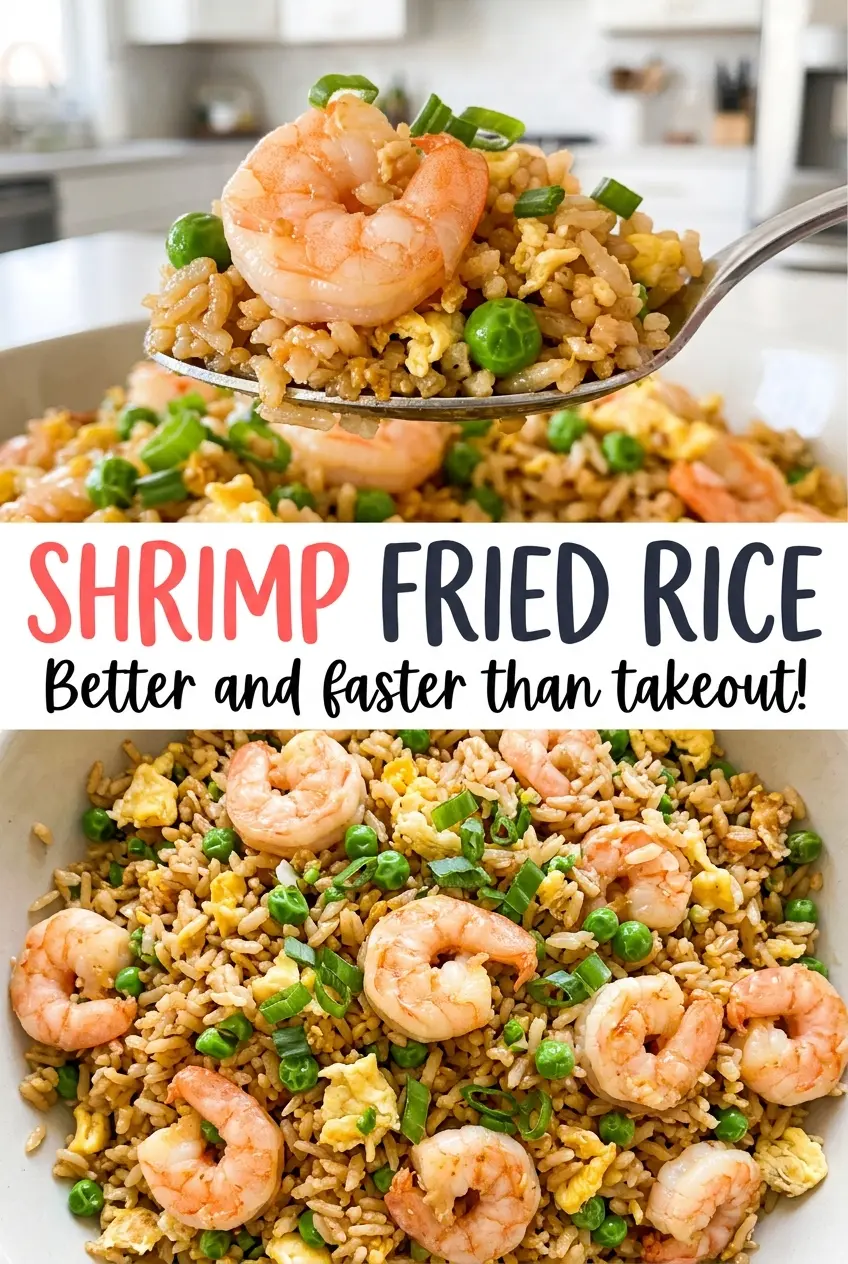
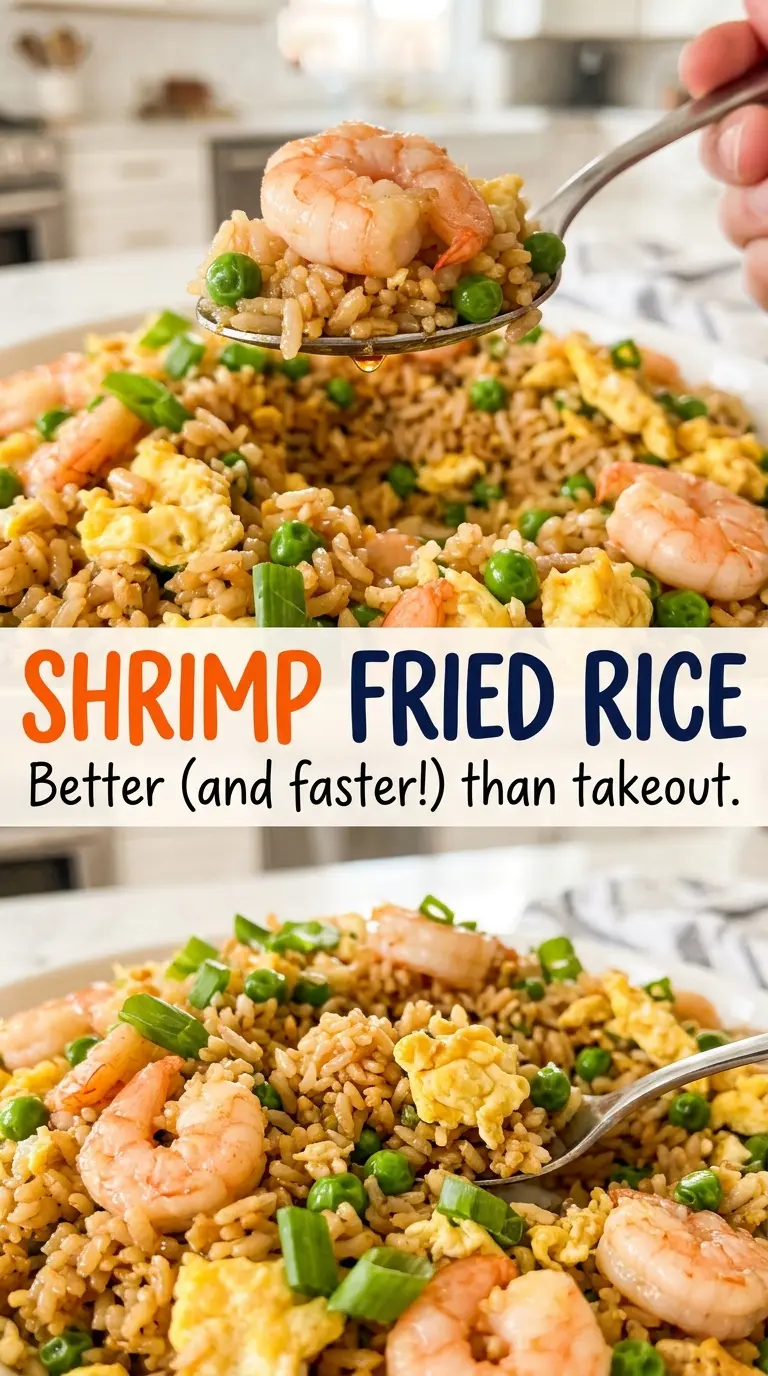
The cold rice hits the hot wok, and its tight clumps start to loosen as the grains turn over in the heat. That quick change is what gives shrimp fried rice its distinct texture: separate grains, lightly toasted edges, and tender shrimp in every scoop. I cook the eggs and shrimp first, then set them aside so they don’t sit in the wok while the rice gets its turn.
Cold, cooked long-grain rice is the right starting point here. It’s firm enough to toss with the soy sauce without turning soft or sticky, and frozen peas and carrots make the vegetable step quick. Keep the cooking stages moving, and the finished rice comes together hot, savory, and full of distinct bites.
Kitchen Note
Break up the cold rice clumps before they go into the wok. It’s much easier to separate them while the rice is still on the board than when you’re trying to toss everything over high heat.
Save this shrimp fried rice for a fast, savory dinner with tender shrimp, soft egg, and cold rice that fries up grain by grain.
Why the Shrimp and Eggs Leave the Wok Before the Rice Goes In
Fried rice cooks quickly, but its ingredients don’t all need the same amount of heat. Eggs turn from softly set to dry in a short stretch, while shrimp can go from tender to firm if they stay in the wok through every other stage. Cooking them separately lets each one stop at the right point instead of asking the rice to wait for them.
There’s a second benefit: the wok has room to do its job. Once the vegetables and rice go in, you need space to toss and separate the grains. A crowded wok traps moisture, and the rice steams instead of frying. Moving the eggs and shrimp to a plate keeps the pan open, then they go back in at the end just long enough to heat through. That order gives you a better balance of textures without adding extra pans or complicated timing.
Cold Rice and a Few Well-Chosen Ingredients Do the Heavy Lifting
- Long-grain white rice — Once cooked and chilled, long-grain rice stays distinct as you toss it in the wok. Shorter-grain rice tends to cling together more, so it won’t give quite the same loose, lightly toasted texture. If you’re starting with freshly cooked rice, spread it out to cool and chill it promptly before using.
- Large shrimp — The 21–25 count shrimp are substantial enough to stay juicy through a quick stir-fry. Patting them dry helps them cook in the hot wok rather than releasing extra moisture. Smaller shrimp can work, but they’ll need less time, so keep a close eye on them.
- Eggs — Beaten eggs make soft, savory curds that contrast with the firmer rice and shrimp. Cook them only until softly set before transferring them out; they’ll heat again when they return to the wok. There isn’t a like-for-like ingredient swap that gives the same curds and flavor.
- Soy sauce — Soy sauce seasons the rice and gives it its familiar deep, savory taste. Tamari can stand in for it in the same quantity if you need a gluten-free option; the result is a little rounder in flavor.
- Toasted sesame oil — This is a finishing oil, not the oil for frying. Its aroma is strongest when it’s added near the end, so save it for the final toss rather than cooking the vegetables in it.
- Garlic, ginger, scallions, and frozen peas and carrots — Fresh garlic and ginger bring a lively aromatic base, while scallions add a mild onion note in two forms: the lighter parts cook with the vegetables, and the dark-green tops go in at the finish. Frozen peas and carrots are a practical choice here; use them straight from the freezer.
The Wok Stages That Keep the Rice Separate and the Shrimp Tender
Set the Eggs Softly
Heat a 14-inch wok over medium-high heat, add 1 tablespoon of the vegetable oil, and pour in the beaten eggs. Stir for 30–45 seconds, watching for soft curds that have just set rather than browned or dried edges. Transfer the eggs to a plate while they’re still tender. They’ll return to the wok later, so they don’t need to be fully cooked through at this stage.
Cook the Shrimp Just Until Opaque
Add another tablespoon of vegetable oil to the wok and season the shrimp with the kosher salt and black pepper. Stir-fry for 2–3 minutes, turning the shrimp so they cook evenly. Look for opaque flesh and check that the center reaches 145°F. Move them to the plate with the eggs as soon as they’re ready; leaving them in the hot wok while the vegetables cook can make them tough.
Wake Up the Vegetables and Aromatics
Add the remaining tablespoon of vegetable oil, then stir-fry the frozen peas and carrots for 2 minutes. Add the minced garlic, minced fresh ginger, and the white and light-green scallion parts. Cook for 30 seconds, stirring so the garlic and ginger become fragrant without scorching. The brief aromatic cook keeps their flavor bright before the rice goes in.
Toss the Rice, Then Finish Everything Together
Add the cold rice and soy sauce, breaking up any remaining clumps as you stir-fry for 3–4 minutes. The rice should be steaming hot and moving freely around the wok, not sitting in a packed layer. Return the eggs and shrimp, then add the toasted sesame oil and dark-green scallion parts. Toss for 1–2 minutes, until everything is hot and the rice reaches 165°F throughout.
Three Useful Ways to Adapt This Shrimp Fried Rice
Use Tamari for a Gluten-Free Version
Replace the soy sauce with the same quantity of gluten-free tamari. It keeps the rice savory, though the flavor is a little rounder and less sharp than soy sauce.
Make It Egg-and-Vegetable Fried Rice
Leave out the shrimp and the salt and pepper used to season it. The eggs remain for protein and soft curds, while the peas and carrots make each bite a little sweeter; the finished dish is lighter and no longer has the shrimp’s briny flavor.
Swap in Chilled Brown Rice
Use cooked, chilled long-grain brown rice instead of white rice. Brown rice has a firmer, chewier bite and a nuttier taste, so the finished dish feels heartier; break up any clumps before adding it to the wok.
Storage and Reheating
- Refrigerator: Store leftovers in a covered container and eat within 3–4 days. The rice will firm up as it chills.
- Freezer: Freeze in airtight portions for up to 3 months for the best texture. Thaw overnight in the refrigerator before reheating.
- Reheating: Warm in a wok or skillet over medium heat, stirring often until steaming hot throughout. Avoid leaving it over heat after it’s warmed through, since the shrimp can turn firm and the rice can dry out.
Questions That Come Up When Making Shrimp Fried Rice
Shrimp Fried Rice
Ingredients
Equipment
Method
- Heat a 14-inch wok over medium-high heat.
- Add 1 tablespoon of the vegetable oil and pour in the eggs.
- Stir for 30–45 seconds until softly set, then transfer to a plate.
- Add 1 tablespoon of the vegetable oil to the wok.
- Season the shrimp with the salt and pepper.
- Stir-fry for 2–3 minutes, until opaque and 145°F, then transfer to the plate with the eggs.
- Add the remaining 1 tablespoon of vegetable oil to the wok and stir-fry the peas and carrots for 2 minutes.
- Add the garlic, ginger, and scallion white and light-green parts, and cook for 30 seconds.
- Add the rice and soy sauce, breaking up any remaining clumps.
- Stir-fry for 3–4 minutes until the rice is steaming hot.
- Return the eggs and shrimp to the wok, add the sesame oil and scallion dark-green parts, and toss for 1–2 minutes until everything is hot and the rice reaches 165°F throughout.