
The onion softens first, then the kitchen starts smelling like warm curry and ginger as the spices hit the oil. That short pause before the coconut milk goes in is what gives this shrimp curry with coconut and lime its rounded, fragrant base instead of a sauce that tastes like spices stirred into cream.
I keep the sauce at a gentle simmer while it comes together, then add the shrimp at the very end. Shrimp cook quickly, and a few extra minutes can turn them from tender to rubbery. Large raw shrimp give you a little more room to catch them at just the right moment.
Fresh lime juice and cilantro go in after the skillet leaves the heat. The lime brightens the coconut without getting lost in the simmer, and the finished curry is silky, savory, and lively on the tongue.

Kitchen Note
Chop the cilantro and have the lime juice ready before the shrimp go into the skillet. Once they’re cooked, the finish takes only a moment, and you won’t have to leave them sitting in the hot sauce while you prep the garnish.
Save this shrimp curry with coconut and lime for a weeknight when you want a fragrant sauce and tender shrimp without a long simmer.
Why the Curry Spices Need a Moment in the Oil
Curry powder and turmeric need a little help to open up. Stirring them into the warm oil with the garlic and ginger gives their aromas a chance to bloom before the liquid ingredients go in. If you skip that brief cooking stage and add the coconut milk right away, the sauce can taste flatter and more powdery.
Tomato paste gets its own minute in the pan, too. Cooking it after the spices takes away its raw, sharp edge and lets it blend into the coconut milk rather than sitting in the sauce as a separate tomato note. You’re not trying to brown it; keep it moving and let it darken slightly.
This is a quick curry, so the order matters more than a long cooking time. The onion softens before the spices, the tomato paste follows, and the liquid only simmers long enough for the base to come together. That sequence builds a sauce with depth while keeping the coconut flavor clear.
Why Full-Fat Coconut Milk and Raw Shrimp Matter Most
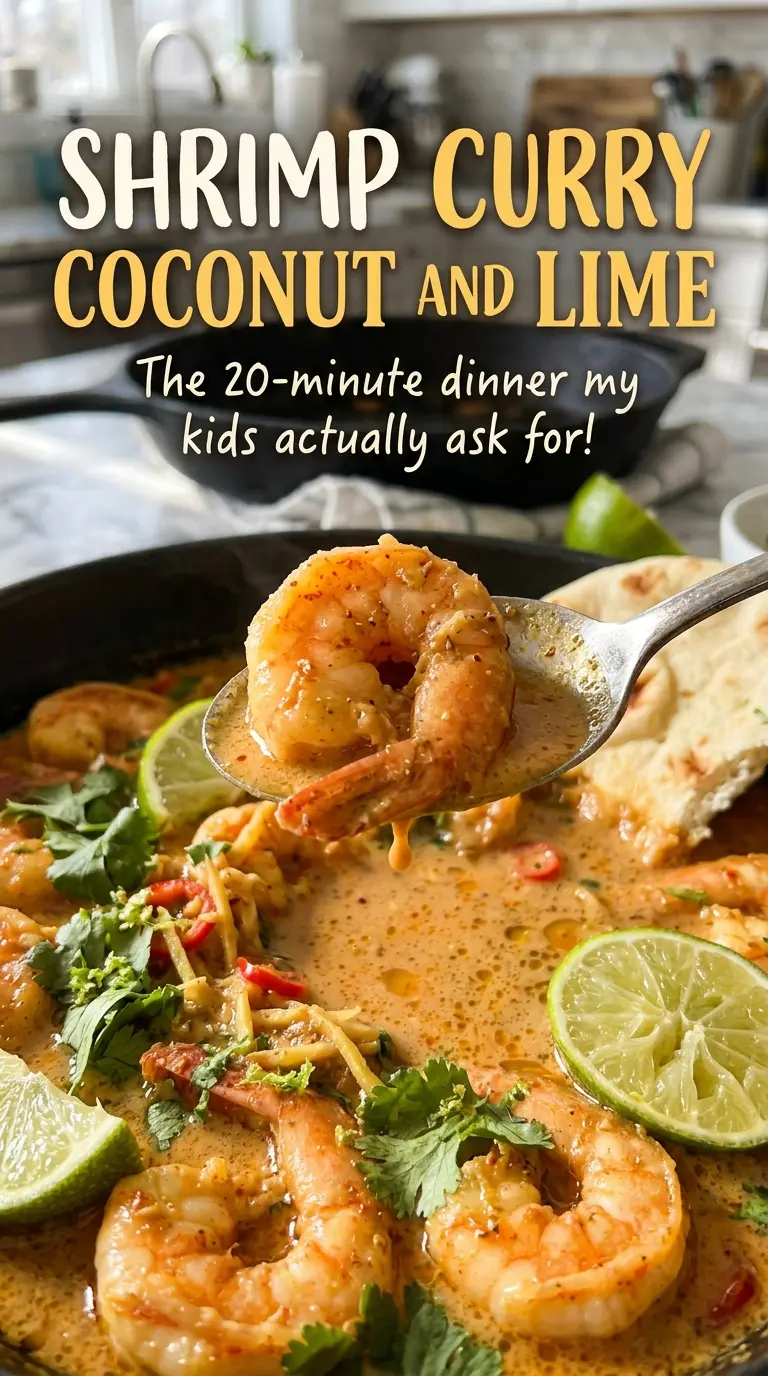
- Large raw shrimp — Their size makes them easier to monitor as they cook, and their mild sweetness works well with the curry sauce. Frozen shrimp are convenient; thaw them before cooking so they enter the skillet evenly. Pre-cooked shrimp aren’t a good stand-in here because they can turn tough while the sauce warms them through.
- Unsweetened full-fat coconut milk — This gives the sauce body and a creamy texture without dairy. Light coconut milk can replace it in the same quantity, but the sauce will be thinner and less rich. Skip sweetened cream of coconut; its sugar would pull the curry in a different direction.
- Curry powder and turmeric — Curry powder brings the blend of spices that defines the dish, while turmeric deepens its warm color. Freshness matters more than brand: an old, faded curry powder won’t give the same aroma. A mild or hot curry powder works, but the heat and balance vary by blend.
- Fresh ginger, garlic, and yellow onion — These form the savory, aromatic base. Freshly grated ginger gives a brighter, sharper note than dried ginger, and finely chopping the onion helps it soften evenly before the liquid goes in. The onion can be chopped ahead, but keep the garlic and ginger ready for the quick spice-cooking stage.
- Tomato paste and low-sodium chicken broth — Tomato paste adds a little savory depth, not a pronounced tomato flavor. Low-sodium broth leaves room for the salt and curry seasoning to come through without making the sauce overly salty. Vegetable broth is a workable swap, with a slightly lighter savory taste.
- Fresh lime juice and cilantro — Lime juice supplies the bright acidity that balances the coconut milk, while cilantro adds a fresh herbal finish. Fresh lime is worth using here; bottled juice tends to taste less lively. If cilantro isn’t your favorite, leave it out rather than replacing it with another herb that would change the finish.
Build the Curry Base Before the Shrimp Hits the Pan
Soften the Onion Without Browning It
Warm the neutral oil in a 12-inch skillet over medium heat, then add the finely chopped onion and fine salt. Cook for 5–7 minutes, stirring occasionally, until the onion is softened. It should look glossy and tender, not browned around the edges. If it starts to color before it softens, lower the heat so the onion has time to turn sweet without scorching.
Bloom the Aromatics and Cook the Tomato Paste
Stir in the minced garlic, finely grated fresh ginger, curry powder, and turmeric. Cook for 30 seconds, just until fragrant; the spices should smell warm and aromatic, not toasted or burnt. Add the tomato paste and stir for 1 minute so it darkens slightly and blends with the aromatics. Keep stirring here, since paste can stick to the skillet if it’s left sitting.
Simmer the Coconut Curry Sauce
Stir in the coconut milk and chicken broth, then bring the sauce to a gentle simmer. Let it cook for 5 minutes, stirring occasionally. Look for small, steady bubbles rather than a vigorous boil; a hard boil isn’t needed to bring the sauce together. Scrape the bottom as you stir so no tomato paste or spices remain stuck there.
Cook the Shrimp and Finish Off the Heat
Add the raw shrimp and cook gently for 3–5 minutes, stirring once or twice. They’re ready when opaque and curled, and the thickest shrimp reaches 145°F. Don’t wait for them to curl into tight little rings; that’s a sign they’ve gone too far. Remove the skillet from the heat, then stir in the lime juice and chopped cilantro.
Three Useful Ways to Adapt This Coconut-Lime Curry
Make It Plant-Based with Chickpeas
For a plant-based version, replace the shrimp with one 15-ounce can of drained chickpeas and use vegetable broth instead of chicken broth. Add the chickpeas when the coconut milk and broth go in so they have time to warm in the curry sauce. The result is softer and earthier than the shrimp version, but the coconut, spices, and lime still make sense together.
Use a Hotter Curry Powder for More Heat
Swap the usual curry powder for a hot curry powder, keeping the amount the same. The sauce will have a more direct warmth, while the coconut milk still rounds it out. Heat varies by blend, so choose one you already know you enjoy rather than trying to make up for a mild blend with a large extra spoonful.
Keep the Curry Gluten-Free
Use gluten-free chicken broth and a gluten-free curry powder in place of standard versions. Those swaps keep the same savory, spiced character, though the blend of curry powder can shift the flavor slightly. The coconut milk, shrimp, aromatics, lime, and cilantro don’t need to change.
Storage and Reheating
- Refrigerator: Store leftovers in an airtight container for up to 3 days. The shrimp may firm up and the sauce may thicken as it chills.
- Freezer: Freeze in an airtight container for up to 2 months. The coconut sauce may separate a little after thawing; stir it gently as it warms.
- Reheating: Warm the curry gently in a skillet over low heat, stirring carefully until steaming. Avoid a vigorous boil, which can toughen the shrimp.
Questions That Come Up While Making Shrimp Curry
Shrimp Curry with Coconut and Lime
Ingredients
Equipment
Method
- Heat the oil in a 12-inch skillet over medium heat, then add the onion and salt and cook for 5–7 minutes, stirring occasionally, until the onion is softened.
- Stir in the garlic, ginger, curry powder, and turmeric and cook for 30 seconds, until fragrant.
- Add the tomato paste and cook, stirring, for 1 minute.
- Stir in the coconut milk and chicken broth, bring to a gentle simmer, and cook for 5 minutes, stirring occasionally.
- Add the shrimp and cook gently for 3–5 minutes, stirring once or twice, until opaque and curled and the thickest shrimp reaches 145°F.
- Remove the skillet from the heat and stir in the lime juice and cilantro.