
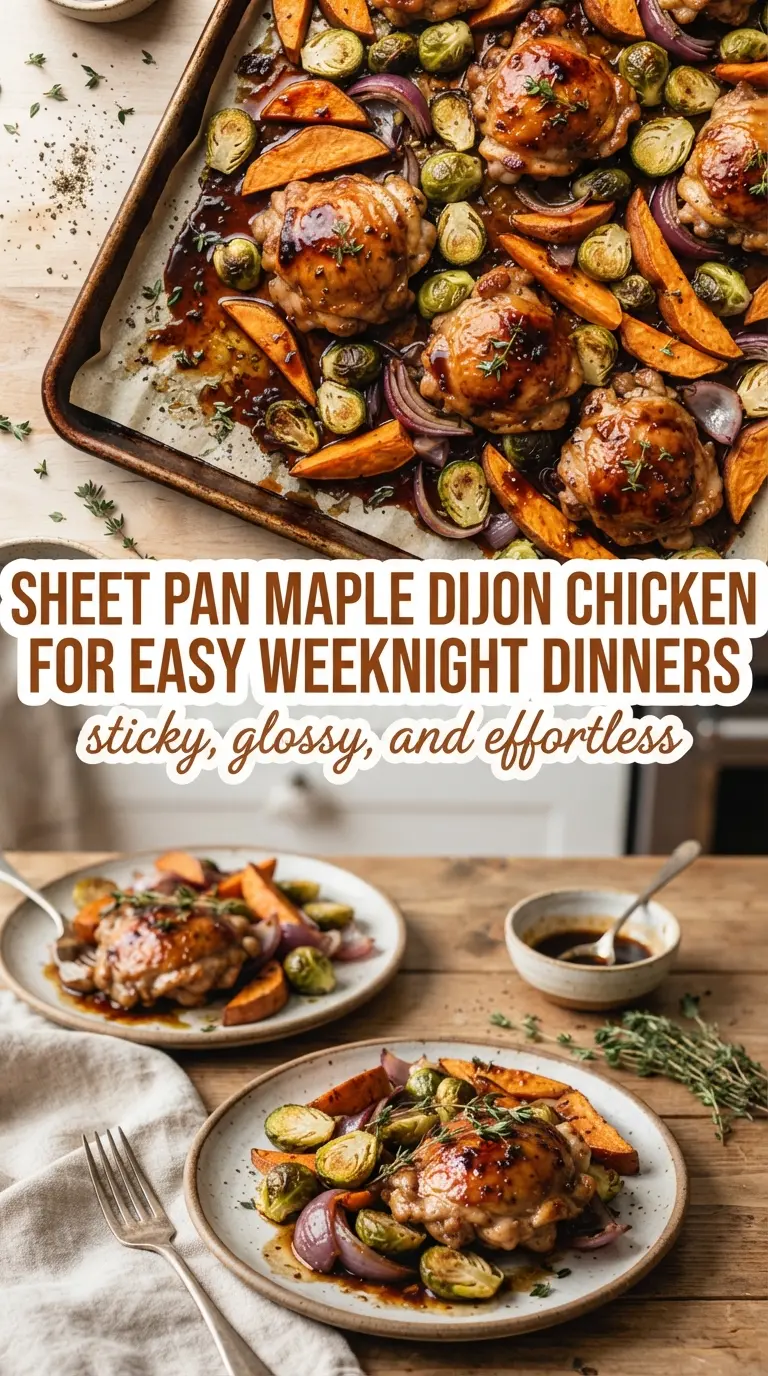
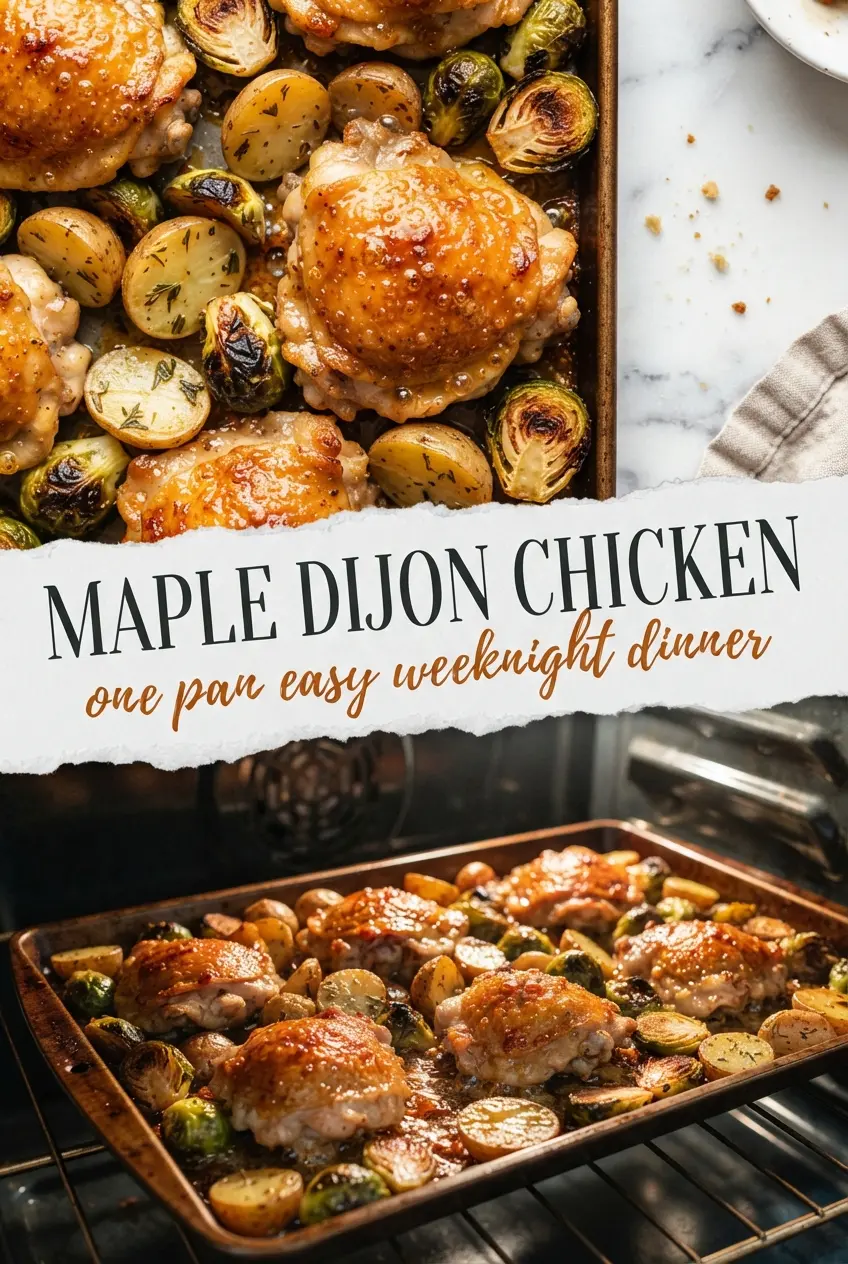
Golden chicken thighs, glossy with maple Dijon glaze, earn their keep the first time they come out of the oven with crisp edges, sticky skin, and vegetables that have picked up just enough caramelized sweetness from the pan. The potatoes go tender underneath, the Brussels sprouts catch at the corners, and the whole tray tastes like you worked harder than you did.
What makes this version work is the balance in the glaze and the way it gets used twice. Half of it coats the vegetables so they roast in that sweet-tangy sheen instead of drying out, and the rest goes on the chicken so the skin can bronze without the pan turning watery. Patting the thighs dry matters here. Wet skin steams before it browns, and brown is what you want if you’re after that crisp, lacquered finish.
Below, you’ll find the detail that keeps the glaze from burning, the small tweak that gives you better color, and a few smart swaps if you need to change the vegetables or make the whole pan fit what you already have on hand.
The glaze turned glossy and thick in the oven, and the chicken skin came out crisp instead of soggy. I used the last 2 minutes under the broiler and the Brussels sprouts got those dark edges that everyone fought over.
Save this Sheet Pan Maple Dijon Chicken for a sticky, savory-sweet dinner with crisp skin and caramelized Brussels sprouts.
The Reason the Chicken Browns Instead of Steaming
The difference between a glossy, caramelized sheet pan dinner and a pale one usually comes down to moisture and spacing. Chicken thighs release juice as they roast, and if the pan is crowded or the skin starts wet, everything steams in its own runoff before the glaze has a chance to tighten and darken. That is why this recipe leans on bone-in thighs and a hot oven. The thighs stay juicy, the skin has enough fat to crisp, and 400°F gives the glaze enough heat to bubble into a sticky coating without turning black too early.
The other thing people miss is that the vegetables need their own head start inside the glaze. Potatoes and Brussels sprouts need direct contact with the pan to brown, not a puddle of sauce underneath them. Tossing them with only half the glaze keeps the coating thin enough to roast, then the chicken finishes the pan with its own juices and the rest of the maple Dijon. If your vegetables look soft but not colored, they were probably packed too tightly or cut too large.
- Use a roomy sheet pan so the chicken and vegetables sit in a single layer.
- Keep the glaze thin and even; a thick blob burns before it flavors anything.
- Let the chicken skin face up the whole time so the rendered fat can crisp it.
- Broil only at the end, when the chicken is already cooked through and the glaze just needs color.
What Each Ingredient Is Doing in This Dish
- Bone-in chicken thighs — These give you the best insurance against dry meat. The bone slows the roast just enough for the skin to turn crisp while the inside stays juicy. Boneless thighs will work, but they cook faster and won’t give you the same drape of fat and flavor.
- Baby potatoes — Their size matters. Small potatoes soften in the time it takes the chicken to cook, and halving them exposes enough cut surface to brown. If yours are larger, cut them smaller so they don’t stay chalky in the center.
- Brussels sprouts — These bring the bitter, nutty edge that keeps the glaze from tasting flat. Halving them gives you those cut faces that char in the hot pan. If they are crowded, they will steam and lose the best part, so spread them out.
- Maple syrup — This is the sweetness and the lacquer. Real maple syrup gives a deeper, rounder finish than pancake syrup, which tends to taste blunt and candy-like. You need enough to brown, but not so much that it turns sticky-burnt before the chicken is done.
- Dijon mustard — Dijon cuts the sweetness and helps the glaze cling. It also sharpens the chicken skin, which keeps the pan from tasting sugary. Grainy mustard can work in a pinch, but it won’t give the same clean tang.
- Olive oil and garlic — Olive oil helps the glaze spread and roast instead of seizing up, and garlic gives the pan a savory base that keeps the whole dish from leaning too sweet. Fresh minced garlic is best here because it perfumes the glaze without taking over.
The 30 Minutes That Matter in the Oven
Building the Glaze
Whisk the maple syrup, Dijon, olive oil, garlic, salt, and pepper until the mixture looks smooth and loose enough to brush or toss. If the oil separates a little, that is fine; it will come together again as soon as it hits the heat. The important part is that the garlic is evenly dispersed, because any clump sitting on top of the chicken can scorch before the rest of the glaze has a chance to brown.
Coating the Vegetables First
Toss the potatoes and Brussels sprouts with half the glaze and spread them on the sheet pan cut side down where possible. That direct contact with the pan is where the browning happens. If the vegetables are piled up or left wet from washing, they will soften before they color, so dry them well and leave space between pieces.
Nestling the Chicken and Roasting
Coat the chicken with the remaining glaze and place the thighs skin-side up among the vegetables. The skin should sit above the glaze, not submerged in it. Roast until the chicken is golden and cooked through and the vegetables are tender, about 30 to 35 minutes, then use the broiler for the last 2 to 3 minutes if you want a darker finish. Watch closely at that point; the line between caramelized and burnt is thin because of the maple.
How to Adapt This for Different Kitchens and Diets
Swap the Brussels Sprouts for Another Roasting Vegetable
Broccoli florets, cauliflower, or green beans all work if Brussels sprouts aren’t your thing. Broccoli and cauliflower take on the glaze nicely, but they cook faster, so keep the pieces a little larger or add them halfway through. Green beans roast faster still and give you a snappier finish.
Make It Gluten-Free Without Losing the Glaze
This recipe is naturally gluten-free as written if your Dijon mustard is certified gluten-free. That matters more than people think, because some mustards use additives or vinegar blends that can sneak in gluten. Check the label once and you’re set.
Use Boneless Chicken Thighs When You Need a Faster Dinner
Boneless thighs shave off some time, but they won’t give you the same crisp skin or the same built-in insulation against drying out. Roast them a few minutes less and watch the glaze closely because the sugars will brown faster without the bone slowing the cook.
Make It Dairy-Free Without Changing a Thing
This dish is already dairy-free, which makes it an easy answer when you need a meal that works for more people at the table. The glaze gets its richness from olive oil and chicken fat, not butter or cream, so you don’t lose anything by keeping it as written.
Storage and Reheating
- Refrigerator: Store leftovers in an airtight container for up to 4 days. The chicken skin softens in the fridge, but the flavor holds up well.
- Freezer: It freezes well if you keep the chicken and vegetables in a freezer-safe container for up to 2 months. The potatoes will soften a bit after thawing, but the dish still reheats nicely for a second dinner.
- Reheating: Reheat in a 375°F oven until hot, about 15 to 20 minutes, instead of using the microwave if you want the skin and vegetables to perk back up. The biggest mistake is blasting it too long, which dries the chicken and makes the glaze sticky in the wrong way.
Answers to the Questions Worth Asking
Sheet Pan Maple Dijon Chicken
Ingredients
Equipment
Method
- Preheat the oven to 400°F and set out a sheet pan for roasting.
- Pat the bone-in chicken thighs dry thoroughly so the glaze sticks and the skin crisps.
- Whisk together the maple syrup, Dijon mustard, olive oil, minced garlic, salt, and pepper until glossy.
- Toss the halved baby potatoes and halved Brussels sprouts with half the glaze, then spread on the sheet pan.
- Coat the chicken thighs with the remaining glaze and nestle them among the vegetables so they roast in the same pan juices.
- Roast for 30-35 minutes at 400°F, until the chicken is golden and cooked through and the vegetables are tender.
- Broil for the last 2-3 minutes (400°F convection broil or the oven’s broil setting) for extra caramelization and deeper amber edges.