
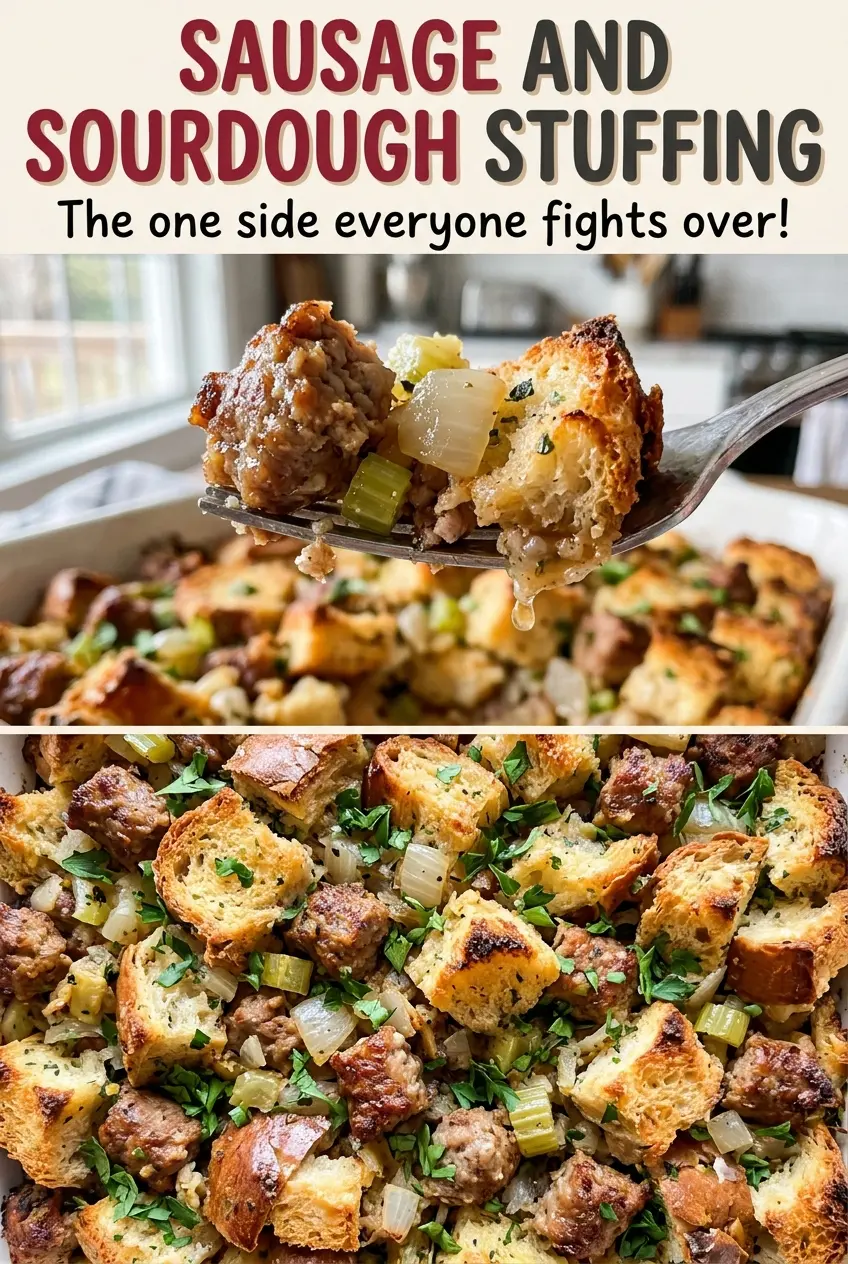
The first spoonful should hold its shape without feeling packed tight. That balance is what I want from sausage and sourdough stuffing: a golden top, a soft center, and enough texture from the bread to keep each serving distinct. The sourdough brings a gentle tang, while pork sausage makes the casserole savory and filling.
I bake the bread cubes until they feel dry and crisp before anything moist goes near them. Then the sausage browns in the skillet, and the onion and celery soften in the drippings with butter and herbs. Once the broth and eggs are tossed through, the bread is ready to bake into a casserole with a crisp top and a tender middle.
Kitchen Note
Give the casserole its full 10-minute rest before serving. The center settles during that pause, so the first scoop is less likely to fall apart.
Save this sausage and sourdough stuffing for a casserole with a crisp golden top and a tender, savory center.
Why the Bread Must Be Dry Before the Broth Goes In
Fresh bread can soak up liquid quickly on the surface while staying soft and fragile in the middle. When that happens, tossing the mixture can break the cubes down, and the baked stuffing leans toward a dense, uniformly soft texture instead of having recognizable pieces of bread. Drying the cubes first gives them room to take in the broth and egg without turning to mush as soon as you mix.
Sourdough has a sturdy, chewy crumb, but the loaf still needs that oven-drying step. Spread the cubes in one even layer so they dry rather than steam against one another, and stir them once halfway through. Look for bread that feels crisp and dry all the way through, not merely toasted on the outside. That texture gives the liquid somewhere to go when it is added later, helping the center bake up moist while the top turns golden.
This is also why I don’t skip the drying just because the loaf seems a little stale. Stale bread can still hold moisture, and the quick oven bake makes the cubes more consistent before they meet the broth mixture.
What Sourdough, Sausage, and Broth Each Bring to the Casserole
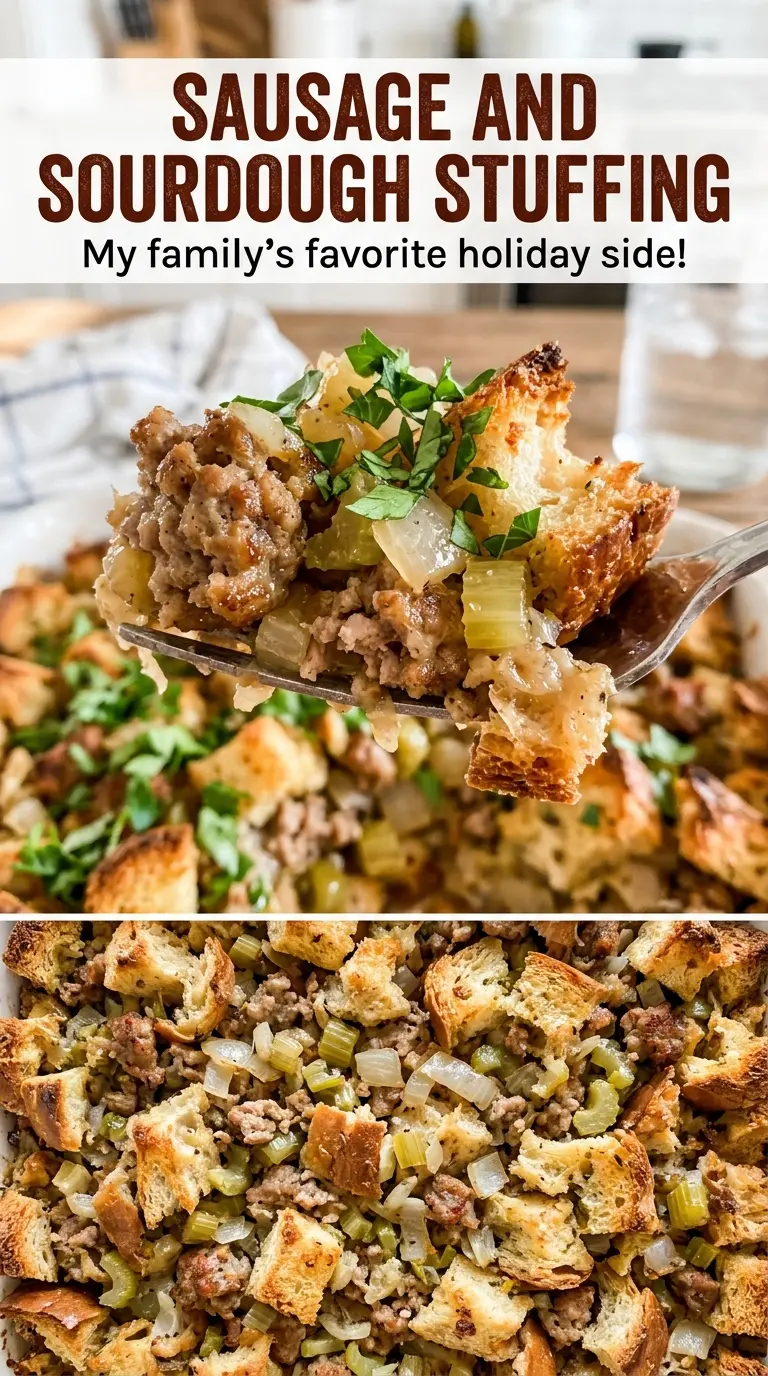
- Sourdough bread — A loaf with a firm, chewy crumb keeps its shape through tossing and baking. A very airy loaf is more likely to crumble, so choose a sturdy one; the oven-drying step helps whether the loaf is fresh or a day old.
- Bulk pork sausage — Bulk sausage browns in small pieces and leaves flavorful drippings for the vegetables. The meat doesn’t need to be a premium brand, but choose sausage you enjoy on its own, since its seasoning carries through the whole dish.
- Unsalted butter, onion, and celery — Butter rounds out the sausage drippings, while the diced vegetables bring a mild, savory base. Fresh, firm celery is worth choosing because it stays more distinct after baking; a standard yellow onion works well here.
- Dried sage and thyme — These dried herbs bloom briefly in the hot vegetables, spreading their aroma through the fat before they meet the bread. Dried herbs are the right fit for that quick step; fresh herbs would bring a different texture and a softer, less concentrated flavor.
- Low-sodium chicken broth — It moistens the bread while leaving room to season with the measured kosher salt. A basic store-brand broth is fine; low-sodium gives you more control than a full-salt broth.
- Eggs and fresh parsley — The eggs help the casserole hold together as it bakes, and parsley adds a fresh note to the rich sausage and herbs. Use fresh parsley for its clean, green flavor, and whisk it thoroughly with the broth so it distributes evenly.
Build the Stuffing in Four Stages, from Dry Bread to Golden Top
Dry the cubes until crisp
Heat the oven to 300°F and spread the bread cubes in an even layer on a large rimmed baking sheet. Bake for 30 to 40 minutes, stirring once halfway through, until the cubes are dry and crisp. If the pieces are crowded, they won’t dry as evenly, so use the full sheet and spread them out. Move the dried bread to a large bowl, then raise the oven temperature to 350°F.
Brown the sausage in the skillet
Grease a 9×13-inch baking dish, then cook the bulk pork sausage in a 12-inch skillet over medium heat. Break it into small pieces as it cooks so it browns evenly rather than staying in large clumps. Cook for about 8 to 10 minutes, until browned and 160°F. Transfer it to the bowl with the bread, leaving the drippings in the skillet.
Soften the vegetables and wake up the herbs
Add the butter, diced onion, and diced celery to the skillet and cook over medium heat until softened, about 8 to 10 minutes. Keep the heat moderate; the vegetables should soften rather than scorch in the sausage drippings. Stir in the dried sage and thyme and cook for 30 seconds, just long enough for their fragrance to rise. Add the vegetables to the bowl and toss them with the bread and sausage.
Moisten, cover, and bake until set
Whisk the chicken broth, eggs, parsley, kosher salt, and black pepper in a medium bowl, then pour the mixture over the bread. Toss until everything is evenly moistened, and transfer it to the prepared baking dish. Cover with foil and bake at 350°F for 30 minutes, then uncover and bake for 20 to 25 minutes, until the top is golden and the center reaches 165°F. Let it rest before serving.
Three Simple Ways to Adapt the Bread or Sausage
Make it gluten-free with a sturdy loaf
Replace the sourdough with a firm gluten-free bread loaf and cut it into cubes. Dry the cubes until crisp before mixing; gluten-free bread can have a more delicate crumb, so toss gently to keep the pieces intact. The flavor will be less tangy than the sourdough version.
Turn up the heat with spicy pork sausage
Use spicy bulk pork sausage in place of regular bulk pork sausage. It keeps the same savory base while adding a peppery kick, so the finished stuffing tastes bolder without changing the bread or baking method.
Use whole-grain sourdough for a nuttier bite
Swap in a sturdy whole-grain sourdough loaf. Its deeper, nuttier taste pairs naturally with sausage and dried herbs, while the firm crumb still gives the casserole distinct bread pieces.
Storage and Reheating
- Refrigerator: Refrigerate leftovers within 2 hours and use within 3 to 4 days. The top will soften as the casserole sits.
- Freezer: Freeze cooled portions in airtight containers for up to 3 months. Thaw overnight in the refrigerator for more even reheating.
- Reheating: Reheat covered in a 350°F oven until hot throughout. Keep it covered so the bread doesn’t dry out; uncover briefly at the end if you’d like to bring back some crispness on top.
Questions That Come Up When Baking This Stuffing
Sausage and Sourdough Stuffing
Ingredients
Equipment
Method
- Heat the oven to 300°F.
- Spread the bread cubes in an even layer on a large rimmed baking sheet.
- Bake the bread for 30 to 40 minutes, stirring once halfway through, until dry and crisp.
- Transfer the bread to a large bowl and raise the oven temperature to 350°F.
- Grease a 9x13-inch baking dish.
- Cook the sausage in a 12-inch skillet over medium heat, breaking it into small pieces, until browned and 160°F, about 8 to 10 minutes.
- Transfer the sausage to the bowl with the bread, leaving the drippings in the skillet.
- Add the butter, onion, and celery and cook over medium heat until softened, about 8 to 10 minutes.
- Stir the sage and thyme into the vegetables and cook for 30 seconds.
- Add the vegetable mixture to the bowl and toss with the bread and sausage.
- Whisk the broth, eggs, parsley, salt, and pepper in a medium bowl.
- Pour the broth mixture over the bread mixture and toss until evenly moistened.
- Transfer the mixture to the prepared baking dish and cover with foil.
- Bake at 350°F for 30 minutes.
- Uncover and bake for 20 to 25 minutes, until the top is golden and the center reaches 165°F.
- Rest the stuffing for 10 minutes before serving.