
Caramelized delicata squash turns this salad into something people remember. The rings roast into tender, golden edges with a soft center, and when you layer them over peppery arugula with salty feta and maple pecans, you get contrast in every bite. It eats like a side dish that wandered into main-course territory, which is exactly why it disappears fast.
What makes this version work is the balance of textures and the order you build them in. Delicata squash has thin skin, so there’s no peeling and no wasted time. The maple pecans bring crunch, but they only stay crisp if you let them cool before tossing them in. The vinaigrette stays light on purpose; too much dressing and the greens collapse before the squash even reaches the table.
Below, I’ll walk through the little details that keep the squash caramelized instead of soggy, plus the best way to assemble it ahead without losing that fresh, just-tossed look.
The squash roasted up tender with those caramelized edges, and the maple pecans stayed crunchy after I cooled them first. I made it ahead for dinner and dressed it at the table — no soggy greens at all.
Save this roasted delicata squash salad for the nights when you want warm caramelized squash, crunchy maple pecans, and a bright vinaigrette in one bowl.
Why Delicata Squash Needs Space on the Pan
The biggest mistake with roasted squash salad is crowding the pan. When the pieces sit on top of one another, they steam instead of browning, and you lose the caramelized edges that give this salad its best flavor. Delicata squash has enough natural sweetness to taste great on its own, but it needs direct heat to develop that toasted, almost nutty finish.
Cutting the squash into rings helps here because the slices are even and roast quickly. They also hold their shape better than small cubes, which can turn soft before the edges color. Flip them once during roasting and leave them alone otherwise; too much stirring interrupts browning.
- Delicata squash — The skin is thin enough to eat after roasting, so don’t peel it. If your squash is especially large, scoop out any seedy center cleanly so the rings stay neat and cook at the same rate.
- Arugula — Its peppery bite keeps the salad from tasting flat. Baby spinach works in a pinch, but it will soften more quickly and won’t give the same sharp contrast.
- Maple pecans — Toasting them with a little maple syrup gives you sticky crunch instead of plain nuts. Let them cool fully before adding them to the salad or they’ll soften the greens and lose their snap.
- Feta — The saltiness pulls everything together and balances the squash’s sweetness. Goat cheese works too, but it gives a softer, tangier finish and melts into the greens faster.
Building the Salad So the Greens Stay Bright

- Olive oil — Use a decent one for both roasting and dressing. The roasting oil helps the squash brown, while the dressing oil needs enough body to carry the vinegar and maple without tasting sharp.
- Apple cider vinegar — This is what keeps the salad from leaning too sweet. If you substitute lemon juice, the dressing will taste brighter and a little less round, which is fine if that’s what you want.
- Maple syrup — A small amount in the vinaigrette ties the dressing to the pecans and squash. Too much and the salad starts to taste glazed instead of balanced, so measure it rather than pouring by feel.
- Salt and pepper — Season both the squash and the dressing. If the salad tastes muted at the end, it usually needs a final pinch of salt more than it needs extra vinegar.
Roasting, Toasting, and Tossing in the Right Order
Roasting the Squash Until the Edges Color
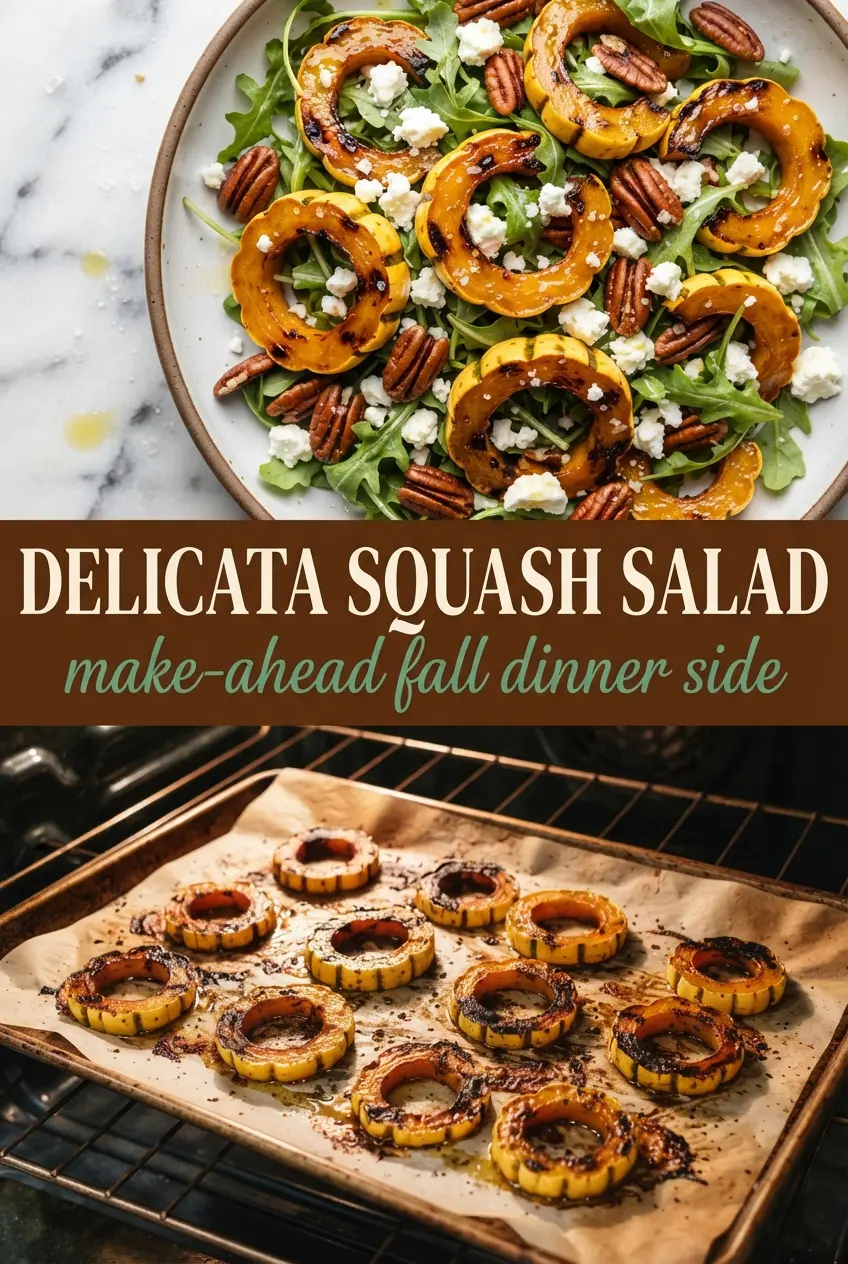
Heat the oven to 425°F so the squash starts browning quickly instead of slowly drying out. Toss the rings with olive oil, salt, and pepper, then spread them in a single layer with a little breathing room. They’re ready when the edges look caramelized and the centers give easily to a fork but still hold their shape. If they come out pale, they just needed more space or another few minutes in the oven.
Making the Maple Pecans Crisp, Not Sticky
Toast the pecans in a dry skillet first, then add the maple drizzle just long enough to coat them. Once the syrup hits the heat, it goes from glossy to sticky fast, so keep the nuts moving until they smell nutty and look lightly lacquered. Dump them onto a plate right away so the residual heat doesn’t burn the sugar. If they cool in the pan, they clump into one hard piece.
Finishing the Salad at the Last Minute
Whisk the vinaigrette separately and toss it with the arugula only when you’re ready to serve. The roasted squash should be warm, not steaming hot, so it doesn’t wilt the greens on contact. Add the feta last so it stays in distinct crumbles instead of disappearing into the dressing. If the bowl looks dry after tossing, drizzle a little more vinaigrette around the edges rather than drowning the center.
Three Ways to Make This Salad Fit the Table You’re Feeding
Dairy-Free Version
Leave out the feta and add extra toasted pecans or a sprinkle of flaky salt at the end. You lose the creamy-salty bite, so the salad will read a little more roasted and nutty, but the maple-vinegar balance still holds together.
Make It a Fuller Meal
Add cooked farro, quinoa, or lentils under the arugula for more substance. Grains soak up the vinaigrette and make the salad hold up longer at the table, which is useful if you’re serving it as a main dish rather than a side.
Swap the Nuts
Walnuts or pepitas work if that’s what you have. Walnuts taste a little more earthy and pepitas bring a cleaner crunch, but both still give you the contrast this salad needs against the soft squash.
Storage and Reheating
- Refrigerator: Store the components separately for up to 3 days. The squash softens a bit, and the greens will wilt if they sit dressed.
- Freezer: Don’t freeze the finished salad. The squash and pecans lose their texture, and the greens won’t recover after thawing.
- Reheating: Rewarm the squash briefly in a 350°F oven or a skillet over medium-low heat. Don’t microwave it if you want to keep the edges from turning limp.
Answers to the Questions Worth Asking
Roasted Delicata Squash Salad
Ingredients
Equipment
Method
- Preheat the oven to 425°F. Toss the delicata squash rings with 2 tbsp olive oil, salt, and pepper until evenly coated, with rings spread out so they roast rather than steam.
- Roast for 20-25 minutes, flipping halfway, until caramelized and tender. Arrange the cut sides to brown, and keep an eye on the edges so they turn golden amber.
- Toast the pecans with a drizzle of maple syrup in a dry skillet until fragrant. Stir as they toast so the maple smell develops without scorching.
- Whisk together 3 tbsp olive oil, apple cider vinegar, maple syrup, salt, and pepper for the dressing. Whisk until the vinaigrette looks smooth and slightly emulsified.
- Toss the arugula with the roasted squash, maple pecans, and feta. Mix just until everything is coated, keeping the arugula as dry and crisp as possible.
- Drizzle with the vinaigrette before serving. Toss once more right before serving so the greens don’t wilt.