
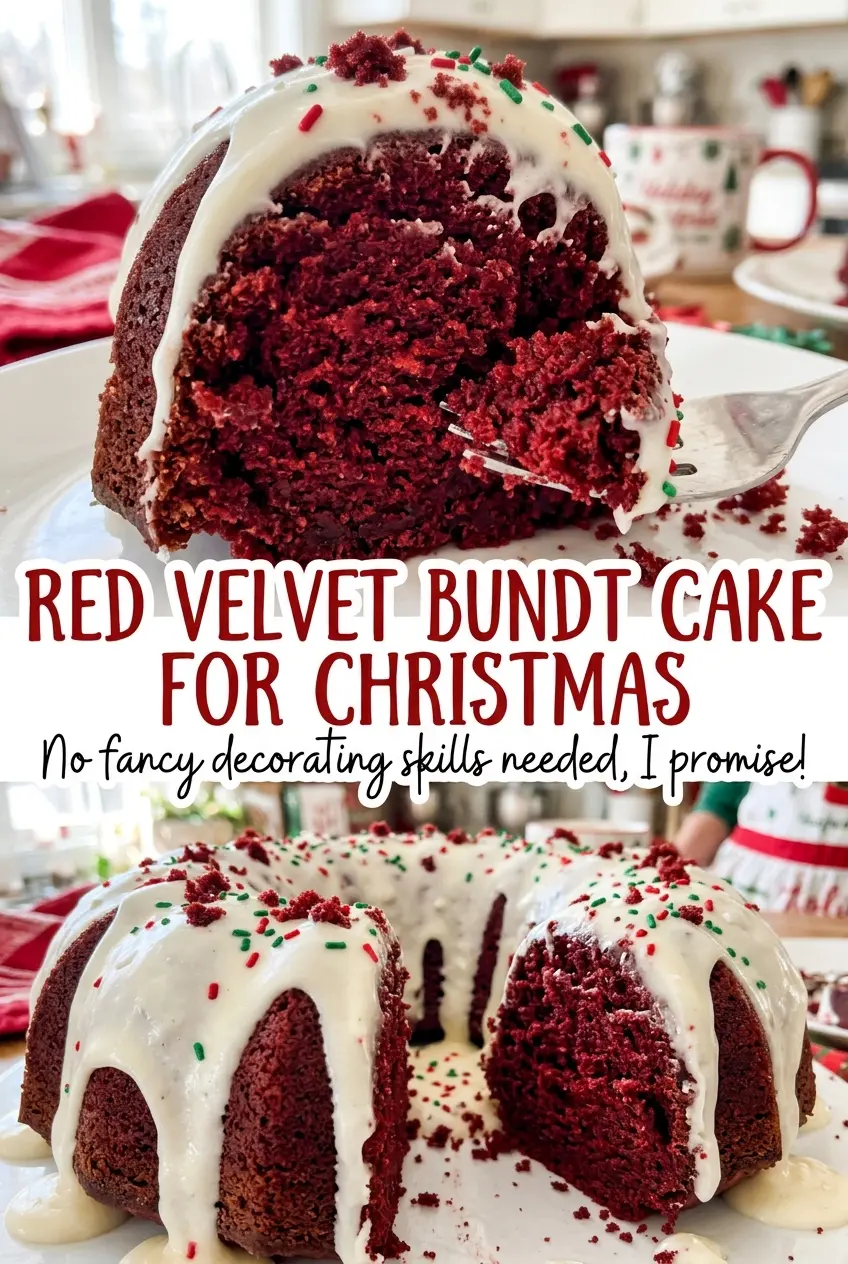
The red batter looks startlingly bright going into the pan, but it settles into a deeper, velvety shade as it bakes. I like this Red Velvet Bundt Cake for Christmas because the ring shape gives the cream cheese glaze plenty of places to run and pool, while each slice stays soft and tender.
This isn’t a chocolate cake with red coloring added for show. The cocoa stays in the background, and the finished cake has the gentle tang that makes red velvet taste like itself. I keep the glaze smooth and pourable, then scatter the red and green sprinkles over it before they can slide off. Each slice has a tender cocoa crumb under a cool, tangy ribbon of cream cheese glaze.
Kitchen Note
Bundt pan release starts with the coating, not the cooling. I pay extra attention to the center tube and the narrow ridges, where a missed patch of baking spray with flour can catch the cake.
Save this Red Velvet Bundt Cake for Christmas for its soft cocoa crumb, cream cheese glaze, and bright holiday sprinkles.
Why Butter Alone Wouldn’t Give This Bundt the Same Soft Crumb
Butter and oil aren’t doing the same job here. Butter brings the rounded flavor you expect in a cake, and beating it with sugar helps build the base of the batter. Oil adds a different kind of tenderness: it stays fluid as the cake cools, so the crumb doesn’t rely on butter alone for softness.
That balance matters in a Bundt, which has a substantial ring of cake and needs enough structure to turn out in one piece. Swapping all the butter for oil would remove the butter’s flavor and change how the batter is built; replacing all the oil with butter would give you a firmer crumb once the cake is cool. Keeping both gives you a slice that feels rich without turning heavy. It’s a useful distinction if you’ve had a Bundt that tasted good warm but seemed dry after it cooled.
The Ingredients That Give This Red Velvet Its Color and Tang
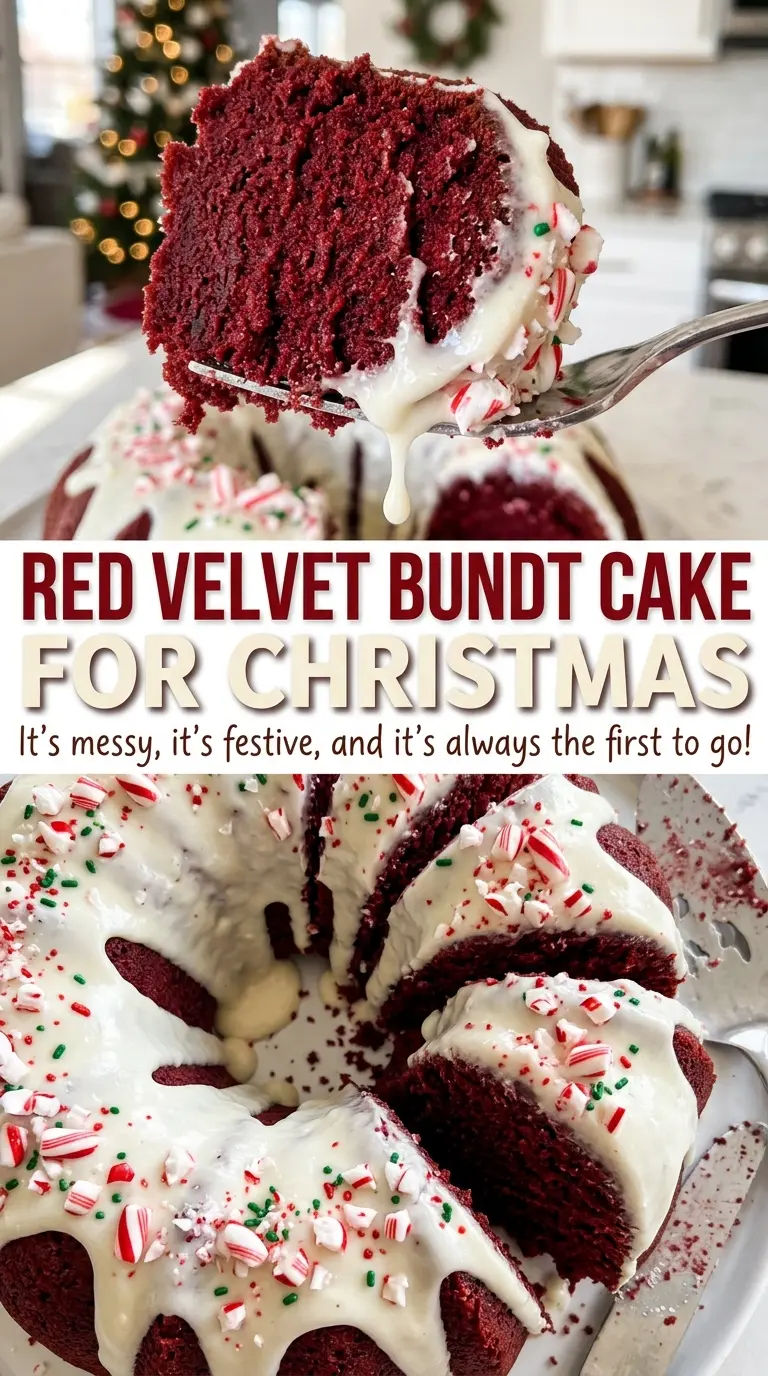
- Unsweetened cocoa and red food coloring — The cocoa gives the cake a gentle chocolate note, while the coloring supplies the familiar red crumb. Use plain unsweetened cocoa powder, not sweetened hot cocoa mix; an expensive brand isn’t necessary. The liquid food coloring is part of the cake’s color balance, so gel coloring isn’t a direct one-for-one swap.
- Buttermilk and white vinegar — Together, they bring the slight tang that keeps the cake from tasting flat and provide acidity alongside the baking soda. Room-temperature buttermilk blends more easily into the batter. If you’re out, plain yogurt thinned with milk until pourable works in place of the buttermilk; keep the separate white vinegar in the batter.
- All-purpose flour — It gives the cake enough structure to hold its Bundt shape. Measure it without packing it tightly into the cup; too much flour can leave the crumb heavier than intended. A cup-for-cup gluten-free baking blend is an option, though the crumb may be more delicate.
- Cream cheese and powdered sugar — Softened cream cheese beats into a smoother glaze, and powdered sugar thickens it without needing to cook anything. Standard powdered sugar is fine; break up any visible lumps before they go into the bowl so the finished drizzle stays smooth.
Build the Batter Gently, Then Let the Bundt Set
Prepare the Pan and Dry Ingredients
Heat the oven to 350°F and coat a 12-cup Bundt pan thoroughly with baking spray with flour. Whisk the flour, cocoa powder, baking soda, and salt together in a medium bowl so the leavening is distributed through the flour. Keep the dry mixture nearby while you work on the batter; the alternating additions go quickly once the eggs are in.
Cream the Butter, Sugar, and Oil
Beat the softened butter and granulated sugar in a large bowl for about 3 minutes, until the mixture looks pale and fluffy. Scrape the bowl if butter is collecting along the sides, then beat in the canola oil. The sugar should look evenly incorporated rather than sitting in a greasy layer.
Add the Eggs and Alternate the Wet and Dry Mixtures
Beat in the eggs one at a time, then mix in the vanilla and red food coloring. Stir the buttermilk and vinegar together in a measuring cup. Add the flour mixture in three additions and the buttermilk mixture in two, starting and finishing with flour; mix just until combined so you don’t develop a tough cake.
Bake Until a Few Moist Crumbs Cling to the Tester
Scrape the batter into the prepared pan and bake for 50 to 60 minutes. Insert a toothpick near the center; it should come out with a few moist crumbs, not wet batter. A completely clean tester can mean the cake has gone a little farther than it needs to, so check near the start of the time range.
Cool Completely Before Adding the Glaze
Let the cake cool in the pan for 15 minutes, then invert it onto a wire rack and cool completely. Beat the softened cream cheese until smooth, then beat in the powdered sugar and milk until the glaze is smooth and pourable. Drizzle it over the cooled cake and scatter the red and green holiday sprinkles over the glaze before it sets.
Three Practical Ways to Adapt This Bundt Cake
Make It Gluten-Free
Replace the all-purpose flour with a cup-for-cup gluten-free baking blend that includes xanthan gum. The cake’s crumb may be a little more delicate, so let it cool fully before turning it out of the pan.
Use Plain Yogurt if You’re Out of Buttermilk
Thin plain yogurt with milk until it pours like buttermilk, then use it in the batter in place of the buttermilk. Keep the white vinegar as written; the cake will still have its characteristic tang.
Leave Off the Cream Cheese Glaze
For a less sweet finish, serve the cake without the glaze. You’ll get more of the cake’s mild cocoa flavor, but lose the tangy contrast and the place for the holiday sprinkles to stick.
Storage and Reheating
- Refrigerator: Keep the glazed cake covered in the refrigerator and enjoy it within 3 to 4 days. The crumb firms up when chilled; don’t leave it at room temperature for more than 2 hours.
- Freezer: Freeze the fully cooled cake before glazing, wrapped tightly in plastic wrap and then foil, for up to 2 months. Thaw it in the refrigerator, then glaze once it’s completely thawed.
- Reheating: No reheating is needed. Warming can loosen the cream cheese glaze; let individual slices sit out briefly if you’d like a softer crumb.
Questions That Come Up Before Baking This Red Velvet Bundt
Red Velvet Bundt Cake for Christmas
Ingredients
Equipment
Method
- Heat the oven to 350°F. Thoroughly coat a 12-cup Bundt pan with baking spray with flour.
- Whisk the flour, cocoa powder, baking soda, and salt in a medium bowl.
- Beat the butter and granulated sugar in a large bowl until pale and fluffy, about 3 minutes.
- Beat the oil into the butter mixture.
- Beat in the eggs one at a time.
- Mix in the vanilla and red food coloring.
- Stir the buttermilk and vinegar together in a measuring cup.
- Add the flour mixture to the butter mixture in three additions, alternating with the buttermilk mixture in two additions. Begin and end with the flour mixture, mixing just until combined.
- Scrape the batter into the prepared pan.
- Bake for 50 to 60 minutes, until a toothpick inserted near the center comes out with a few moist crumbs.
- Cool the cake in the pan for 15 minutes.
- Invert the cake onto a wire rack and cool completely.
- Beat the cream cheese until smooth.
- Beat in the powdered sugar and milk until the glaze is smooth and pourable.
- Drizzle the glaze over the cooled cake.
- Scatter the holiday sprinkles over the glaze before it sets.