
Roasted acorn squash turns silky and sweet in the oven, and that tender flesh is the perfect contrast to fluffy quinoa, tart cranberries, and toasted pecans. This is the kind of dinner that looks composed and special but eats like a practical weeknight meal, with every bite moving from soft to chewy to crisp. The goat cheese on top finishes it with just enough tang to keep the whole dish from leaning too sweet.
What makes this version work is the balance. The squash roasts cut-side down first, which traps steam and lets the flesh turn buttery instead of drying out. Then the filling is mixed separately so the quinoa stays light and the pecans keep their crunch. The maple syrup is there for roundness, not sweetness; just a tablespoon ties the cranberries and squash together without making the filling taste like dessert.
Below, I’ve included the details that matter most: how to roast the squash until it’s tender all the way through, how to season the filling so it tastes layered instead of flat, and the best swaps if you want to change the cheese or make it fully dairy-free.
The squash came out tender without collapsing, and the quinoa filling stayed fluffy instead of getting mushy. I used feta like suggested and the salty bite with the cranberries was perfect.
Save this Quinoa Stuffed Acorn Squash for a cozy dinner with roasted squash, tart cranberries, and a crunchy pecan finish.
The Secret to Squash That Tastes Roasted, Not Watery
Acorn squash can go wrong in two directions: it either turns soft but bland, or it steams itself into a pale, watery half-shell. Roasting it cut-side down first solves both problems. That position lets the surface that will become your bowl stay protected while the exposed flesh concentrates and caramelizes against the pan.
The other mistake is stuffing it too early. If you pile the filling into the squash before it’s tender, the grains can dry out before the squash finishes cooking. By roasting first, then filling, you keep the quinoa fluffy and the squash fully creamy at the edges. You also get better seasoning control, because the filling and the squash each get their own chance to taste like something on purpose.
What Each Ingredient Is Actually Doing in This Dish
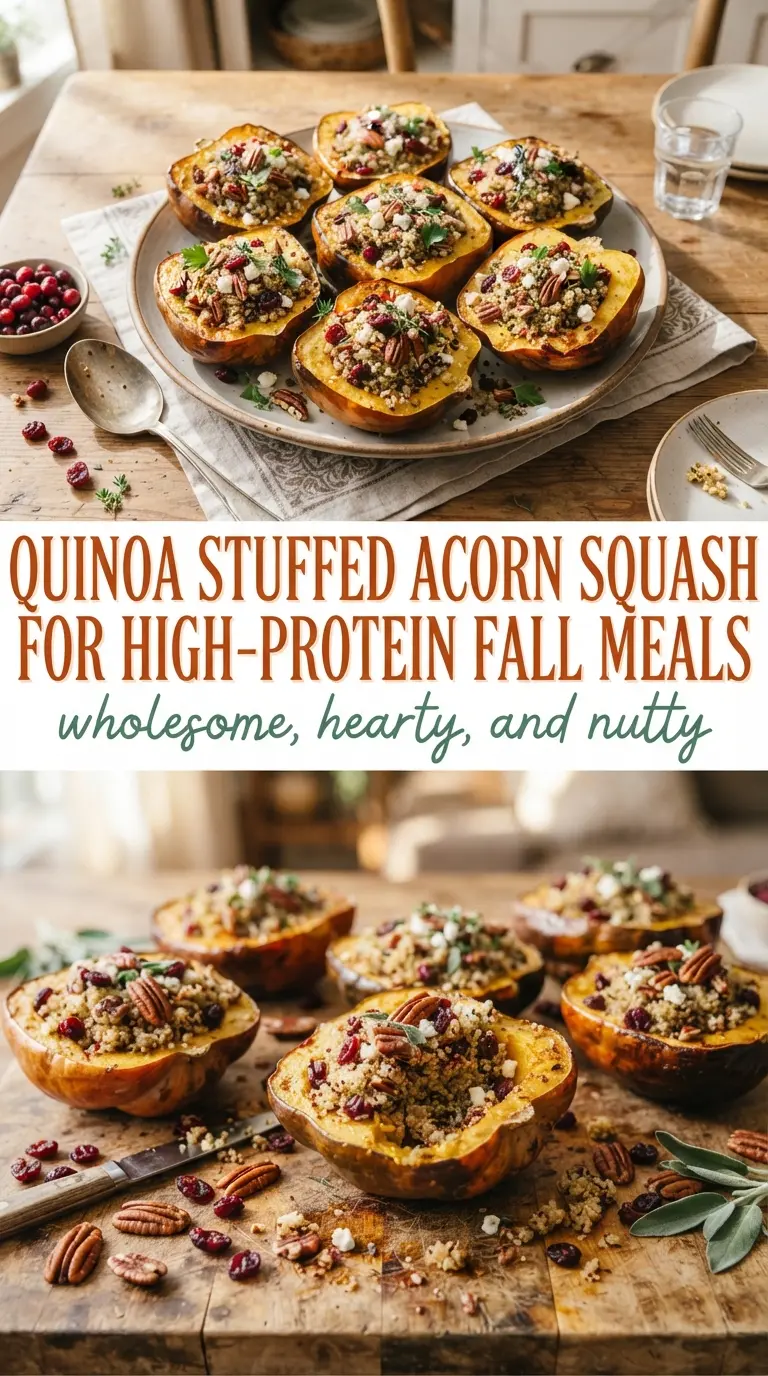
- Acorn squash — This is the edible bowl and the sweet, tender base of the whole dish. Smaller squash are easier to roast evenly, and a sharp knife helps when halving them. If one side is wobbling on the cutting board, slice a thin strip off the bottom so it sits flat before you cut.
- Cooked quinoa — Quinoa gives the filling structure without heaviness. It should be cooked and fluffed before mixing so it doesn’t clump or turn pasty in the oven. Brown rice works in a pinch, but you’ll lose that lighter, slightly nutty texture.
- Dried cranberries — These bring the sharp, tart sweetness that keeps each bite lively. If yours are very dry, soak them in warm water for 5 minutes and drain well before mixing. That little step keeps them from stealing moisture from the quinoa.
- Pecans — Toasted pecans are the crunch in the dish, and they matter more than people think. Raw pecans taste flat here, while toasted ones bring a deeper, buttery note. Chop them after toasting so you get pieces that stay noticeable in every bite.
- Goat cheese — The cheese softens into the warm filling and adds a clean tang that cuts through the squash. Feta is the best swap if you want the same salty brightness with a firmer crumble. If you want this dairy-free, skip the cheese and add a little extra salt plus a drizzle of olive oil before serving.
- Maple syrup — Just enough to round out the cranberries and echo the sweetness in the squash. Use real maple syrup, not pancake syrup, because the flavor is cleaner and less sticky. You don’t need much; more than a tablespoon starts to push the filling in the wrong direction.
Roasting the Squash Before You Fill It
Season the cut sides generously
Brush the cut sides with olive oil and season them before they go into the oven. That salt on the flesh is what keeps the squash from tasting flat once it’s roasted. Place the halves cut-side down on the pan so the flesh steams and browns at the same time. If the squash looks dry when you take it out, it usually needed a little more oil before roasting.
Mix the filling while the squash roasts
Toss the cooked quinoa with cranberries, pecans, and maple syrup while the squash is in the oven. The warm quinoa helps the syrup coat everything evenly, which keeps the filling from tasting scattered. Don’t add the cheese yet if you want it to stay more distinct on top. Fold it in only if you like a softer, more blended filling.
Finish with the filling and cheese
Flip the squash cut-side up once it’s tender enough to pierce easily with a fork and the flesh gives without resistance. Heap in the quinoa mixture; don’t be shy, because it should sit tall in the squash cavity. Top with goat cheese and return it to the oven just until everything is warmed through. If you bake it too long at this stage, the quinoa dries out and the cheese loses its fresh tang.
How to Adapt This for Different Tables
Dairy-Free Without Losing the Contrast
Leave off the goat cheese and finish with a drizzle of olive oil and a pinch of flaky salt. You’ll lose the tang, so add a few extra cranberries or a small splash of lemon juice to bring back some brightness. The filling still works because the squash and pecans already provide plenty of richness.
Make It Vegetarian and Heartier
It already is vegetarian, but you can turn it into a fuller meal by stirring in sautéed spinach, chopped kale, or roasted mushrooms. Add those after cooking so they don’t water down the filling. Mushrooms are the best choice if you want a deeper, more savory result.
Swap the Grain When You Have Leftovers
Brown rice, farro, or barley all work in place of quinoa if that’s what you have cooked already. Quinoa stays the lightest and fastest, while farro gives the filling more chew. If you use a grain that’s drier than quinoa, add a little more maple syrup or a drizzle of olive oil so the stuffing doesn’t taste dusty.
Storage and Reheating
- Refrigerator: Store leftovers in an airtight container for up to 4 days. The squash softens a little more as it sits, but the flavor holds well.
- Freezer: Freeze the stuffed squash halves individually wrapped, then tucked into a freezer bag, for up to 2 months. The texture of the squash gets softer after thawing, so it’s best if you plan to reheat and eat rather than serve for company.
- Reheating: Warm in a 350°F oven until heated through, about 15-20 minutes for halves. Microwave reheating works in a hurry, but it can make the pecans lose their crunch, so the oven is the better choice if you want the texture to stay close to fresh.
Answers to the Questions Worth Asking
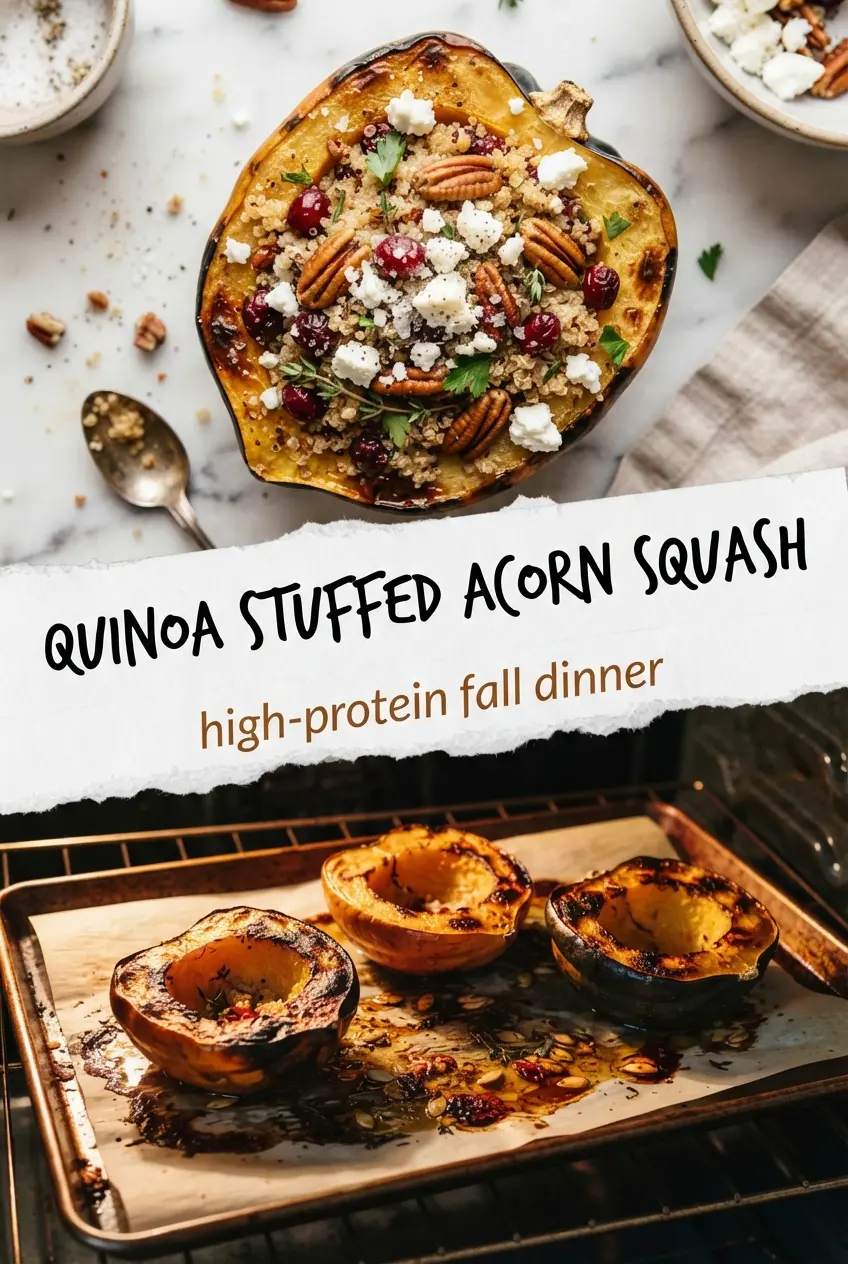
Quinoa Stuffed Acorn Squash
Ingredients
Equipment
Method
- Preheat the oven to 400°F. Brush the cut sides of the squash with olive oil and season with salt and pepper for even flavor.
- Place the squash cut-side down on a sheet pan and roast for 30-35 minutes, until tender and easily pierced.
- In a bowl, mix the cooked quinoa with dried cranberries, toasted pecans, and maple syrup until the quinoa is evenly coated.
- Flip the squash halves cut-side up and fill generously with the quinoa mixture so the tops are mounded.
- Top with crumbled goat cheese and return to the oven for 5-10 minutes until warmed through and the cheese softens.