
A thin cake can go from flexible to brittle while you’re still deciding what to do with it. For this pumpkin roll, the useful moment is right when it comes out of the oven: turn it onto a sugared towel and roll it while it’s hot. That gives the cake a curve to cool into, instead of asking it to bend sharply after it’s set.
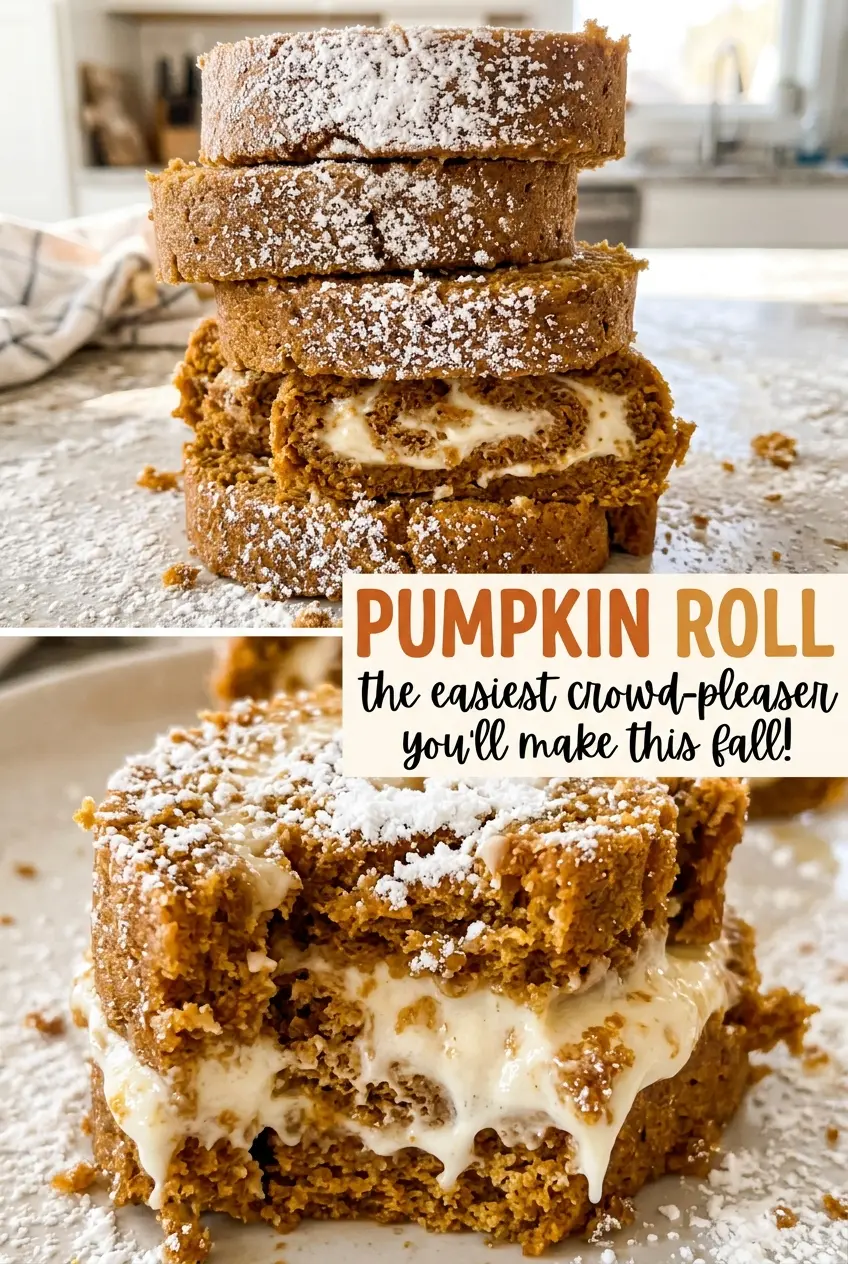
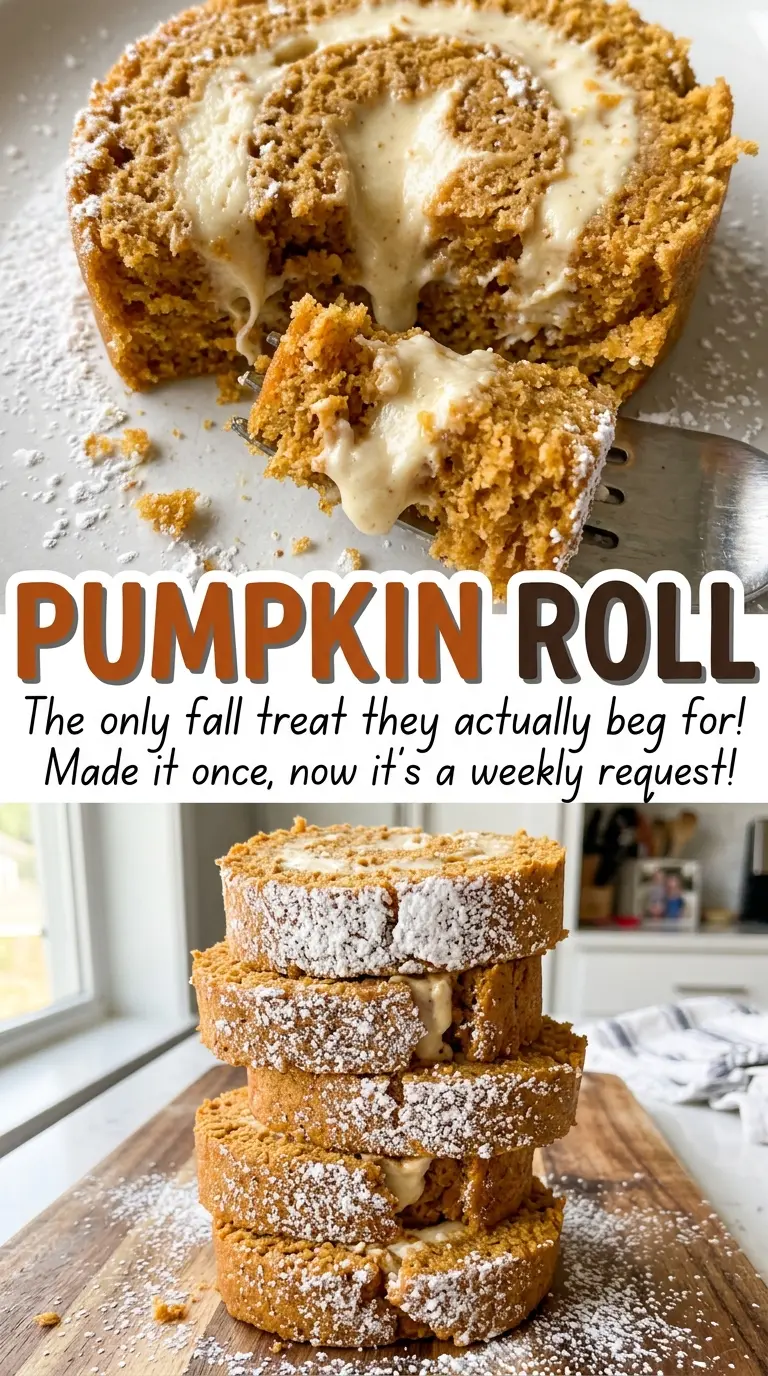
I beat the eggs and sugar until they’re thick and pale, then fold in the pumpkin and dry ingredients just until the flour disappears. That keeps the batter light without overworking it. Once the cream cheese filling is tucked inside, the slices show a soft spiced cake around a smooth, tangy spiral.
Kitchen Note
The filling should be smooth and spreadable before it goes on the cake. Softened cream cheese and butter beat together without lumps, so you can spread the filling gently instead of dragging it across the cooled cake.
Save this pumpkin roll for its tender spiced cake and cream cheese spiral—it’s a lovely make-ahead dessert that slices neatly once chilled.
Why This Pumpkin Cake Gets Rolled Before It Cools
The cake is thin by design, which makes it easy to roll but also means it loses flexibility quickly as it cools. Rolling it while hot sets a gentle curve into the cake as it cools. When it’s time to add the filling, you can unroll it carefully, spread the filling, and roll it back along that same curve rather than forcing a flat, cool cake into a tight spiral.
The towel does more than give you something to hold. Powdered sugar keeps the cake from sticking to the cotton as you roll, and the towel supports the warm cake so it doesn’t sag or tear under its own weight. Use a clean, thin cotton kitchen towel; a bulky towel makes a thicker roll harder to handle. Keep the cake seam-side down on the rack while it cools so it holds its shape.
Don’t rush the cooling stage just to get to the filling. The cake needs to be completely cool before you spread the cream cheese mixture, or the filling can soften and slide. Once it’s filled and chilled until firm, the roll is easier to unwrap, dust, and slice cleanly.
Why Pumpkin Puree and Room-Temperature Eggs Matter in This Cake
- Pumpkin puree — It adds moisture and pumpkin flavor to a thin cake that needs to stay flexible enough to roll. Use plain pumpkin puree, not pumpkin pie filling, which is already sweetened and seasoned. Keep this ingredient as listed; changing the moisture and sugar balance can affect the cake’s texture.
- Eggs — Beating the eggs with the sugar builds the volume that helps the cake bake up light rather than dense. Room-temperature eggs blend more readily into the mixture. I wouldn’t replace them here; they provide both structure and lift in a cake with no other leavener doing that job.
- All-purpose flour — It gives the cake enough structure to hold its spiral without making it heavy. Measure it without packing it into the cup, and stop mixing as soon as no dry streaks remain. A different flour can absorb liquid differently, so this isn’t the place for an untested one-for-one swap.
- Cinnamon and cloves — These give the pumpkin cake its warm, spiced character. Ground spices are convenient here, and freshness matters most if the jars have been sitting open for a long time. You can leave out the cloves for a milder cinnamon-forward cake, but don’t add extra spice without adjusting the balance.
- Cream cheese and unsalted butter — Together they make a smooth filling that’s rich enough to hold its shape when the roll is sliced. Use both softened, as listed, so they beat together evenly. There isn’t a dependable dairy-free substitute in this formula that keeps the same filling texture.
- Vanilla extract — It rounds out the sweetness of the filling without taking over the pumpkin and spice. A familiar, good-quality extract is plenty; this isn’t a recipe where you need a specialty product. You can omit it for a simpler cream cheese filling, though it will taste less aromatic.
How to Bake, Roll, and Fill the Pumpkin Cake Without Tearing It
Whip the Eggs and Spread the Batter Thin
Heat the oven to 375°F, then grease a 10×15-inch jelly roll pan, line it with parchment, and grease the parchment. Whisk the flour, baking powder, baking soda, cinnamon, cloves, and salt in a medium bowl. Beat the room-temperature eggs and granulated sugar with an electric mixer on medium-high speed for 3 to 5 minutes, until thick and pale; this gives the batter the lift it needs. Beat in the pumpkin, then mix in the flour mixture just until no dry streaks remain, and spread the batter evenly in the pan.
Check the Cake Before It Dries Out
Bake for 13 to 15 minutes, watching for the cake to spring back when you touch it lightly. If the center stays indented, give it a little more time within that range; if the surface feels dry or firm, it’s at risk of cracking as you roll. While it bakes, sprinkle 2 tablespoons of the powdered sugar over a clean, thin cotton kitchen towel. Set the towel close by so you can turn the cake out as soon as it leaves the oven.
Roll the Warm Cake in the Sugared Towel
Turn the hot cake out onto the sugared towel, then peel off the parchment. Starting at a short end, roll the cake and towel together into a snug spiral. Set it seam-side down on a wire rack and leave it until completely cool, about 1 hour. If the parchment clings, peel it back slowly rather than tugging at the cake.
Fill, Re-Roll, and Chill Until Firm
Beat the softened cream cheese and butter in a medium bowl until smooth, then beat in the powdered sugar and vanilla until the filling is smooth and spreadable. Carefully unroll the cooled cake and spread the filling evenly over it, leaving a 1/2-inch border. Roll the cake back up without the towel, then wrap it in plastic wrap and refrigerate for at least 1 hour, until firm. Unwrap the roll, dust it with the remaining powdered sugar, and slice to serve.
Small Changes That Keep This Pumpkin Roll’s Texture Intact
A Milder, Cinnamon-Forward Cake
Leave out the ground cloves for a gentler spice flavor. The cake will still have cinnamon and pumpkin, but it won’t have the clove’s sharper warmth; the texture stays the same.
A Simpler Vanilla-Free Filling
Skip the vanilla extract if you prefer a plain cream cheese filling. It will be less fragrant, while the cream cheese and butter still make a smooth, spreadable center.
A Less-Sweet Finish
Leave off the final powdered sugar dusting if you’d rather keep the outside plain. The roll will look less snowy and taste a little less sweet on the surface, without changing the cake or filling.
Storage and Reheating
- Refrigerator: Keep the wrapped roll or slices in an airtight container for up to 4 days. The cake may become a little softer as it sits.
- Freezer: It freezes well. Wrap the whole roll or individual slices tightly, then freeze for up to 1 month; thaw in the refrigerator before serving.
- Reheating: No reheating is needed. Serve it chilled; microwaving can soften the cream cheese filling and make the slices slump.
Questions That Come Up When Making Pumpkin Roll
Pumpkin Roll
Ingredients
Equipment
Method
- Preheat the oven to 375°F.
- Grease a 10x15-inch jelly roll pan.
- Line the pan with parchment paper.
- Grease the parchment.
- Whisk the flour, baking powder, baking soda, cinnamon, cloves, and salt in a medium bowl.
- Beat the eggs and granulated sugar in a large bowl with an electric mixer on medium-high speed for 3 to 5 minutes, until thick and pale.
- Beat in the pumpkin.
- Mix in the flour mixture just until no dry streaks remain.
- Spread the batter evenly in the prepared pan.
- Bake for 13 to 15 minutes, until the cake springs back when lightly touched.
- While the cake bakes, sprinkle 2 tablespoons of the powdered sugar over a clean, thin cotton kitchen towel.
- Turn the hot cake out onto the sugared towel.
- Peel off the parchment.
- Roll the cake and towel together from a short end.
- Place the rolled cake seam-side down on a wire rack.
- Let it cool completely, about 1 hour.
- Beat the cream cheese and butter in a medium bowl until smooth.
- Beat in the powdered sugar and vanilla until the filling is smooth and spreadable.
- Carefully unroll the cooled cake.
- Spread the filling evenly over it, leaving a 1/2-inch border.
- Roll it back up without the towel.
- Wrap the roll in plastic wrap.
- Refrigerate for at least 1 hour, until firm.
- Unwrap the roll.
- Dust it with the remaining 2 tablespoons powdered sugar.
- Slice to serve.