
Pumpkin cinnamon rolls bake up soft, plush, and fragrant, with tender orange dough wrapped around a dark cinnamon-sugar ribbon and finished with tangy cream cheese icing. The pumpkin doesn’t make them taste like pie; it gives the dough a gentle richness and a moist, pillowlike crumb that stays soft after baking. When they come out right, the spirals pull apart in neat layers and the icing melts into the cracks just enough to catch in every bite.
What makes this version work is balance. Pumpkin puree adds moisture, so the dough needs enough flour to stay manageable without turning tight or bready. The filling uses both brown sugar and a full hit of cinnamon, which keeps the spice flavor bold even after the rolls rise and bake. Warm milk helps wake up the yeast quickly, but it shouldn’t be hot or it can slow everything down instead of helping it along.
Below, I’ve included the small details that keep the dough soft, the spirals tidy, and the filling from leaking all over the pan. The dental floss trick is worth using, and the icing goes on best while the rolls are still warm, not piping hot.
The dough came together soft but not sticky, and the cinnamon filling stayed in the swirl instead of melting out. I used the floss trick to cut them and every roll puffed up evenly in the pan.
Save these pumpkin cinnamon rolls for a morning when you want soft spirals, cream cheese icing, and a dough that rises into big fluffy layers.
The Quiet Reason Pumpkin Dough Stays Soft Instead of Heavy
Pumpkin dough can go wrong in one of two ways: it turns dense from too much flour, or it bakes up loose and gummy from too much moisture. The trick is not treating pumpkin puree like a wet ingredient that behaves like milk. It brings body, not just liquid, and that means the dough should feel tacky and supple, not dry enough to fight you.
The other mistake happens during kneading. Once the flour is mostly in, the dough needs enough working time to become smooth, but not so much that it turns stiff. If it’s bouncing back hard when you try to roll it, it’s already too tight. A soft dough here gives you those pull-apart layers instead of a dull, bready coil.
What Each Ingredient Is Actually Doing in This Dough
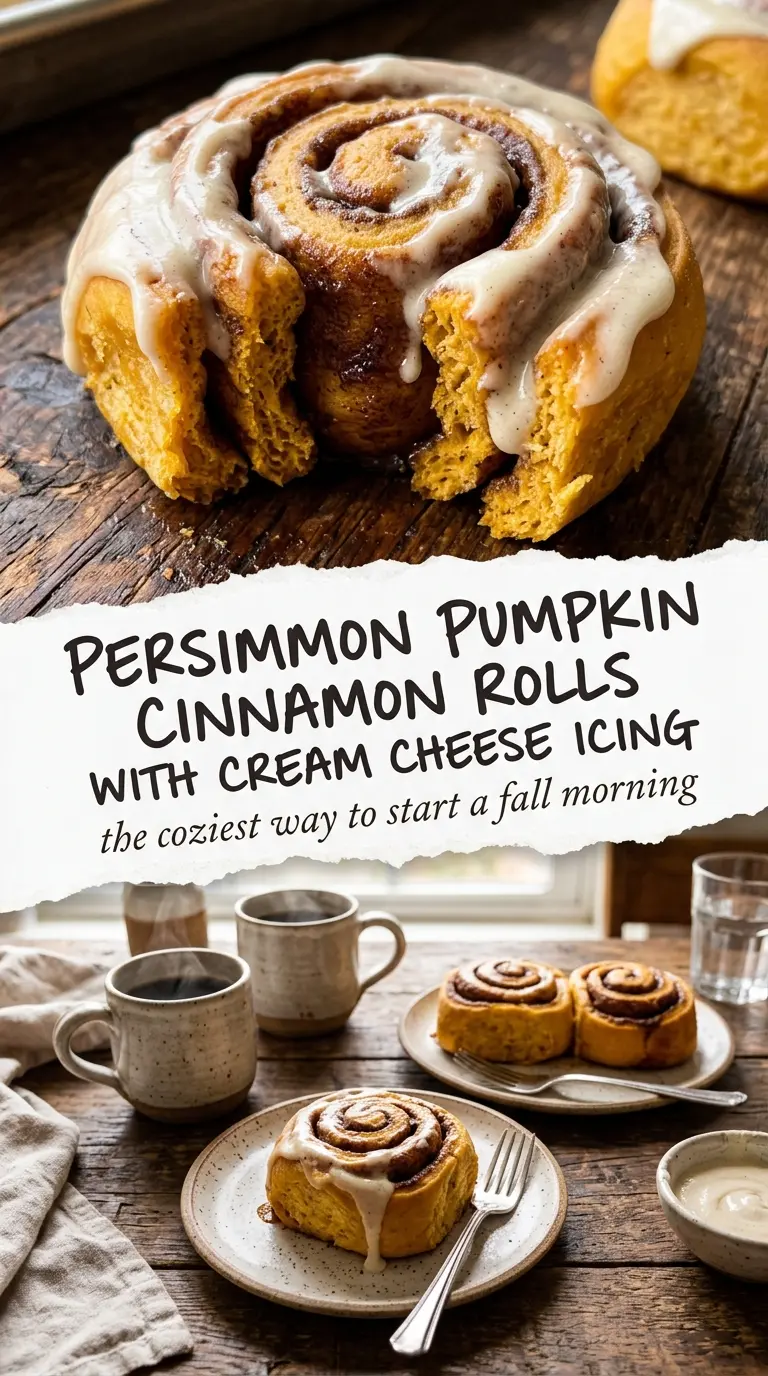
- All-purpose flour — This gives the rolls structure without making them chewy. Start with the amount listed, then stop adding flour as soon as the dough holds together and only feels slightly sticky.
- Pumpkin puree — This is what makes the crumb tender and gives the dough its color. Use plain pumpkin puree, not pumpkin pie filling, or the sugar and spices in the filling will throw off the dough.
- Active dry yeast — The proofing step tells you quickly whether it’s alive. If it doesn’t get foamy in warm milk, stop there and start over; flat yeast means flat rolls.
- Brown sugar and cinnamon — Brown sugar stays a little softer during baking, which helps the filling melt into the swirl instead of drying out. Cinnamon is the backbone of the flavor, so don’t skimp on it.
- Cream cheese — This gives the icing the tang that keeps the rolls from tasting flat and sweet. Full-fat cream cheese gives the smoothest icing, but the main thing is that it needs to be softened so it blends without lumps.
Building the Spiral Without Squeezing the Filling Out
Bloom the Yeast First
Dissolve the yeast in warm milk and give it the full 5 minutes. You’re looking for a foamy top, not just a few bubbles around the edge. If the milk is too hot, it can kill the yeast; if it’s too cool, the dough will still rise, but it’ll take much longer and the rolls can end up compact.
Mix the Dough Until It Feels Elastic
Stir in the pumpkin puree, melted butter, sugar, egg, and cinnamon before adding the flour gradually. The dough should start off shaggy, then turn smooth and soft as you knead it. If it sticks hard to your hands, add flour a tablespoon at a time; if it feels dry or cracks when you pull it, it’s already too far gone.
Roll, Fill, and Slice Cleanly
Roll the dough into a rectangle with even thickness so the rolls bake at the same pace. Spread the softened butter all the way to the edges, then scatter the brown sugar and cinnamon evenly so you don’t end up with bare spots inside the spiral. Roll it up tightly from the long side and use unflavored dental floss to cut the slices cleanly; a knife tends to squash the shape and push the filling out.
Let the Rolls Rise Before Baking
Once the rolls are in the pan, give them the second rise until they look puffy and touching. That extra rise is what gives you soft sides and a lighter center. If you bake them too early, the centers stay tight and the tops don’t get that full, rounded lift.
Finish With Icing While They’re Warm
Beat the cream cheese, powdered sugar, and milk until smooth, then spread it over the warm rolls. Warm rolls help the icing soften and sink into the grooves without dissolving into a runny glaze. If the rolls are piping hot, the icing will melt off; if they’ve cooled completely, it sits too thick on top and misses the best part.
Three Ways to Make These Rolls Fit the Morning You’ve Got
Dairy-Free Version
Swap the milk for an unsweetened non-dairy milk and use a plant-based butter in both the dough and filling. The rolls still bake up soft, though the icing won’t have the same tang unless you use a dairy-free cream cheese that melts smoothly.
Make-Ahead Overnight Rolls
Assemble the rolls, cover the pan tightly, and refrigerate overnight after shaping. In the morning, let them sit at room temperature until puffy before baking. This keeps the texture light and saves you from doing the messy part before coffee.
Extra-Spiced Filling
Add a pinch of nutmeg or pumpkin pie spice to the cinnamon filling if you want a warmer spice note. Keep the amount small, because the cinnamon should still lead and the pumpkin should stay in the background.
Storage and Reheating
- Refrigerator: Store covered for up to 4 days. The rolls stay soft, though the icing firms up in the fridge.
- Freezer: Freeze baked rolls without icing for up to 2 months. Wrap them well so they don’t dry out, then thaw before reheating and icing.
- Reheating: Warm individual rolls in the microwave for 20 to 30 seconds or cover a pan and heat in a low oven. Don’t blast them on high heat or the edges dry out before the center warms through.
Answers to the Questions Worth Asking
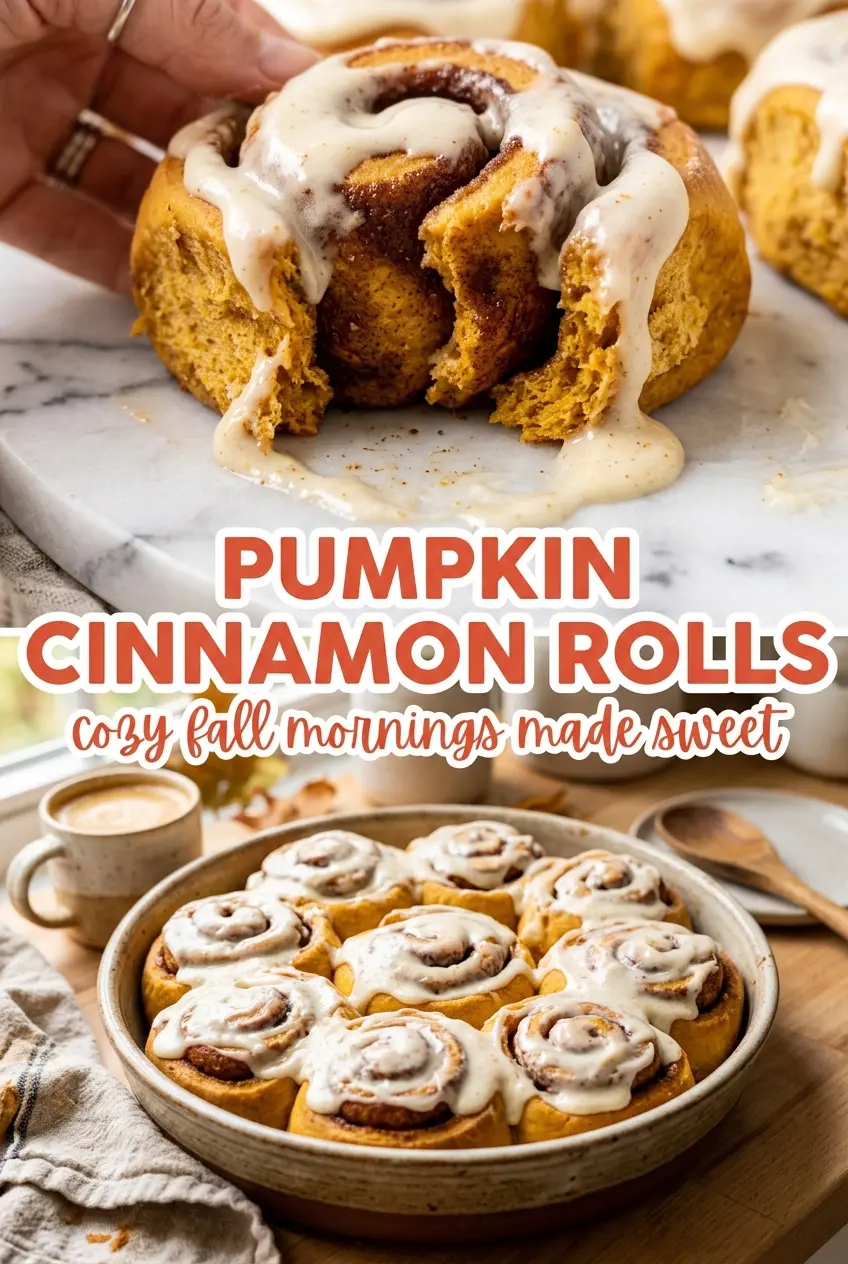
Pumpkin Cinnamon Rolls
Ingredients
Equipment
Method
- Dissolve active dry yeast in warm milk and let sit for 5 minutes until foamy with small bubbles visible on top.
- Mix in pumpkin puree, melted unsalted butter, granulated sugar, egg, and cinnamon for dough until evenly combined and smooth.
- Gradually add all-purpose flour and mix until a soft dough forms.
- Knead the dough until smooth and elastic, pressing folds together until the surface looks cohesive.
- Let the dough rise in a warm place for 1 hour, until doubled in size and visibly puffy.
- Roll the dough into a rectangle and spread softened butter for filling over the surface in an even layer.
- Sprinkle brown sugar for filling and cinnamon for filling over the butter, covering the dough from edge to edge.
- Roll the dough up tightly into a log, keeping the spiral tight so slices stay defined.
- Slice the roll into individual pieces and place them in a greased baking dish, spacing them for airflow.
- Let the rolls rise for 30 minutes until they look puffed and touch slightly.
- Bake at 350°F for 20-25 minutes until golden and the tops look set and lightly browned.
- Beat cream cheese for icing, powdered sugar for icing, and milk for icing until smooth, then spread over the warm rolls while the centers are still soft.