
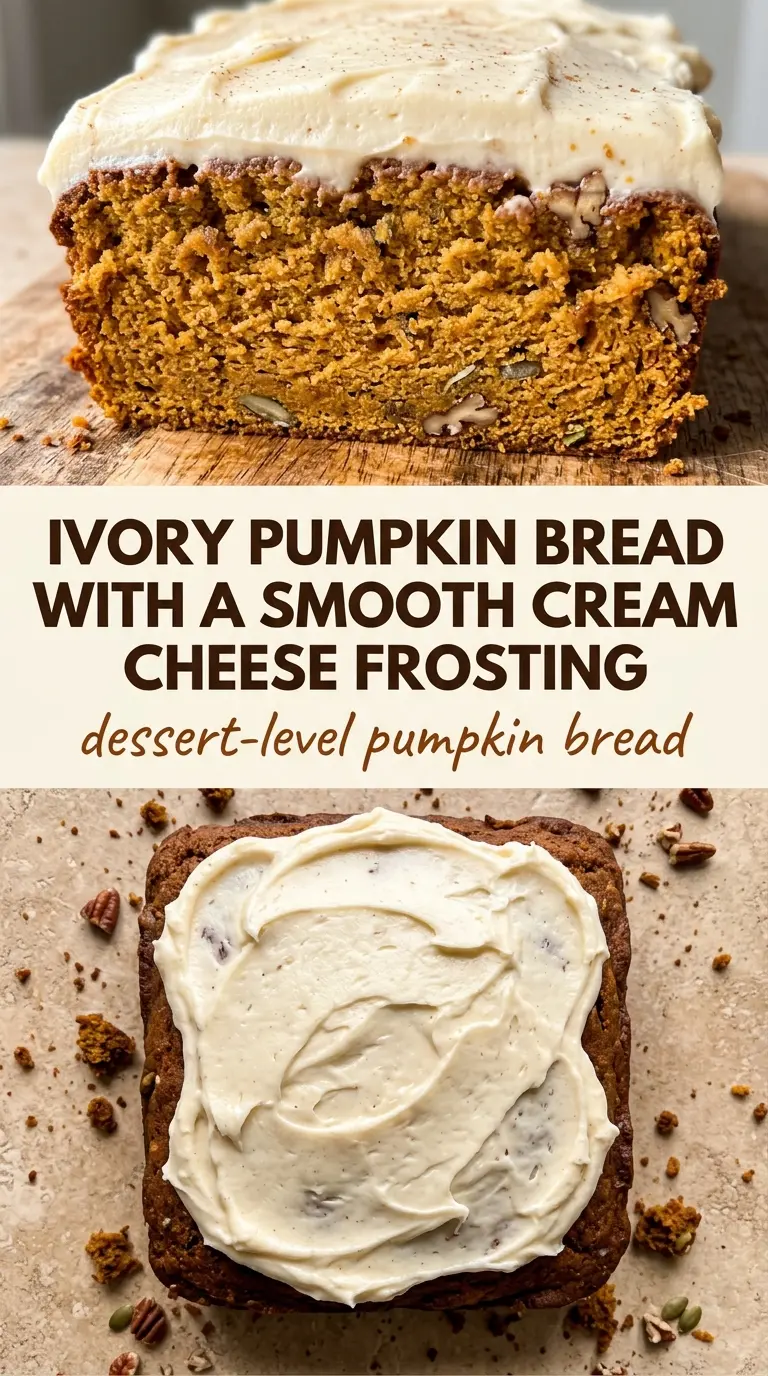
Pumpkin bread turns into something worth slicing thick when the crumb stays tender instead of gummy and the top gets finished with a cool layer of cream cheese frosting. This version leans into that contrast: warmly spiced loaf underneath, tangy frosting on top, and enough structure to hold together clean slices without collapsing under the weight of the topping.
The trick is keeping the batter simple and not overworking it. Pumpkin puree brings moisture, oil keeps the crumb soft for days, and the eggs give the loaf just enough lift to stay plush instead of dense. The frosting matters just as much — beaten until smooth, not whipped until loose — so it spreads in a clean layer instead of sliding off the sides.
Below, I’ve included the part that makes the biggest difference: how to tell when the loaf is done before it dries out, plus the small cooling step that keeps the frosting from melting into the bread.
The loaf came out super moist and the frosting set up beautifully after chilling. I also liked that the spices were there without overpowering the pumpkin.
Save this pumpkin bread with cream cheese frosting for the days when you want a soft spiced loaf with a tangy finish.
The Reason Pumpkin Bread Stays Tender Instead of Heavy
Pumpkin bread goes wrong in two common ways: it turns dry because it’s baked too long, or it turns pasty because the batter was overmixed. This loaf avoids both by using oil instead of butter and by keeping the mixing gentle once the flour goes in. Oil stays soft at room temperature, so the crumb keeps that plush, sliceable texture even after a day or two in the fridge.
The other thing that matters is the balance between pumpkin and flour. Pumpkin puree adds moisture, but it also weighs a loaf down if you don’t give it enough structure. That’s why the batter should look thick but still spoonable, not loose like cake batter. If it looks glossy and smooth with no dry pockets, stop there. Overmixing past that point is what makes quick breads tough.
What Each Ingredient Is Actually Doing in This Loaf
- Pumpkin puree — This brings the moisture and the earthy pumpkin flavor that defines the loaf. Use pure pumpkin puree, not pumpkin pie filling, because pie filling already contains sugar and spices that throw off the balance.
- Vegetable oil — Oil keeps the crumb softer than butter would here. A neutral oil is best because it doesn’t compete with the cinnamon and pumpkin.
- Eggs — The eggs help the loaf set and give it enough lift to bake up with a tender, even crumb. Room-temperature eggs blend more smoothly into the batter, but cold eggs still work if that’s what you have.
- Powdered sugar in the frosting — This thickens the cream cheese mixture without making it grainy. Add it gradually so the frosting stays smooth and spreadable instead of turning stiff.
- Cream cheese and butter — Both need to be softened before mixing. Cold dairy leaves little lumps behind, and overbeating warm dairy can make the frosting loose, so stop as soon as it turns silky.
Getting the Batter Mixed, Baked, and Frosted Without Ruining the Texture
Whisk the Dry Ingredients First
Start with the flour, baking soda, cinnamon, and salt in one bowl. That small step keeps the baking soda from clustering in one spot, which would leave bitter pockets or a weak rise. The cinnamon should disappear into the flour so it doesn’t streak through the batter.
Build the Pumpkin Base
Whisk the sugar, oil, eggs, and pumpkin puree until the mixture looks smooth and uniform. It should be thick and glossy, not separated. If the eggs don’t fully disappear into the mixture before the flour goes in, the loaf can bake unevenly.
Fold, Don’t Beat
Add the dry ingredients to the wet mixture and fold just until the flour disappears. A few streaks at the edge are better than a batter that’s been stirred until elastic. Overmixing at this stage develops too much gluten, and that’s how pumpkin bread ends up tight instead of tender.
Bake Until the Center Sets
Scrape the batter into a greased 9×5-inch loaf pan and bake at 350°F for 55 to 65 minutes. The top should be deeply golden and spring back lightly when touched, while a toothpick inserted into the center comes out clean or with just a few moist crumbs. If the top is browning too quickly before the center is done, tent it loosely with foil for the last 15 minutes.
Cool Before the Frosting Goes On
Let the loaf cool completely in the pan, then move it to a wire rack before frosting. If the bread is even slightly warm, the cream cheese topping will melt and slide. The loaf needs to be fully cool so the frosting sits in a thick, clean layer that holds its shape when sliced.
Beat the Frosting Smooth
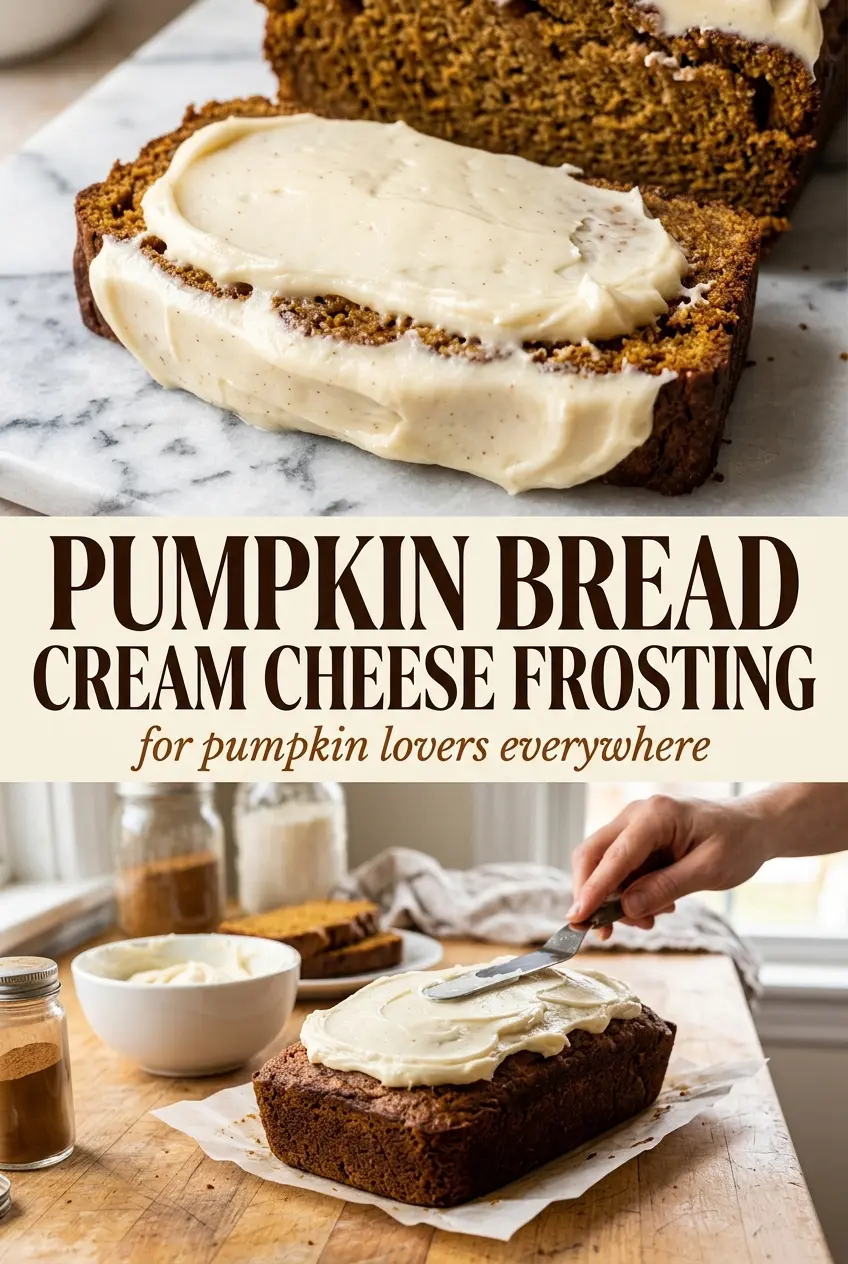
Beat the softened cream cheese and butter together first until there are no lumps, then add the powdered sugar and vanilla. The frosting should look creamy and spreadable, not whipped and airy. Spread it over the cooled loaf with an offset spatula or the back of a spoon, then dust the top with a little cinnamon if you want a neat finish.
Three Smart Ways to Change This Loaf
Dairy-Free Version
Swap the cream cheese and butter for dairy-free cream cheese and a plant-based butter that’s meant for baking. The frosting won’t taste exactly the same, but it still gives you that cool, tangy finish on top of the spiced loaf.
Less-Sweet Topper
Reduce the powdered sugar in the frosting slightly if you want a sharper cream cheese flavor. The frosting will be softer and a little looser, so chill the loaf after frosting before slicing for the cleanest cuts.
Make It Without Frosting
Skip the topping and dust the cooled loaf with cinnamon sugar instead. You’ll lose the tangy contrast, but the bread itself still stands on its own as a moist, spiced slice for breakfast or snacking.
Storage and Reheating
- Refrigerator: Store the frosted loaf covered for up to 5 days. The crumb stays moist, but the frosting firms up, so let slices sit at room temperature for a few minutes before serving.
- Freezer: Freeze the unfrosted loaf wrapped tightly in plastic and foil for up to 2 months. Cream cheese frosting doesn’t freeze well on the finished loaf, so frost it after thawing for the best texture.
- Reheating: Warm individual unfrosted slices in the microwave for 10 to 15 seconds. Don’t reheat a frosted slice unless you want the topping to melt into the bread.
Answers to the Questions Worth Asking
Pumpkin Bread With Cream Cheese Frosting
Ingredients
Equipment
Method
- Preheat the oven to 350°F and grease a 9x5-inch loaf pan.
- Whisk together the flour, baking soda, cinnamon, and salt until evenly combined.
- In a separate bowl, whisk the sugar, vegetable oil, eggs, and pumpkin puree until smooth, then fold in the dry ingredients.
- Pour the batter into the prepared loaf pan, then bake at 350°F for 55-65 minutes until a toothpick inserted into the center comes out clean.
- Cool completely in the pan, then transfer the loaf to a wire rack.
- Beat the cream cheese and butter together until smooth.
- Gradually mix in the powdered sugar and vanilla extract until the frosting is smooth and spreadable.
- Spread the frosting evenly over the completely cooled loaf before slicing.