
Silky pumpkin Alfredo clings to every strand of fettuccine with that rich, spoon-coating texture people usually hope for but don’t always get from a cream sauce. The pumpkin doesn’t make it taste like pie; it gives the sauce body, a deep orange color, and a mellow sweetness that plays perfectly against Parmesan and sharp garlic. Crispy sage on top finishes the whole bowl with a savory crunch that keeps each bite from feeling heavy.
This version works because the pumpkin puree is treated like part of the sauce, not a last-minute add-in. It gets a few minutes in the pan with cream, garlic, and nutmeg so the flavors blend before the cheese goes in. That order matters. If you dump Parmesan into a sauce that’s too hot, it can turn grainy. If you skip the pasta water, the sauce can thicken into a paste instead of staying glossy and loose enough to coat the noodles.
Below, I’m walking through the exact points that matter most: how to keep the sauce smooth, when to thin it, and why the sage should be fried at the very end. It’s the kind of pasta that looks fancy in the bowl but comes together without any drama.
The sauce turned out so smooth and glossy, and the sage stayed crisp on top even after serving. I used a splash of pasta water like you said and it coated the fettuccine instead of clumping up. My husband asked if I could make it again next week.
Save this Pumpkin Alfredo Pasta with Sage for the night you want a creamy pasta that feels cozy, looks elegant, and still comes together in about 30 minutes.
The Reason Pumpkin Alfredo Stays Smooth Instead of Turning Grainy
Pumpkin Alfredo has one job: stay creamy while carrying enough body to coat pasta without feeling thin or heavy. The place it usually goes wrong is the cheese. Parmesan needs gentle heat and steady stirring, not a boiling sauce, or it can seize and turn sandy. The pumpkin helps here because it adds thickness before the cheese goes in, which means you don’t have to overcook the dairy just to get some body.
The other trap is using too much sauce reduction before the pasta enters the pan. You want the sauce to look a little looser than you think it should. Fettuccine will drink up moisture fast, especially while it sits for a minute or two before serving. That reserved pasta water is not optional; its starch helps the sauce cling and gives you a softer, silkier finish than cream alone can manage.
- Pumpkin puree — Use plain pumpkin puree, not pumpkin pie filling. The puree gives you color, body, and a subtle sweetness without added sugar or spices fighting the Parmesan.
- Heavy cream — This is what keeps the sauce stable. Half-and-half can work in a pinch, but the sauce will be thinner and more prone to breaking once the cheese goes in.
- Parmesan — Grate it yourself if you can. Pre-grated cheese often contains anti-caking agents that keep it from melting as smoothly.
- Sage — Fresh sage matters here. It turns crisp and fragrant in oil in seconds, and that crunchy, earthy finish is a big part of what makes the dish taste complete.
Building the Sauce Without Losing the Silkiness
Start the pasta first
Get the fettuccine going in well-salted water before you start the sauce. That timing gives you the pasta water you need at the end, and it keeps the whole dish moving so the sauce doesn’t sit and thicken too long while you wait for noodles. Cook until just al dente; it should still have a little bite because it will finish in the sauce.
Cook the garlic gently
Melt the butter and cook the garlic just until fragrant, about a minute. If it browns, the sauce picks up a bitter edge that doesn’t belong here. You’re looking for soft garlic aroma, not color. This is a mild sauce, and the garlic should support it, not dominate it.
Let the pumpkin and cream come together
Stir in the pumpkin puree, cream, and nutmeg, then let the mixture simmer for a few minutes. You want the sauce bubbling lightly at the edges, not boiling hard in the center. That short simmer takes away the raw taste from the pumpkin and gives the sauce a fuller texture before the cheese goes in.
Add the Parmesan off aggressive heat
Once the sauce looks smooth, add the Parmesan a handful at a time and stir until melted. If the pan is too hot, the cheese can turn stringy or grainy. Pull the skillet slightly off the burner if needed. Thin with reserved pasta water little by little until the sauce looks glossy and coats the back of a spoon without clumping.
Finish with the pasta and the sage
Toss the drained fettuccine directly into the skillet and stir until every strand is coated. Then fry the sage leaves in olive oil for about 30 seconds per side, just until crisp and darker at the edges. They go from perfect to burnt fast, so keep them moving and pull them the moment they stiffen.
What to Change When You Want a Different Version
Dairy-Free Pumpkin Alfredo
Use full-fat coconut cream or an unsweetened oat-based cooking cream in place of the heavy cream, then swap the Parmesan for a dairy-free Parmesan-style topping. The sauce will be a little less sharp and slightly sweeter, but the pumpkin still gives it enough body to feel rich.
Gluten-Free Pasta Swap
Use a gluten-free fettuccine or another long noodle, but stop cooking it a minute early. Gluten-free pasta can go from firm to soft quickly, and it also sheds starch differently, so keep a little extra pasta water on hand to help the sauce cling.
Make It a Little Lighter
You can replace part of the cream with whole milk, but don’t swap all of it or the sauce will lose the plush texture that makes this dish work. If you go lighter, keep the pasta water handy and expect a looser, less luxurious finish.
Add Protein Without Weighing It Down
Seared chicken, Italian sausage, or sautéed mushrooms all fit well here. Cook them separately and fold them in at the end so the sauce stays smooth and you don’t crowd the pan while building flavor.
Storage and Reheating
- Refrigerator: Store in an airtight container for up to 3 days. The sauce will thicken as it chills, so expect the pasta to absorb more of it.
- Freezer: I don’t recommend freezing this one. Cream sauces with cheese can separate after thawing, and the pasta texture usually turns soft.
- Reheating: Warm it gently in a skillet over low heat with a splash of milk or water. The common mistake is blasting it in the microwave, which dries out the pasta and can make the sauce break.
Answers to the Questions Worth Asking
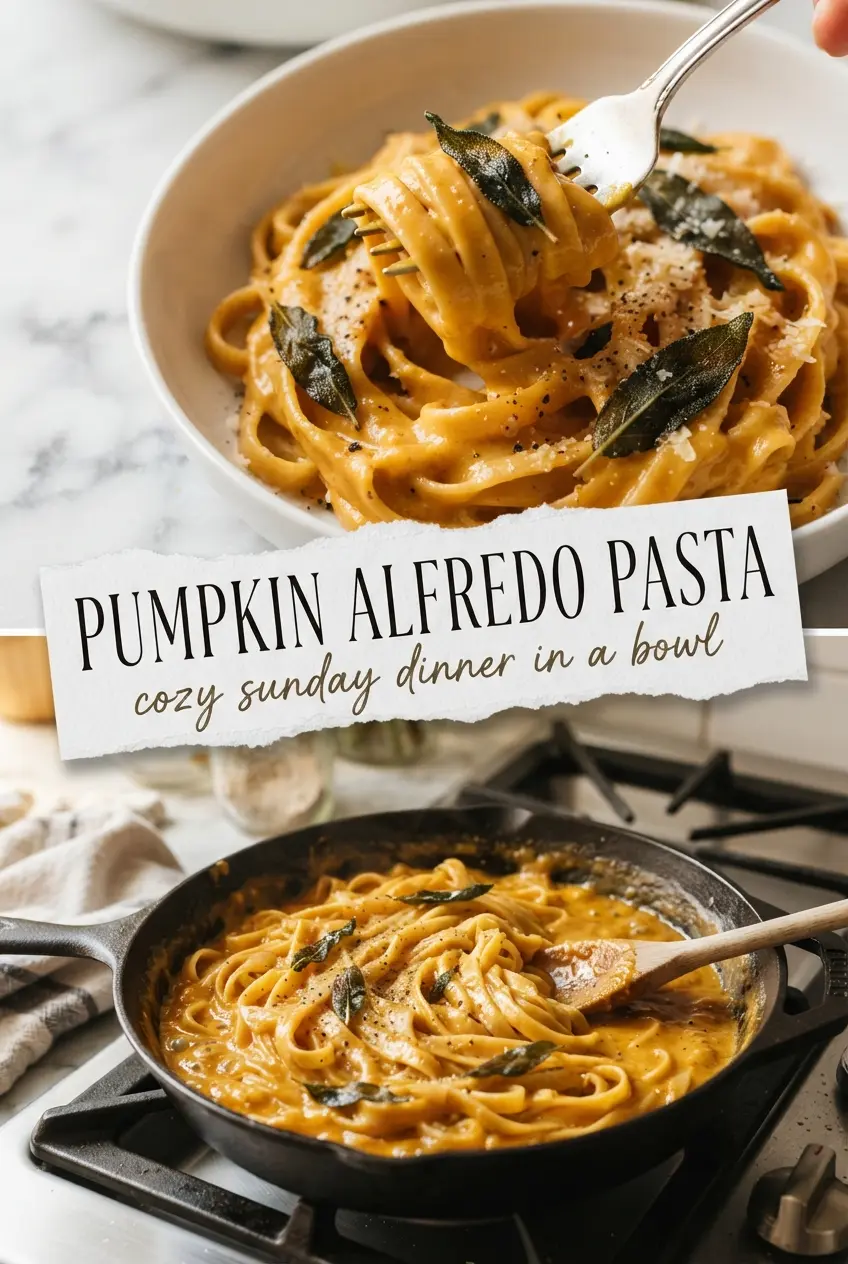
Pumpkin Alfredo Pasta with Sage
Ingredients
Equipment
Method
- Bring a large pot of salted water to a rolling boil, then cook the fettuccine until al dente. Drain and reserve 1/2 cup pasta water for loosening the sauce.
- Melt the butter in a large skillet over medium heat. Sauté the minced garlic until fragrant, about 1 minute, then stir to prevent browning.
- Stir in the pumpkin puree, heavy cream, and nutmeg. Simmer for 5 minutes, stirring occasionally until the sauce looks smooth and slightly thickened.
- Add the grated Parmesan and stir until melted and smooth. Thin with reserved pasta water a splash at a time as needed to reach a silky consistency.
- Add the drained pasta to the skillet and toss until well coated in the sauce. Keep tossing until the pasta looks glossy and evenly covered.
- Heat the olive oil in the skillet and fry the sage leaves until crisp, about 30 seconds per side. Transfer to a sheet pan as they finish, so they stay crunchy.
- Top the pasta with the crispy sage leaves and extra Parmesan before serving. Finish with any extra salt and pepper to taste.