
Deep burgundy plum jam has a kind of quiet luxury to it: glossy, tart-sweet, and thick enough to cling to a spoon without feeling sticky. The fresh fruit keeps the flavor bright, while a small amount of lavender adds a soft floral note that sits in the background instead of taking over. It tastes like plum jam with a little more depth, not like perfume in a jar.
What makes this version work is restraint. The plums cook down with sugar and lemon until the pectin in the fruit starts doing its job, and the lavender goes in tied up so it can infuse without scattering bits through the jam. That matters, because lavender goes from elegant to soapy fast when it’s overused. The lemon juice sharpens the fruit and helps the set, while a touch of zest and cinnamon rounds out the edges without making the jam taste spiced.
Below, you’ll find the exact cue I use for testing the set, why fresh lavender is worth hunting down if you can find it, and a few ways to serve this jam that go beyond toast.
The lavender stayed delicate and the jam set up beautifully after 30 minutes. I used it on biscuits and the plum flavor still came through clean, not muddy.
Save this plum-lavender jam for croissants, biscuits, and the kind of brunch where one jar disappears fast.
The Tiny Mistake That Makes Plum Jam Taste Flat
The difference between vivid plum jam and something that tastes merely sweet usually comes down to two things: acid and timing. Plums need lemon juice to wake up their flavor, and they need enough simmer time for the water to cook off and the natural pectin to concentrate. If you pull the jam too early, it stays loose and tastes thin. If you cook it too hard, you can dull the fruit and push the lavender into the background in a bad way.
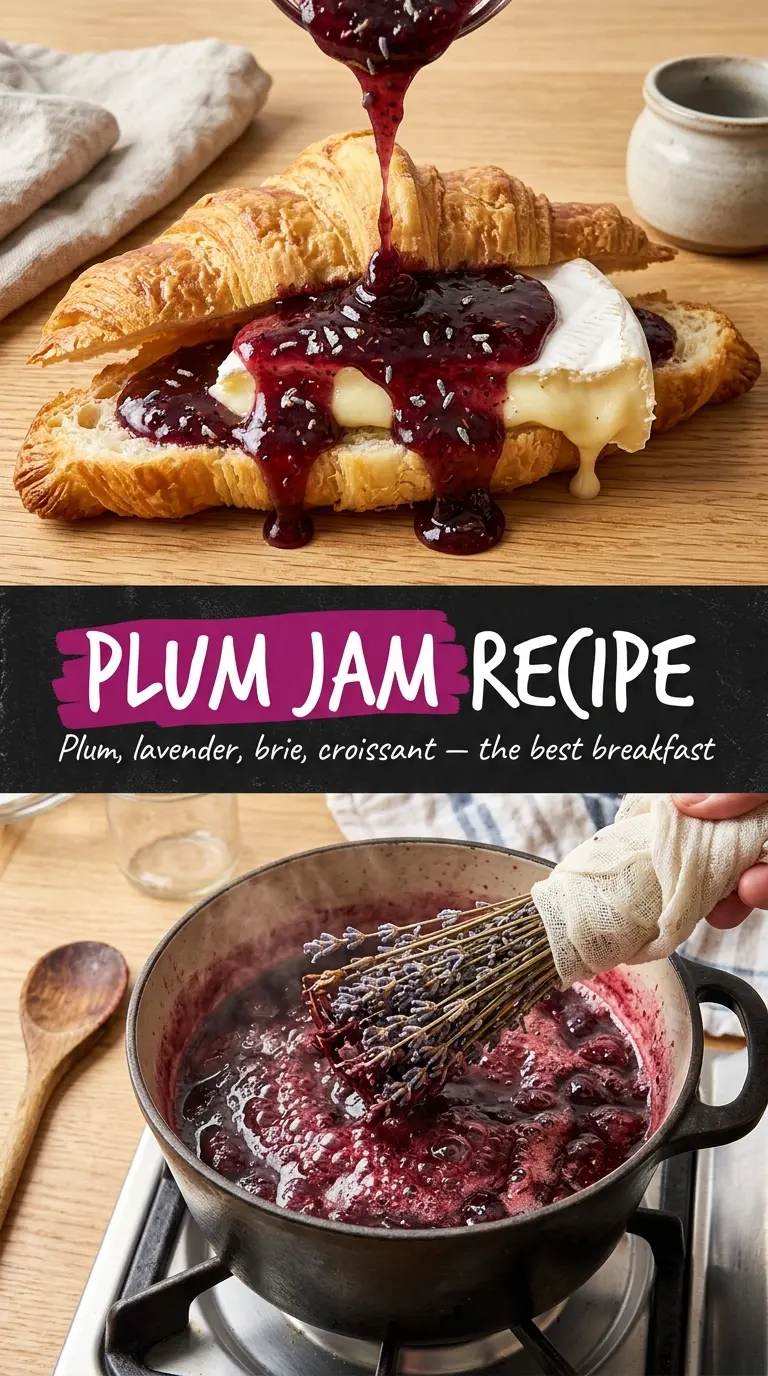
The other mistake is adding too much lavender or letting it boil too long. Lavender is not a background flavor you can pour in generously and sort out later. It should perfume the jam, not dominate it. Tied in cheesecloth, it infuses evenly and comes out cleanly when the flavor is there.
- Watch the bubbles. Early in the cook, the mixture will look loose and foamy. As it thickens, the bubbles get larger and slower, and the jam starts to fall from the spoon in heavy sheets instead of running off like syrup.
- Use a wide, heavy pot. More surface area means faster evaporation and less chance of scorching the fruit on the bottom.
- Test for set on a chilled plate. A small spoonful should wrinkle when you push it with your finger after a minute in the freezer. That’s more reliable than guessing by time alone.
What Each Ingredient Is Doing in This Jam
- Fresh plums — These carry the whole recipe. Ripe fruit gives you sweetness and enough natural pectin to help the jam set, but you still want plums that taste bright and fragrant rather than mushy.
- Granulated sugar — Sugar does more than sweeten here. It helps pull juice from the fruit, supports the set, and keeps the finished jam glossy. Reducing it too much changes the texture and shortens the shelf life.
- Lemon juice and zest — The juice sharpens the plum flavor and helps the pectin work. The zest adds a cleaner citrus note that keeps the jam from tasting one-dimensional.
- Fresh lavender buds — Fresh is best if you can find it. It gives a softer, more herbal perfume than dried lavender. If you use dried, cut the amount to 1 teaspoon, because dried lavender can take over fast.
- Cinnamon — This is background support, not a spice-forward note. It bridges the fruit and floral flavors and makes the jam taste more rounded.
- Salt — Just a pinch, but it matters. It keeps the jam from tasting flat and makes the fruit taste fuller.
How to Cook It Until It Sets Cleanly
The Maceration That Builds Flavor
Combine the chopped plums, sugar, lemon juice, and zest in a heavy pot and let it sit for 30 minutes. The fruit will start releasing juice, and the sugar will begin dissolving into a glossy syrup. That head start shortens the cook and helps the jam keep its fresh plum flavor. If you skip this rest, the fruit can scorch before it has enough liquid to move freely in the pot.
Infusing the Lavender Without Overdoing It
Tie the lavender in cheesecloth and add it to the pot before you bring everything to a boil. You want the bundle to steep while the fruit cooks down so the flavor blends into the jam, not sits on top of it. Pull the bundle out as soon as the plum mixture tastes lightly floral. Leave it in too long and the lavender starts to turn sharp and perfumed in a way that overwhelms the fruit.
Cooking to the Set Point
Bring the jam to a boil, stirring often at first so nothing sticks on the bottom, then lower it to a strong simmer. You’re looking for a thick, bubbling consistency that coats the spoon and leaves a trail for a second when you drag a spatula across the pot. This usually takes 25 to 35 minutes, depending on the ripeness of the fruit and the width of your pan. If the heat is too high, the jam can seize on the bottom before the top has finished reducing.
Testing and Jarring
Test the set on a chilled plate or with a thermometer if that’s how you like to work. Once it wrinkles and doesn’t run back into a puddle, it’s ready for jars. Ladle the hot jam into sterilized jars, leaving the proper headspace if you’re processing them. If you’re refrigerating instead, let the jars cool before sealing so condensation doesn’t water down the top layer.
Ways to Adjust the Flavor Without Losing the Jam’s Character
Drier Lavender, Same Soft Floral Note
If you only have dried lavender, use 1 teaspoon instead of 1 tablespoon fresh. Dried flowers are more concentrated, and that smaller amount still gives the jam its floral lift without crossing into soapiness.
Lower-Sugar Jam
You can cut the sugar a bit, but the jam will set more loosely and won’t keep as long. For a lower-sugar batch, expect a softer spoonable texture and plan to refrigerate it instead of storing it long term on the shelf.
No-Lavender Version
If floral jam isn’t your thing, leave the lavender out and add a little extra zest. You’ll still get a bright plum preserve with more citrus lift and a cleaner, fruit-forward finish.
Storage and Reheating
- Refrigerator: Keeps for about 4 weeks once cooled and sealed. The flavor stays bright, though the texture may firm up a little more after chilling.
- Freezer: Freezes well in freezer-safe containers with headspace. Thaw in the refrigerator overnight and stir before using.
- Reheating: Jam is usually served cold or at room temperature, but if it thickens too much in the fridge, let the jar sit on the counter for 15 to 20 minutes. Microwaving can make the texture uneven and can loosen the set at the edges.
The Questions People Ask Before They Make This Jam
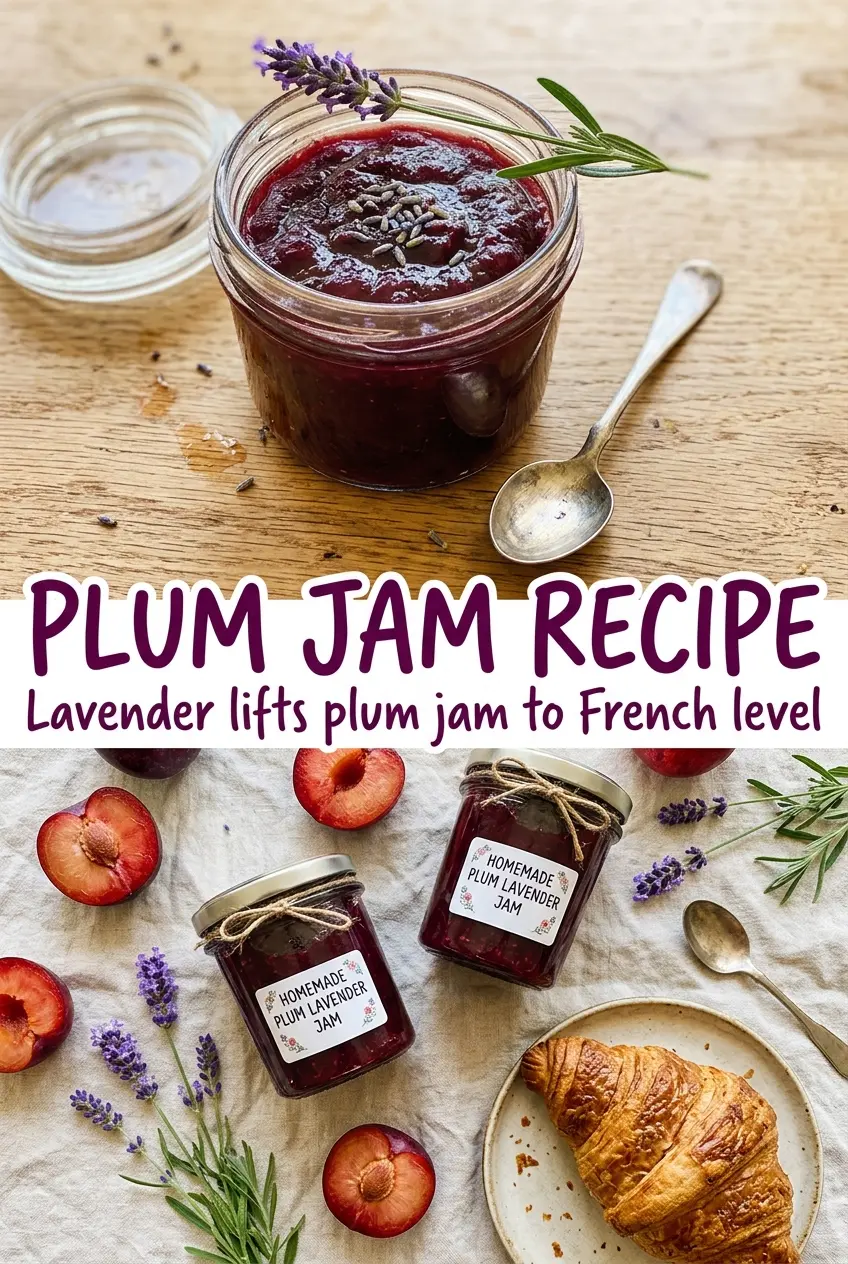
Plum Jam Recipe
Ingredients
Equipment
Method
- Combine the fresh plums, granulated sugar, lemon juice, and lemon zest in a heavy pot, then rest for 30 min so the sugar dissolves and the fruit releases juice.
- Tie the lavender buds in cheesecloth and add the bundle to the pot, then bring the mixture to a boil while stirring to prevent scorching.
- Simmer for 25-35 min, stirring occasionally, until the jam is thick enough to coat a spoon.
- Remove the lavender bundle and test for set by spooning a little onto a cold plate—it should wrinkle when pushed.
- Ladle the hot jam into sterilized jars, filling to the recommended headspace, then process jars for 10 min for pantry storage or refrigerate for up to 4 weeks.