
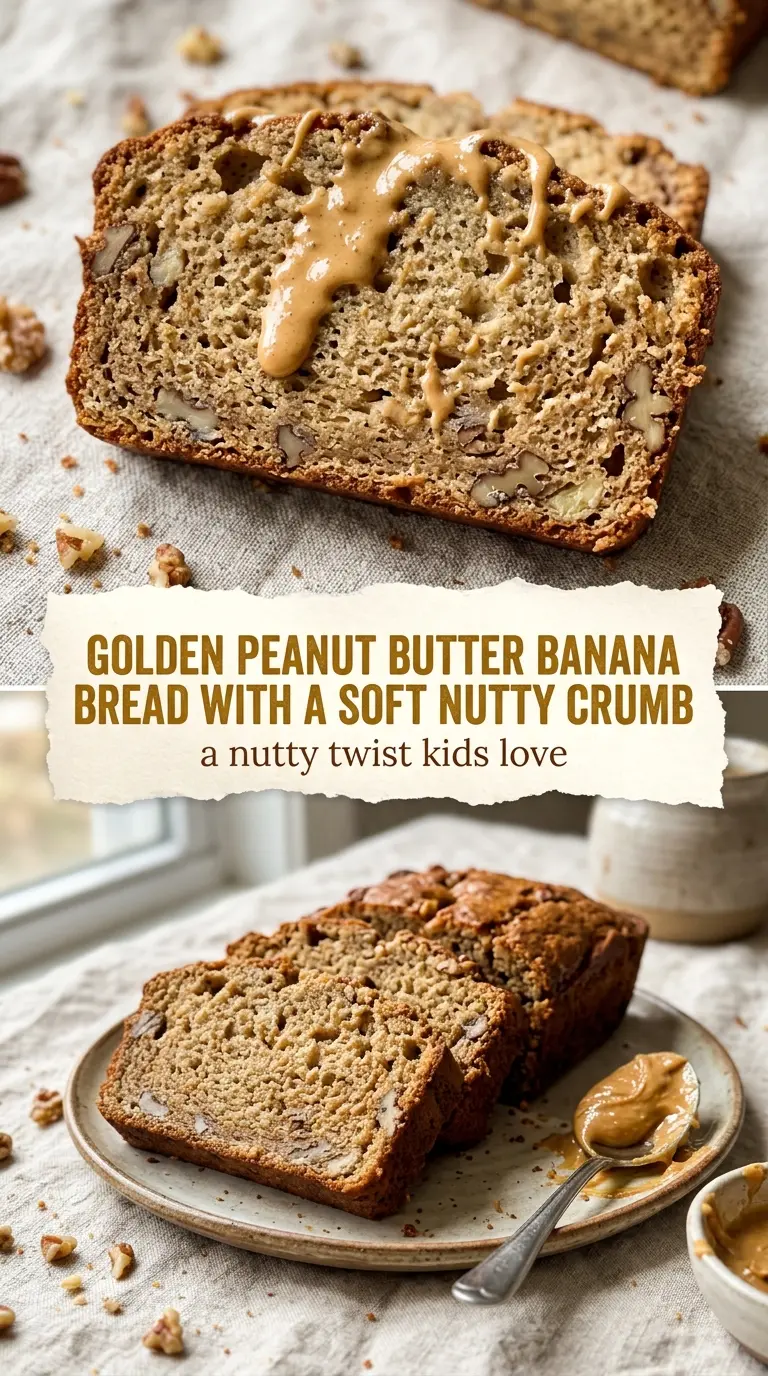
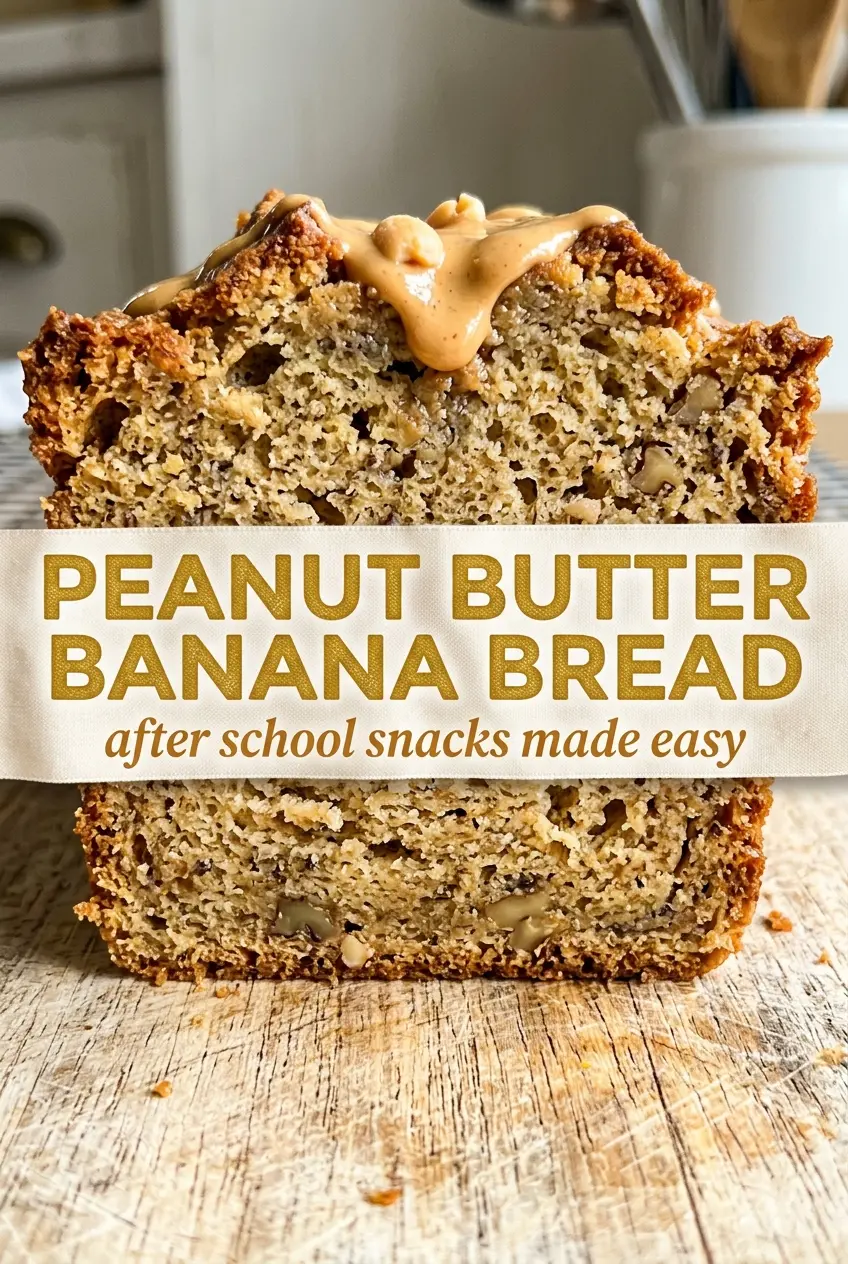
Peanut butter banana bread bakes into a soft, fragrant loaf with a tender crumb and a nutty richness that plain banana bread can’t match. The peanut butter doesn’t just add flavor; it deepens the texture and gives each slice a little more body, so the bread feels moist without turning heavy. Once it cools, it slices cleanly and holds together beautifully, which makes it just as good for lunchboxes as it is for an afternoon snack.
The key is using very ripe bananas and whisking the peanut butter into the melted butter before anything else goes in. That keeps the peanut butter from staying in little streaks and gives the batter a smooth, even base. Brown sugar works better here than white sugar because it echoes the caramel note in the bananas and helps the loaf stay soft for days.
Below, I’ve included the small details that keep this loaf from turning dense, plus a few ways to adjust it if you want a slightly richer finish or need to work with what’s already in your pantry.
The peanut butter blended right into the bananas and the loaf came out moist without being gummy. I loved that it sliced cleanly once cooled, and the extra drizzle on top made each piece taste like a bakery treat.
Peanut butter banana bread stays extra soft and slices cleanly, so save this loaf for school snacks, breakfast, or that extra-drizzly peanut butter finish.
The Trick to Keeping Peanut Butter Banana Bread Soft, Not Heavy
The most common problem with banana bread like this is a loaf that bakes up dense in the middle. Peanut butter adds richness, but it also adds weight, so the batter needs to stay light from the start. That’s why the bananas, peanut butter, and melted butter are whisked together first until smooth before the sugar and egg go in. When the base is cohesive, the flour folds in more evenly and the finished loaf bakes up tender instead of tight.
Another place people go wrong is overmixing after the flour goes in. As soon as the dry ingredients disappear, stop stirring. A few small streaks are fine; they’ll finish blending in the oven, and the loaf will stay softer because the gluten hasn’t been worked too hard.
What Each Ingredient Is Doing in This Loaf
- Ripe bananas — These bring the moisture and the natural sweetness that make the loaf taste like banana bread instead of a peanut butter quick bread. Use bananas with plenty of brown spots; under-ripe bananas won’t mash smoothly or give the same depth of flavor.
- Creamy peanut butter — Creamy peanut butter melts into the batter best and gives the bread its signature nutty richness. Natural peanut butter can work, but stir it very well first so the oil doesn’t separate and throw off the texture.
- Melted butter — Butter adds flavor and helps the crumb stay tender. Melted is the right choice here because it blends easily with the peanut butter and bananas without needing extra mixing.
- Brown sugar — Brown sugar keeps the loaf moist and adds a caramel note that flatters both the bananas and the peanut butter. If you only have white sugar, the bread will still bake, but it won’t have quite the same soft, rounded flavor.
- All-purpose flour — This gives the loaf structure without making it chewy. Bread flour is too strong for this kind of quick bread, and cake flour can make it too fragile to slice cleanly.
- Baking soda — The soda helps the loaf rise and also reacts with the bananas to give the crumb a lighter texture. If your baking soda is old, the bread may bake up flatter than you want, so use a fresh box if you can.
Building the Batter So the Loaf Bakes Evenly
Start with the bananas and peanut butter
Mash the bananas in a large bowl until mostly smooth, then whisk in the peanut butter and melted butter until the mixture looks creamy and unified. If the peanut butter is cold and thick, it will leave little lumps behind, so let it soften slightly first. This base should look glossy and loose before anything else goes in.
Add the sugar and egg without overworking it
Stir in the brown sugar and egg just until combined. The batter will look a little thicker and darker at this stage, and that’s exactly what you want. Overbeating here can make the loaf a touch tough, especially once the flour is added.
Fold in the dry ingredients gently
Whisk the flour, baking soda, and salt in a separate bowl, then fold them into the wet mixture with a spatula. Stop as soon as the flour disappears. If you keep stirring, the batter turns elastic and the finished loaf loses that soft, cakey crumb that makes this bread so good.
Bake until the center is set
Scrape the batter into a greased loaf pan and bake at 350°F for 55 to 60 minutes. The top should be deeply golden and the center should spring back lightly when pressed. If a toothpick comes out with wet batter, give it a few more minutes; if it comes out with a few moist crumbs, the loaf is done.
Ways to Adjust This Loaf Without Losing What Makes It Good
Make it dairy-free
Swap the butter for melted coconut oil or a neutral dairy-free baking butter. Coconut oil gives the loaf a slightly richer aroma, while a baking butter keeps the flavor closer to the original. Either option still gives you a soft crumb, though the texture will be a touch less buttery.
Use chunky peanut butter for more texture
Chunky peanut butter adds little peanut pieces through the loaf, which makes each slice feel heartier. The crumb still bakes the same way, but the finished bread is less smooth and a little more rustic. I like this when I want the peanut butter flavor to stand out even more.
Add chocolate chips for a sweeter version
A handful of chocolate chips turns this into more of a dessert-style loaf. Fold them in at the very end so they don’t sink, and keep the amount modest so the batter doesn’t get overloaded. The chocolate plays nicely with the peanut butter and makes the slices feel richer.
Storage and Reheating
- Refrigerator: Store tightly wrapped for up to 5 days. The loaf stays moist, though the peanut butter flavor becomes a little more pronounced by day two.
- Freezer: This freezes well. Wrap the cooled loaf or individual slices tightly, then place in a freezer bag for up to 3 months. Slice first if you want easy grab-and-go portions.
- Reheating: Warm slices in the microwave for 10 to 15 seconds or in a low oven until just heated through. Don’t overheat it or the bread dries out and loses that soft center.
Questions I Get Asked About This Recipe
Peanut Butter Banana Bread
Ingredients
Equipment
Method
- Preheat the oven to 350°F and grease a loaf pan with a thin coating so the loaf releases cleanly.
- Whisk the peanut butter and melted butter into the mashed bananas until smooth and glossy, with no streaks of peanut butter.
- Stir in the brown sugar and egg until the mixture looks evenly combined.
- Whisk the flour, baking soda, and salt in a separate bowl, then fold into the wet mixture until just combined and no dry flour remains.
- Pour the batter into the loaf pan and tap once to settle the surface.
- Bake for 55 to 60 minutes at 350°F, until a toothpick inserted in the center comes out clean and the top looks deep golden.