
Golden-orange acorn squash wedges roast into tender, caramelized bites with crisp edges and a savory Parmesan crust that lands somewhere between cozy side dish and vegetable people actually go back for. The butter helps the squash brown instead of drying out, and the garlic powder plus thyme give it a seasoned backbone without covering up the squash itself. When it comes out of the oven, the edges are browned and sticky, the centers are soft, and the cheese has melted into those little lacy spots that turn deeply golden.
The part that makes this version work is the timing. Parmesan goes on after the squash has already started to soften, so it melts and browns instead of burning before the squash is done. A light score across the flesh also helps the wedges cook more evenly, especially where the squash is thickest near the curve. You don’t need a long ingredient list here; you need heat, fat, and just enough seasoning to push the squash toward savory.
Below you’ll find the small details that matter most: how to cut the squash safely, when to add the cheese, and what to do if you want to swap the herbs or stretch the recipe for a bigger table.
The squash turned tender in the middle and the Parmesan got that perfect salty crust instead of burning. I used the parsley at the end and it made the whole pan taste brighter.
Save this Parmesan Herb Roasted Acorn Squash for a simple side with caramelized edges and a salty Parmesan finish.
The Secret to Acorn Squash That Browns Instead of Going Soft
Acorn squash can slip into mush if it’s crowded on the pan or rushed at too low a temperature. The goal here is dry heat and space. When the wedges sit in a single layer, the edges catch the oven’s heat and caramelize before the centers collapse. That’s what gives you those browned ridges and a tender bite instead of something watery and dull.
The other piece people miss is the cheese timing. Parmesan added from the start tends to scorch before the squash is fully tender. Adding it halfway through gives you a browned, savory crust that clings to the wedges. If your squash ever turns out pale and soft, the oven wasn’t hot enough, or the pan was too crowded for the steam to escape.
- Single-layer roasting — This matters more than people think. If the wedges overlap, they steam, and steaming is the fastest way to lose that roasted edge.
- Butter — Butter carries the seasoning and helps the squash brown. Olive oil works in a pinch, but butter gives a deeper, rounder finish here.
- Parmesan timing — Add it after the squash has had time to soften. That gives you a nutty crust instead of bitter, burnt cheese.
What Each Ingredient Is Actually Doing in This Dish

acorn squash brings the tender, almost buttery center and those naturally sweet edges that roast beautifully. Choose squash that feel heavy for their size and have firm skin without soft spots.
butter is the fat that helps everything brown and keeps the wedges from tasting dry. If you need a dairy-free option, use olive oil, but expect a slightly cleaner, less rich finish.
Parmesan does two jobs at once: it seasons and it browns. Grate it finely so it melts into the surface instead of sliding off in clumps. Pre-shredded cheese can work, but freshly grated melts more evenly and gives you a better crust.
thyme and garlic powder build the savory base without adding extra moisture. Dried thyme is the right call here because it holds up in the oven; fresh thyme can be used, but it’s softer and less assertive.
parsley is the finish, not decoration. It cuts through the richness and makes the whole dish taste brighter right at the end.
The 35 Minutes That Matter Most
Prepping the Squash for Even Roasting
Slice the acorn squash into wedges that are close in size so they cook at the same pace. If the squash is difficult to cut, microwave it for a minute or two first to soften the skin just enough to get through safely. A light scoring in the flesh helps the butter and seasoning settle in, and it gives heat a path into the thickest part of each wedge. Uneven wedges are the most common reason some pieces go soft while others stay firm.
Seasoning and Arranging for Browning
Toss the wedges with the melted butter, thyme, garlic powder, salt, and pepper until every cut surface looks coated. Don’t drown them; too much butter pools on the pan and can keep the squash from browning cleanly. Lay them cut-side down or flat in a single layer on parchment-lined baking sheet. If the pan looks crowded, use two pans instead of forcing everything together.
Roasting Before the Cheese Goes On
Roast the squash at 400°F until the centers are beginning to soften and the edges are taking on color. This first stage is about structure, not full caramelization. You’re looking for the flesh to give slightly when pierced and for the edges to look dry rather than glossy. If they go in too long before the Parmesan, the cheese will have nothing to cling to and can end up overdone.
Finishing With Parmesan
Sprinkle the Parmesan over the partially roasted squash, then return it to the oven until the cheese melts and turns golden. Watch the edges of the cheese closely near the end; Parmesan goes from browned to bitter fast. The final result should be tender squash with crisp, salty bits attached to the surface. Add the parsley after it comes out so it stays fresh and green.
Three Ways to Adjust the Squash Without Losing the Point
Dairy-Free Version With Olive Oil
Swap the butter for olive oil and skip the Parmesan, or use a dairy-free Parmesan-style topping if you like a cheesy finish. The squash will still roast well, but it won’t have the same rich crust, so lean harder on salt, pepper, and garlic powder for flavor.
More Savory With Sage or Rosemary
Replace the thyme with a smaller amount of dried sage or finely chopped rosemary for a deeper, woodier flavor. Rosemary is stronger, so use less than you would thyme, or it can take over the squash.
Extra Crispy Edges for a Bigger Crowd
Use two sheet pans and rotate them halfway through roasting so every wedge gets strong heat. More space means more browning, and that’s the difference between a soft vegetable side and one people keep picking at from the pan.
How to Store and Reheat Leftovers
- Refrigerator: Store in an airtight container for up to 4 days. The cheese will soften, but the squash holds up well.
- Freezer: Freezing isn’t ideal here. The squash turns softer after thawing, and the Parmesan crust loses its texture.
- Reheating: Reheat on a baking sheet in a 375°F oven until hot and the edges crisp back up. The microwave works for speed, but it softens the crust and flattens the roasted flavor.
Answers to the Questions Worth Asking
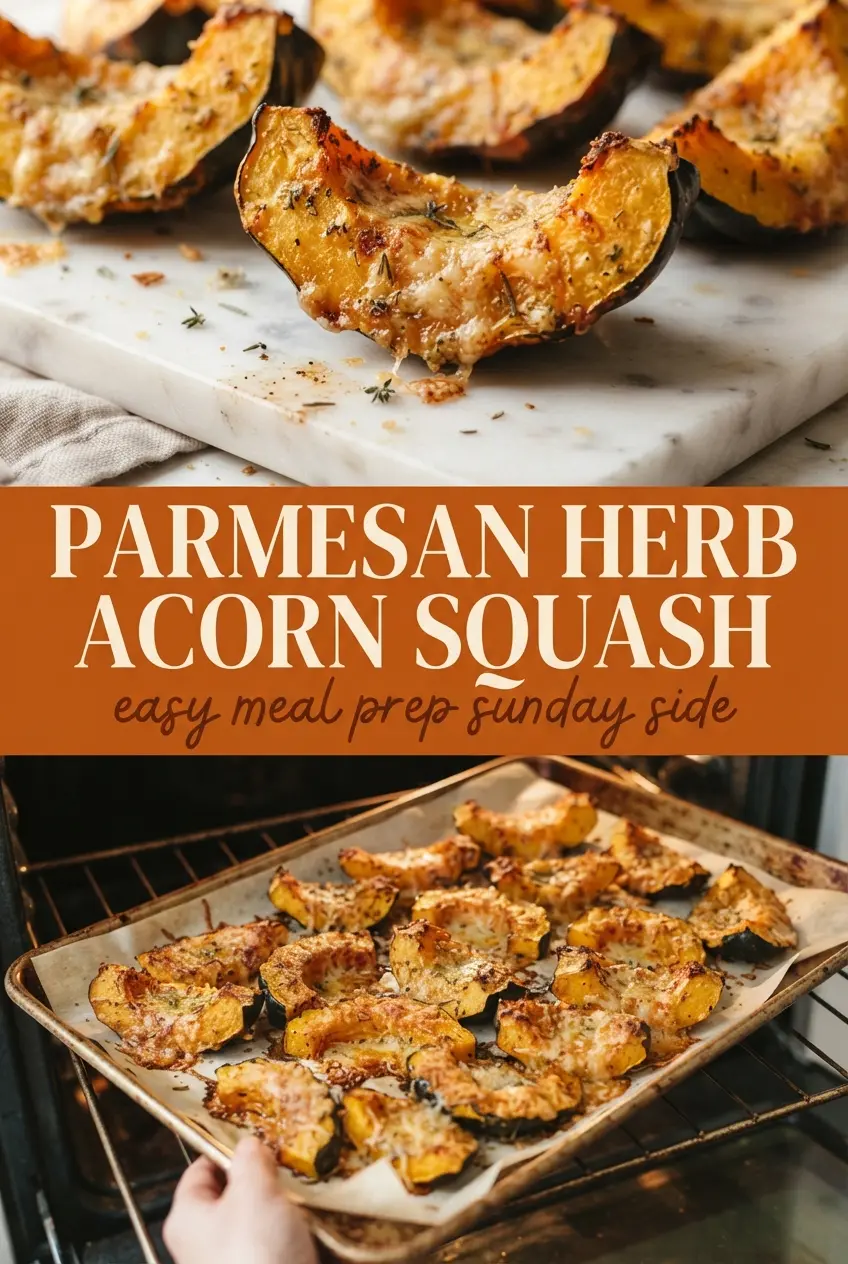
Parmesan Herb Roasted Acorn Squash
Ingredients
Equipment
Method
- Preheat the oven to 400°F and line a sheet pan with parchment paper for easy cleanup and nonstick roasting.
- Toss the squash wedges with melted butter, dried thyme, garlic powder, salt, and pepper until evenly coated.
- Arrange the squash in a single layer on the sheet pan so the edges roast instead of steaming.
- Roast at 400°F for 25 minutes, then sprinkle with grated Parmesan over the hot squash.
- Roast for 10 more minutes at 400°F until the Parmesan is golden and the edges look caramelized.
- Garnish with chopped fresh parsley before serving to add a fresh, green finish.