
Golden Parmesan on top, tender chicken in the middle, and a loaf that slices cleanly without crumbling — that’s what makes this version worth keeping around. The top turns deeply savory in the oven, while the inside stays moist instead of turning dry and compact like so many chicken meatloaves do.
The trick is in the balance: enough breadcrumbs and egg to hold the loaf together, but not so much that it eats like stuffing. A little milk keeps the chicken mixture soft, and mixing just until combined matters here. Overworking ground chicken tightens it up fast, which is how you end up with a dense loaf instead of one that stays juicy through the center.
Below, I’ll walk through the part that matters most — shaping, topping, and baking it long enough for the crust to brown without drying out the meat. I’ve also included the swaps that work best when you want to use turkey instead, or when you need a gluten-free version that still holds together.
The Parmesan topping browned beautifully and the loaf stayed juicy all the way through. I used turkey and it still sliced perfectly after resting.
Save this Parmesan Chicken Meatloaf for the nights when you want a crisp cheesy crust and a tender, sliceable dinner without a lot of fuss.
The Reason Chicken Meatloaf Stays Dry — and How This One Avoids It
Chicken meatloaf dries out for two reasons: the mixture gets overmixed, or it bakes until every bit of moisture is gone. Ground chicken has a softer structure than beef, so it needs a lighter hand from the moment you combine everything. Once you start packing it like a meatball mixture, the loaf turns tight and a little rubbery after baking.
This version stays tender because the breadcrumbs and milk work together to hold moisture inside the loaf while the egg gives it structure. The Parmesan does more than add flavor on top; it helps form that crisp, salty crust that keeps the surface from tasting bland. Baking on a parchment-lined sheet instead of in a deep pan also helps the edges brown instead of steaming.
What Each Ingredient Is Actually Doing in This Dish
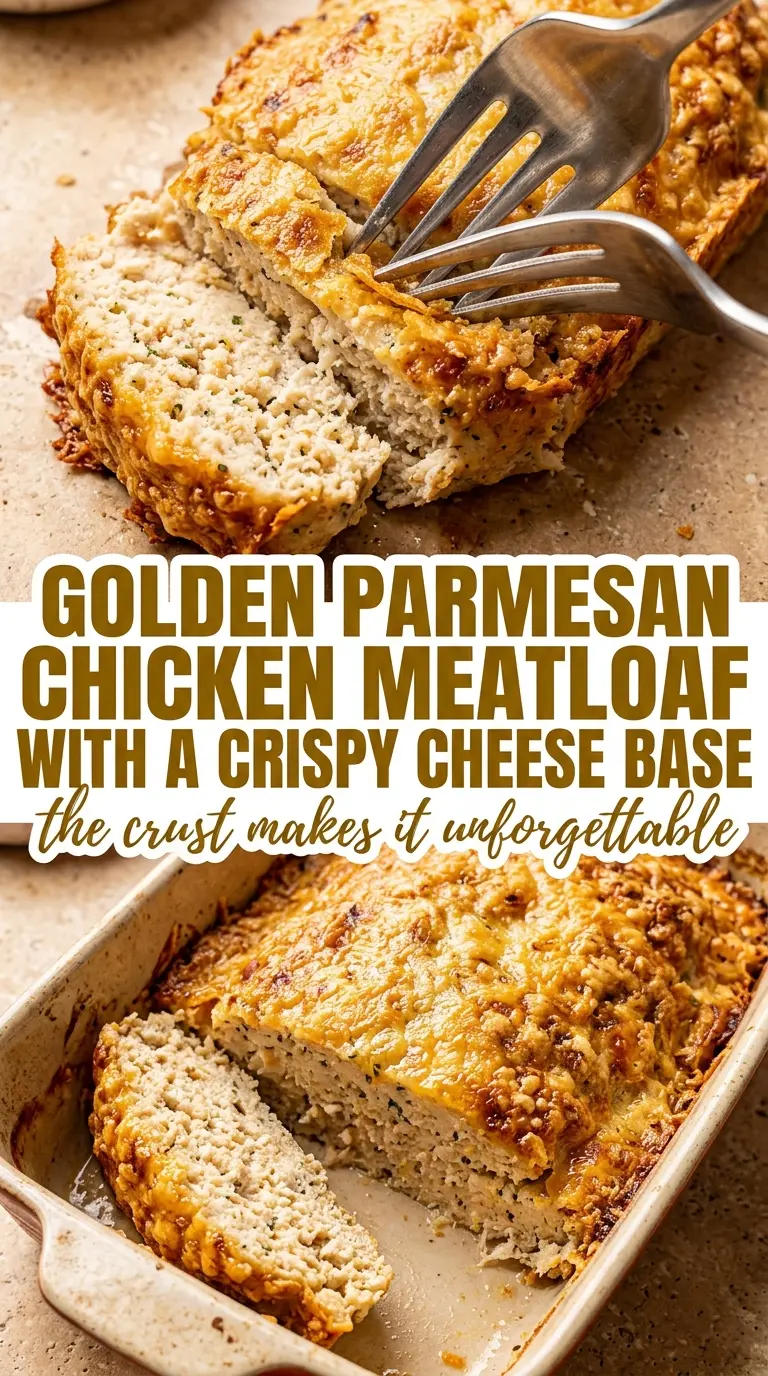
- Ground chicken — Use standard ground chicken, not extra-lean if you have a choice. The little bit of fat helps the loaf stay juicy. If yours is very lean, don’t add extra breadcrumbs to compensate; the milk and egg already do the binding work.
- Parmesan cheese — Freshly grated Parmesan melts and browns better than the powdery shelf-stable kind. Half goes into the loaf for salty depth, and the rest forms the crust. If you swap in another hard cheese, pick one that grates fine and can take heat without turning oily.
- Breadcrumbs — Plain breadcrumbs keep the texture soft without making the loaf taste seasoned twice. Panko works too, but it gives a looser crumb. For gluten-free, use gluten-free breadcrumbs in the same amount; almond flour won’t behave the same way and can make the loaf fragile.
- Milk and egg — These are the moisture and structure insurance. The egg helps the loaf hold its shape, while the milk keeps the chicken mixture from baking up dry. If you need to, unsweetened plain yogurt can stand in for the milk, but use only a few tablespoons so the mixture doesn’t get too heavy.
Shaping, Topping, and Baking the Loaf So It Stays Juicy
Mixing the Base Without Packing It Tight
Combine the chicken, half the Parmesan, breadcrumbs, egg, milk, garlic, Italian seasoning, salt, and pepper in a large bowl, then stop as soon as the mixture looks evenly mixed. It should feel soft and a little sticky, not dense like sausage. If you keep stirring after that point, the loaf tightens up in the oven and slices less cleanly later.
Forming the Loaf for Even Browning
Shape the mixture into a free-form loaf on parchment instead of pressing it into a pan. A loaf that sits directly on a baking sheet gets better airflow, which means the sides brown instead of steaming. Keep the shape even from end to end so the thinner edges don’t dry out before the center is cooked.
Letting the Parmesan Crust Do Its Job
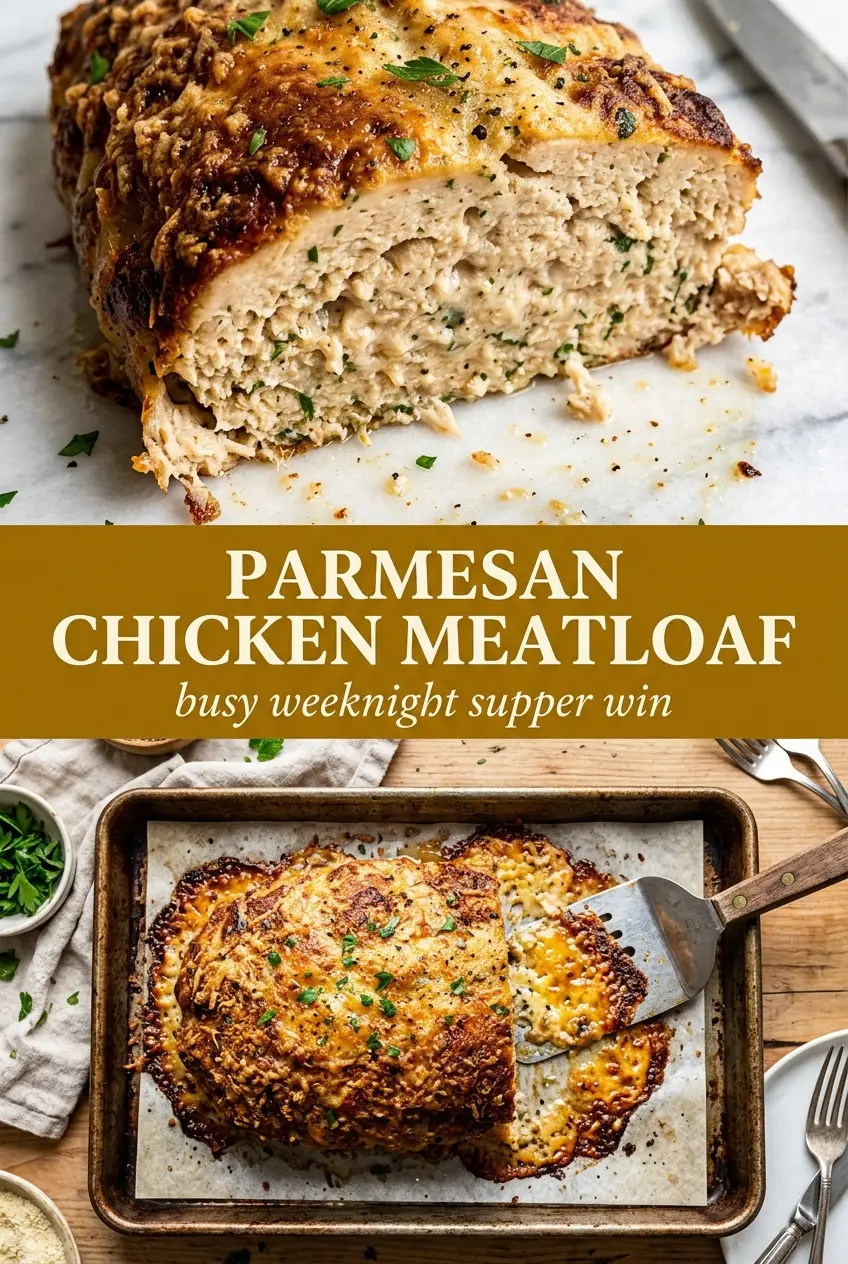
Scatter the remaining Parmesan over the top before baking, and cover the whole surface rather than leaving gaps. As it melts, it turns into a salty, lightly crisp shell that gives the loaf its best texture. Bake until the top is deep golden and the center reaches a safe internal temperature; if the outside is browning too quickly, loosely tent it with foil for the last stretch.
Resting Before You Slice
Let the loaf sit for 10 minutes after it comes out of the oven. That rest matters more than people think, because the juices settle back into the meat instead of running out onto the cutting board. If you slice it too soon, the center will look crumbly even when the loaf was cooked correctly.
How to Adapt This for Turkey, Gluten-Free Breadcrumbs, or a Little More Flavor
Swap in ground turkey for a leaner loaf
Ground turkey works almost exactly the same way here, and it’s the easiest substitute if that’s what’s in your fridge. If the turkey is especially lean, don’t skip the milk, because that extra moisture helps keep the loaf from tasting dry and chalky. The flavor stays mild, so the Parmesan and garlic still carry the dish.
Make it gluten-free without losing the slice
Use gluten-free breadcrumbs in the same amount and keep the rest of the method unchanged. They’ll bind just like regular breadcrumbs if the mixture rests for a minute before shaping. Don’t use a heavy flour substitute; the loaf needs breadcrumb structure, not more starch.
Add more herb flavor without changing the texture
Chopped parsley, a pinch of dried basil, or a little extra Italian seasoning all work here. Add herbs to the bowl with the dry ingredients so they distribute evenly. Fresh herbs on top at the end give the loaf a brighter finish, but they won’t replace the savory flavor the Parmesan gives inside.
Storage and Reheating
- Refrigerator: Store slices in an airtight container for up to 4 days. The loaf firms up a bit as it chills, which actually makes it easier to reheat cleanly.
- Freezer: It freezes well. Wrap individual slices tightly and freeze for up to 2 months so you can reheat only what you need.
- Reheating: Warm slices covered in a 300°F oven with a splash of broth or water in the pan, or microwave them at half power. High heat dries out ground chicken fast, which is the main reason leftovers turn tough.
Questions I Get Asked About This Recipe
Parmesan Chicken Meatloaf
Ingredients
Equipment
Method
- Preheat the oven to 375°F and line a baking sheet with parchment for easy release and clean-up.
- In a large bowl, mix ground chicken, 1/2 cup Parmesan, breadcrumbs, egg, milk, garlic, Italian seasoning, salt, and pepper until just combined.
- Shape the mixture into a loaf on the prepared sheet, keeping it an even thickness so it bakes uniformly.
- Sprinkle the remaining Parmesan evenly over the top to form a crisp, golden crust as it bakes.
- Bake for 45–50 minutes at 375°F until golden and cooked through.
- Rest the meatloaf for 10 minutes, then sprinkle with chopped fresh parsley and slice to serve.