
As the cranberries heat, a few begin to pop against the sides of the saucepan, and the sharp berry smell softens into something bright with orange. The first time I made this, I expected the sauce to look finished while it was still bubbling. It doesn’t. Orange Cranberry Sauce thickens as it cools, so judging it straight from the pan can send you looking for a problem that isn’t there.
The orange comes through in two ways: juice gives the berries a citrusy liquid to cook in, while finely grated zest brings a fresher aroma. I stir the sugar into the liquids before the cranberries go in, which keeps the mixture easy to manage and gives the berries room to burst as they simmer. The result is tart, sweet, and bright enough to stand out without covering up the cranberries. This batch makes 8 servings and uses one 2-quart saucepan.
Once the berries have burst and the sauce has had time to settle, you get a glossy, spoonable sauce with whole cranberry pieces and a clear orange note.
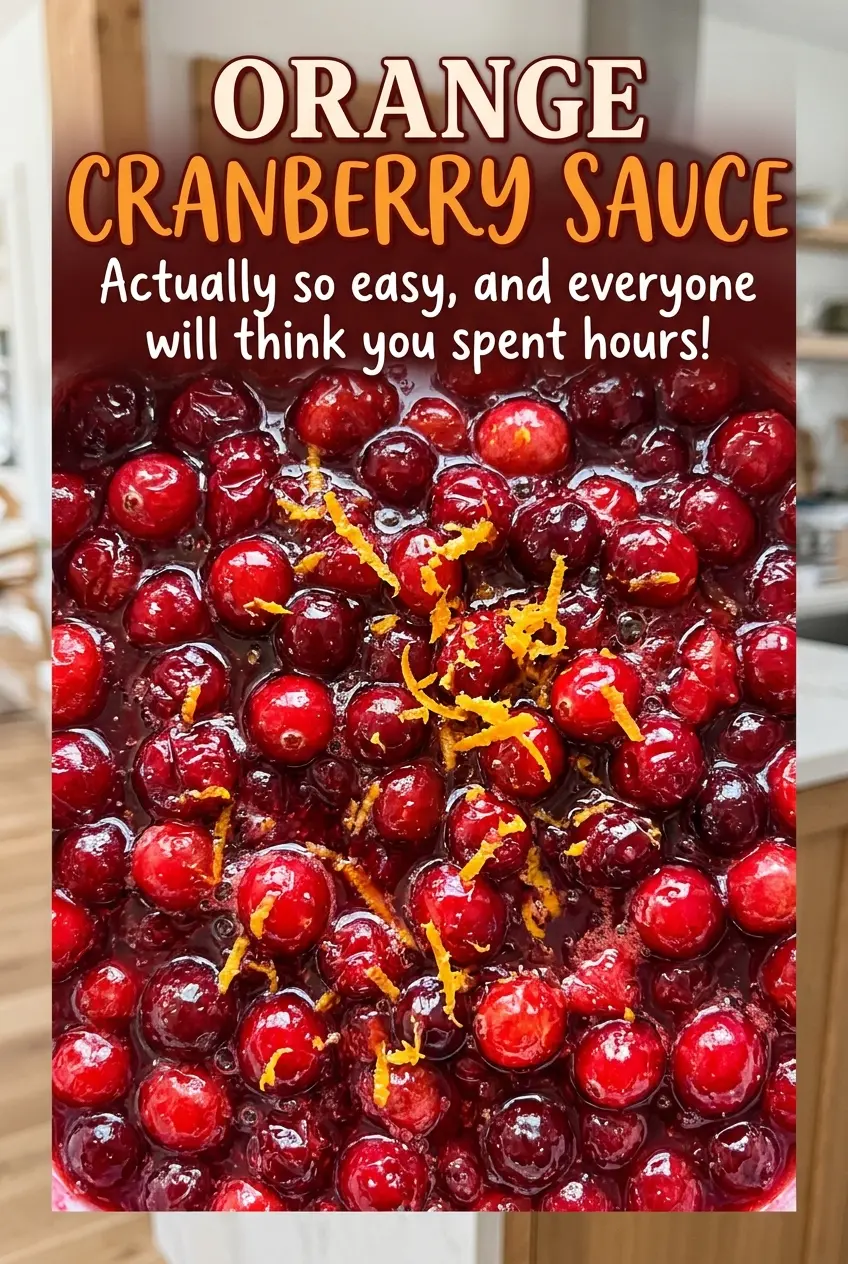
Kitchen Note
Give the sauce at least 30 minutes off the heat before deciding it needs more cooking. It firms up as it cools, and that resting time is part of getting the right spoonable texture.
Save this Orange Cranberry Sauce for a batch with tart berries, a bright orange finish, and a texture that thickens as it cools.
Why You Don’t Need Every Cranberry to Burst
A cranberry sauce can look uneven while it cooks: some berries collapse early, while others keep their shape. That’s not a sign that the pan needs constant attention or that you should mash everything against the side. The berries soften and burst at different points, and the finished sauce is meant to have some texture. Stir occasionally so the mixture cooks evenly, then let the simmer do its work.
Cranberries naturally contain pectin, which helps the sauce thicken as it cooks and cools. That’s why this version doesn’t need a separate thickener or a long reduction. If you keep boiling it in pursuit of a perfectly smooth, jam-like look, you risk ending up with a thicker, more concentrated sauce than you intended. The useful visual cue is that most berries have popped and the liquid has thickened around them; a few intact berries are fine. The orange juice and zest keep the tart fruit from tasting one-dimensional, but the cranberries should still be the main event.
How the Orange, Sugar, and Cranberries Shape the Sauce
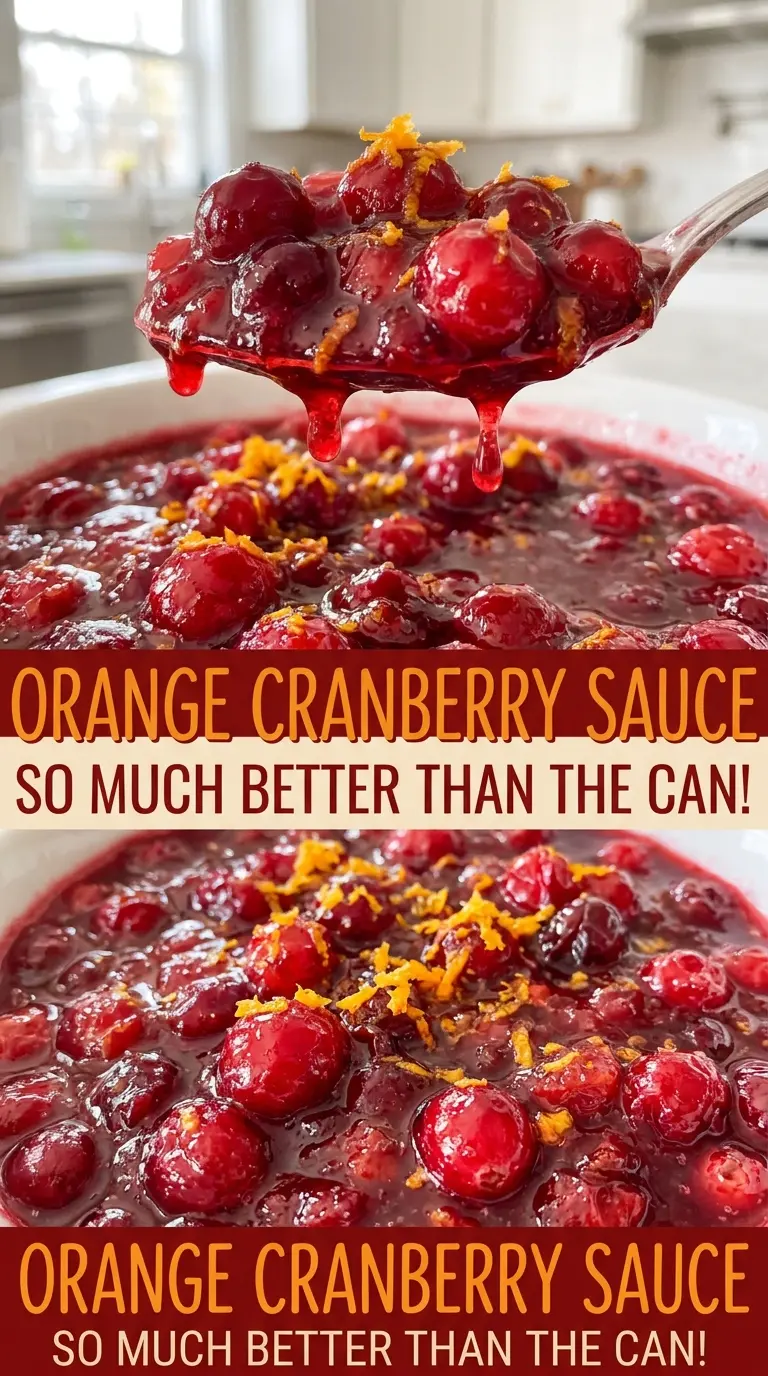
- Cranberries — Fresh and frozen berries both work here. Choose berries that look intact and clean; the important part is using cranberries rather than a dried version, since these fresh or frozen berries provide the fruit and liquid behavior this sauce depends on. Frozen cranberries can go into the saucepan without changing the other ingredients.
- Orange juice — The juice supplies both citrus flavor and part of the liquid base. Plain bottled orange juice is a practical choice; freshly squeezed juice works too, though its sweetness and acidity can vary slightly from orange to orange.
- Finely grated orange zest — Zest gives the sauce a fragrant orange note that juice alone doesn’t provide. Grate only the colored outer peel; the white layer underneath can taste bitter. A fine grater distributes the zest through the sauce rather than leaving long strips.
- Granulated sugar — Sugar balances the tart cranberries and dissolves cleanly in the liquid before the fruit is added. Keep it granulated for this method; coarse or alternative sweeteners may dissolve differently and change the balance of the finished sauce.
- Water — Water helps form the cooking liquid with the juice and gives the sugar a chance to dissolve before the fruit goes in. It doesn’t need to be replaced with more juice; the orange flavor comes from the combination of juice and zest.
Building the Sauce Without Scorching the Sugar
Dissolve the Sugar Before Adding Fruit
In a 2-quart saucepan, combine the sugar, water, orange juice, and finely grated orange zest. Bring the mixture to a boil over medium-high heat, stirring until the sugar dissolves. Look for a clear, bubbling liquid rather than grains caught on the bottom of the pan. If you add the cranberries before the sugar has dissolved, the berries make it harder to see or reach any undissolved sugar.
Simmer Until Most Berries Pop
Add the cranberries and bring the mixture back to a boil. Then reduce the heat to medium-low and simmer for 10 to 12 minutes, stirring occasionally. You’ll hear the berries pop as their skins split, and the liquid will turn thicker and more richly colored. If the boil stays vigorous after you lower the heat, turn it down until the sauce simmers steadily rather than splattering up the sides.
Let the Sauce Settle Off the Heat
Once most of the cranberries have burst and the sauce has thickened, remove the saucepan from the heat. Let it cool for at least 30 minutes before serving or transferring it for storage. The sauce will still look loose while hot, and that doesn’t mean it needs extra simmering. Stir gently as it cools if you want the whole berries distributed through the sauce.
Fresh, Frozen, and Naturally Free-From Options
Use Frozen Cranberries Straight from the Bag
Frozen cranberries are an easy option when fresh berries aren’t available. Add them to the orange-sugar mixture and use the same simmering cues: most berries should burst and the sauce should thicken. You don’t need a separate ingredient adjustment for frozen fruit.
Keep the Fresh-Cranberry Version Simple
Fresh cranberries give you the classic version, with the same orange-and-berry balance and the same simmering method. Pick through the bag and remove any berries that are shriveled or damaged before cooking; sound berries are all you need for this straightforward sauce.
A Naturally Dairy-Free and Gluten-Free Dish
The ingredients in this sauce contain no dairy or wheat, so there’s no butter, flour, or thickener to replace for those needs. The cranberry-and-orange texture comes from the fruit itself, not a dairy-based addition.
Storage and Reheating
- Refrigerator: Store the cooled sauce in an airtight container for up to 4 days. It will become firmer and more gelled as it chills.
- Freezer: Freeze in a freezer-safe airtight container for up to 2 months. Thaw it in the refrigerator; the texture may be a little softer after thawing, so stir gently before serving.
- Reheating: This sauce is also good chilled or at room temperature. To serve it warm, heat it gently in a saucepan, stirring, just until warmed through; boiling it again can make it thicker than you want.
Questions That Come Up When the Sauce Is on the Stove
Orange Cranberry Sauce
Ingredients
Equipment
Method
- Combine the sugar, water, orange juice, and orange zest in a 2-quart saucepan, stirring until the sugar dissolves.
- Bring the mixture to a boil over medium-high heat.
- Add the cranberries and return the mixture to a boil.
- Reduce the heat to medium-low and simmer for 10 to 12 minutes, stirring occasionally, until most of the cranberries have burst and the sauce has thickened.
- Remove the pan from the heat and let the sauce cool for at least 30 minutes; it will thicken further as it cools.