
Pillowy focaccia with a crackly caramel top and a soft, airy crumb is the kind of bake that disappears before it ever cools completely. This cinnamon sugar version takes that same structure and turns it into something halfway between breakfast bread and dessert: golden edges, buttery pools in every dimple, and a brown sugar topping that bakes into sticky, amber patches instead of sliding off the surface. The long rise does the heavy lifting here. It gives the dough flavor and strength without any kneading, and that relaxed fermentation is what keeps the crumb open and tender instead of dense.
The trick is treating the dough like focaccia, not like a quick sweet dough. A wet, shaggy dough is exactly what you want at the beginning, and the olive oil in the pan matters because it helps the bread fry gently at the edges as it bakes. The cinnamon sugar topping goes on before baking, where it melts into the dough and sets into a glossy crust instead of sitting on top in a sandy layer. Let it cool just enough for the caramel to firm up, and the slices will hold together instead of tearing into a sticky mess.
Below, I’ll show you the small details that make the texture work, the best way to handle the topping, and a few swaps that keep the bread worth baking even when you want to change it up.
The dough rose into those big airy bubbles overnight, and the cinnamon topping melted into the dimples instead of burning. I let it cool for 15 minutes like you said, and the slices held together perfectly.
Save this sticky cinnamon sugar focaccia for the day you want a no-knead bread with caramelized edges and a soft, pillowy crumb.
The Reason the Topping Bakes In Instead of Sliding Off
The biggest mistake with sweet focaccia is treating the topping like an afterthought. If you scatter cinnamon sugar over dough that hasn’t been properly dimpled, it sits on top, dries out, and bakes into a dusty layer that falls off when you slice it. Here, the dimples are part of the design. They catch the butter and sugar so it melts down into the bread, which gives you those dark, glossy pockets of caramel instead of a loose topping.
The other thing that matters is the bake itself. At 425°F, the edges have enough heat to brown and crisp before the center dries out. If the pan is under-oiled, the dough can stick and the bottom turns tough instead of tender. If the oven runs cool, the sugar won’t caramelize deeply enough and you’ll miss that rich, sticky finish.
- Dimples — Press all the way to the pan. Shallow indentations don’t hold the topping, and that’s where most of the caramel ends up wasting itself on the surface.
- Long rise — The overnight rest builds flavor and gives the dough strength. Skip that, and you’ll get a flatter bread with less open crumb.
- Olive oil — This protects the bottom from drying out and helps the crust crisp where it meets the pan. A neutral oil works, but olive oil gives the bread a better savory edge.
- Butter, brown sugar, cinnamon — Together they form the gooey topping. Brown sugar caramelizes better than white sugar, and the butter carries the cinnamon into every dimple.
What Each Ingredient Is Doing in This Sweet Focaccia
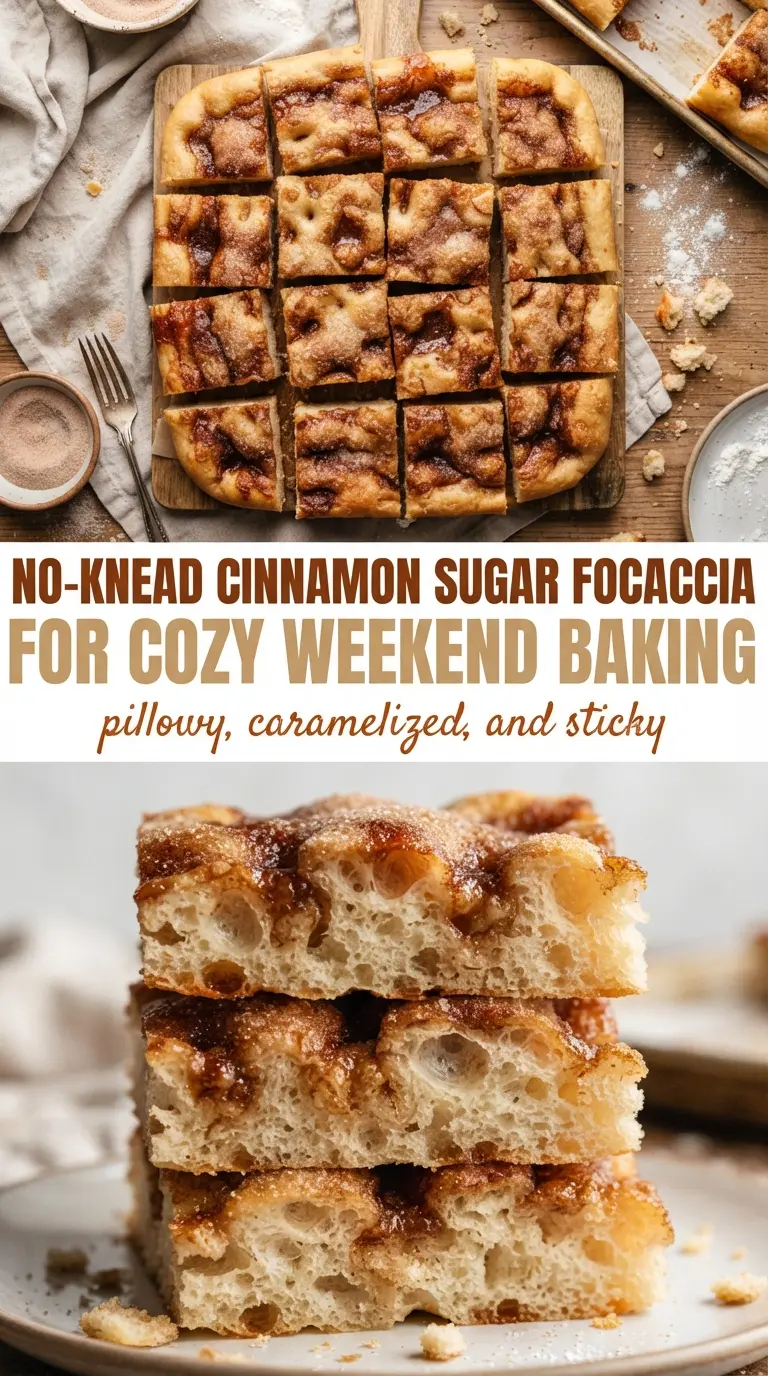
All-purpose flour gives you enough structure for lift without turning the crumb chewy. Bread flour will make the bread a little firmer and springier, but it isn’t necessary here. Instant yeast is the quiet workhorse; because it’s mixed straight into the dough, you don’t need to proof it first, and the long rise gives it plenty of time to do its job.
The warm water should feel just a little warmer than your hand, not hot. Hot water can weaken yeast before the dough even begins. The olive oil is one of the few ingredients where quality matters: use one you’d actually like on bread, because its flavor carries through the crust. For the topping, brown sugar beats white sugar because the molasses content deepens the caramel note and helps the top set with that sticky finish. If you only have granulated sugar, the topping will still work, but it will taste cleaner and less rich.
Butter should be melted, not browned. Browned butter would add nuttiness, but it also thickens faster and can clump with the sugar before it spreads into the dough. Cinnamon varies more than people think, so if yours has been sitting in the cupboard for years, the topping will taste flat. Fresh cinnamon gives the whole loaf its warmth.
Building the Dough, the Rise, and the Caramel Top
Mixing a Shaggy Dough on Purpose
Stir the flour, yeast, salt, and warm water together until you have a rough, sticky dough and no dry flour remains. Don’t chase a smooth dough here. The stickiness is what lets this recipe stay no-knead, and it will tighten up as it rests. If the dough looks dry and stiff from the start, the crumb will bake up tight instead of airy.
The Overnight Rest That Creates Flavor
Cover the bowl and let it sit at room temperature for 12 to 18 hours. By morning, it should look expanded, bubbly, and loose, with a light fermented smell. If your kitchen is hot, it may move faster; if it’s cool, give it the full time. The dough is ready when it has visible bubbles across the surface and a jiggly, elastic feel.
Stretching Into the Pan Without Deflating It
Oil the pan generously, then tip the dough in and stretch it gently toward the corners. If it keeps springing back, let it rest for 10 minutes and return to it. That pause matters. Forcing the dough makes it tear, and a torn surface won’t hold the topping as evenly. After the second rise, it should look puffy and relaxed, not tight.
Dimpling and Topping for Sticky Edges
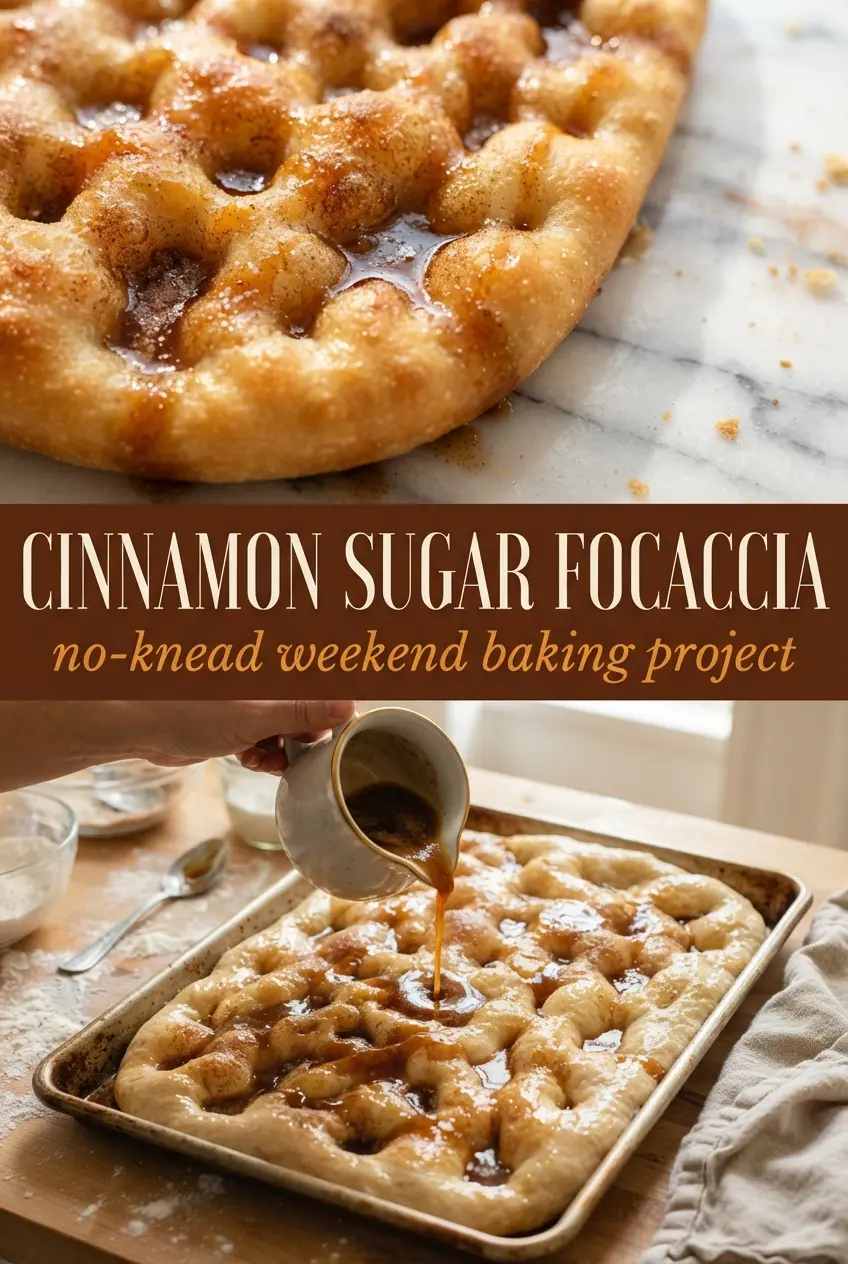
Press your fingers deeply all over the dough, right down to the pan. Then mix the melted butter, brown sugar, and cinnamon and spoon or pour it over the top so it settles into the dips. The goal is pooling, not even coverage. Some bare spots are fine because they become crisp, buttery edges. If the topping looks greasy, that’s normal; it will bake into the bread as the sugar melts.
Baking Until the Top Turns Deep Gold
Bake until the surface is deeply golden and the sugar looks lacquered at the edges. Pale focaccia tastes underbaked here. You want the smell of toasted butter and caramel, and the pan should feel hot through the oven mitt when you lift it. Let it cool slightly before slicing so the topping can set; cutting too soon turns the caramel into a sticky pull rather than a clean slice.
Three Ways to Change the Bread Without Breaking It
Dairy-Free Version
Swap the butter for a good plant-based butter that melts smoothly. You’ll still get the sticky top, though the flavor will be a little less rich and the caramel will set a touch softer. Keep the brown sugar the same so the topping still bakes into that glossy layer.
Extra-Crunchy Cinnamon Sugar Top
Use the full amount of brown sugar, then finish the baked bread with a light brush of melted butter and a little more cinnamon sugar while it’s still warm. That gives you a drier, crackly top instead of a fully melted glaze. It’s a good move if you want a bakery-style sugary crust that snaps a bit when you bite it.
Less-Sweet Breakfast Version
Cut the brown sugar back to 1/2 cup and add a pinch of flaky salt on top before baking. That keeps the bread in breakfast territory instead of pushing it into dessert. The result is less sticky, but the focaccia still bakes with the same tender crumb and caramelized edges.
Storage and Reheating
- Refrigerator: Store covered for up to 3 days. The top softens as it sits, and the caramel gets a little denser.
- Freezer: Freeze slices wrapped tightly for up to 2 months. Thaw at room temperature while still wrapped so the sugar doesn’t weep.
- Reheating: Warm slices in a 325°F oven for 8 to 10 minutes. The oven brings back the edges in a way the microwave can’t; microwave heat makes the topping rubbery and the crumb gummy.
Answers to the Questions Worth Asking
No-Knead Cinnamon Sugar Focaccia
Ingredients
Equipment
Method
- Mix the all-purpose flour, instant yeast, salt, and warm water in a bowl until a shaggy dough forms, then stop as soon as no dry flour remains. Cover and let rise at room temperature for 12-18 hours until visibly puffy.
- Grease a sheet pan with olive oil and transfer the dough, stretching it to fill the pan. Let rise for 1 more hour until the dough spreads and relaxes.
- Dimple the dough all over with your fingers, pressing down to create deep craters without tearing through the bottom.
- Mix the butter, melted, brown sugar, and cinnamon, then pour over the dough so it pools in the dimples. Let it settle on the surface while the oven heats.
- Bake at 425°F for 25-30 minutes until deeply golden and caramelized on top. Cool slightly before slicing so the caramel sets.