
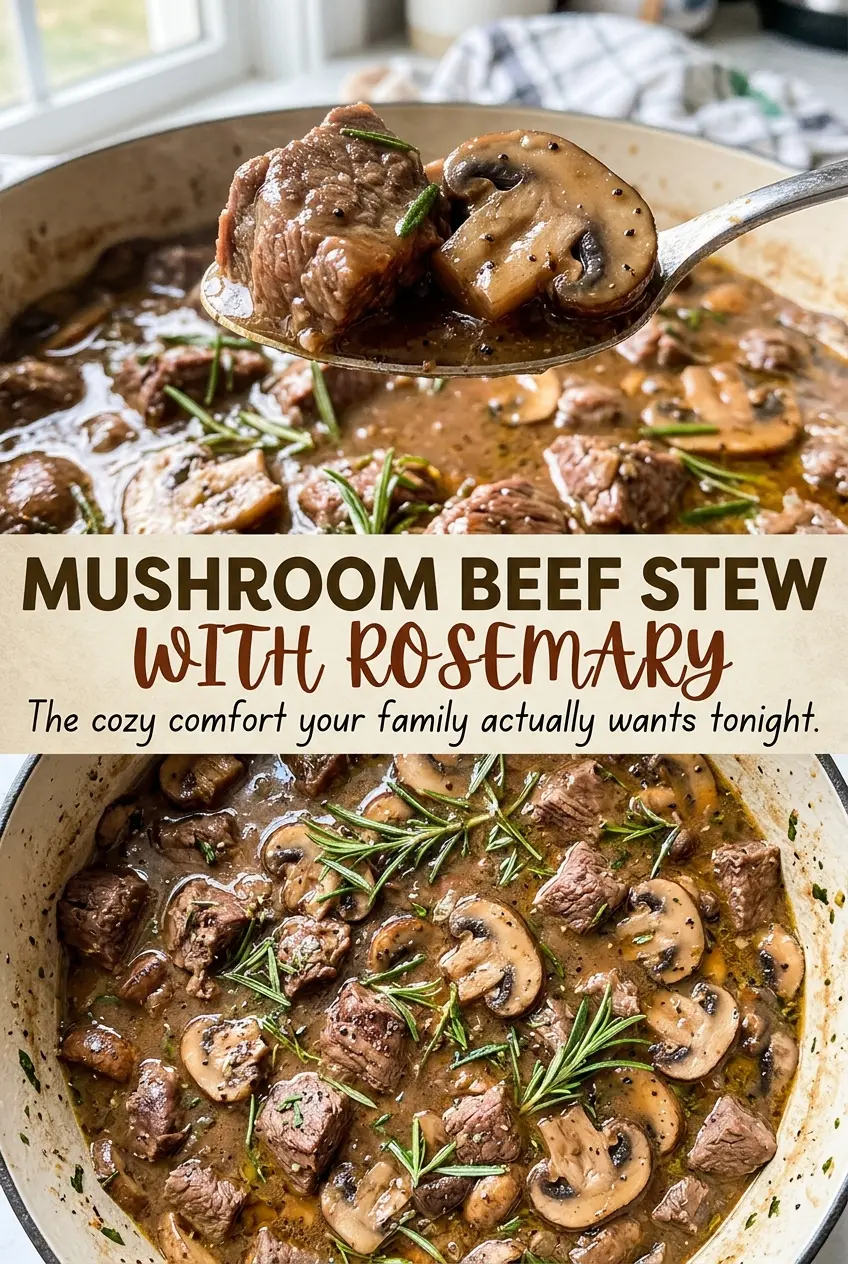
The beef needs room in the Dutch oven: crowd the pot and the cubes steam instead of developing the browned edges that give this stew its deep flavor. I brown them in batches, then use the same pot for the mushrooms and the wine-thickened base. Those layers of fond turn into a savory broth for Mushroom Beef Stew with Rosemary.
There’s a little restraint in the timing, too. The beef gets a head start to soften, while the potatoes, carrots, and mushrooms join later so they don’t spend the whole braise breaking down. Fresh rosemary perfumes the broth as it simmers, and the finished stew has tender beef, vegetables that hold their shape, and a gravy made right in the pot.
Kitchen Note
Let the stew rest for the full 10 minutes after you remove the rosemary stems and bay leaf. The broth settles around the beef and vegetables, making the first ladle easier to serve neatly.
Save this rosemary beef stew for a cozy supper with fork-tender beef, browned mushrooms, and a rich red-wine gravy.
Why the Potatoes and Mushrooms Go In Late
A long, gentle braise is what makes chuck tender, but it’s too much time for every ingredient to spend in the pot. Potatoes and carrots need enough simmering to become tender, not so much that their edges dissolve into the gravy. Adding them after the beef has already had time to soften gives the vegetables their own shorter cooking window.
The mushrooms benefit from that timing as well. They get browned first, which concentrates their savory flavor, then wait on the plate while the beef braises. Returning them with the vegetables keeps them from simmering for the entire time the beef needs. The result is a stew where the beef is tender and the potatoes, carrots, and mushrooms still have a distinct texture in each spoonful.
That order also keeps the pot manageable. You can focus on browning the beef and building the base first, then add the vegetables once the broth is already seasoned and gently simmering. Nothing needs to be rushed into the pot just to finish cooking alongside the beef.
What Builds the Deep, Rosemary-Scented Gravy
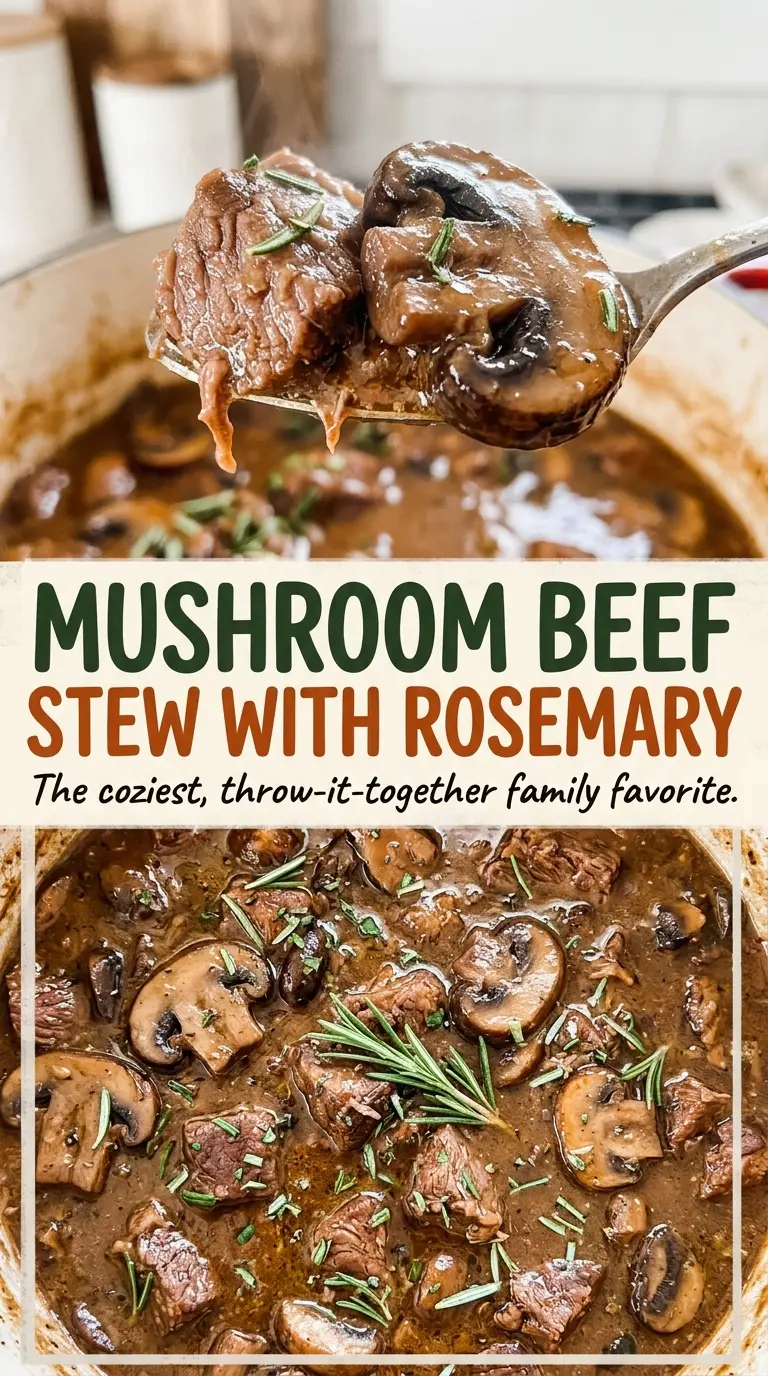
- Beef chuck — Its connective tissue softens during the covered braise and gives the stew its tender, substantial bites. Choose evenly cut cubes when possible; an economical chuck roast is a good choice, and cutting it yourself lets you keep the pieces a consistent size.
- Cremini mushrooms — Their earthy flavor deepens as they brown, and quartering gives them enough surface area to color while leaving substantial pieces in the finished stew. They don’t need to be fancy; fresh mushrooms with firm caps are what matter here.
- Yellow onion, garlic, and tomato paste — Together they create a savory foundation before the liquid goes in. Fresh garlic gives the cleanest flavor, while tomato paste from a tube works just as well as canned paste; stir it until it darkens slightly and coats the onion.
- Dry red wine — It lifts the browned bits from the bottom of the pot and adds acidity to balance the rich beef. Use a dry red wine whose flavor you enjoy; a wine labeled cooking wine is often salty and less pleasant to drink or cook with.
- All-purpose flour — Cooking it briefly with the onion mixture helps thicken the broth into gravy. For a gluten-free pot, use a cup-for-cup gluten-free flour blend in the same step; different blends can produce a slightly different texture.
- Low-sodium beef broth — It carries the browned flavors through the braise and lets you control the seasoning. Low-sodium broth is useful here because the stew reduces slightly as it cooks; a good-quality carton is fine, and there’s no need for a specialty brand.
- Rosemary, bay leaf, potatoes, and carrots — Whole rosemary sprigs and a bay leaf season the broth without leaving chopped herbs throughout the gravy. Yukon Gold potatoes hold their shape well, and scrubbing rather than peeling keeps their skins intact; cut the carrots and potatoes to the stated sizes so they cook evenly.
Building the Stew in the Dutch Oven Without Losing the Browned Bits
Brown the Beef in Uncrowded Batches
Pat the beef dry, then season it with the larger portion of salt and pepper. Heat some of the oil in a 6-quart Dutch oven over medium-high heat and brown the beef in batches for 3 to 4 minutes per side, moving each batch to a plate as it colors. Leave space between the cubes so they sear rather than steam. A deep brown crust is the cue to turn them; pale gray sides mean the pot is crowded or the beef is still releasing moisture.
Give the Mushrooms Their Own Sear
Add the remaining oil to the same pot and cook the quartered mushrooms, stirring occasionally, for 5 to 7 minutes until browned. They may release moisture before they begin to color, so let that moisture cook away instead of adding more oil right away. Transfer them to the plate with the beef once their surfaces are browned. Keeping the mushroom and beef juices together means they’ll return to the stew later.
Turn the Fond Into a Wine-Thickened Base
Cook the diced onion in the pot for 4 to 5 minutes, until softened, then stir in the garlic and tomato paste for 1 minute. Add the flour and cook it for 1 minute, stirring so it coats the onion rather than clumping. Pour in the wine and scrape up the browned bits as it simmers for 2 to 3 minutes. Those bits should loosen from the bottom and blend into the liquid before you add the broth.
Braise the Beef Until It Starts to Yield
Stir in the beef broth, rosemary, bay leaf, and the remaining salt and pepper, then return the beef and its juices to the pot. Bring everything to a gentle simmer, cover, and cook over low heat for 1 hour 15 minutes to 1 hour 30 minutes. Keep the simmer calm rather than letting the broth boil hard. The beef should be noticeably more tender before you add the vegetables, though it will finish cooking with them.
Finish With Vegetables and a Short Rest
Stir in the potatoes, carrots, and browned mushrooms, cover the pot, and simmer for 35 to 45 minutes. Check that the beef is fork-tender and the vegetables are tender before taking the pot off the heat. Remove the rosemary stems and bay leaf, then let the stew rest for 10 minutes before serving. If the potatoes or carrots still feel firm, keep the covered pot at a gentle simmer until they soften.
Simple Swaps That Keep the Stew Balanced
Make It Gluten-Free With a Cup-for-Cup Blend
Replace the all-purpose flour with the same measure of a cup-for-cup gluten-free flour blend, stirring it into the softened onion mixture before adding the wine. The stew keeps its thickened gravy, though the texture may be a little less silky depending on the blend.
Use Beef Broth Instead of Red Wine
For a wine-free version, replace the wine with the same volume of low-sodium beef broth. Scrape up the browned bits and simmer the liquid as you build the base; the gravy will taste rounder and less tangy without the wine’s acidity.
Trade Some Carrots for Parsnips
Replace some of the carrots with parsnips cut into the same 1-inch pieces, then add them with the potatoes. Parsnips bring a more earthy sweetness and soften readily in the braise, so keep the pieces close in size to the carrots.
Storage and Reheating
- Refrigerator: Refrigerate leftovers in an airtight container within 2 hours and use within 3 to 4 days. The potatoes soften a little after chilling.
- Freezer: Freeze the cooled stew in airtight freezer-safe containers for up to 2 to 3 months. Potatoes may become softer after thawing, but the broth and beef freeze well.
- Reheating: Warm it gently on the stovetop, stirring carefully, until it reaches 165°F. Add a splash of beef broth if it has thickened in the refrigerator, and avoid a hard boil that can break up the vegetables.
Questions That Come Up While This Beef Stew Cooks
Mushroom Beef Stew with Rosemary
Ingredients
Equipment
Method
- Pat the beef dry and season it with 1 teaspoon of the salt and 3/4 teaspoon of the black pepper.
- Heat 1 tablespoon of the oil in a 6-quart Dutch oven over medium-high heat.
- Brown the beef in batches for 3 to 4 minutes per side, transferring it to a plate as it browns.
- Add the remaining 1 tablespoon oil to the pot and cook the mushrooms for 5 to 7 minutes, stirring occasionally, until browned.
- Transfer the mushrooms to the plate with the beef.
- Add the onion and cook for 4 to 5 minutes until softened.
- Stir in the garlic and tomato paste for 1 minute.
- Stir in the flour and cook for 1 minute.
- Pour in the wine and scrape up the browned bits, simmering for 2 to 3 minutes.
- Stir in the beef broth, rosemary, bay leaf, and remaining 1/2 teaspoon salt and 1/4 teaspoon black pepper.
- Return the beef and its juices to the pot, bring to a gentle simmer, cover, and cook over low heat for 1 hour 15 minutes to 1 hour 30 minutes.
- Stir in the potatoes, carrots, and mushrooms, cover, and simmer for 35 to 45 minutes, until the beef is fork-tender and the vegetables are tender.
- Remove the rosemary stems and bay leaf, then let the stew rest for 10 minutes before serving.