
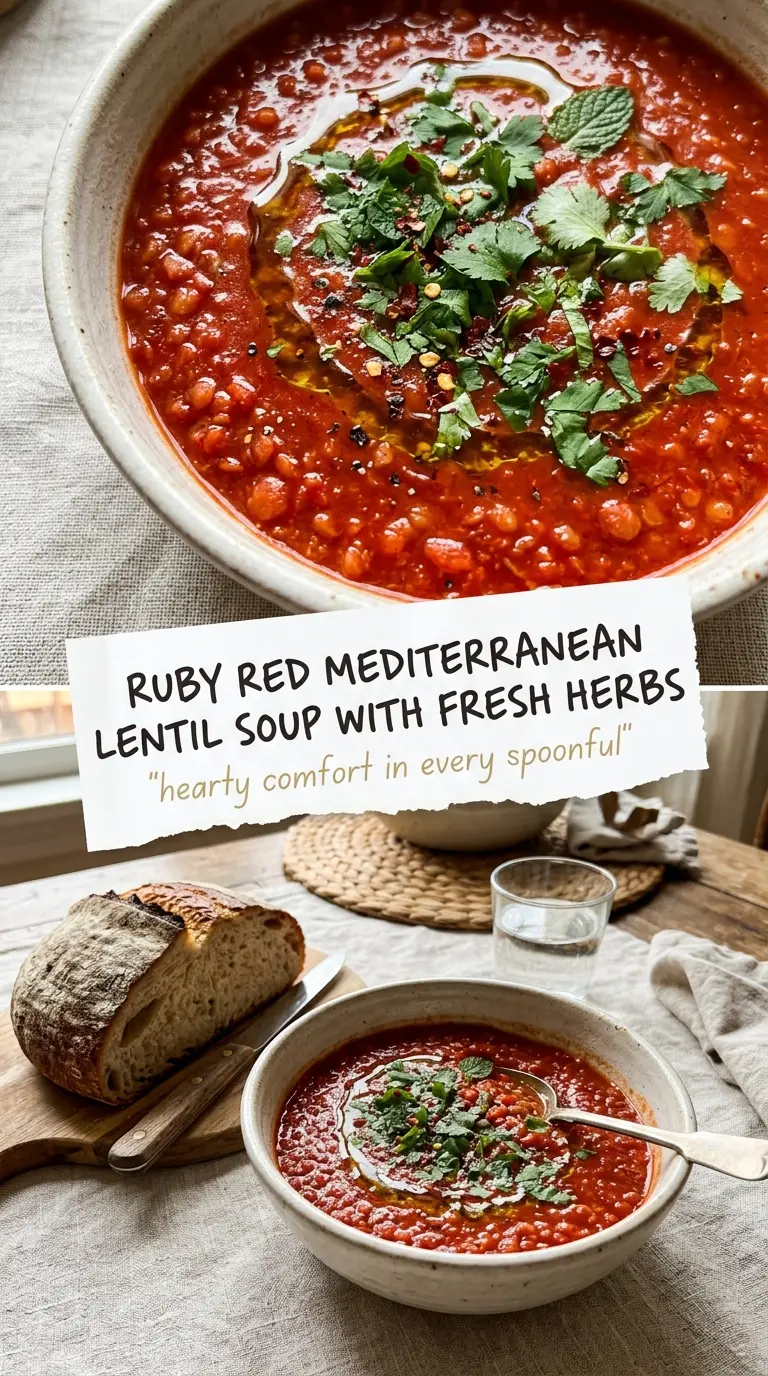
Hearty Mediterranean lentil soup settles into the bowl with a deep ruby broth, tender lentils, and enough vegetable sweetness to keep every spoonful interesting. The texture lands somewhere between brothy and stew-like, which is exactly what makes it such an easy repeat meal: it feels substantial without turning heavy, and it gets even better after a night in the fridge.
The trick here is building flavor in layers instead of trying to force it at the end. Onion, carrot, and garlic need a little time to soften before the spices go in, because cumin and smoked paprika bloom best in hot oil and taste flat if they’re tossed straight into liquid. The tomatoes bring brightness and body, while the lentils break down just enough to thicken the broth naturally as they cook.
Below, you’ll find the timing that keeps the lentils tender instead of mushy, plus the simple adjustment that brings leftovers back to life without losing that rich, rustic texture.
“I loved how the lentils held their shape but still made the soup thick and hearty. It reheated beautifully with a splash of broth, and the smoked paprika gave it that warm, cozy depth without taking over.”
Love the deep, rustic texture of this Mediterranean lentil soup? Save it to Pinterest for meal prep nights when you want something hearty, brothy, and better the next day.
The Lentils Need Space to Simmer, Not Rush
One of the easiest ways to ruin lentil soup is to boil it hard the entire time. That rough heat breaks the lentils too fast, which gives you a cloudy broth and a grainy texture before the vegetables have any chance to soften properly. A steady simmer keeps the lentils tender and lets the tomatoes, broth, and spices turn into something cohesive instead of muddy.
The other mistake is seasoning too early and then forgetting the soup will concentrate as it cooks. Vegetable broth varies a lot in salt level, and lentils absorb liquid as they soften, so the flavor should be balanced near the end rather than judged at minute one. Taste after the lentils are tender. That’s when the soup tells the truth.
What Each Ingredient Is Actually Doing in This Dish
- Dried green or brown lentils — These hold their shape better than red lentils, which is why the soup stays hearty instead of turning into puree. Green and brown both work well here; brown cooks a little softer, green stays a touch firmer.
- Diced tomatoes — They bring acidity, color, and body to the broth. Use the canned tomatoes you like to eat on their own, because the flavor carries straight through the pot.
- Carrots and onion — This is the base flavor. They sweeten the broth as they soften, and if they stay undercooked, the soup tastes thin even when the lentils are done.
- Garlic — It only needs a minute with the vegetables before the spices go in. If it browns hard, it turns bitter, so add it once the onion starts to look translucent.
- Vegetable broth — This does most of the heavy lifting, so choose one with enough body to stand up to the lentils. If yours is weak, the soup will taste flat no matter how long it simmers.
- Cumin and smoked paprika — These give the soup its warm, earthy backbone. Toasting them in the pot for 30 seconds wakes them up; skipping that step leaves them dusty and one-note.
The Pot-to-Bowl Timing That Gives You Tender Lentils and a Deep Broth
Softening the Vegetables First
Cook the onion, carrots, and garlic in a little oil until the onion turns translucent and the carrots lose their raw crunch at the edges. You’re not building color here; you’re building sweetness and aroma. If the pan looks dry, add a splash more oil so the garlic doesn’t scorch before the vegetables soften.
Toasting the Spices
Stir in the cumin and smoked paprika for about 30 seconds, just until the kitchen smells warm and earthy. That short toast pulls the oils out of the spices and keeps the soup from tasting like broth with seasoning sprinkled on top. If the spices stick, the heat is too high — lower it before they darken.
Simmering Until the Lentils Give Up Their Bite
Add the lentils, tomatoes, and broth, then bring the pot to a boil before lowering it to a steady simmer. You want small bubbles, not a rolling boil. Check the lentils around 30 minutes; they should be tender with a slight bite, and the broth should look fuller and more velvety than it did at the start. If the pot looks dry before the lentils are done, add more broth or water in small splashes.
Finishing With Fresh Herbs
Turn off the heat and taste for salt and pepper before adding parsley. Fresh herbs taste brightest when they hit the hot soup at the end, and the parsley keeps the whole bowl from feeling heavy. If the soup tastes flat after seasoning, a small squeeze of lemon wakes everything up without changing the character of the dish.
What to Change When You Want to Make It Yours
Make It Vegan-Friendly and Still Deep in Flavor
This recipe is already naturally vegetarian, and it stays fully vegan as long as your broth is vegetable-based. If you want more richness, stir in a drizzle of olive oil at the end instead of reaching for dairy. That small finish gives the soup a rounder mouthfeel without changing the clean, earthy flavor.
Swap in Red Lentils for a Softer, Thicker Bowl
Red lentils cook much faster and break down more completely, so the soup turns thicker and less rustic. That’s a good choice if you want a smoother texture, but you’ll need to shorten the simmer time and watch the pot closely so it doesn’t turn to mash.
Add Greens Without Throwing Off the Balance
A handful of spinach or chopped kale folds in well during the last few minutes of cooking. Spinach wilts almost immediately, while kale needs a little longer to soften. Add greens at the end so they stay bright and don’t disappear into the broth.
Storage and Reheating
- Refrigerator: Store for up to 5 days. The lentils keep absorbing broth, so the soup will thicken as it sits.
- Freezer: It freezes well for up to 3 months. Cool it completely first and leave a little space in the container because the broth expands.
- Reheating: Warm it gently on the stove over medium-low heat with a splash of broth or water. The common mistake is reheating it too aggressively, which makes the lentils break down and leaves the soup pasty.
Answers to the Questions Worth Asking

Mediterranean Lentil Soup
Ingredients
Equipment
Method
- Heat a large Dutch oven over medium heat and add the onion and carrots; cook until the vegetables soften, about 5 minutes, stirring occasionally. The mixture should look translucent around the edges and smell sweet and warm.
- Add the minced garlic to the pot and cook for 30 seconds, stirring constantly until fragrant. You should see no raw garlic bits or scorching on the bottom.
- Stir in the cumin and smoked paprika and toast for 30 seconds, keeping the heat at medium so the spices bloom. The spices should darken slightly and look glossy as they toast.
- Add the lentils, diced tomatoes, and vegetable broth to the pot and stir to combine. Make sure all lentils are submerged under the broth.
- Bring the soup to a boil, then reduce heat to maintain a gentle simmer and cook for 30-35 minutes until the lentils are tender. Look for tender lentils and a thickened, ruby-red broth that gently bubbles.
- Taste and adjust seasoning to your preference, adding more spice or broth-based seasoning as needed. The flavor should be balanced and fully developed.
- Turn off the heat and garnish with fresh parsley before serving. The surface should have bright green flecks right before you eat.