
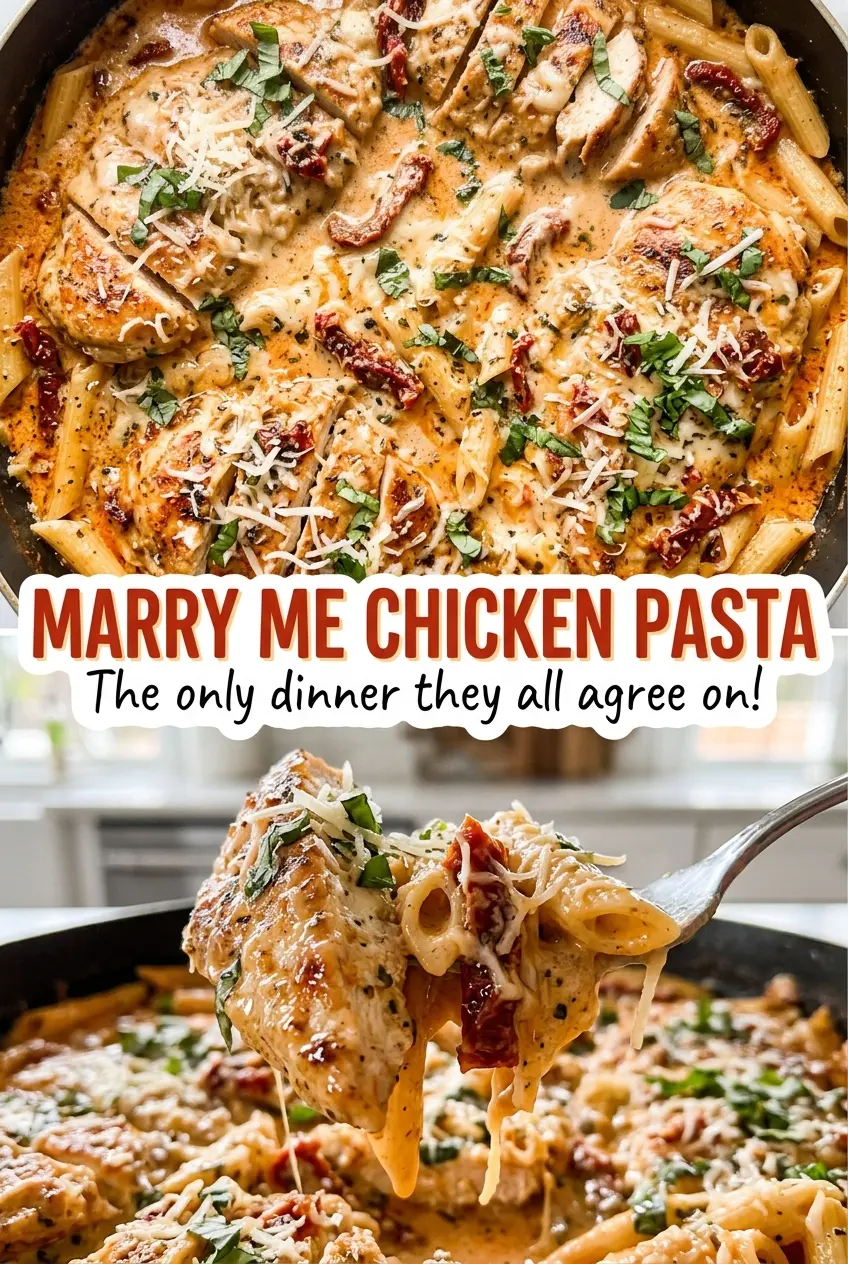
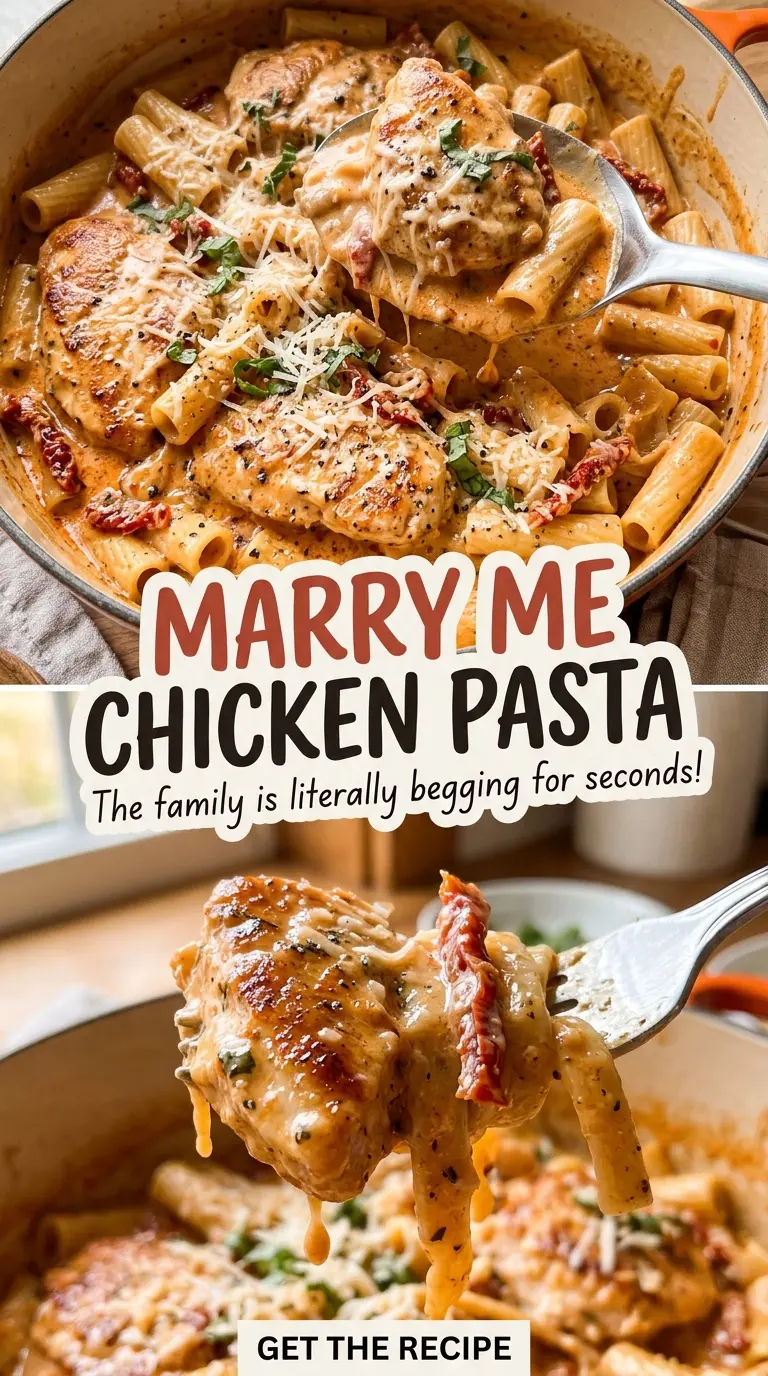
Chicken should hiss the second it hits the skillet; if the pan goes quiet, the pieces are crowded and they’ll steam instead of brown. I cook this Marry Me Chicken Pasta in two batches so each piece gets a golden edge, then use the browned bits left behind to build the sauce. That little bit of color makes the creamy tomato sauce taste fuller without adding another ingredient.
The sauce comes together in the same skillet, with sun-dried tomatoes and broth loosening the flavorful bits from the bottom before the cream goes in. Once the Parmesan melts, the sauce is rich but still loose enough to coat every ribbon of fettuccine. Toss in the chicken and fresh basil at the end, and dinner lands with tender chicken, a gentle kick of red pepper, and silky noodles.
Kitchen Note
Reserve the pasta water before you drain the fettuccine; once it’s gone, there’s no getting that starchy liquid back. Use the full reserved portion in the final toss, where it helps the sauce cling to the noodles.
Save this Marry Me Chicken Pasta for a night when you want creamy Parmesan sauce, tender chicken, and sun-dried tomatoes in every forkful.
Why Browning the Chicken in Batches Makes the Sauce Better
A deep skillet can still be too crowded for a good sear. When too many chicken pieces go in at once, they release moisture faster than it can evaporate, and the meat turns pale instead of developing browned edges. Cooking half at a time gives the pieces room to make direct contact with the hot pan.
Those browned bits are more than a sign that the chicken is ready. Garlic, sun-dried tomatoes, and broth go into the same skillet, and the broth loosens the savory fond as you scrape the bottom. That makes the sauce taste connected to the chicken rather than like a separate cream topping. Keep the fond in the pan; wiping it out would discard the flavor you just built.
Use a 12-inch deep skillet and medium-high heat for the chicken. Turn the pieces occasionally so they color on more than one side, and transfer each finished batch to a plate while you cook the next. The brief pause is useful: the chicken stays out of the way while the sauce gets its start in the same pan.
What the Cream, Tomatoes, and Parmesan Each Bring to the Sauce
- Heavy cream — It gives the sauce its body and helps it stay smooth as it simmers. Lower-fat milk makes a thinner sauce and is more likely to turn watery, so heavy cream is the reliable choice here.
- Oil-packed sun-dried tomatoes — Their concentrated tang and tender texture balance the cream. Drain them well before chopping so extra oil doesn’t leave a slick on the finished sauce; choose a reasonably priced jar, since the tomatoes are chopped and cooked into the sauce.
- Finely grated Parmesan — Fine shreds melt into the warm cream more evenly than thick shavings. A wedge grated at home gives the smoothest result, while a good-quality finely grated Parmesan works when convenience matters. Pecorino Romano can replace it for a sharper, saltier finish.
- Fettuccine — The broad ribbons catch the creamy sauce and pieces of tomato. Linguine is the closest easy swap if that’s what’s in the pantry; cook it until al dente and keep the rest of the method the same.
- Boneless, skinless chicken breasts — They cook quickly and stay tender when cut evenly and removed once cooked through. Boneless, skinless thighs are a workable swap, though their richer flavor and slightly different cooking time mean you should rely on the doneness cue rather than the clock alone.
- Fresh basil — It adds a fresh, aromatic finish against the rich sauce, which is why it goes in at the end. Dried basil has a more muted, cooked flavor and won’t give the dish the same fresh lift.
Getting the Chicken Browned and the Cream Sauce Coated
Cook the fettuccine to a firm bite
Bring the water to a boil in a 6-quart pot, add the tablespoon of kosher salt, then add the fettuccine. Cook it for 8–10 minutes, tasting near the end so it’s al dente rather than soft. Before draining, reserve half a cup of pasta water. Drain the noodles and set them aside while you make the chicken and sauce.
Sear the chicken without crowding the skillet
Season the 1-inch chicken pieces with the remaining salt and black pepper. Heat a tablespoon of olive oil in a 12-inch deep skillet over medium-high heat, then cook half the chicken for 4–6 minutes, turning occasionally. Look for browned edges, and check that the thickest pieces reach 165°F before transferring them to a plate. Add the remaining oil and cook the other half the same way.
Let the tomatoes and broth lift the browned bits
Reduce the heat to medium and add the minced garlic and crushed red pepper flakes to the skillet. Stir for 30 seconds; garlic can turn bitter if it sits too long over the heat. Stir in the drained, chopped sun-dried tomatoes and chicken broth, scraping across the bottom of the pan. Simmer for 2 minutes so the broth picks up the browned flavor.
Finish the sauce, then toss everything together
Stir in the heavy cream and Italian seasoning, then simmer for 3–5 minutes, until the sauce thickens slightly. Stir in the finely grated Parmesan until it melts into the sauce. Add the drained fettuccine, cooked chicken, basil, and reserved pasta water. Toss over low heat for 1–2 minutes, until the noodles are coated and the chicken is hot.
A Gluten-Free Bowl, a Little More Heat, or a Different Noodle
Use gluten-free fettuccine
Swap in gluten-free fettuccine and cook it according to its package directions, stopping when it’s al dente. The sauce and chicken stay the same, though gluten-free pasta can soften faster once tossed, so serve the finished dish promptly.
Turn up the red pepper
Add extra crushed red pepper flakes with the garlic if you want a more pronounced kick. The heat blooms in the oil as it cooks, so the sauce will taste spicier than if you sprinkled the flakes over the finished pasta.
Switch the pasta shape
Linguine works well in place of fettuccine and gives you a slightly narrower strand with the same creamy coating. Cook it until al dente, reserve the pasta water before draining, and use the same finishing method.
Storage and Reheating
- Refrigerator: Store leftovers in an airtight container for 3–4 days. The fettuccine will absorb some sauce as it sits, so it won’t be quite as silky the next day.
- Freezer: Freezing isn’t recommended. The cream sauce may separate after thawing, and the cooked pasta tends to turn soft.
- Reheating: Warm leftovers gently in a skillet over low heat with a splash of chicken broth, stirring until hot throughout. Avoid boiling the sauce, which can make it oily or uneven.
Questions That Come Up While Making Marry Me Chicken Pasta
Marry Me Chicken Pasta
Ingredients
Equipment
Method
- Bring the water to a boil in a 6-quart pot, add 1 tablespoon of the salt and the fettuccine, and cook for 8–10 minutes until al dente. Reserve 1/2 cup of the pasta water, then drain the pasta.
- Season the chicken with the remaining 1/2 teaspoon salt and the pepper. Heat 1 tablespoon of the olive oil in a 12-inch deep skillet over medium-high heat and cook half the chicken for 4–6 minutes, turning occasionally, until browned and cooked to 165°F; transfer to a plate and repeat with the remaining oil and chicken.
- Reduce the heat to medium, add the garlic and red pepper flakes to the skillet, and cook for 30 seconds; stir in the sun-dried tomatoes and broth, scraping up the browned bits, and simmer for 2 minutes.
- Stir in the heavy cream and Italian seasoning and simmer for 3–5 minutes until slightly thickened. Stir in the Parmesan until melted.
- Add the drained pasta, chicken, basil, and reserved pasta water, then toss over low heat for 1–2 minutes until the pasta is coated and the chicken is hot.