
Maple cinnamon roasted butternut squash turns soft, sweet cubes into something you’d put on the table next to a roast chicken and end up sneaking straight from the pan. The edges caramelize into sticky, amber-brown corners while the centers stay tender and almost silky. It’s the kind of side dish that tastes like you spent more effort than you did.
The trick is keeping the squash in a single layer so it roasts instead of steams. Maple syrup gives you that lacquered finish, but it can burn if the pan is crowded or the oven runs hot, so the balance here matters: enough sweetness to coat, enough heat to deepen the edges, and just enough butter to help the spice cling. A little nutmeg rounds out the cinnamon without making the whole pan taste like dessert.
Below, I’ve included the roasting cue that tells you the squash is done even before the timer goes off, plus a few swaps that keep the same caramelized texture when you need to adjust the recipe.
The squash caramelized beautifully and the maple-cinnamon coating got sticky without burning. I used the broil trick for the last minute and those edges were the best part.
Save this maple cinnamon roasted butternut squash for the nights when you want caramelized edges, warm spice, and almost no cleanup.
The Reason Butternut Squash Turns Mushy Instead of Caramelized
The biggest mistake with roasted squash is giving it too much room to sweat and too little heat to brown. When cubes pile up, they release steam, and that steam softens the surface before the sugars can color. You end up with tender squash, but not the deep, sticky edges that make this dish worth making.
This version stays on the right side of that line because the squash is cut evenly, coated lightly, and spread out where the hot air can move around each piece. Maple syrup helps with browning, but it also means the squash can go from glossy to scorched if you roast it too low or too crowded. The goal is a pan that looks almost dry at first, then turns shiny, then develops those dark little caramelized corners near the end.
- Even cubes — The more uniform the pieces, the more likely they are to finish at the same time. Tiny scraps will brown before the larger chunks are tender.
- Single layer on the pan — This is what keeps the squash roasting instead of steaming. If your pan is overloaded, use two pans.
- High heat — 425°F gives the sugars enough heat to caramelize without turning the maple into a burnt glaze too soon.
What Each Ingredient Is Doing in This Dish
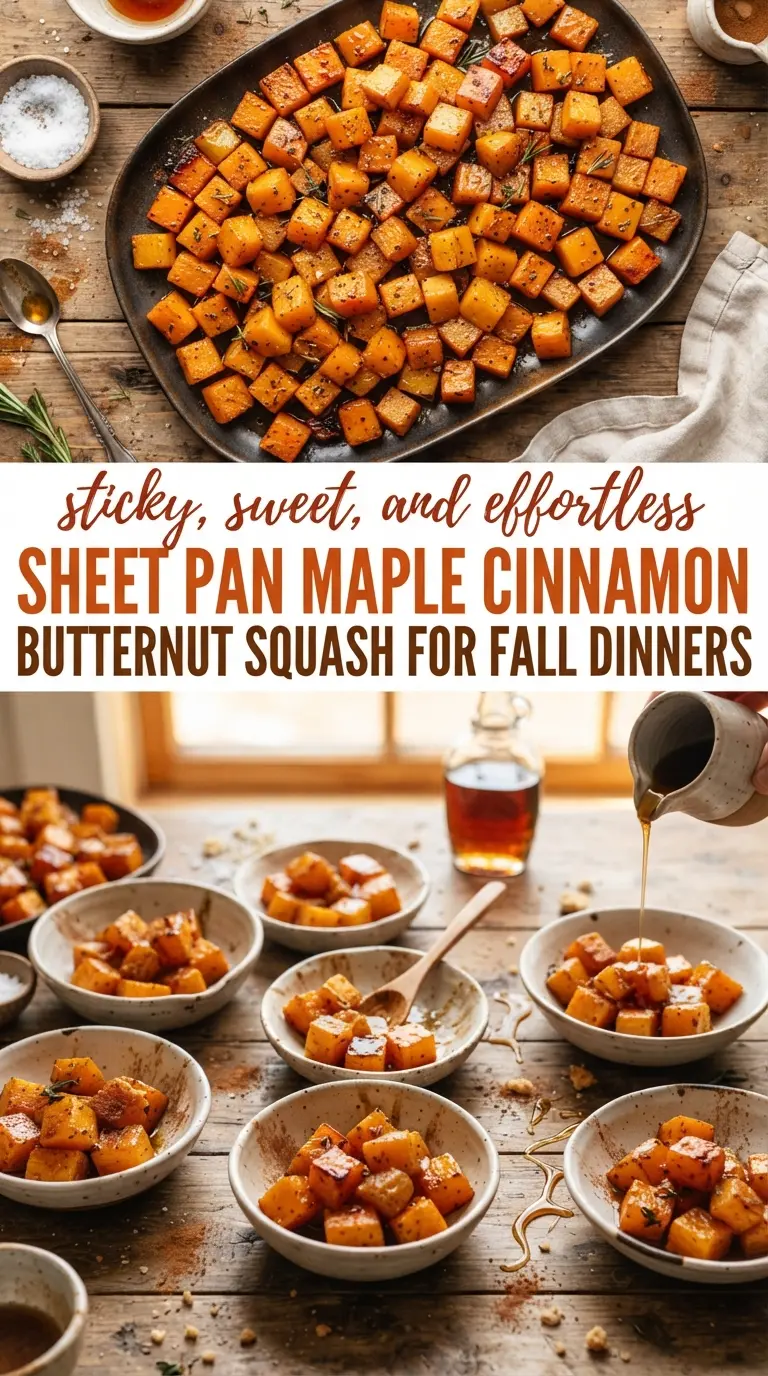
- Butternut squash — This is the base and it matters more than almost anything else. A firm squash with dense flesh roasts into creamy centers and browned edges; one that’s already soft or watery will slump instead of caramelize.
- Maple syrup — This gives the glaze its amber color and that subtle woodsy sweetness. Honey can work in a pinch, but it browns a little faster and tastes sharper.
- Melted butter — Butter carries the cinnamon and helps the squash pick up color. Olive oil works for a dairy-free version, but the flavor will be less round and the glaze won’t feel quite as rich.
- Cinnamon and nutmeg — Cinnamon brings the warm, familiar note, while nutmeg keeps the flavor from flattening into plain sweetness. Freshly grated nutmeg is excellent here, but even a small pinch from a jar does the job.
- Salt — Don’t skip it. Salt keeps the glaze from tasting one-note and makes the squash taste more like itself, not just like maple.
Roasting the Squash Until the Glaze Turns Sticky
Coating the Cubes Evenly
Toss the squash with the maple syrup, melted butter, cinnamon, nutmeg, and salt until every piece is lightly coated. You want a sheen, not a puddle. If the cubes are sitting in a pool of liquid, they’ll steam on the pan and the glaze will slide off instead of clinging to the squash.
Spreading It Out for Browning
Scatter the squash on a parchment-lined sheet pan in one layer with a little breathing room between pieces. Crowding is the fastest way to lose the caramelized edges. If you can see parchment in the gaps, you’re in good shape.
Roasting to Tender, Not Soft
Roast at 425°F for 25 to 30 minutes, flipping halfway through so the bottoms can brown too. The squash is done when a fork slides in easily and the edges have deep golden spots. If the cubes look pale at 25 minutes, give them a few more minutes instead of pulling them early; under-roasted squash tastes flat and the glaze won’t have time to thicken.
Finishing with Extra Edge
If you want a deeper caramelized finish, broil the pan for the last 1 to 2 minutes and watch it closely. The difference between bronzed and burnt is small here because the maple is already concentrated. Pull the pan the moment the corners darken and the glaze looks glossy and sticky.
How to Adapt This for a Different Table
Dairy-Free Version With the Same Glossy Finish
Swap the butter for melted coconut oil or olive oil. Coconut oil gives you a richer finish and a little sweetness of its own, while olive oil keeps the flavor cleaner and more savory. The squash will still caramelize well, but the coating won’t taste quite as round as it does with butter.
Less Sweet, More Savory
Cut the maple syrup back by a tablespoon and add a pinch more salt plus a little black pepper. That keeps the squash glossy but moves the flavor toward a side dish that belongs beside pork, chicken, or holiday turkey without reading as dessert.
Using Pre-Cut Squash
Pre-cut squash saves time, but it’s often damp and unevenly sized. Pat the cubes dry before tossing them, and sort out the tiny pieces so they don’t overcook. You’ll still get good flavor, though the edges usually won’t brown as deeply as freshly cut squash.
Storage and Reheating
- Refrigerator: Store leftovers in an airtight container for up to 4 days. The edges soften a bit, but the flavor holds up well.
- Freezer: It freezes okay, though the texture gets softer after thawing. Freeze in a single layer first, then transfer to a container if you want to keep the pieces from sticking together.
- Reheating: Reheat on a sheet pan in a 400°F oven until warmed through. The oven brings back some of the caramelization; the microwave will make the squash soft and dull.
Answers to the Questions Worth Asking
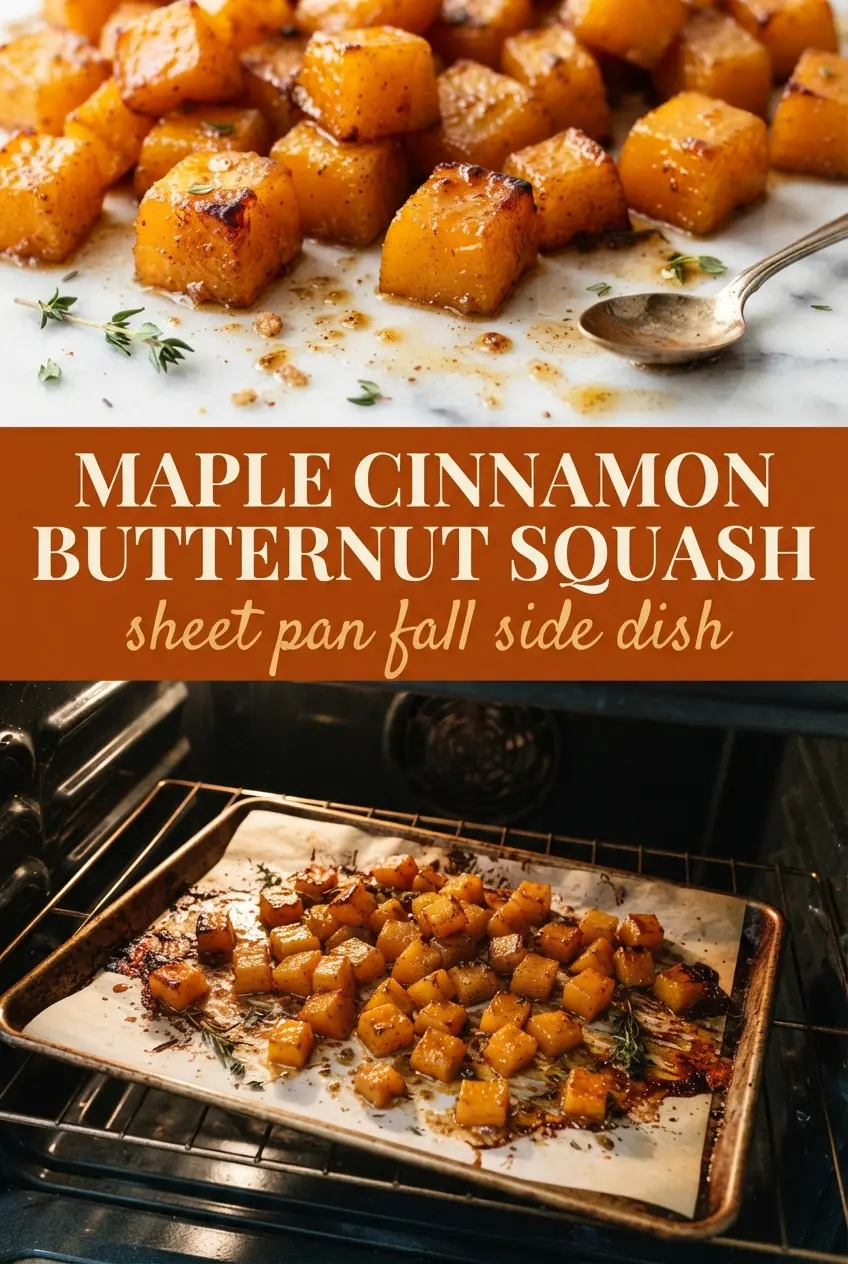
Maple Cinnamon Roasted Butternut Squash
Ingredients
Equipment
Method
- Preheat the oven to 425°F and line a sheet pan with parchment paper for easy release.
- Toss the squash cubes with maple syrup, melted butter, cinnamon, nutmeg, and salt until evenly coated.
- Spread the squash in a single layer on the sheet pan so the cubes roast rather than steam.
- Roast for 25-30 minutes, flipping halfway, until deeply caramelized and tender.