
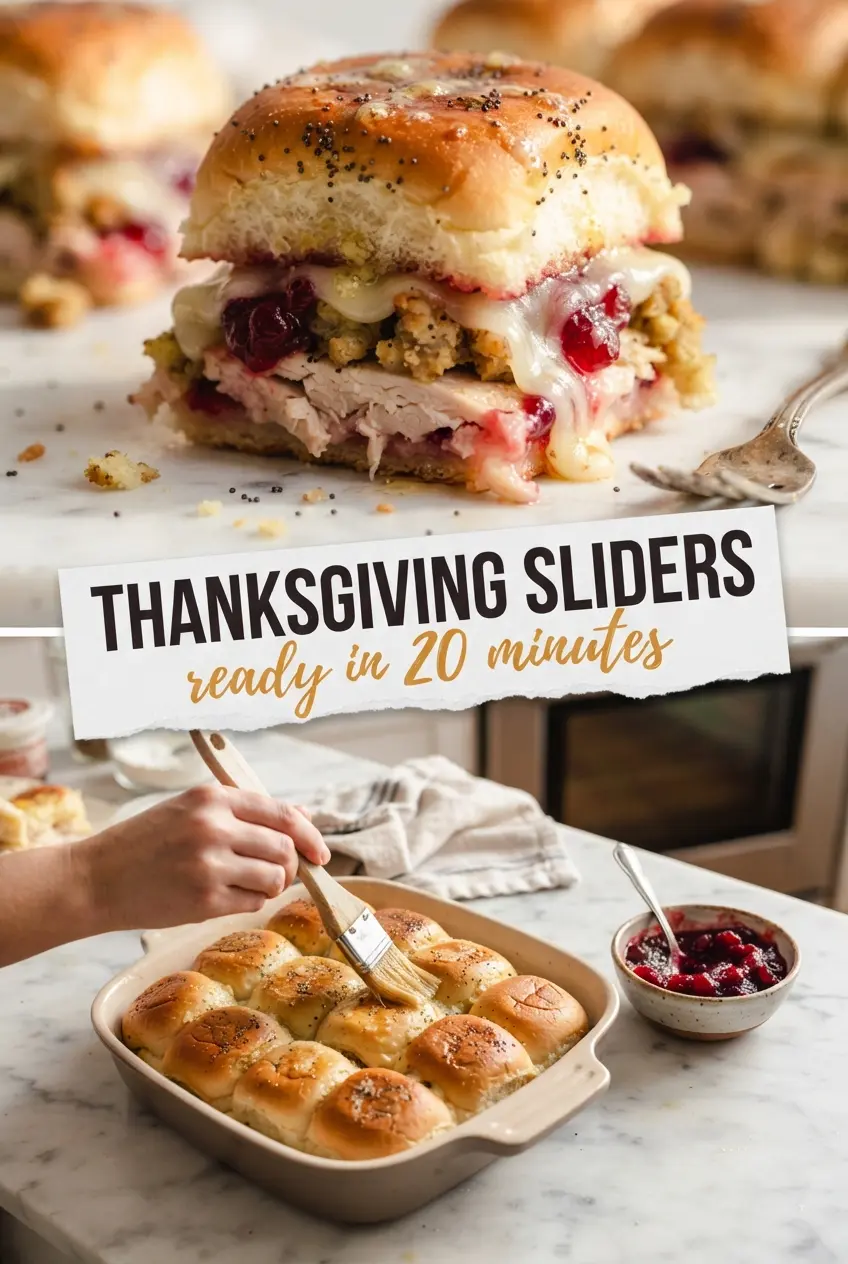
Soft slider rolls, melted Swiss, and a stack of turkey, stuffing, and cranberry sauce turn Thanksgiving leftovers into something people get excited about all over again. The rolls bake up golden and glossy on top while the middle stays warm, savory, and a little tangy from the cranberry. It’s the kind of tray that disappears fast because it tastes like the holiday, just easier to eat.
The part that makes these work is the browned butter glaze. Browning the butter gives it a nutty depth that plain melted butter can’t match, and the Dijon plus Worcestershire keep the whole pan from tasting one-note or overly rich. The stuffing adds body, the cranberry sauce cuts through the cheese, and the Swiss melts into everything without turning greasy.
Below, I’ll show you how to layer the sliders so they stay sturdy, not soggy, and why a covered-then-uncovered bake gives you soft centers with browned tops. There’s also a smart way to adapt these if your leftover turkey is a little dry.
The butter glaze soaked into the tops without making them soggy, and the stuffing layer kept the turkey from drying out. I baked a pan for lunch and everyone went back for seconds.
These leftover Thanksgiving sliders turn turkey, stuffing, and cranberry sauce into the kind of melty pan dinner worth saving.
The Trick to Keeping Leftover Turkey Sliders from Turning Soggy
The biggest mistake with sliders like these is loading them up with wet fillings and then baking them too long covered. Turkey leftovers are already cooked, so they don’t need a long bake to become safe or tender again. They just need enough heat to warm through and enough protection to keep the rolls from drying out before the cheese melts.
The cranberry sauce belongs directly on the bottom rolls because it acts like a barrier and adds moisture where the bread needs it most. The stuffing sits in the middle and helps hold the filling together, which matters when you slice the sliders later. If your stuffing is a little dry, these sliders still work because the butter glaze and melted cheese bring the whole pan back to life.
- Leftover turkey — Slice it thin so it heats quickly and stacks neatly. If it’s dry, tuck the slices under the stuffing and cheese so the butter glaze and cranberry sauce can soften it as the sliders bake.
- Stuffing — This is what gives the sliders their holiday texture and helps keep the filling from collapsing. Dense stuffing works better than fluffy, and it’s fine if it has herbs, onions, or even a little sausage in it.
- Cranberry sauce — Jellied or whole berry both work. Jellied spreads more easily; whole berry gives you little bursts of tartness, which is nice if your turkey and stuffing are on the mild side.
- Swiss cheese — Swiss melts smoothly and has enough flavor to stand up to the cranberry without fighting it. Provolone or mozzarella can work in a pinch, but they’re milder and you’ll lose some of that savory contrast.
- Slider rolls — Soft rolls are the right choice because they absorb the glaze without falling apart. Split the whole package in one layer if you can, so the sliders stay aligned and the top bakes evenly.
- Browned butter glaze — Browning the butter gives the top a deeper, nuttier finish than plain melted butter. Dijon, Worcestershire, and poppy seeds add sharpness and texture, and they keep the glaze from tasting flat.
Building the Pan So Every Bite Has Turkey, Stuffing, and Cheese
Set the Bottom Layer First
Start with the bottom halves of the rolls in your baking dish and spread the cranberry sauce over them before anything else goes on. That thin layer helps anchor the filling and keeps the bread from getting dry. If the sauce is very thick, warm it for a few seconds so it spreads without tearing the rolls.
Stack the Filling in the Right Order
Layer the turkey first, then the stuffing, then the cheese. The stuffing helps fill gaps between the turkey slices, and the cheese melts down through everything to bind the layers. Don’t pile the filling too high or the tops will slide around when you brush on the butter.
Brush the Butter While It’s Still Warm
Brown the butter until it smells nutty and the milk solids turn amber, then whisk in the mustard, Worcestershire, and poppy seeds right away. Brush it over the tops while it’s still warm and fluid so it soaks into the bread instead of sitting on the surface. If you let the butter cool too much, it thickens and won’t spread evenly.
Bake Covered, Then Uncovered
Cover the pan for the first 10 minutes so the turkey and stuffing warm through without the bread drying out. Then uncover it for the last 10 minutes so the tops turn deep golden and the cheese at the edges gets a little bit crisp. If the tops brown too fast, tent the pan loosely with foil again and finish for a few more minutes.
How to Adapt These Sliders for What You Have Left
Use ham instead of turkey
Ham gives you a saltier, more savory slider with a stronger smoky edge. If you swap it in, cut back slightly on the Worcestershire in the glaze so the whole pan doesn’t lean too salty.
Make it gluten-free
Use gluten-free slider rolls and check that your Worcestershire sauce is gluten-free. The filling itself already works well, but gluten-free rolls brown faster, so keep an eye on them during the uncovered bake.
Swap the Swiss for cheddar
Cheddar brings sharper flavor and a little more richness, especially if your leftovers are mild. It melts fine here, but it doesn’t stay quite as silky as Swiss, so shred it or use thin slices for the cleanest melt.
Storage and Reheating
- Refrigerator: Store covered for up to 3 days. The rolls will soften a little, but the flavor holds up well.
- Freezer: These freeze best after baking. Wrap individual sliders tightly and freeze for up to 2 months, then thaw in the fridge before reheating.
- Reheating: Warm them covered in a 325°F oven until heated through. Microwaving works in a pinch, but it makes the rolls rubbery and the tops lose their texture.
Answers to the Questions Worth Asking
Leftover Thanksgiving Sliders
Ingredients
Equipment
Method
- Preheat the oven to 350°F. Choose a baking dish sized to hold the roll halves in one layer.
- Place the bottom rolls in a baking dish and spread with cranberry sauce. Cover as evenly as possible so every slider has a layer.
- Layer the turkey, stuffing, and Swiss cheese, then add the roll tops. Keep the layers fairly even so the filling bakes uniformly.
- Brown the butter in a Dutch oven, watching for golden-brown bits and a nutty aroma. Continue until the butter is visibly browned, then remove from heat.
- Whisk in the Dijon mustard, Worcestershire sauce, and poppy seeds. Stir until smooth and speckled with poppy seeds.
- Brush the browned butter glaze over the rolls. Aim for coverage on the tops and edges where the filling meets the bread.
- Bake covered for 10 minutes at 350°F, until the rolls are hot through. Look for bubbling around the edges when you lift the cover.
- Bake uncovered for 10 minutes at 350°F, until the tops turn golden and the cheese is gooey. Let rest for 2 minutes before serving so the filling sets slightly.