
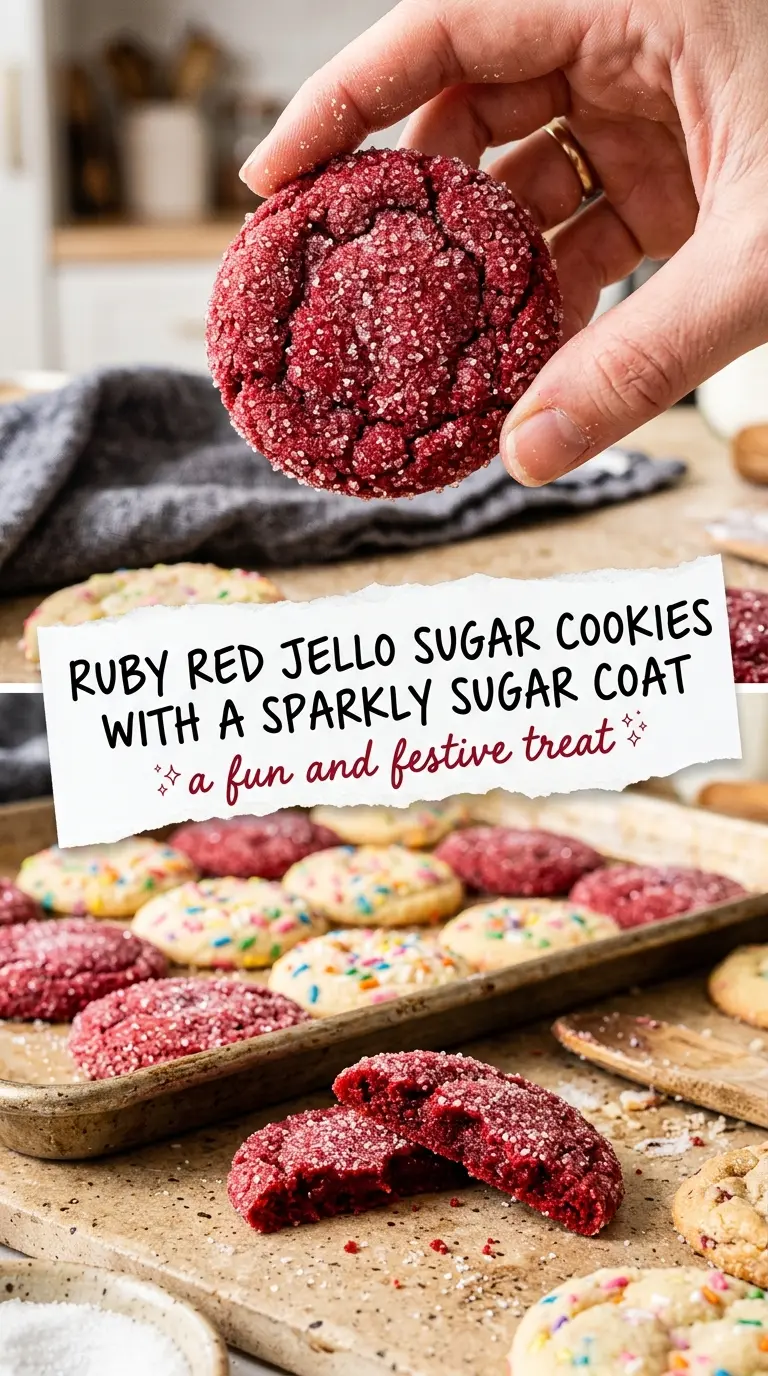
Soft, buttery sugar cookies with a fruity pop of color have a way of disappearing fast, especially when the edges stay just set and the centers bake up tender instead of dry. The gelatin doesn’t just tint the dough. It adds a light fruit flavor that makes these cookies taste playful without losing the classic sugar cookie comfort people expect. A sparkling sugar coating gives them a little crunch and makes the tops catch the light in the prettiest way.
The trick is keeping the dough soft enough to bake up tender, but not so warm that the cookies spread into flat discs. Creaming the butter and sugar until fluffy gives the dough structure, and mixing in the gelatin powder with the dry ingredients helps distribute the color and flavor evenly. The other important part is pulling them from the oven while the centers still look a little underdone. That last bit of carryover heat finishes the bake without turning them crumbly.
Below, I’ve included the small details that matter most here, especially how to keep the color bold, how to avoid overbaking, and what to do if you want to change the flavor without changing the texture.
The gelatin flavor came through without being fake-tasting, and the cookies stayed soft for days. I baked them at 10 minutes and the centers were perfect after cooling on the tray.
These Jello sugar cookies bring soft centers, bright color, and a sparkly sugar crust to every batch.
The Reason These Cookies Stay Soft Instead of Spreading Too Thin
Most flavored sugar cookies fail for one of two reasons: the dough gets too warm before it goes into the oven, or the cookies bake past the point where the centers can stay tender. Jello powder doesn’t behave like a liquid flavoring, so it won’t thin the dough on its own, but it can distract people into thinking the batter should look wetter than it does. It shouldn’t. What you want is a soft, scoopable dough that holds together cleanly when rolled.
The second trap is overmixing after the flour goes in. Once the dough comes together, stop. Extra mixing develops more gluten than you need, which turns a cookie that should melt gently into one with more chew than you probably want here. If your kitchen is warm and the dough feels sticky, chill it for 15 to 20 minutes before rolling. That small pause helps the cookies hold their shape and keeps the sugar coating from dissolving before baking.
- Fluffy creamed butter and sugar give the cookies lift and keep the crumb light.
- Flavored gelatin powder adds color and fruit flavor without watering down the dough.
- Sparkling sugar gives the finished cookies a crisp, shiny shell that regular granulated sugar won’t match.
What Each Ingredient Is Actually Doing in These Jello Cookies
- Butter needs to be softened, not melted. Soft butter traps air when you cream it with the sugar, which is what gives these cookies that light, tender bite. If the butter is too warm, the dough spreads more and the cookies lose definition.
- Flavored gelatin is the whole point of the recipe. A bolder flavor like strawberry, cherry, or lime gives the clearest color and taste. The small box size matters because too much gelatin can make the cookies taste artificially strong and can throw off the dough balance.
- Flour gives the cookies structure, but measuring it too heavily will dry them out. Spoon it into the cup and level it off. If you pack it in, the dough gets stiff and the cookies bake up dense.
- Sparkling sugar is worth using if you want that bakery-style finish. Regular sugar works in a pinch, but it won’t stay as bright or give the same crackly sparkle after baking.
- Vanilla softens the fruit flavor so the cookies taste rounded instead of one-note. You can use a little less if you want the gelatin flavor to lead, but don’t leave it out completely.
Getting the Dough Mixed and the Cookies Out of the Oven at the Right Moment
Creaming the Base
Beat the softened butter and sugar until the mixture looks pale and fluffy, not greasy or wet. That step builds air into the dough, and it gives the cookies enough lift to bake up soft instead of flat. Add the egg and vanilla next and mix just until combined. If the mixture looks slightly broken at that stage, it usually comes together once the dry ingredients go in.
Bringing in the Gelatin and Flour
Mix the flour, baking powder, and gelatin powder together before adding them to the bowl. That keeps the color and flavor even across the dough instead of leaving streaks. Stop mixing as soon as the flour disappears and the dough starts to pull away from the sides. If you keep going, the dough tightens up and the finished cookies lose that soft middle.
Shaping and Coating
Roll the dough into even balls so they bake at the same rate, then coat them in sparkling sugar while the dough is still tacky. Press each ball down slightly before baking; these cookies won’t spread a lot on their own, so that small flattening helps them settle into the right shape. If the dough sticks to your hands, chill it briefly rather than adding more flour, which can dry out the cookies.
Watching the Bake
Bake just until the edges look set and the centers still look a touch soft. That usually takes 10 to 12 minutes, depending on the size of your dough balls and how accurate your oven runs. Let the cookies sit on the tray for 5 minutes before moving them. They finish setting during that rest, and moving them too early can make the centers crack or break apart.
How to Change the Flavor Without Ruining the Texture
Swap the Gelatin Flavor for a Different Color
Cherry, strawberry, lime, and lemon all work well here. Pick a flavor with a clear color if you want the cookies to look vivid on the tray, because pale flavors can bake out looking muted. The dough and bake time stay the same, but the finished cookie will lean more fruity or tart depending on the box you use.
Make Them Gluten-Free
Use a 1:1 gluten-free baking blend that includes xanthan gum. The texture will be a little more delicate, but the cookies still hold together well if you don’t overmix the dough. Let the dough rest for 10 to 15 minutes before shaping so the flour has time to hydrate.
Add a Citrus Edge
A little lemon or lime zest wakes up the fruit flavor and keeps the cookies from tasting flat. Add only the finely grated zest from one fruit, because too much extra moisture can soften the dough. This is a good move if you want the cookie to taste brighter without changing the base recipe.
Storage and Reheating
- Refrigerator: Store in an airtight container for up to 5 days. The cookies stay soft, though the sugar coating softens a little after the first day.
- Freezer: These freeze well. Freeze baked cookies in a single layer, then move them to a sealed container for up to 2 months. You can also freeze the shaped dough balls and bake them straight from frozen, adding 1 to 2 minutes.
- Reheating: If you want that just-baked softness back, warm a cookie for 5 to 8 seconds in the microwave. Longer than that can make the sugar coating melt and the cookie turn tough around the edges.
Questions I Get Asked About This Recipe

Jello Sugar Cookies
Ingredients
Equipment
Method
- Preheat the oven to 350°F, and line a sheet pan for easy transfer.
- Cream the butter and granulated sugar until fluffy, then beat in the egg and vanilla extract until smooth.
- Mix in the flour, baking powder, and gelatin powder until a soft dough forms.
- Portion the dough into balls and place them on the sheet pan.
- Roll each cookie ball in sparkling sugar until coated.
- Flatten the tops slightly so the cookies bake evenly.
- Bake at 350°F for 10–12 minutes, until the edges are just set.
- Cool on the tray for 5 minutes before transferring to a rack to finish setting.