
Italian sausage lasagna soup brings all the best parts of lasagna into one pot: savory sausage, tender ruffled noodles, a rich tomato broth, and that cool, creamy finish of ricotta on top. It eats like a full dinner, but it cooks like a weeknight soup, which is exactly why it earns a repeat spot. The broth stays bold without turning heavy, and every spoonful gives you a little bit of pasta, a little bit of cheese, and plenty of flavor.
The trick is building the base before the liquid goes in. Browning the sausage with the onion gives the broth a deeper, meatier backbone, and that browned fond on the bottom of the pot is part of the payoff. The lasagna noodles go in broken, which keeps the soup rustic and helps them cook evenly without turning mushy. Ricotta and Parmesan at the end keep the finish creamy and bright instead of thick and gluey.
Below, you’ll find the one step that keeps the broth from tasting flat, plus the best way to handle leftovers so the noodles don’t swallow all the liquid overnight.
The noodles stayed tender without falling apart, and the ricotta on top melted into the broth just enough to make it taste like lasagna in a bowl. My husband went back for seconds and asked if I could make it again next week.
Save this Italian Sausage Lasagna Soup for the nights when you want lasagna flavor, ruffled noodles, and a one-pot dinner with creamy ricotta on top.
The Shortcut Most Lasagna Soups Miss: Browning the Sausage Hard Enough
Lasagna soup can fall flat when the meat is only cooked through instead of browned. That browned sausage is where the deeper, savory flavor comes from, and it does more for the broth than any extra seasoning shake ever will. When the onion goes in with the sausage, it softens in the rendered fat and picks up all that flavor instead of cooking separately in plain broth.
The other thing that matters is the order of the liquid. Once the tomatoes, sauce, and broth go in, the pot should come up to a real boil before the noodles are added. If you dump noodles into a barely hot broth, they sit there and go soft on the outside before the center is tender. A steady boil gives you noodles that cook evenly and keep a little bite.
This is also why Parmesan gets stirred in at the end instead of simmered forever. Long cooking dulls the cheese and can make the broth gritty. Finish the soup, then let the bowls get their ricotta and basil right before serving.
What Each Ingredient Is Actually Doing in This Bowl
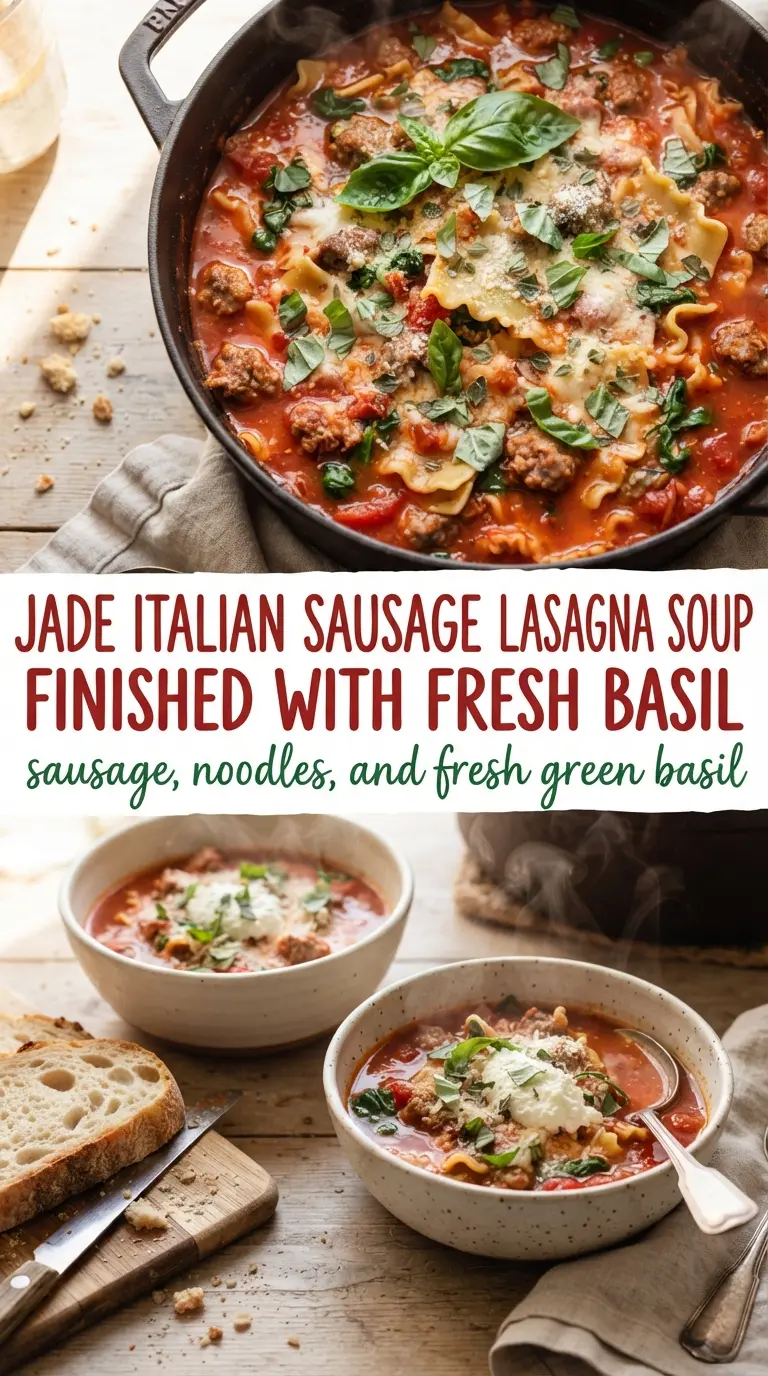
- Italian sausage — This is the main flavor builder, especially if you use sausage with fennel and garlic already in it. Mild or hot both work; hot adds a little more edge. If you swap in ground beef, add an extra pinch of fennel seed and a bit more salt because the soup will lose some of that classic sausage depth.
- Yellow onion and garlic — These soften the savory edges and round out the broth. Dice the onion finely so it nearly melts into the base. Garlic should go in after the sausage browns so it doesn’t scorch and turn bitter.
- Diced tomatoes and tomato sauce — The diced tomatoes give the soup body and little bits of texture, while the tomato sauce smooths everything out so the broth tastes full and coherent. If all you have is crushed tomatoes, use them. The soup will be a touch thicker, which is still a good result.
- Chicken broth — Broth stretches the tomato base into a true soup and carries all the sausage flavor through the pot. Homemade or boxed both work here. Use a low-sodium version if you want control over the final seasoning, because the sausage and Parmesan already bring salt.
- Broken lasagna noodles — These give you the lasagna feel without any layering. Break them into rough pieces, not tiny shards, so they stay substantial in the bowl. If you need a gluten-free version, use a sturdy gluten-free pasta shape that can hold up in broth.
- Ricotta and Parmesan — Ricotta gives you that creamy lasagna finish, and Parmesan sharpens the tomato broth. Don’t stir the ricotta into the whole pot unless you want a cloudy, thicker soup; spoon it over each bowl so every serving keeps that fresh, cool contrast.
- Fresh basil — Basil wakes up the whole bowl at the end. Tear it instead of chopping it so the leaves don’t bruise into a dark paste. If basil isn’t available, parsley will freshen the dish, but it won’t give the same sweet finish.
The 20 Minutes That Matter Most
Browning the Sausage and Onion
Set a Dutch oven over medium-high heat and cook the sausage with the onion until the meat is deeply browned and the onion is softened, about 8 minutes. You want visible caramelized bits on the bottom of the pot, not just gray cooked meat. If the pot looks dry before the sausage is browned, the heat is too high; lower it a touch so the sausage renders fat instead of scorching.
Building the Broth
Add the garlic and stir just until it smells fragrant, about 30 seconds, then pour in the tomatoes, tomato sauce, broth, and Italian seasoning. Scrape the bottom of the pot as the liquid goes in so all those browned bits dissolve into the soup. Bring it to a boil before adding the noodles; a lazy simmer here gives you limp pasta and a thinner-tasting broth.
Cooking the Noodles Without Losing the Texture
Stir in the broken lasagna noodles and cook until they’re tender, about 10 minutes. Keep the soup at a steady boil or lively simmer so the pasta cooks through evenly. If the noodles absorb more liquid than you want, add a splash of broth or water at the end and let it heat through for a minute.
Finishing With Cheese and Basil
Take the pot off the heat before stirring in the Parmesan so the cheese melts smoothly instead of clumping. Ladle the soup into bowls, then top each one with a spoonful of ricotta and a scatter of torn basil. That last-minute finish is what makes the soup taste like lasagna instead of just tomato pasta.
What to Change When You Need a Different Version
Gluten-Free Lasagna Soup
Swap the lasagna noodles for a gluten-free pasta that holds its shape, such as brown rice pasta or a sturdy gluten-free rotini. Cook it just until tender, because gluten-free pasta can go mushy if it sits too long in hot broth. If you plan on leftovers, it helps to cook the pasta separately and add it to each bowl as you serve.
Dairy-Free Version
Leave out the ricotta and Parmesan, then finish each bowl with a drizzle of olive oil and a little extra basil. The soup still has plenty of body from the sausage and tomato base, but it loses the creamy lasagna finish. A spoonful of unsweetened dairy-free ricotta can work if you want that same topping-style contrast.
Make It Lighter
Use turkey sausage instead of pork sausage and choose a low-sodium broth. You’ll get a leaner soup with a slightly less rich finish, so add a little extra Parmesan or a pinch of red pepper flakes if you want more punch. The texture stays the same, but the broth will taste cleaner and less heavy.
Storage and Reheating
- Refrigerator: Store for up to 4 days. The noodles will keep soaking up broth, so the soup thickens as it sits.
- Freezer: It freezes, but the noodles soften after thawing. For the best texture, freeze the soup base without the pasta, then cook fresh noodles when you reheat it.
- Reheating: Warm it gently on the stove over medium-low heat with a splash of broth or water. High heat can make the noodles too soft and can turn the broth starchy.
Answers to the Questions Worth Asking
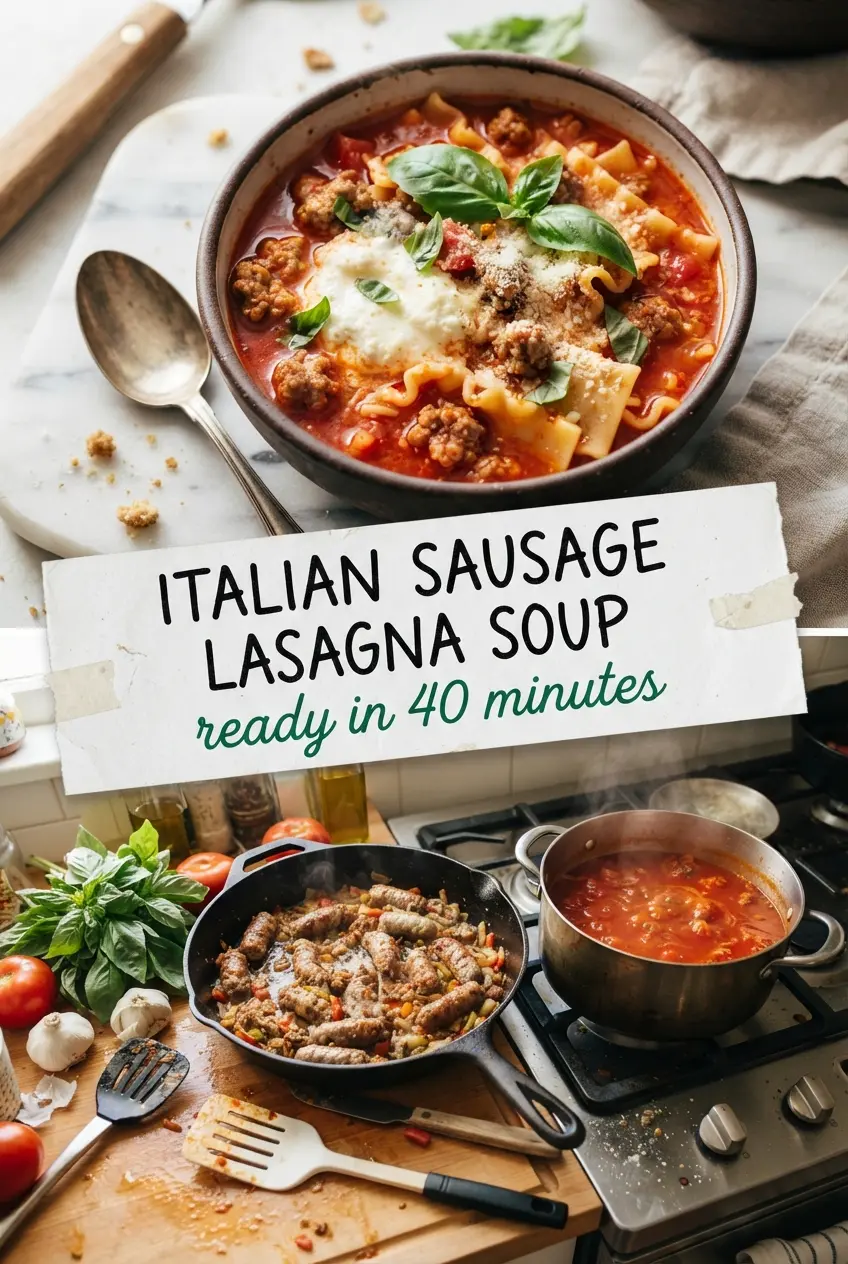
Italian Sausage Lasagna Soup
Ingredients
Equipment
Method
- Heat a Dutch oven over medium-high heat and brown the Italian sausage and diced yellow onion for 8 minutes, stirring until the sausage is cooked through and the onion is softened (you’ll see browned bits on the bottom).
- Add the minced garlic and cook for 1 minute, stirring until fragrant (about 60 seconds, not browned).
- Add the diced tomatoes, tomato sauce, chicken broth, and Italian seasoning, then bring to a boil (steam and steady bubbles across the surface).
- Stir in the broken lasagna noodles and cook for 10 minutes, until tender and ruffled (watch for bubbling return and a softer bite).
- Stir in the grated Parmesan until melted and the soup looks slightly thickened and glossy (about 1 minute).
- Top each bowl with ricotta cheese and torn fresh basil so the basil stays bright and fragrant (add right before serving).